- HOME
- Contract Management
- Contract renewal management: The complete guide
Contract renewal management: The complete guide
- Last Updated : August 10, 2026
- 95 Views
- 5 Min Read

Most teams only think about contract renewal management once a deadline has already slipped past them. That gap has a real cost. Research from World Commerce and Contracting found that renewal costs from poor forward planning are one of the leading causes behind the 11% of contract value that companies typically lose in a contract’s lifecycle.
This guide walks through what renewal management actually involves, where it tends to break down, and how to optimize the contract renewal management process from start to finish.
Key takeaways
Teams tend to think about contract renewals only once a deadline has already passed.
There are usually four stages to a contract renewal process: Determining the renewal type, reviewing terms and performance, reaching a decision, and documenting the outcome.
Getting it wrong costs real money: missed renewals, unwanted auto renewals, closed negotiations.
Manual tracking can be a bad idea, due to broken handoffs and spreadsheets that don’t scale.
Optimizing renewals comes down to reminders, activity management, renewal letters, and calendar visibility.
What contract renewal management means
Contract renewal management is the ongoing work of tracking when agreements are due for expiry, deciding what should happen next, and whether the contract should renew on the same term, be renegotiated, extended, or allowed to expire.
How a traditional contract renewal process usually looks
Determining the renewal type
There are two types of contract renewals: manual, and evergreen/automated. The type of renewal is usually chosen at the pre-signature stage. A manually renewing contract requires the contract owner to act before the contract terminates. An evergreen renewal contract renews automatically for the agreed term, with no action required from anyone.
Reviewing the terms and performance
This step happens at the post-signature stage, once the contract is nearing its expiry. Manual renewals are an opportunity to evaluate the quality of the current engagement. Contract managers can review the terms and compare them against the counterparty’s performance, so the decision is made consciously rather than by default. Evergreen renewals don’t require this review, and are usually reserved for high trust relationships where that active evaluation of each term isn’t considered necessary.
Reaching a decision
The decision to renew a contract happens close to the contract’s expiry date. The review leads to one of four outcomes, renew the contract as is, renegotiate specific terms, extend it, or let it expire.
Documenting the outcome
Whether renegotiating terms or renewing as is, the decision is documented as a renewal of the existing contract, with the agreed terms recorded and signed by the parties involved. If the decision is not to renew, a formal notice that the contract will not continue is sent to the counterparty instead.
Why can bad contract renewal management prove costly?
Unintentional renewal misses
A missed renewal means different things for different teams. For procurement, it can mean downtime on a critical service the business depends on. For sales, it can mean a churned customer. To top it off, the organization also loses time restarting the renewal process from scratch.
Unwanted auto renewals
When a contract is set to renew automatically, with no one obligated to check the details first, it can lock the business into another full term on conditions that were never reconsidered, sometimes with pricing or terms that no longer make sense.
Missed negotiation opportunity
Once a renewal is done, changing anything means going through an amendment, which is a separate negotiation of its own, and something that could have been avoided if the pre-renewal negotiation window were still open.
Why is tracking manually a bad idea?
Broken hand-off
When the person who owns a set of renewals tracks them in their own file or inbox, then changes roles or leaves the organization, what they were tracking is usually left behind, untouched or too difficult for anyone else to interpret.
Doesn’t scale with volume
A spreadsheet works fine for a handful of contracts. It stops working once a business is juggling a dozen subscriptions and agreements all at once, because nothing is easier to maintain as the number of contracts grows or as more people need to track them. Spreadsheets also don’t come with built-in reminders based on contract type.
How to optimize your contract renewals for the best
Configure the right reminders
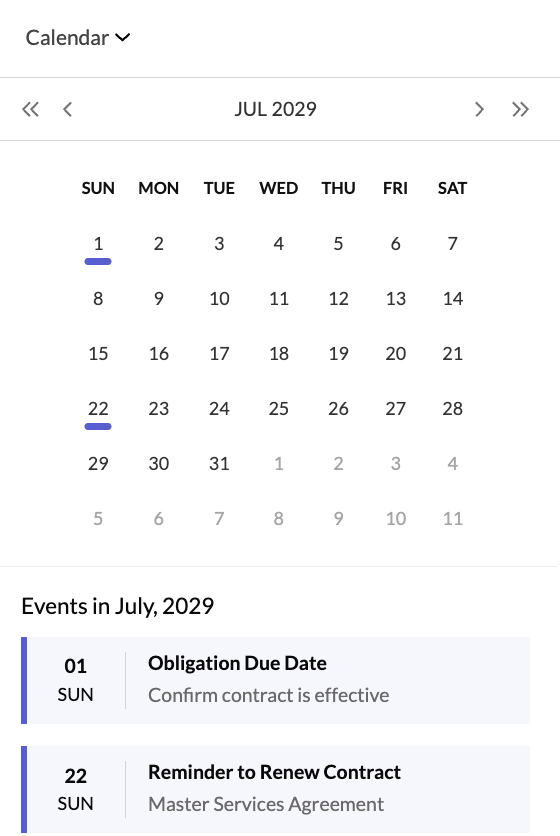
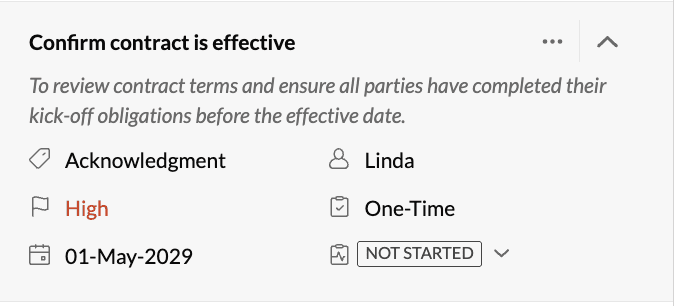
Setting up reminders during the contract’s creation ensures that the contract renewal isn’t missed. If the contract owner wants to confirm whether key obligations were fulfilled before the contract renews for the next cycle, they can send obligation reminders to the people responsible. These obligations can be set up as either one-time or recurring tasks. Both can be displayed in a common calendar view, bringing them all together in one place.
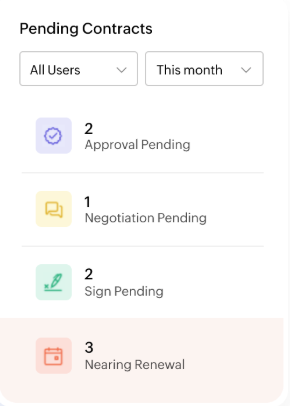
Here’s how it looks in Zoho Contracts:
Capture the context
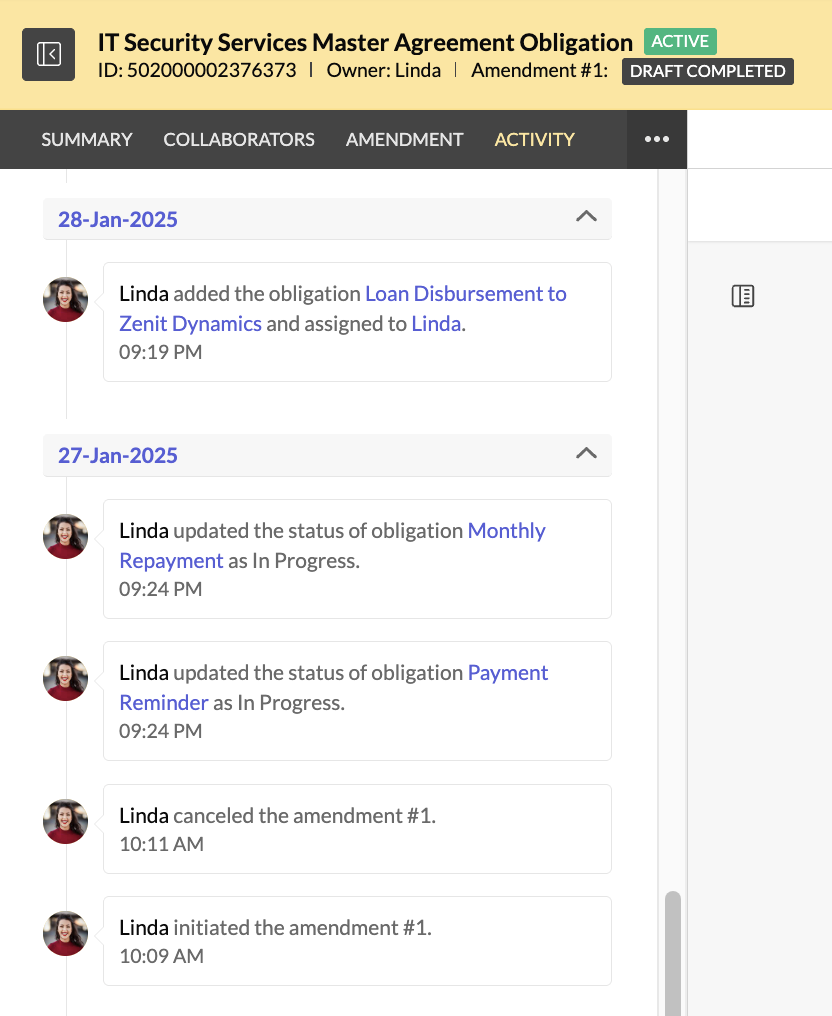
As a contract can undergo multiple changes during its lifecycle, keeping track of all these changes and ensuring that context is captured in the renewal letter is critical. These changes can include past amendments, prior renewals, and extensions.
A contract owner also needs to go through the obligations associated with the contract before a renewal to know how they’ve fulfilled their contractual obligations, and how the counterparties have fulfilled them. A modern CLM helps you track all of these activities effortlessly.
Automate the renewal letter generation
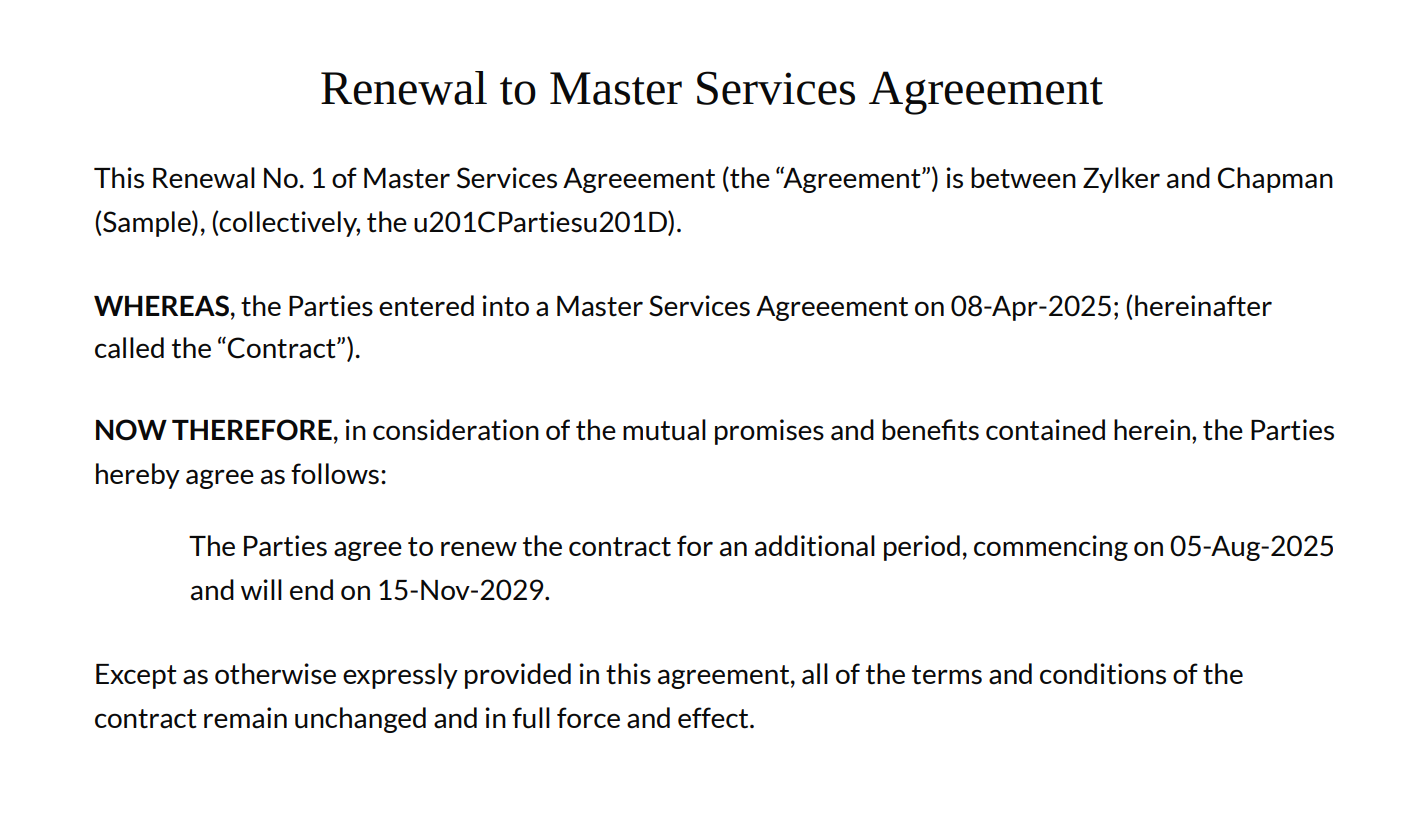
The renewal letter, which usually accompanies a contract to confirm it’s been renewed, can be automatically generated if the entire contract lifecycle is managed from one central platform. Because the software already knows the contract’s full history, the letter will be automatically generated with the necessary context.
Modern contract renewal management software or CLM software make this kind of automation possible.
Get granular renewal insights
While the calendar view is great for a glance at what’s renewing, sometimes you may need more than that to dig into the numbers.
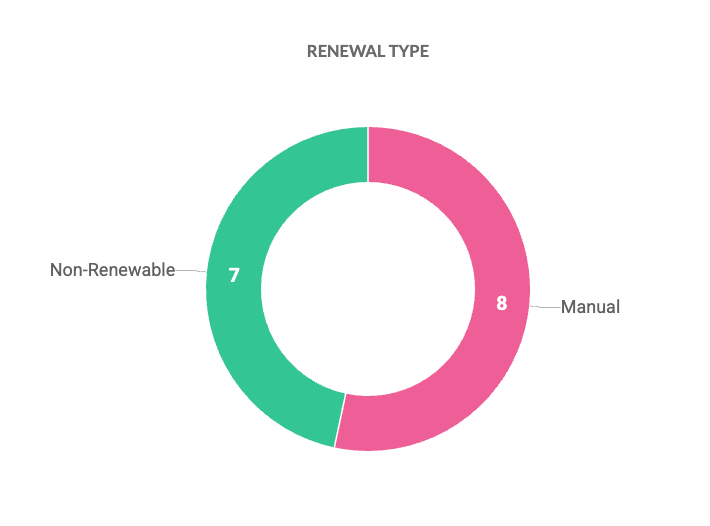
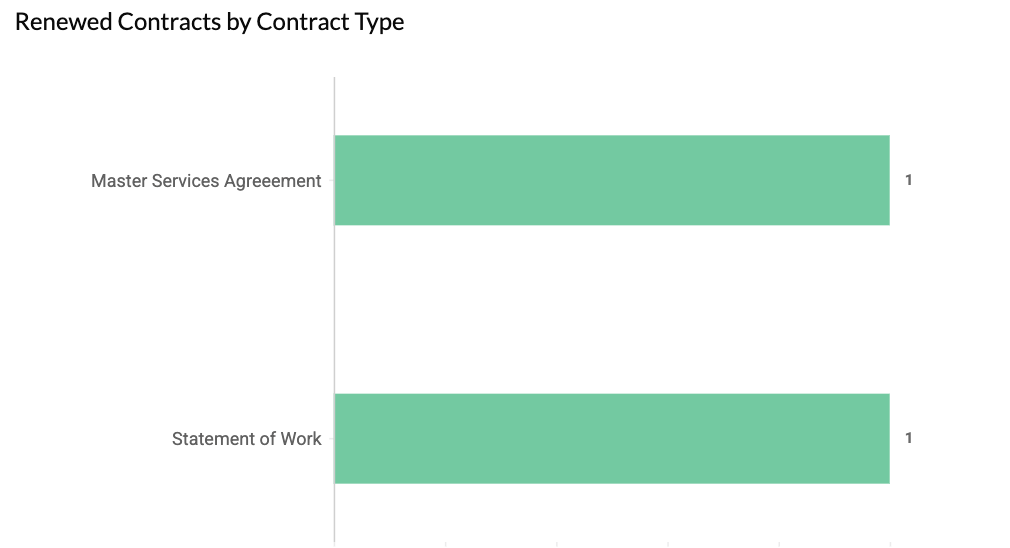
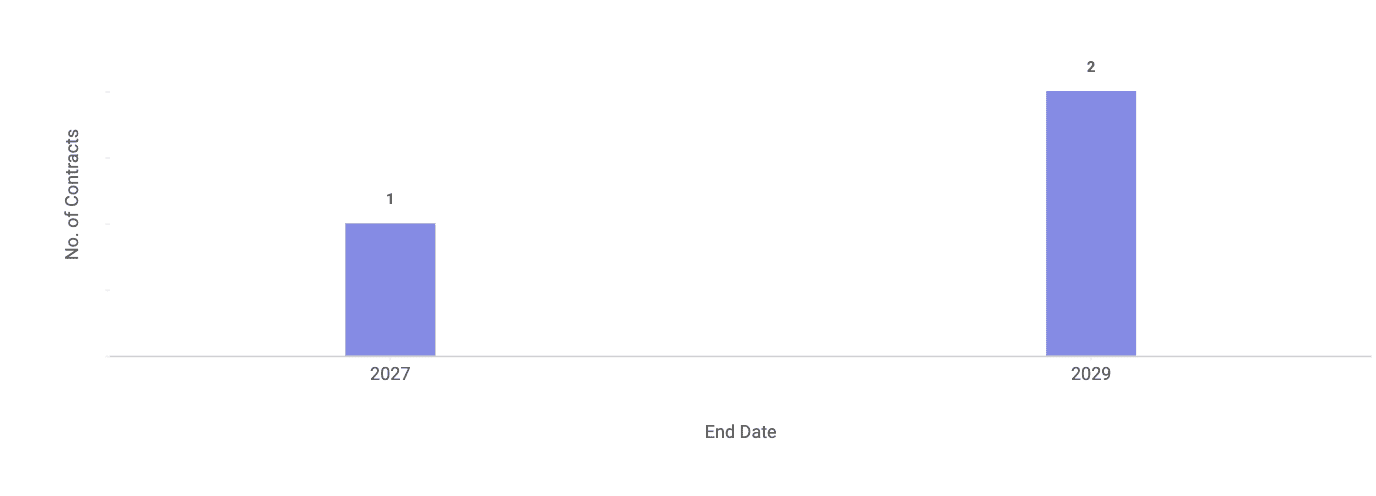
That’s exactly where reports come in. Advanced contract management tools provide you with insights, such as contracts by renewal type, that can break down how many of your contracts are marked for manual renewal versus automated renewals. You’ll also have reports to pull up all of your upcoming renewals or renewed contracts filtered down to any specific period.
Contract renewal management doesn’t have to be complicated
Determine the renewal type, review it before the deadline, record what happens, and decide with real information in hand.
Zoho Contracts brings you easily configurable reminders, activity management, renewal letters, and granular renewal visibility together, so a renewal decision doesn’t depend on someone remembering to check manually every time.
FAQ
How many contracts make a contract renewal software necessary?
For a handful of contracts, a spreadsheet is genuinely fine to manage by hand. The tipping point tends to show up once that grows to a dozen or more, or once several people need to check the same tracker rather than just one.
What is contract renewal automation?
Contract renewal automation isn’t one single feature. It’s several things working together: Automating renewal reminders, surfacing renewal dates automatically, auto-generating renewal letters, and pulling that information together into live reports, reducing the burden of what was previously tracked or managed manually.
What’s the difference between a contract renewal and a contract extension?
A renewal continues the contract for the same or a similar duration in a new term, and doesn’t change the contract’s scope. An extension prolongs the current term instead of starting a new one, with the existing terms and obligations carrying forward unchanged into the extended period. Neither one alters what the contract actually covers. Technically, when the obligations and other terms in the contract are altered, it’s called a contract amendment.