- HOME
- Email Marketing
- Post purchase emails: Examples, templates, and tips
Post purchase emails: Examples, templates, and tips
- Last Updated : May 29, 2026
- 779 Views
- 5 Min Read
Congratulations! If you're here, it means you made it. You’ve used emails, social media, advertisements, websites, and various other channels and landed your customers. You're selling what you wanted to sell. But it doesn't end there.
Now that you have customers who trusted you enough to give you their money, how do you retain, increase, and provide value in return?
Emails are your best friend for post-purchase nurturing, loyalty, and advocacy creation.
What are post-purchase emails?
Post-purchase emails are the emails you send after a customer has made a purchase from you. These emails can be sent for various intents and purposes including feedback collection, gratitude, personalized offers, upselling, and much more.
According to this Forbes article, loyal customers are five times more likely to purchase again and four times more likely to refer a friend to the company. Given that most purchases are made digitally these days, and even physical purchases are attached to digital identities, emails after purchase are a great way to build customer loyalty.
Not all post-purchase emails need to be sent immediately after purchase. If the mail is transactional, like confirming the purchase, or a note of gratitude for the purchase, they can (and should) be sent immediately. Other mails—like cross-sell marketing or exclusive offers—can be sent later to promote new product launches or special promotional sales.
Why are post-purchase emails important?
Put yourself in the shoes of a first-time customer making a purchase from your business. This customer's friend is now looking for something similar to what you're selling.
Now, what determines whether the customer will recommend your brand? Is it only the quality of the product or service?
There are many things that could go wrong during or after purchase for your customers, such as:
Poor purchase experience in-store or on your website.
Hidden costs.
Broken payment URL/gateway that took many tries to get right.
Unavailability of preferred payment options.
Product/service not meeting expectations.
Poor support post-purchase.
No feedback mechanism in place.
What if you knew about these things as soon as they happened, apologized to the customer, and offered them a referral bonus? This is just one use case of a post-purchase email. Imagine how many more ways post-purchase emails can help your brand.
By connecting the loop between post-purchase and your business, you'll not only close any gaps in your customer experience, but you’ll also improve retention and advocacy. According to one study, even a 5% increase in customer retention can increase company profits by 25% to 95%. And post-purchase emails help you create not just one loyal customer, but help turn every customer into a loyal one.
In essence, post-purchase emails will help your business:
Engage with customers.
Receive feedback to improve purchase process.
Provide exclusive offers and discounts.
Upsell and cross-sell.
Enhance product ratings and increase positive reviews.
Provide better customer support.
Improve trust, brand affinity and loyalty.
Increase sales via referrals.
Post-purchase email examples and templates
Before you start sending post-purchase emails, it’s crucial to know the different types of emails you can send and identify the ones that will work for your industry, customer base, and marketing strategy.
Transaction: Order confirmations, shipping notices, delivery confirmations—emails of this type are called transactional emails. Transactional emails are set up to go out automatically after customers place an order on your website. To set up transactional emails that are sent out automatically when a customer makes a purchase, you can explore ZeptoMail, Zoho’s dedicated transactional email delivery service.
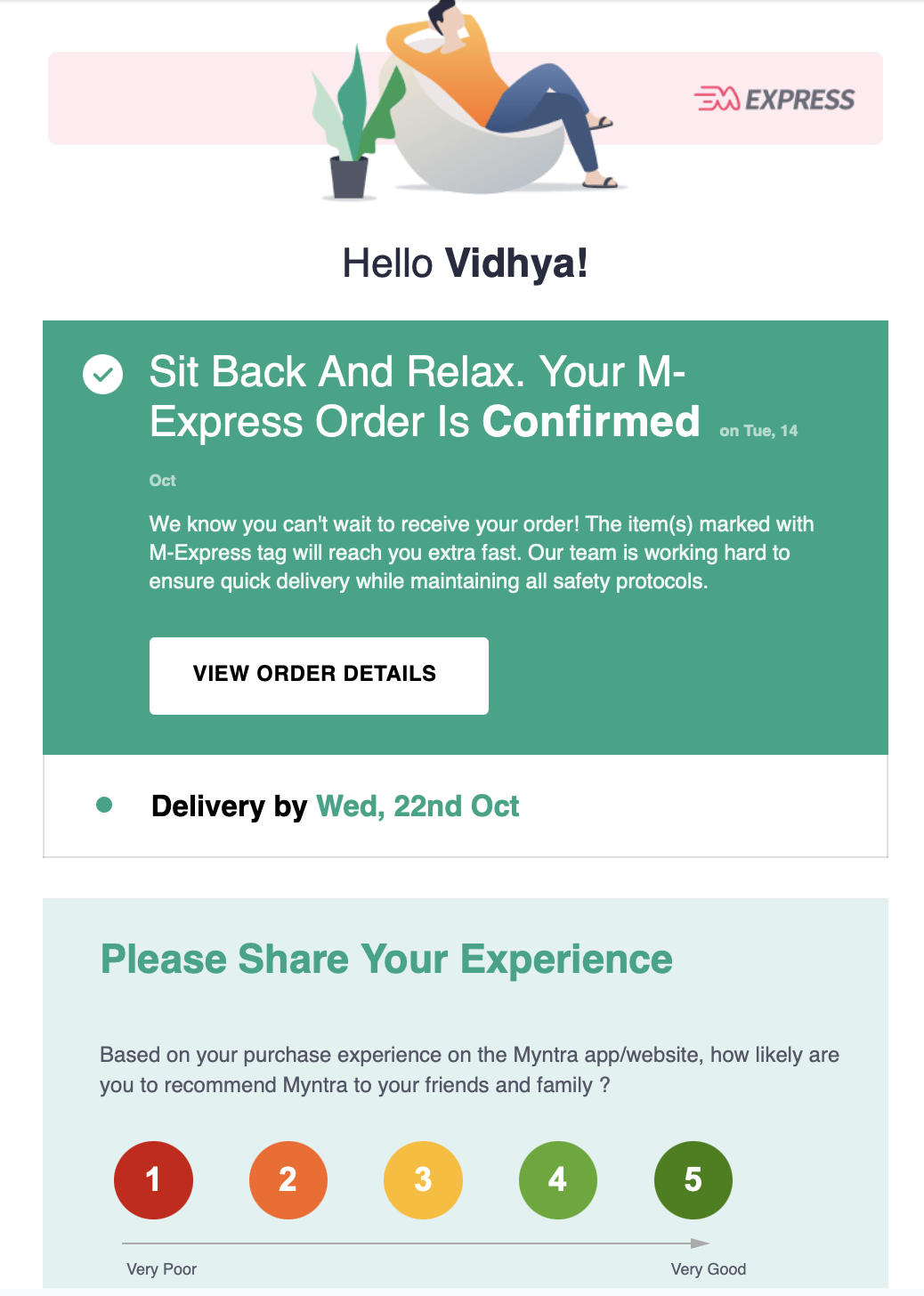
You can request feedback about the customer’s shopping experience in your order confirmation mail. This email from Myntra is a great example of combining a transactional order confirmation with a feedback/rating request.
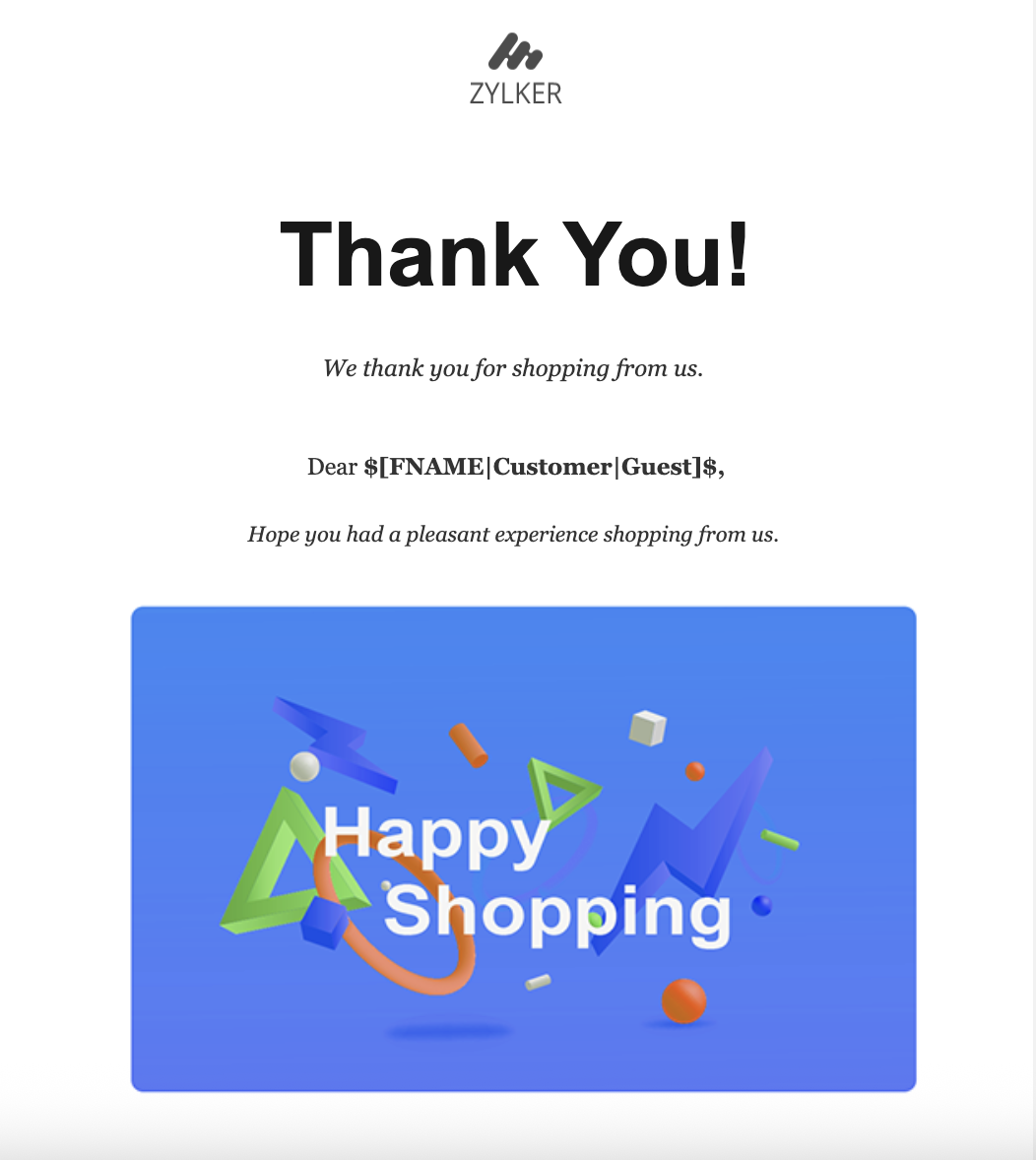
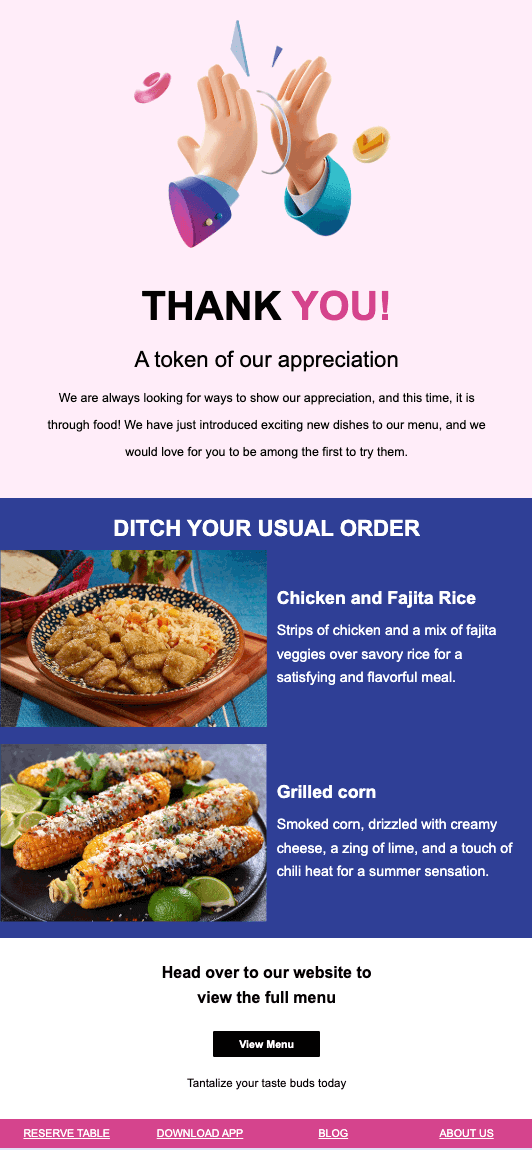
Thank you mail: Simple acknowledgements or shows of gratitude are underrated. The easiest type of post-purchase email is a plain thank you mail that conveys gratitude to the customer for the purchase.
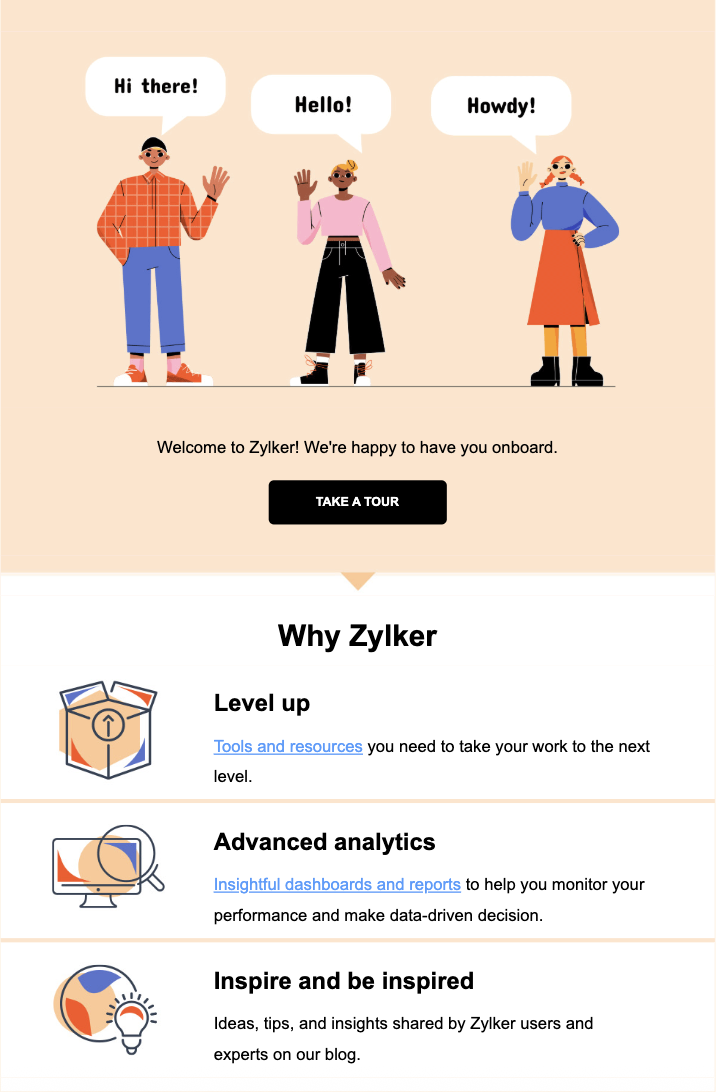
Welcome mail: When it comes to purchases like software, companies sometimes miss out on creating a proper onboarding experience and end up losing the customer before the next renewal. This is where welcome emails with good onboarding instructions, best practices, and guidance about the features can help. These mails can ensure that your customer continues to get the necessary help about how to use their purchase and creates long-lasting loyalty.
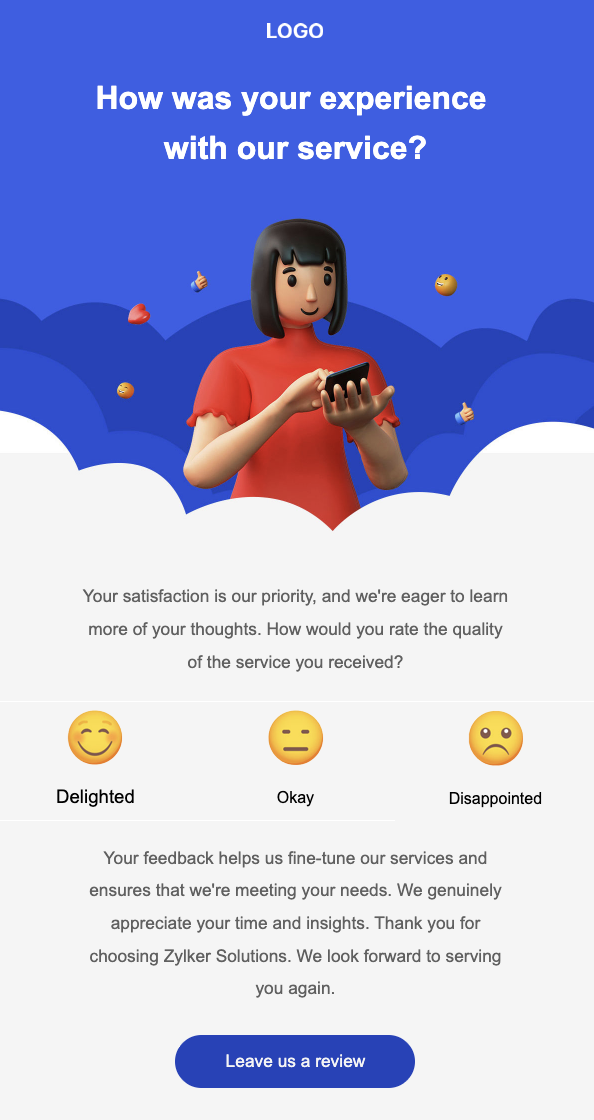
Feedback and review request mail: Ask your customers to share their feedback on their purchase and submit a genuine review on your website, Google, or other review sites. This way you can engage your customers and leverage user-generated feedback to acquire more customers.
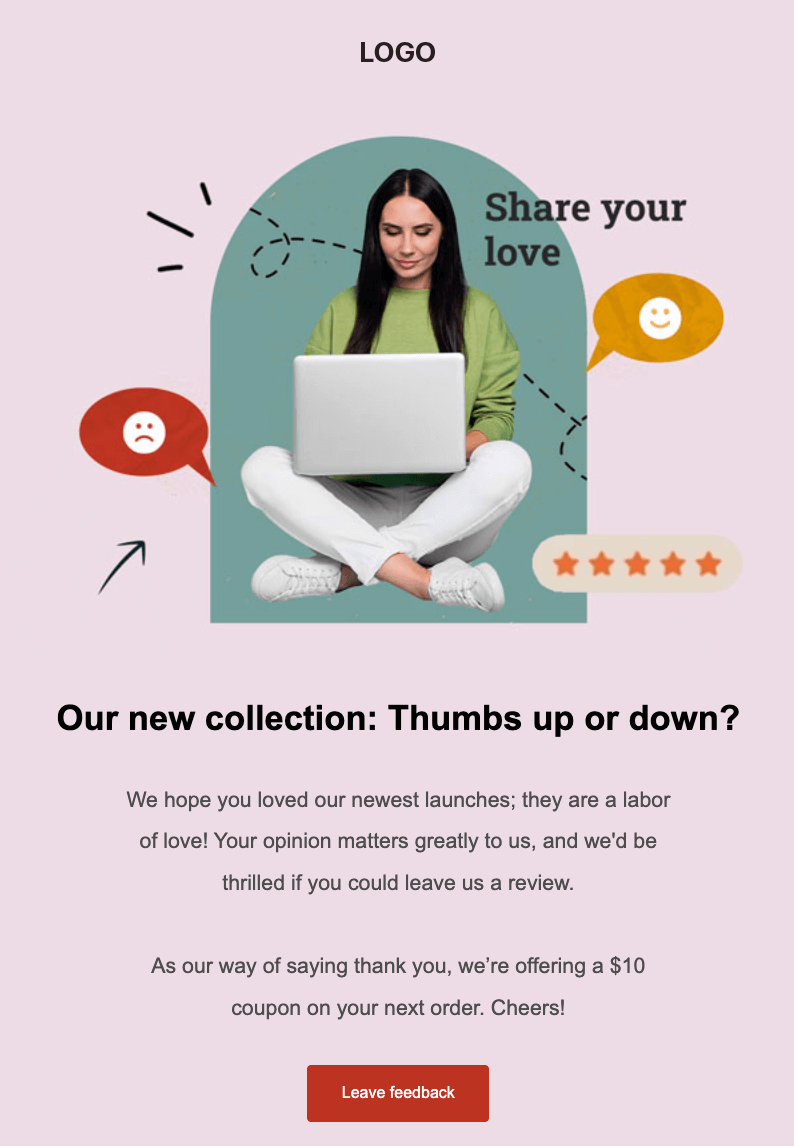
Survey mail: Send an email asking your customers to take a detailed survey on your product or their purchase experience. You can offer an incentive like a gift card or an exclusive discount on their next purchase for completing the survey. This is a great way to get insights on your products and your customers’ buying journey. This also shows your customers that your genuinely care about improving the experience for them, leading to improved customer loyalty.
Reorder, upsell and cross-sell mails: If they've purchased once from you and like your product or service, then getting them to repurchase will be easy. All it takes is some compelling emails.
If you're selling fast-moving consumer goods or products that are purchased at regular intervals—for example, if you’re running a restaurant—you can send reminders at regular intervals about the repeat orders or new arrivals, drawing your customers to come back to try more products.
Emails with content like: “Since you purchased item ABC from us, we thought you may like these products too...” can nudge your customers to try them.
If you're selling a course or a software, you can offer similar courses or other integrated software, or you can also upsell by offering product bundles at discounts.
Beta or special access mails: For new products or features, your existing customers are the ideal candidates for beta testing. They're already familiar with your business and are often more than happy to provide honest feedback. Beta testing is a win for your customers as well, because they get exclusive access before general users while also being able to contribute towards improving your offering.
Tips for creating the best post-purchase emails
Plan your emails in advance. Leverage the email templates available in email marketing products like Zoho Campaigns, create your post-purchase workflows, and set up automation for every new customer that’s added to your contacts.
Segment your customers based on demography, purchase pattern, and engagement with emails. This will help you send targeted campaigns that are more likely to convert.
Leverage dynamic content to create multiple variations of emails within the same template to send different mails to different customers.
Set email frequency based on customers' behavior. Did you know that you can set email sending limits in Zoho Campaigns to limit the total number of emails sent to a contact? This will help reduce email fatigue for the receivers.
Send your emails at a time that the audience is more likely to open them; i.e., aligned to both their time zone and to the best time they open their emails. Zoho Campaigns’ time-zone-based sending and send-time optimization are features you can leverage to ensure that your emails are always sent when they're most likely to be read.
Ready to turn first-time buyers into loyal advocates?
Try Zoho Campaigns for free today.
 Vidhya Vijayaraghavan
Hi! I'm Vidhya, a storyteller and problem solver. I wholeheartedly believe that B2B content doesn't have to be boring.
When not writing or having a writer's block, you can catch me reading, puzzling, or volunteering.
I'm game for a conversation about anything, especially B2B SaaS marketing (and cats too!).