

- HOME
- Banking & payments
- GIRO and instant payments (FAST and PayNow): How businesses can leverage them effectively
GIRO and instant payments (FAST and PayNow): How businesses can leverage them effectively
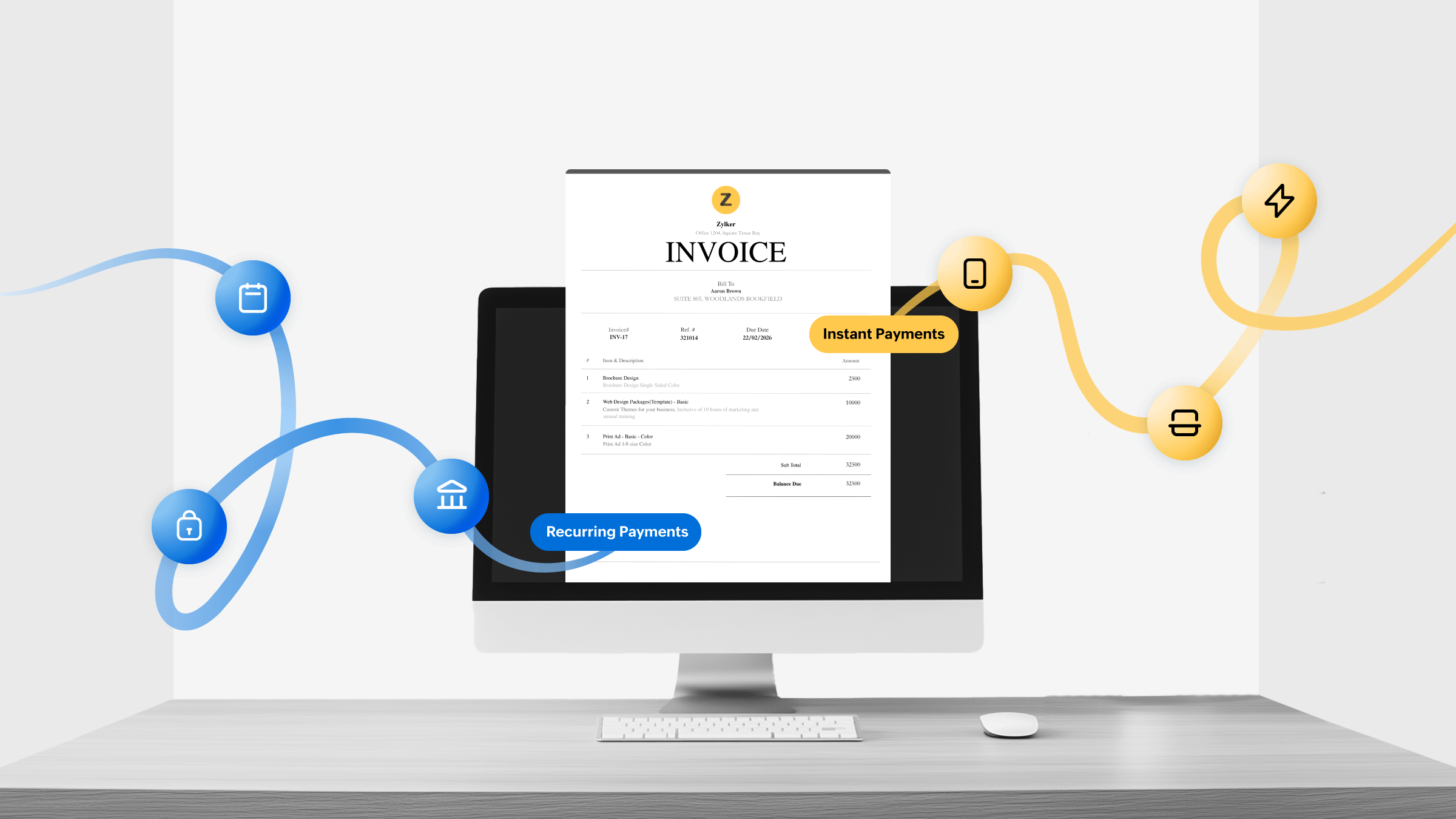
The e-payments ecosystem in Singapore has evolved rapidly over the last decade. Many payment options have seen wide-scale adoption among individuals, small businesses, and corporations. GIRO (General Interbank Recurring Order) is a well-established automatic payment method used for managing cash flows for recurring transactions. Then there are instant payment methods like FAST and PayNow that make fund transfers more agile by quickly transferring funds from one account to another.
There is a common misconception among small businesses that they have to choose one payment method that best suits all of their business operations. But streamlining payments is about adopting the right payment method for the right transactions. Therefore, knowing when to use which payment method is essential for collecting payments effectively.
General Interbank Recurring Order (GIRO)
GIRO is an e-payment method that eliminates manual intervention by directly debiting funds from one entity's bank account and crediting them to another entity's bank account for pre-approved recurring transactions. The timing of the transaction will be predetermined, ensuring timely payments. Entities involved in GIRO payments can be individual customers, businesses, and government institutions. There are two methods of GIRO payments serving different purposes—Direct Debit and Direct Credit.
From a business perspective, GIRO Direct Debit is used when it has to receive funds from its customers or other entities that owe the business on a regular basis. The business should register with the bank to set up GIRO Direct Debit to receive recurring payments. Customers have to authorise the debit by registering for GIRO Direct Debit with their bank. The recurring transactions will be activated once the bank verifies customer authorisation and transaction details.
GIRO Direct Credit is used when a business wants to make regular payments to select entities that it owes. The business can set up GIRO Direct Credit by registering with their bank without requiring authorisation from the recipient.
Capabilities
GIRO payments are suitable for more frequent transactions, especially those that are made in bulk. They are generally cost-efficient, as they are processed in bulk with less administrative intervention. Businesses should refer to their bank's pricing guide, as the cost per transaction for GIRO payments varies by bank. GIRO is not an instant payment model; it usually takes a few working days for transactions to complete.
Businesses have better control over the transactions, as they are scheduled ahead, although the initial setup process can be lengthy. Moreover, it is easier for the businesses to reconcile the transactions that are processed through GIRO due to the detailed reference associated with each transaction.
Instant payment methods (FAST & PayNow)
FAST
Fast and Secure Transfers (FAST) is a real-time electronic fund transfer system in Singapore. Users can transfer funds from one bank account to another by entering the recipient's account details. Businesses can open a Singapore-dollar bank account with a participating bank to access FAST payment services.
PayNow
PayNow is another instant bank-to-bank fund transfer that functions on the FAST network. Users can transfer funds with proxy identifiers like registered mobile numbers, NRIC, and business UEN. Funds can also be transferred by scanning a PayNow QR code or SGQR code. Businesses can set up PayNow by registering proxy identifiers like the business UEN (Unique Entity Number) with a participating bank.
While both are instant fund transfer options, FAST is generally used for higher-value transactions using bank details, while PayNow uses proxies, eliminating the need for bank details.
Capabilities
Instant payments are generally used for ad hoc and time-sensitive transactions. They are known for their agility, as they are both easy to set up and convenient to use. Transactions performed through these payment methods are settled near almost instantly. The cost per transaction varies between FAST and PayNow. PayNow generally has a fixed cost per transaction, depending on the bank, while FAST charges may vary based on the bank and transaction volume. Transaction reconciliations made through instant payment methods may require additional effort due to less structured references, especially for large-volume transactions.
GIRO vs instant payments
Here's a table that summarises and compares the capability of GIRO and instant payment methods.
| Features | GIRO | Instant payments |
| Setup | High efforts | Low efforts |
| Transaction initiation | Automatic | FAST: Manual; requires bank details PayNow: Manual; requires proxy identifiers |
| Reconciliation | Less efforts | More efforts |
| Cost | Less cost-efficient at low volumes but gets cheaper as volume scales | More cost efficient at low volumes but gets more expensive as volume scales |
| Real-time settlement | No | Yes |
| Customer authorisation (pre-mandate) | Required for GIRO Direct Debit | Not required |
| Best suited for | High volume and recurring transactions | For ad-hocs and time-sensitive transactions |
As reflected in the above comparison table, the trade-offs across setup, cost, and transaction control make it clear that no single payment method can suit every transaction need. For instance, when a business selects GIRO for its predictability, it may have to compromise on the flexibility offered by instant payment methods. Thus, adopting a combination of payment methods based on business requirements can make payment collection more robust.
Since business requirements vary based on operations and organisational goals, implementing the right mix of payment methods often requires more than just selection—it depends on how these methods are integrated into day-to-day processes. While instant payment methods are relatively easy to adopt and can be accessed through payment gateways, accounting systems, or invoicing software, GIRO setup is facilitated through banks and customer authorisation.
Businesses with subscription-based models may find it beneficial to go through the more involved setup process of GIRO to enable predictable collections. In contrast, small-scale businesses operating through retail channels may benefit from instant payment methods. By aligning payment infrastructure with transaction needs, businesses can streamline collections and achieve greater operational efficiency over time.