Top strategies for effective event vendor management

Vendor management can make or break an event. Learn how event management tools help planners streamline communication, track progress, and manage payments with ease.

Some events fail long before the first guest arrives. Not because of bad planning. Not because of low attendance.But because of poor vendor management.

When one caterer misses a delivery, an AV partner delays setup, or a décor vendor misreads the theme brief, the ripple effect can throw off your entire event day.

It's a nightmare every event planner knows too well: the endless follow-ups, crossed wires, and last-minute scrambles.

But here's the good news: you don't have to live in that chaos anymore. With the right event management tools, vendor coordination can shift from frantic juggling to effortless synchronization.

In this blog, we'll discuss why vendor management is the beating heart of every successful event, explore the common vendor challenges event planners face, and see how tools like Zoho Backstage simplify the process, from onboarding vendors to tracking deliverables and payments, all in one place.

Event vendor management: A comprehensive guide

Why vendor management is the backbone of every event

Every event, no matter how big or small, is powered by vendors. They're the behind-the-scenes experts who make the experience come alive, from the chef plating gourmet dishes to the AV team fine-tuning the spotlight.

Here are the main vendor categories most event planners work with:

  • Catering -- They are the heart of the event and make attendees feel comfortable.
  • AV and production -- The backbone of your event. They are what keep the whole event running smoothly.
  • Décor and design -- The vibe-setters. The first thing people notice when they walk in.
  • Transportation -- The silent workhorses managing shuttles, deliveries, and VIP transfers.
  • Venue partners -- The ones keeping the event running and the permits in check.

Now, trying to manage all of that at once. It's not just multitasking; it's like conducting a 50-piece orchestra during a thunderstorm. Everyone has to play in rhythm, at the right time, and hit the right note.

That's the secret most non-planners fail to notice. If your vendor management is smooth, your entire event feels smooth. If it's messy, you'll feel that chaos ripple through every schedule, stage, and session.

The everyday struggles of vendor management

If you've ever managed an event, you already know that vendor challenges rarely come one at a time. They usually pile up all at once.

Let's look at the most common hurdles event planners face daily:

1. Miscommunication everywhere

One vendor is communicating with you via email, and the other is texting you updates at midnight. Meanwhile, the presenter is asking for a "quick change" to tomorrow's setup. Can you imagine the hassle? When there's miscommunication, you'll forget and overlook most of the things that you should never have overlooked.

2. Missed deadlines

Missed deadlines can damage your brand's reputation a lot. Also, missed deadlines have a domino effect on the whole team and can affect other aspects of the event as well. If one vendor's late, the next can't start. The décor team can't set up because the AV guys haven't finished rigging. If this keeps happening, suddenly, your "two-hour buffer" disappears.

3. Budget blowouts

One of the main problems with vendor management is budget blowouts. You approve one small change, maybe upgraded centerpieces or extra lighting, and there goes another $500. Without real-time visibility, overspending happens before you even realize it.

4. No clear accountability

Something goes wrong. But who's responsible? The vendor? Your team? A bad brief? Without a proper tracking system, it's impossible to tell. So, you end up firefighting instead of problem-solving.

5. The paperwork mountain

Contracts, invoices, tax forms, receipts. Miss one signature, and your payment gets delayed. Lose one invoice, and reconciliation becomes a week-long nightmare.

Sound familiar? That's because this is the everyday reality of most event planners. Manual vendor management might have worked ten years ago, but with today's scale and speed, it's just not sustainable.

When you're juggling multiple cities, venues, and vendors, you need more than spreadsheets and sticky notes; you need a system.

How event management tools simplify vendor management

This is where modern event management tools completely change the game. They now go beyond registrations and ticketing, and have evolved into a control center for all your event operations. Now, you get a single place to coordinate every vendor, task, and update.

Here's what that looks like in action:

  • You can assign vendors to specific event segments and track their deliverables in real time.
  • Everyone gets notified instantly if something changes. No more chasing confirmations or resending instructions.
  • You can store contracts, track payments, and monitor progress without flipping through endless email threads.

And because everything's centralized, you can see exactly what's on track and what's at risk. No surprises, no panic, just clear visibility.

Event management tools transform vendor management from a game of constant catch-up into a system that practically runs itself organized, documented, and transparent.

When every team member and vendor works off the same platform, the event planner finally gets what they've always needed most: control without chaos.

That's when you stop managing problems and start managing progress.

But still vendor management is not a piece of cake at all. And if you think you can keep it for the last moment, you're in for a surprise. Still here's how event management tools simplify vendor management:

Centralized communication: One hub, no chaos

Instead of juggling emails, messages, and calls, event management tools give you one shared platform for all vendor communications.

  • You can assign vendors to specific event segments, share files, and tag them in updates directly.
  • All correspondence stays documented, so there's no confusion about who said what, or when.
  • Changes in schedules, setup layouts, or attendee counts are instantly visible to everyone.

With a unified dashboard in your event management software, event teams can share announcements, manage discussions, and keep every vendor aligned without endless back-and-forths.

Result: Fewer mistakes, faster responses, and complete communication transparency.

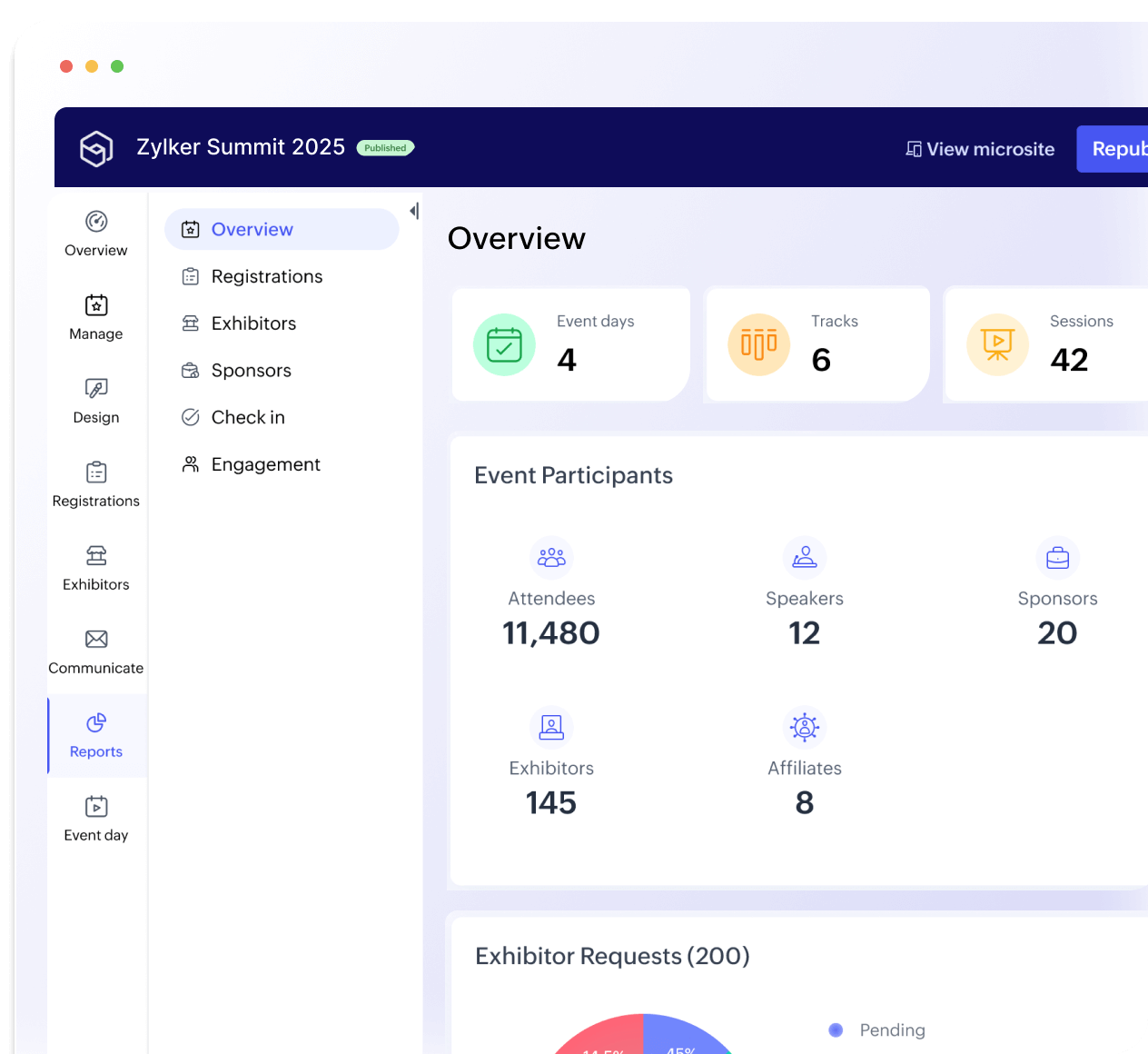
With Zoho Backstage, you can view sponsorships, check booth availability using intuitive floor planning. This makes sure that everyone knows their piece of the puzzle, and you can stop being the human reminder system.

Digital contracts and payment monitoring

Contracts, invoices, receipts, approvals... they add up fast. And losing even one can derail your budget or delay payments.

That's why most event management platforms now double as digital filing cabinets. You can upload vendor contracts, attach payment schedules, and store every receipt safely.

You can use custom forms and approvals that help collect vendor information, manage approvals for booth allocations, and track payment receipts.

When every document and payment status is visible, you eliminate disputes and ensure everyone gets paid on time.

Clear accountability, no finger-pointing

When every vendor task, file, and update lives in one system, accountability becomes automatic.

There's no more "but I didn't get the update" or "I thought that was someone else's job." Everyone sees the same dashboard, the same deadlines, and the same expectations.

If something slips, you can trace it back in seconds. No guesswork. No blaming. Just facts.

Event management tools turn your entire vendor operation into a transparent ecosystem where progress is measurable, communication is logged, and everyone's on record.

Real-time changes, zero panic

If there's one thing every event planner agrees on, it's that plans always change. Schedules shift, deliveries get delayed, last-minute venue requests pop up.

Here's where event management software truly shines. The moment you tweak a setup time or edit a floor plan, the system updates everyone automatically. Vendors get instant notifications, so they can adjust on their end without those frantic, late-night calls.

This agility keeps your event on track even when life throws a curveball. You stay in control. Vendors stay informed. And the show goes on, no matter what.

Data-backed vendor performance evaluation

One of the underrated advantages of using event management tools is data. Data helps event planners make informed decisions for future collaborations. Instead of guessing who to hire next year, you'll have data to back your choice and will improve your relationships with long-term vendors.

Benefits of efficient vendor management with event tools

Let's step back for a second. When your vendor management runs smoothly, everything else falls into place. You stop firefighting. You start leading.

Here's what changes when you start using event management tools to handle vendors:

  • Fewer errors, fewer headaches: Everyone's looking at the same information.
  • Total transparency: You can track every task, file, and payment to make sure that nothing skips your mind.
  • Faster decision-making: Real-time updates help you act, not react.
  • Stronger vendor relationships: When vendors know what's expected and feel supported, they deliver better.
  • Better cost control: You catch overspending before it happens.
  • More creative time: When operations run smooth, you get to focus on the fun stuff like designing experiences, not chasing confirmations.

The real-world impact of event vendor management: A quick scenario

Imagine you're managing a tech conference with 2,000 attendees. You have five major vendor categories: AV, catering, décor, stage production, and transportation.

Now picture managing all five vendors through emails and phone calls. You're switching tabs, missing attachments, and tracking progress through color-coded spreadsheets.

One small misstep, say, the AV vendor misreading the rehearsal time, and your event timeline goes off the rails.

Now imagine managing the same conference through a centralized event management platform. Every vendor logs in, checks assigned tasks, uploads confirmations, and receives real-time updates.

You can see who's completed what, track pending items, and even send reminders with one click.

That's what efficient vendor management looks like in the modern event world. They are organized, transparent, and stress-free.

Simplify vendor management with Zoho Backstage today

Managing vendors shouldn't feel like herding cats. With Zoho Backstage, you can bring all your vendors, teams, and event operations into one connected space.

From managing registration forms and attendee interactions, Backstage helps event planners reduce errors, save time, and build stronger vendor partnerships.

If you're ready to move from scattered communication to streamlined collaboration, it's time to see how Zoho Backstage can transform your vendor management process.

FAQs

They centralize task tracking and send automated reminders, ensuring every vendor meets their deadlines without constant manual follow-ups.

Yes, event management platforms like Zoho Backstage allow you to store contracts, monitor payments, and manage approvals, all within a single dashboard.

By keeping every update, task, and communication logged, they make it easy to identify delays or issues and assign responsibility transparently.

Absolutely. They're built to handle multiple vendors simultaneously, helping event planners oversee everything from catering to AV setups with clarity and control.

Zoho Backstage combines event planning, task management, and communication tools, making it simple to coordinate vendors, track deliverables, and avoid last-minute chaos.