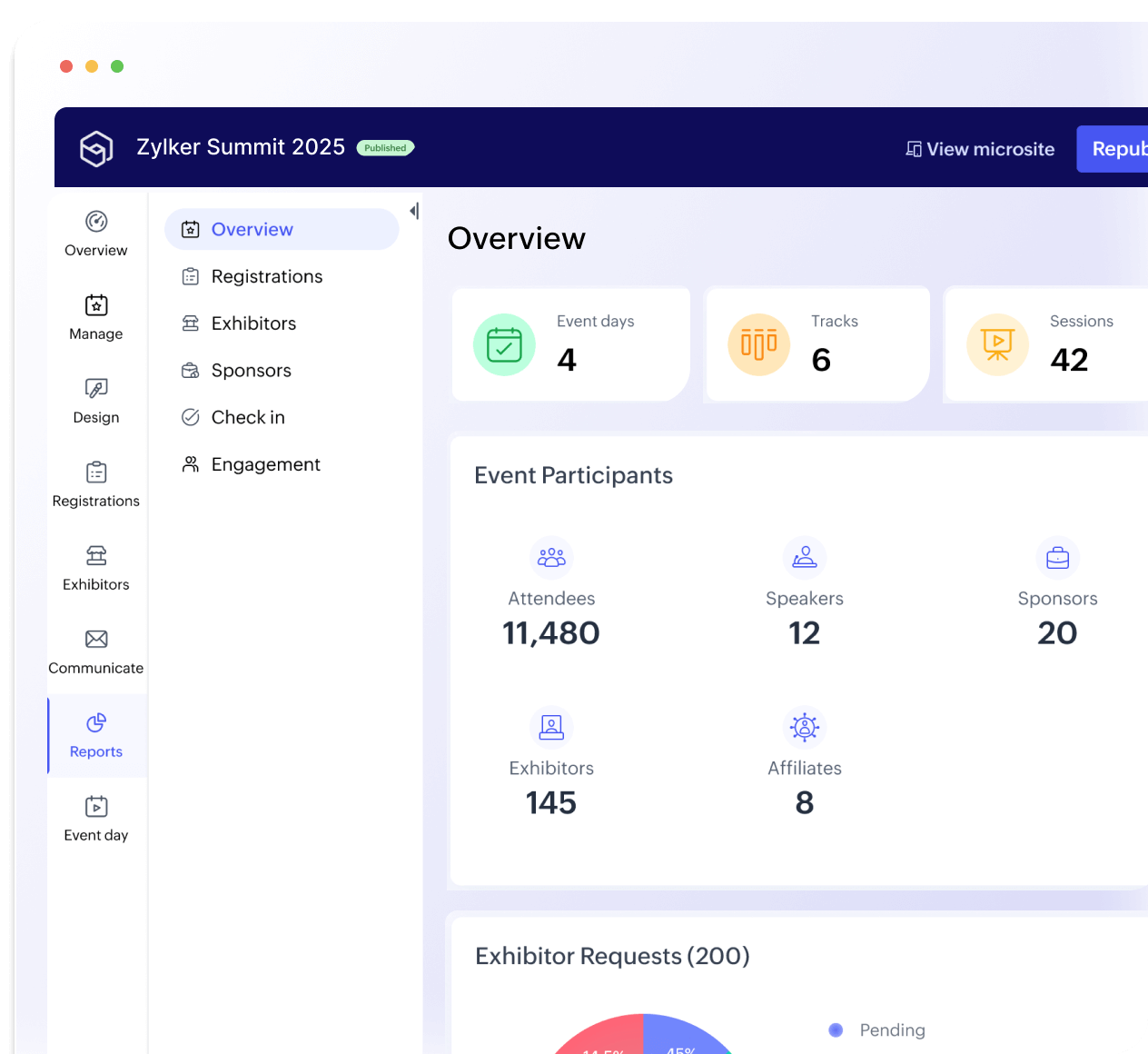
Managing event logistics efficiently is critical to building successful events. Let's explore how you can manage logistics easily and efficiently with the right technology and a comprehensive framework.
Managing your event logistics makes the difference between an exceptional attendee experience and lost business opportunities. It is what drives quality, reliability, and repeatability of experiences, making a standard event a standout one.
We keep hearing from event planning leaders on how mega-scale events depend heavily on event logistics to be fail-proof. In 2022, the Haas Formula 1 team missed the first round of pre-season testing in Bahrain after the cargo plane used to transport their vehicle was stalled in Istanbul. That's the power of event logistics planning—even small glitches can cause massive disruptions. But when done right, logistics can be a massive event enabler.
Initially, handling event logistics can look like a daunting task for organizers. With larger events, the team has to coordinate everything from marketing collaterals and technology to payments, transportation, and more. For smaller events and teams, there's a lot at stake—with tight budgets and limited bandwidth, they need to assemble the entire event arrangements to perfection.
As events thus grow in complexity and scale, organizers increasingly rely on integrated technology to manage time-sensitive operations—covering everything from venue scheduling and vendor coordination to attendee registration, ticketing, and on-site support.
This advent of modern event planning platforms enables planners to centralize every aspect of logistics. They automate communications with suppliers, help track resource movement in real time, and syncing schedules across multiple teams.
Let's learn how you can crack event logistics success, along with the right tools to aid your way.
Mastering event logistics: Processes, tools & best practices
Why is event logistics important for event success?
Next time you attend a flagship event or a community event like SaaStr—you'll notice that the organizing teams have silently cracked the code to exceptional event logistics management. SaaStr has everything from cocktail mixers to gaming nights in their agenda, while still helping SaaS startups meet VCs, achieve funding and network with peers.
Such events use efficient logistics management to create powerful marketing opportunities and memorable experiences. It's what gets them on the press and directly drives ROI—while keeping attendees coming every year.
This is why event logistics, when done right, can be a huge asset to event planning leaders. It provides event planning teams with the ability to get creative and flexible without compromising on outcomes.
Key stage-wise event logistics considerations
Efficient logistics planners have a value system in mind that they treat as their north star. Every activity should prioritize exceptional attendee outcomes over all else. But today, the role of logistics in events has evolved far beyond traditional coordination.
Let's split our logistics planning across the event timeline and see how regular activities can be augmented with better planning.
Pre-event logistics
Pre-event logistics involves planning ahead for all event requirements such as venues, activities, catering, safety and other aspects. Your event planning team needs to be aligned across the board for various aspects such as:
Venue of the event: Shortlist possible venues for your event depending on the event format (in-person, hybrid etc.,) attendee volume, agenda and other needs. Whilst doing this, it's important to ensure that your venue is able to accommodate seating needs, activity planning and compliance checks. Remember—the venue arrangements decide how attendees perceive your brand, how they recall the event, and whether they choose to come back once again. We've put together this detailed guide to event venue management here.
Materials and goods: If you're running any sort of event that has in-person attendance, either hybrid or fully in-person events, materials sourcing is a key aspect. Ask questions about your events' requirements like—what are the physical collaterals I need (brochures, standees)? What are the decor items needed (tablecloth, flowers)? What are the giveaway and swag kits like? Build your inventory checklist based on this information.
Digital tools & technical requirements: Technology plays a heavy role across event formats. About 85% of event planners use event planning software—like Zoho Backstage—to improve how logistics and agendas are managed. If you're doing a virtual event, you may need streaming software, mics etc., and for in-person events, AV setups and digital billboards. The more leverage you place on technology than on manual actions, the sharper your outcomes.
Catering and F&B (Food & Beverage): Important consideration, especially if you're hosting day-long or multi-day events. Catering quality makes a major impact—and is directly tied to your company reputation if you're planning a corporate event. Food safety is now (as always) a top priority—as is being inclusive of dining etiquette, dietary needs and experiential dining for attendees.
Travel and accommodation: If you're holding hybrid or in-person events with audiences across national and international locations, you'll need to help them with flight bookings, hotels, transportation and more. Most often, you can contract local hotels, or your venue itself, for good discounts on rooms and transportation.
Security and compliance: Compliance is a big requirement—especially with advanced AI technology and sophisticated event arrangement becoming popular trends. Procure hosting permits, fire permits, No-Objection certificates, area approvals, and other permits on protocol and security staffing aspects before the event.
Event-day logistics
Your team might have worked quite a bit on pre-event logistics, but it requires even more coordination to ensure D-Day activities like check-in, badging, seating etc., are done seamlessly. The best event planning teams move in a finely-orchestrated motion and are fully in touch with each other.
Some important touchpoints:
Floor planning and set-up: You need a clear and detailed floor plan that indicates where to place attendees, activities, marketing collaterals, support staff, F&B stations and more. The floor plan is your guide to this—your event planning team can direct all vendors and hire set-up staff to create and replenish arrangements with ease.
Check-in to departure flows: The best way to handle the flow from checking-in attendees to finally sending them off, is to digitize it all. Use an event management software to make all of it efficient, from QR-scanned ticket checks to badging to a full-fledged mobile app that shows them around.
Speaker and session management: When you have multi-day events, or hybrid events that span across multiple physical locations and digital spaces at the same time, this becomes complex. You need to ensure that all speakers and session hosts are comfortably placed in green rooms, mic'd up and prepared with all they need. Take them through a tech-check 2-3hrs ahead to keep the flow smooth for everyone.
Contingency planning and safety: Always have pre-prepared contingency flows, safety squads, and training for staff. Make sure your logistics plan has already accounted for all health requirements, essential services like rest areas and emergency exits. Keep your event planning crew and volunteers briefed about this—so anyone can assist attendees at all times.
Post-event logistics
A good logistics plan doesn't end when the event concludes—the most crucial part is learning and building a repeatable process for the next event. This is when you can track the effectiveness of your event, and make adjustments for better ROI next time.
Data capture: If you have an event management platform like Zoho Backstage, you can readily access attendee analytics, event KPIs, engagement metrics, lead information and more. This will help you track actual vs projected attendee numbers, identify which speakers or sessions drove maximum attendance, and even track revenue generation. Make sure to export this data to your CRM for follow-ups.
Clearing out inventory and materials: This can be quite tedious depending on the event scale, but the important part is to track what can be reused for future events vs disposed of. For leftover F&B, flowers, and other perishable items, it's a good practice to donate to local community organizations, when possible. In this post-event phase, you'll also be settling all vendor contracts and payments—completing this early helps you maintain good relations with suppliers.
Post-event attendee experience: If you're building repeat events, it becomes important to follow up with all attendees. This can be done via a quick post-event survey or feedback form. You can also send personalized thank you notes, follow-up resources (presentation materials, recordings), and invite attendees to future events. If your event was focused on lead generation, this step is imperative to converting prospects to customers.
Event logistics planning checklist
We've put together a handy logistics checklist that spans the common items that mid- to large-scale event planning teams may need. You can use this as a baseline and add your own requirements specific to the type of events you're building.
These are just some fundamental questions—you can create your own questionnaire with a lot more details.
Common pitfall: Many event planners dive into selecting their vendors and venues even before they have this sorted. Make sure to assemble your information first!
Quick tip: Ideally, for an international, large-scale event start this well in advance (9-12 months) to avoid hassle.
Step-by-step event logistics implementation: A 5-step framework
Step 1: Understand your event requirements
This is the foundation step where you understand what you want your event to be and accomplish. Put together the basic information that will drive all your event planning decisions.
Questions
Answers
What is the goal of the event?
Lead generation / Customer Engagement / Networking etc.,
What is the event format?
In-person / Hybrid / Virtual
What is the total budget allocated?
$XXX
What is the total count of attendees + speakers + staff?
These are just some fundamental questions—you can create your own questionnaire with a lot more details.
Common pitfall: Many event planners dive into selecting their vendors and venues even before they have this sorted. Make sure to assemble your information first!
Quick tip: Ideally, for an international, large-scale event start this well in advance (9-12 months) to avoid hassle.
Step 2: Build a detailed event logistics management plan
Next step, we can create a detailed timeline view of our event logistics plan.
You can build this as a Gantt chart and link it to your event planning software. At this stage, you should have already figured out your event venues, finalized the vendors, transportation, and all other logistics requirements.
Common pitfall: You might get stuck with dependencies and conflicts early on. Ex: Assemblers cannot be fixed until material supply etc.,
Quick tip: Remember to call out dependencies and conflicts in advance. Keep your order of priorities straight, and close items as they are accomplished with your event planning team. Following these industry best practices will help you scale events smoothly.
Such event logistics are complex—you have event planning teams across regions, heavy equipment loads, multiple protocol requirements and other complexities.
If you're planning on events like multi-day conferences or tradeshows that bring in 500+ attendees, you might definitely be considering in-house, external, new and old vendor options.
First, create a list of all possible vendors, suppliers and other staff for the various activities you have planned.
Some venues come with a pre-approved vendor list (decoration, cleaning, even catering), whereas other times, you can put out RFPs, check with peers for recommendations, search online or even outsource this to agencies. Remember, the best vendors need to be available for the dates, in your exact venue location, and have detailed expertise with the requirements.
Common pitfall: Vendor services and outcome quality is of high importance. Don't auto-choose vendors just because of a lower pricing range. Pick vendors whose services are best-in-class.
Quick tip: Most times, vendors are selected either as repeat suppliers, or by peer recommendations. Ask your team and industry colleagues for preferred vendors.
Step 4: Team cadences and co-ordination
Event logistics management schedules tend to go across 6-12 months of planning, and budgets starting from $10K to even $1M.
It's important to keep your event planning team closely informed of all tasks and activities, have regular cadences and track all events and tasks in a single, accessible spot—your event planning software.
Remember, a well-in-sync team is best equipped to deal with small, everyday logistics issues to large emergencies. It is the key to smart event planning.
Common pitfall: Event planning teams often have trouble coordinating with vendors across regions and time zones—make sure each item and stakeholder is assigned a single SPOC to do this.
Pro tip: Having a singular task tracker, or even building a quick self-serve AI Agent can help event planning teams execute tasks and distribute actions smoothly.
Step 5: Monitor and optimize for ROI
When you're working on event planning, one of the primary things you can expect is constant change—schedules vary, speakers change, attendee volumes may grow or diminish. In fact, some events experience heavy compliance regulations and even natural disasters.
In an event like a corporate conference, for example, you might have attendees including existing and new customers, partners, and prospects. It becomes imperative to track individual metrics and registration flows, even from early stages, in these cases.
Common pitfall: You might run into conflicting data capture, which leads to issues like under/over staffing, catering changes, and incorrect KPI matching.
Quick tip: You can use your event planning platform—like Zoho Backstage—to regulate ticketing, identify sales ROI, and even connect external software to plan out your logistics.
Smart event logistics planning with the right tools
Event logistics management is getting increasingly tech-first, with more event planners scaling their events confidently with the power of AI and planning tools. Logistics need not consume heavy budgets to be efficient—planning early and executing methodically can help with smarter operations.
With the advent of event management software like Zoho Backstage, logistics planning has become smarter and dependable. By automating your tasks and simplifying execution for your teams, you build reliability and security within your logistics operations. With the right combination of tools, teams and planning, you can turn logistics into a powerful support system that helps you build great events.
Event logistics management forms the backbone of event planning by ensuring all aspects like venue arrangements, marketing collaterals, transportation and more are synchronized. It ensures event success by streamlining all logistics aspects such as vendor coordination, procurements, payments and other important activities are done effectively on time.
For mid- to large-scale events, logistics planning should begin at least 6--9 months in advance. This helps you book venues, confirm vendors, and secure compliance approvals. The more lead time you have, the easier it is to manage dependencies and avoid rushed decisions.
Digital tools simplify logistics by providing a single workspace for scheduling, vendor management, and real-time updates. They make sure you do not have to depend on manual processes or obsolete checklists. Instead, you can automate your tasks to ensure better security and support.
Post-event logistics data helps planners identify bottlenecks, reduce costs, and refine strategies for upcoming events. It gives you the insights that you need to identify what is and isn't working—and improve your overall process. Over time, it builds a repeatable framework for more efficient event execution.