
Key takeaways
- A successful loyalty program starts with clear goals, the right platform, and rewards that genuinely motivate customer behavior.
- Different loyalty models—points, tiered, review, and referral programs—serve different business objectives.
- Measuring performance through engagement, retention, and redemption metrics is essential to continuously improve results.
What is a customer loyalty program?
A customer loyalty program is a thoughtful way for businesses to say, "We value you." Instead of treating every purchase as a one-time transaction, it turns each interaction into the beginning of a relationship.
At its core, a loyalty program rewards customers for coming back, engaging with the brand, and choosing it again and again. When businesses think about how to create a customer loyalty program, the real goal isn't just repeat sales; it's building trust, connection, and long-term loyalty.
These programs often reward customers with points, discounts, exclusive perks, early access, birthday rewards, or special experiences. But beyond the rewards, what truly makes a loyalty program powerful is how it makes customers feel: recognized, appreciated, and valued.
Why your business needs a loyalty program
Acquiring a new customer is hard. Keeping one is smarter.
A loyalty program helps you shift from chasing new sales to building lasting relationships. Instead of constantly spending on marketing to bring people back, you create reasons for customers to return on their own.
Here's why it truly matters:
- Improves customer retention
- Increases repeat purchases
- Boosts customer lifetime value
- Builds emotional connection
- Reduces marketing costs
- Encourages brand advocacy
A well-designed loyalty program goes beyond rewarding purchases; it shows customers that their continued trust matters. When people feel valued, they don't just return; they connect.
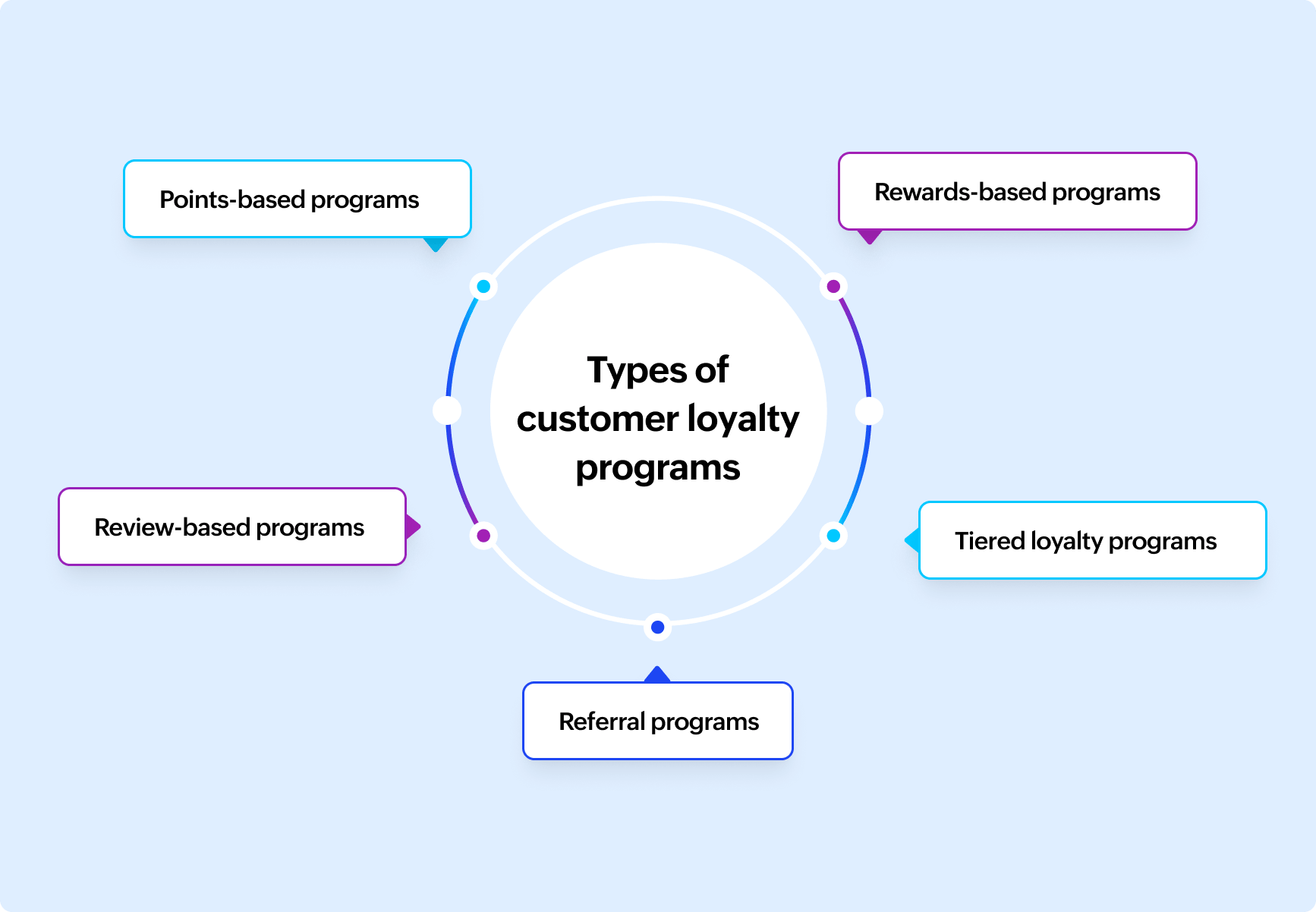
Types of customer loyalty programs
Loyalty programs aren't one-size-fits-all. They can be designed in different formats depending on how you want customers to interact with your brand and what actions you want to encourage.
Here are some of the most common types:
Points-based programs
Customers earn points for purchases, sign-ups, feedback, or engagement tasks, which can later be redeemed for meaningful rewards.
Rewards-based programs
Customers earn perks such as coupons, free shipping, or personalized rewards for completing specific actions.
Review-based programs
Customers receive incentives for sharing reviews or feedback, helping build trust while feeling heard and valued.
Tiered loyalty programs
Customers progress through levels like silver, gold, or platinum, unlocking better rewards as their loyalty increases.
Referral programs
Customers earn rewards for bringing in new customers, turning loyal buyers into brand advocates.
How to build a customer loyalty program
Understanding how to create a loyalty program requires a step-by-step approach.
Define your goals
Start by identifying what you want to achieve: retention, higher average order value, referrals, or engagement. Clear goals shape how you build the program.
Understand your customers
Analyze purchase behavior, frequency, and preferences. Knowing your audience is critical to creating a customer loyalty program that actually resonates.
Choose the right platform
The success of your loyalty program doesn't just depend on strategy; it also depends on the system you use to run it. Selecting the right software makes managing your program simpler, more organized, and scalable as your business grows.
Set meaningful tasks and rewards
Loyalty tasks should be simple, achievable, and engaging, whether it's making a purchase, leaving a review, or referring a friend. Rewards, on the other hand, must feel genuinely valuable.
Tracking and communication
Handle reward tracking, send timely customer notifications, and measure performance. Monitoring engagement and loyalty data helps you analyze the overall effectiveness of your loyalty program.
Promote and monitor
Once your loyalty program is live, promote it consistently across your website, checkout pages, email campaigns, and social channels.
Loyalty program examples
Here are three well-known loyalty programs that showcase different approaches to customer engagement:
Myntra
Myntra Insider blends tiered rewards with experiential benefits, offering early access to sales, priority support, and exclusive fashion experiences. It focuses on creating a sense of status and belonging for loyal shoppers.
Adidas
adiClub rewards customers not just for purchases but also for engagement activities like app interactions and fitness participation. Members gain access to exclusive products, events, and personalized benefits.
Burger King
Royal Perks is a points-based loyalty program where customers earn "crowns" for every purchase. These points can be redeemed for free menu items. The program is simple and designed to encourage frequent visits through instant, tangible rewards.
These examples highlight how brands design loyalty programs around their audience, blending rewards, exclusivity, and engagement to build long-term relationships.
Common mistakes to avoid while building loyalty programs
Even the best ideas can fall short if execution isn't thoughtful. Here are some common pitfalls businesses should avoid when building a loyalty program:
- Overcomplicating the program rules
- Poor reward structure
- Offering rewards that lack real value
- Failing to promote the program properly
- Not tracking performance metrics
- Making redemption difficult
- Poor communication
- Lack of personalization
- Undefined program goals
- Ignoring customer feedback
Avoiding these mistakes helps ensure your loyalty program feels seamless, valuable, and engaging from start to finish.
Why choose Zoho Thrive to build your customer loyalty programs?
Zoho Thrive is a loyalty management platform designed to help businesses launch, manage, and optimize customer loyalty programs effortlessly from a unified dashboard.
With Zoho Thrive, you can:
- Create points-based and tiered loyalty programs
- Configure meaningful tasks and flexible reward rules
- Create and manage reward structures
- Track rewards and send timely customer notifications
- Monitor real-time performance and customer participation
- Analyze program effectiveness with built-in insights
Together, these capabilities help you build a customer loyalty program that is structured, measurable, and designed for long-term growth.
FAQs
How much does it cost to create a customer loyalty program?
The cost varies based on your budget, software, and promotions. However, with Zoho Thrive's free customer loyalty platform, you can launch and manage a loyalty program at no cost, allowing you to see results before making an investment.
What type of loyalty program works best?
There isn't a single format that works for every business. Programs that blend immediate rewards with long-term benefits often perform best, especially when they include personalized or exclusive perks. The strongest loyalty strategies focus on building emotional connections, not just offering discounts.
How do you measure loyalty program success?
Measure metrics like average order value, repeat purchase rate, redemption rate, points earned, opt-in rate, and referral conversions. These insights show how well your program is driving engagement and growth.
Loyalty program vs. referral program: What's the difference?
A loyalty program rewards existing customers for continuing to purchase and engage with your brand. A referral program, on the other hand, incentivizes customers to bring in new buyers. One strengthens retention, while the other supports acquisition.