Imagine this. Two hotels in the same city. Similar room rates. Similar amenities on paper. One consistently fills up on weekends and generates strong repeat business. The other discounts aggressively to stay competitive and still underperforms on occupancy. The gap between them is rarely about the bed or the breakfast. It is often about how guests perceive the value of what they are getting.
Value perception is not the same as price. A guest who pays $250 a night and feels they got a $350 experience will come back. A guest who pays $180 and feels they got a $150 experience will not, regardless of how reasonable the rate looks from the outside. The question for hotel operators is not whether their rates are competitive. It is whether guests walk away feeling that what they received was worth what they paid and what drove that feeling. A value perception survey is how hotels can find this out.
What is perceived value in a hotel context?
Perceived value is a guest’s overall assessment of what they received relative to what they gave up to get it. What they gave up includes not just money but time, effort, and the alternatives they passed over. What they received includes the room itself, service interactions, amenities, location, atmosphere, and the overall experience of the stay.

So what does perceived value actually mean? In simple terms, it comes down to one question guests ask themselves when they’re checking out: was it worth the money? They may never say it out loud, but they’re making that judgment throughout their stay. And price is only one part of it. Many other factors can influence how they feel about what they paid.
Customer perceived value in hospitality research is typically broken into four components:
- Functional value: Does the room do what it is supposed to do? Is it clean, quiet, comfortable, and equipped? Does the Wi-Fi work? Is the shower reliable? Functional value is the baseline. Failing it destroys perceived value regardless of everything else.
- Emotional value: A lot of it comes down to how the guest felt during the stay. It can be anything: was the check-in friendly and welcoming, or did it feel like a transaction? Did someone remember their name? Did the room have details that made it feel considered, or could it have been anywhere? These small things can make a big difference, especially for a hotel trying to position itself as premium.
- Social value: There’s also the question of what staying at the hotel says about the guest. This can be particularly important for business travelers and people choosing a hotel as part of the lifestyle they want to associate with. If a hotel feels like it reflects a certain taste, level of status, or sense of belonging, guests may see more value in it than what they’re getting from the room and its basic amenities alone.
- Price value: Does the rate feel fair relative to what was received? This is the one most hotel operators focus on. Still, Deloitte’s 2025 Value-Seeking Consumer report found that price perception can predict 60 to 90 percent of value perceptions across brands, while 10 to 40 percent of perceived value comes from factors entirely beyond price, including quality, trust, and attitude. For hotels specifically, Deloitte found that atmosphere, room quality, and food and beverage offerings were the top value drivers among brands guests perceived as offering more value.
Why most hotels are measuring the wrong things
Post-stay surveys are pretty common in hospitality. Guests are usually asked about things like cleanliness, comfort, the staff, and whether they would recommend the hotel. That information is useful, especially when a hotel is trying to spot problems with its day-to-day operations. But it doesn’t necessarily tell you whether the guest felt they got good value from the stay.
A guest might give the hotel a five for cleanliness and still walk away thinking they paid too much. Those two things can exist at the same time. A satisfaction survey typically focuses on specific aspects of the experience. Value is more about the overall feeling a guest has when they think about everything they paid for and what they got in return.
That’s why improving individual parts of the stay doesn’t always lead to more repeat bookings. A hotel could train its staff, improve its cleanliness scores, and replace its mattresses, and still have guests who don’t feel the experience was worth the price. Sometimes it’s something much smaller. A $28 parking charge might leave a bad impression. A long line at check-in might frustrate someone who’s traveling for work. Or the room might have been perfectly fine, but nothing about the stay gave the guest a reason to think, “I’d come back here.”
Value perception surveys are designed to surface exactly these gaps.
What a hotel value perception survey should measure
A well-designed value perception survey does not replace a satisfaction survey. It complements it by asking different questions at a different level of analysis.
Overall assessment
Here, the anchor question is:
How would you rate the overall value of your stay for the price you paid?
This gives a headline number but should always be followed by open-ended questions to understand what drove it.
Look at the individual parts of the stay
Ask guests how they felt about the value of the room, food and drinks, amenities, location, and service. This can show where guests feel they got their money’s worth and where they didn’t.
Ask about the price and what they expected
One useful question is whether the stay was better than expected or disappointing for the price they paid. That can help separate two very different problems. Maybe the hotel didn’t deliver what it promised. Or maybe the stay was fine, but the guest came in expecting something else.
Put the hotel next to its competitors
Asking guests how the hotel compares with similar properties at a similar price gives a much clearer picture than asking whether they were simply “satisfied.” People have a better sense of value when they have something to compare it with.
Ask them why
After asking whether the stay was worth the price, let guests explain their answer. They might mention something the hotel team hadn’t thought about, or bring up a small problem that affected how they felt about the stay. Those comments can be more revealing than a rating on its own.
Test whether the value would hold at a higher price
One simple way to do this is to ask whether they would come back if the rate were 15% higher. It gives you a better idea of how strong their connection to the hotel really is. If a small price increase changes their answer, that tells you something about how they currently see the value of the stay.
When to deploy the survey and how to structure it
Asking guests for feedback can make a difference to the answers you get. If you wait too long, they may not remember the smaller details of their stay. Ask too soon, and they may still be reacting to something that happened just before checkout. Here are a few instances where you can send out a value perception survey to your guests:
Post-checkout email (within 2 hours): Sending the survey shortly after the guest leaves is usually a good option. They’ve had a little time to move on from the checkout experience, but the stay is still fresh enough for them to remember it properly.
In-stay pulse check (day 2 of a multi-night stay): Useful for catching issues while there is still time to address them. Should be short, three to four questions maximum, focused on whether expectations are being met.
When a guest books again or interacts with the loyalty program, they’re already showing that they liked the experience enough to come back. That makes it a good time to ask what made them want to return. Their answer can tell you what they actually valued about the hotel.
Keep the post-stay value perception survey to eight to twelve questions. Longer than that and the completion rate drops off, and the responses toward the end become less reliable.
Connecting value perception data to hotel decisions
The output of a value perception survey is only useful when it helps the hotel make specific decisions. Here’s how the findings can translate into action:
If room-level value ratings are low even though cleanliness scores are strong, the problem may have more to do with the room design, technology, amenities, or what guests feel they are getting for the price. That calls for a different fix than a housekeeping issue.
If guests expected more than they got, it’s worth going back to what they saw before they booked. The photos, room descriptions, and pricing online may have given them a different idea of what the stay would be like.
If emotional value scores are consistently lower than functional ones, the issue may be with the service rather than the room. Guests can be happy with the room itself and still feel that the staff interactions were a bit cold, rushed, or impersonal.
If parking, F&B prices, or long waits at check-in keep coming up in the comments, there’s probably something there, but these things may not show up clearly in the survey scores. If guests repeatedly mention the same problem, it is hard to ignore.
Running hotel value perception surveys with Zoho Survey
Hotel groups with properties in different locations face another problem. Feedback from one property needs to be comparable to that from another. Otherwise, it’s difficult to see whether the same issues are coming up across the group.
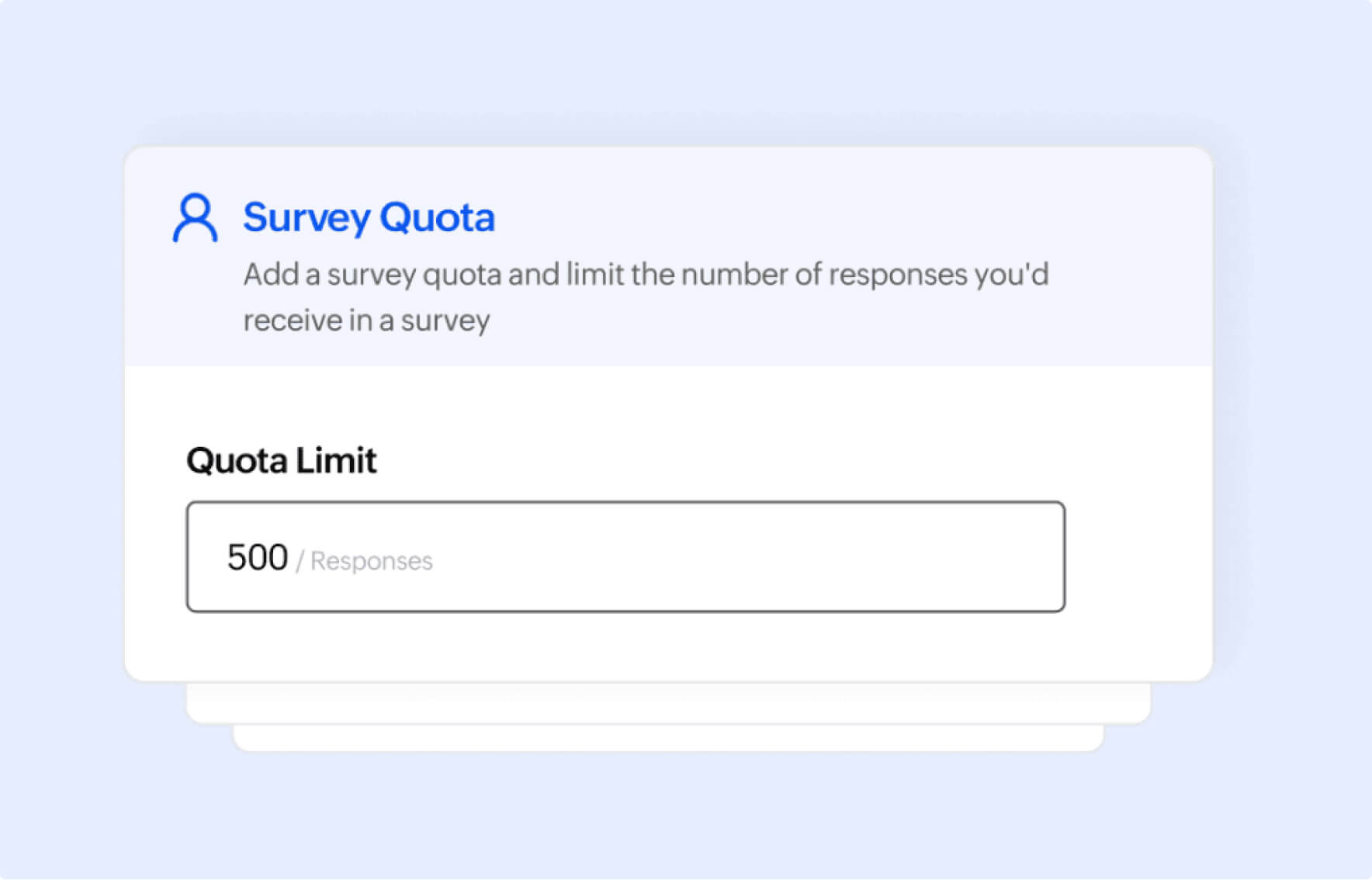
Zoho Survey’s branching logic can help with this. The questions can change depending on things like the type of guest, how long they stayed, or how they booked. A business traveler staying for two nights, for example, doesn’t necessarily need to see the same questions as a couple staying for five nights on holiday. Quota management also helps keep one type of guest from making up most of the responses. With cross-tabulation, the results can then be compared across properties, rate tiers, seasons, or guest types without having to pull everything together manually.
For loyalty program integration, Zoho Survey supports post-stay survey distribution via email with response data that can be linked to guest profiles, allowing the hotel team to identify which guest segments consistently perceive high value and what they have in common.