
Every November, Target's planning teams start pulling on threads that most shoppers never think about: how much snow fell in the Midwest last year, whether a competitor cut prices on outerwear in October, and what a spike in searches for "gift wrap" three weeks before Christmas usually means for register counts in early December.
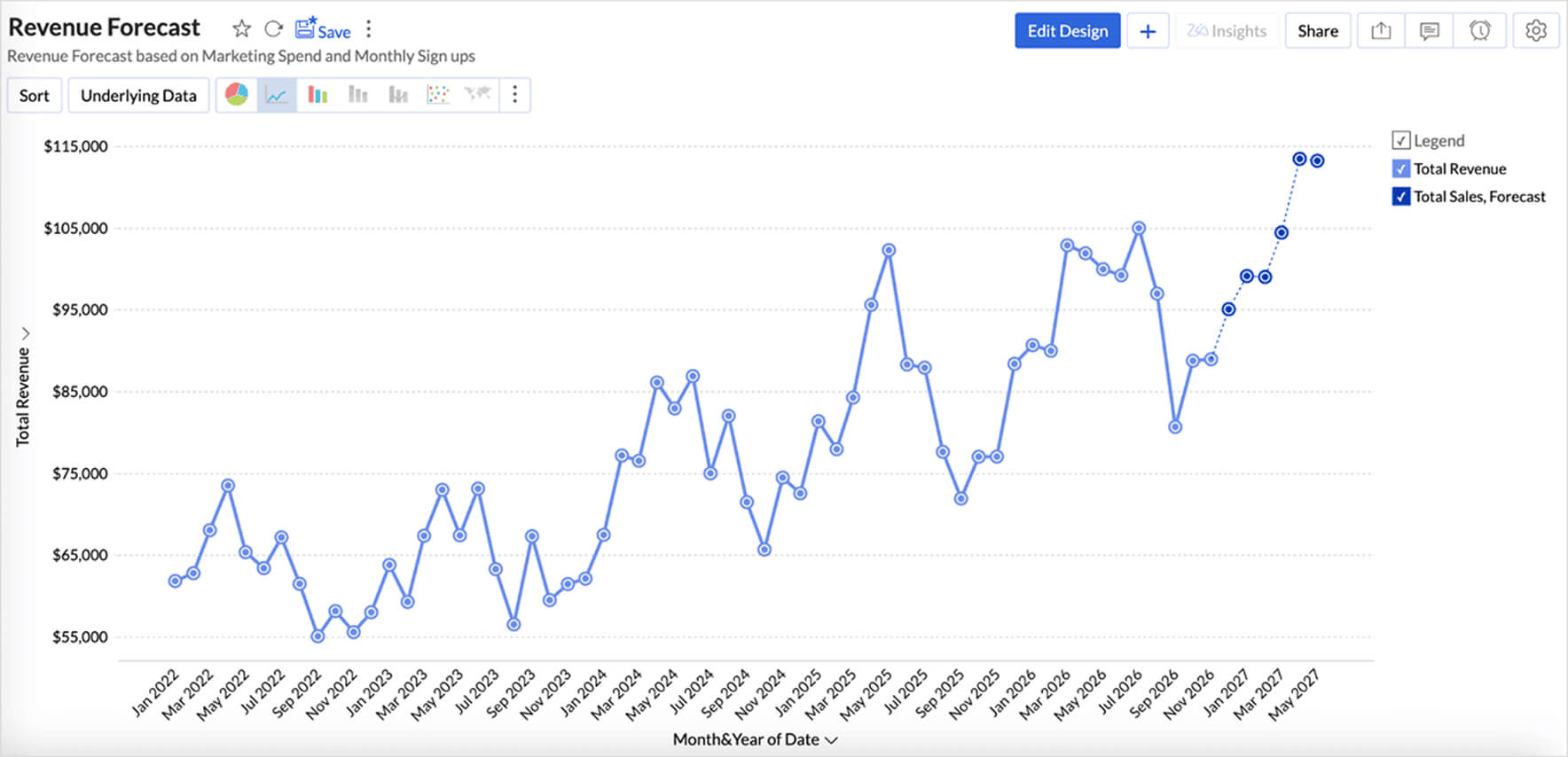
The company folds years of sales history together with real-time signals from its stores and its site, feeding all of it into models that decide how much inventory sits in which warehouse before the rush even starts. That's product demand forecasting doing its actual job: turning a mess of historical and current data into a number a buyer can act on.
Most product teams outside of retail giants don't have Target's data infrastructure, but they have something almost as useful and far cheaper to collect: the people who are about to buy (or not buy) what they're building. That's where surveys come in.
What is demand forecasting, really?
Demand forecasting is the practice of estimating how much of a product customers will want to buy over a given period. This helps companies plan production, staffing, pricing, and marketing around those numbers instead of guessing. It sounds like a supply chain problem (and historically, it was treated as one) owned by operations teams trying to keep warehouses stocked correctly.
But product teams run into the exact same question every time they scope a roadmap: How many people will actually use this feature, upgrade to this tier, or buy this new SKU once it ships? The stakes are just as high. If you overbuild for demand that never shows up, you've burned engineering time and budget. On the other hand, if you underbuild, you scramble to catch up while competitors take the customers you left on the table.
The category is also getting more automated by the year. Gartner projects that 70% of large-scale organizations will have adopted AI-based forecasting to predict future demand by 2030, up sharply from where adoption sits today.

Why surveys matter in demand forecasting
Every forecasting model has a blind spot; it assumes the future will behave similarly to the past. That assumption becomes increasingly unreliable whenever customer preferences change, competitors launch new products, pricing shifts, or entirely new product categories emerge.
Demand forecasting surveys fill this gap by capturing leading indicators of future demand rather than relying solely on historical purchasing behavior. Instead of asking what customers bought, these surveys ask what they're planning to buy, when they expect to purchase, which features matter most, and what factors might prevent them from completing purchases.
Research supports the importance of combining behavioral data with direct customer feedback. According to PwC's Global Consumer Insights Survey, consumers continue to change their purchasing behaviors in response to inflation, technology, and evolving expectations. This makes past buying patterns alone an increasingly incomplete predictor of future demand.
Demand forecasting surveys can help product teams answer questions such as:
- How likely are customers to purchase a new product?
- Which features are essential and which add little value?
- How sensitive is demand to price changes?
- When do customers expect to make a purchase?
- Which competing products are customers considering?
- What barriers could delay or prevent adoption?
These insights are especially valuable before major product launches, pricing changes, inventory planning cycles, and capacity decisions. Rather than replacing traditional forecasting models, surveys strengthen them by adding the customer perspective that operational data often lacks.
Simply put: Sales history tells you what happened; customer demand forecasting surveys help explain what's likely to happen next.
Designing a demand forecasting survey that produces usable numbers
A demand forecasting survey isn't the same instrument as a general customer satisfaction survey. But treating it like one is the most common way teams end up with data they can't actually forecast from. A few things separate a survey built for forecasting from one built for general feedback.
Ask about intent, not opinion
"Would you find this useful?" produces a flood of polite yeses that don't predict purchasing behavior. Asking "How likely are you to buy this in the next three months?" on a concrete probability scale produces something you can model against actual conversion rates once the product ships.
Anchor pricing questions to real numbers
Open-ended willingness-to-pay questions get vague answers. Giving respondents a small set of price points to react to, and watching where demand drops off, produces a curve a pricing team can actually use.
Segment respondents
A current customer's stated intent to upgrade means something different from a cold prospect's interest in a hypothetical product. Blending the two into one top-line number hides the signal that matters most: whether the people most likely to buy actually will.
Size the sample
A survey of 40 people in a Slack community isn't enough to forecast demand for a national launch, but it may be plenty to validate direction before investing in a larger, statistically sound sample later in the process.
Run it at the right moment
Concept-stage surveys, sent before anything is built, are best for testing whether an idea has legs at all. Pre-launch surveys, sent once a product is close to shipping, are better for sizing initial demand and setting inventory or capacity plans. Using the wrong one at the wrong stage produces numbers that look precise but answer the wrong question.
Watch for the gap
Respondents answer forecasting questions the way they'd like to see themselves, not necessarily the way they'll act when a credit card is involved. Framing questions around a specific, near-term scenario (say something like "if this were available next month at this price") rather than a vague future hypothetical narrows that gap somewhat, though it never closes it entirely. That's a reason to treat survey output as a directional input rather than a finished number on its own.
Demand forecasting survey questions product teams should be asking
The effectiveness of a demand forecasting survey depends largely on the questions it asks. Rather than collecting general opinions, the survey should uncover buying intentions, expected behavior, and the factors most likely to influence future purchasing decisions.
Purchase intent
These questions estimate the likelihood that customers will purchase the product:
- How likely are you to purchase this product within the next six months?
- If this product became available today, how likely would you be to buy it?
- How confident are you that this product meets your needs?
- How frequently would you expect to use this product?
Buying timeline
Timing is just as important as purchase intent when forecasting demand. Ask:
- When do you expect to purchase a product like this?
- What event would most likely trigger your purchase?
- Are you actively researching solutions in this category?
- Is your purchase planned or dependent on future circumstances?
Feature preferences
Understanding which features drive purchase decisions helps forecast demand for different product configurations. Ask questions like:
- Which feature is most important when choosing a product like this?
- Which feature would most influence your buying decision?
- Which proposed feature offers the least value to you?
- Are there any capabilities you believe are missing?
Competitive alternatives
These questions identify where future demand is likely to come from:
- Which product or brand are you currently using?
- What would motivate you to switch to a new solution?
- Which competitors are you considering?
- What do you like most about your current product?
Price sensitivity
Price directly affects purchasing behavior and forecast accuracy. Consider asking:
- At what price would this product become too expensive?
- At what price would you consider it a good value?
- Would you still purchase this product if the price increased by 10%?
- Which pricing model would you prefer (one-time purchase, subscription, usage-based, etc.)?
Barriers to adoption
Identifying obstacles helps product teams forecast not only demand but also potential adoption challenges. These questions help:
- What concerns would prevent you from purchasing this product?
- What additional information would you need before making a decision?
- Which factor is most likely to delay your purchase?
- What would give you greater confidence in choosing this product?
Using Zoho Survey for demand forecasting
Zoho Survey gives product teams the tools they need to collect reliable demand signals before making high-impact business decisions. Teams can build customized demand forecasting surveys using a wide range of question types, including Likert scales, ranking questions, matrix questions, multiple-choice questions, and open-ended responses, allowing them to measure purchase intent, feature preferences, price sensitivity, and expected buying timelines within a single survey.
Skip logic and question branching ensure respondents only see questions relevant to their previous answers, creating a smoother survey experience while improving data quality. Once responses begin coming in, real-time reports and cross-tab analysis help teams compare demand across customer segments, industries, locations, or demographics without manual analysis. Survey responses can also be exported or integrated with Zoho Analytics for deeper forecasting and reporting.
Zoho Survey is now available with a seven-day, credit card-free Enterprise trial that gives product teams full access to the advanced features they need to build, distribute, and analyze demand forecasting surveys from day one. Sign up for free today!
The bottom line
Demand forecasting is no longer just about analyzing yesterday's sales; product teams also need visibility into what customers are likely to buy tomorrow. Surveys provide that forward-looking perspective by uncovering purchase intent, feature preferences, pricing expectations, and adoption barriers that historical data can't reveal on its own.
When combined with traditional forecasting models, survey insights help teams make more confident decisions about product development, inventory planning, pricing, and production. Organizations that consistently listen to customers before making major product decisions are better positioned to reduce forecasting errors, respond to market changes, and launch products that align with real customer demand.