Risk and opportunity management
Prevention is the strongest insurance against loss. The Risk & Opportunity module in Zoho Sprints helps agile teams minimize threats and maximize value, so you can make faster, better-informed decisions that align with your organization's risk appetite and tolerance thresholds.
Get Started
Manage risk tolerance
Capture opportunities quickly
Identify risks proactively
Strengthen business resilience
Risk and opportunity matrix
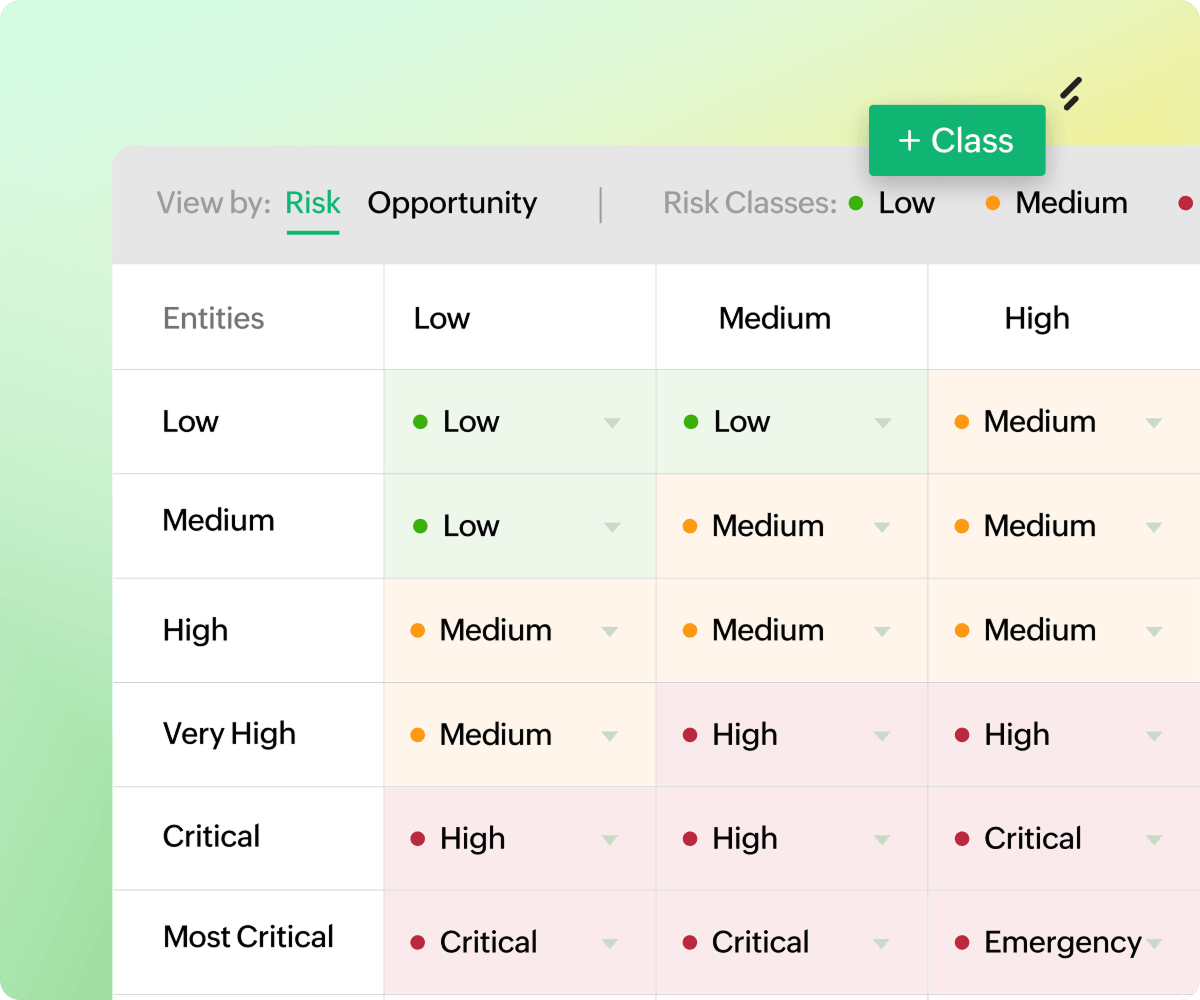
Effective risk and opportunity management starts with a clear assessment. The Matrix section enables your team to evaluate items by probability and impact, determine severity, and assign a defined class: low, medium, or high. This clarity helps you understand risk exposure, uncover hidden opportunities, and define focused response plans.
Centralized register
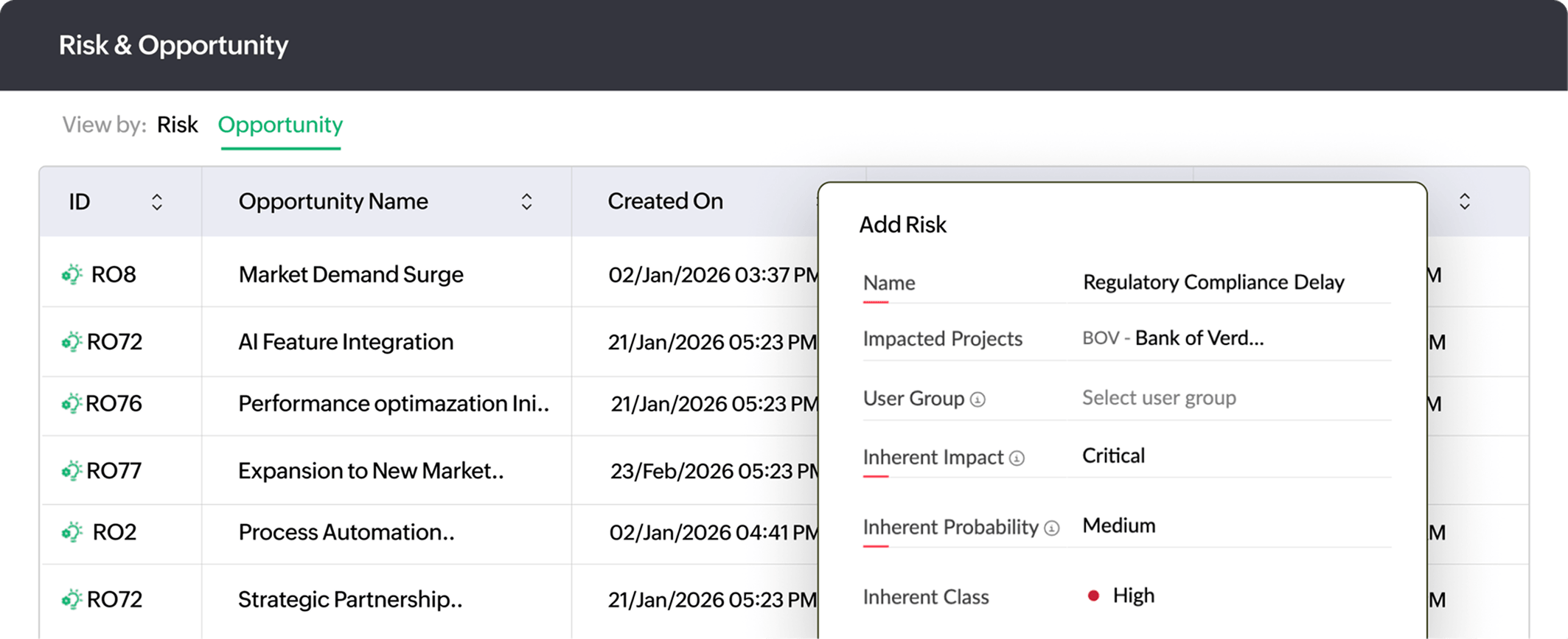
Record risks and opportunities in one place to prevent scattered tracking and delayed decisions. Your team can create multiple risks and opportunities, define inherent probability and impact, assign ownership, link them to the impacted project, and capture key details like the identification date, due date, and status.
Mitigation and action plans
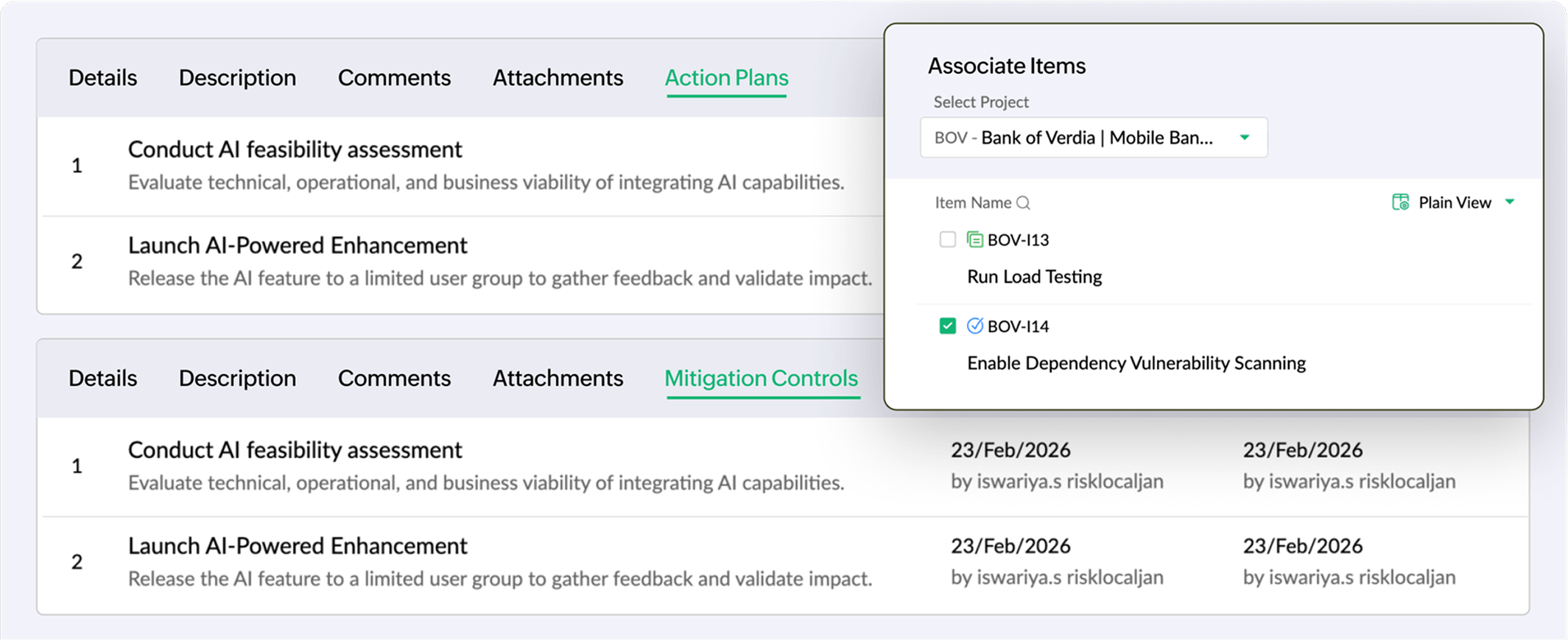
Plan clear responses to address risks and capitalize on opportunities. Create multiple mitigation controls and action plans, and associate existing or new work items to reduce risk exposure and drive follow-through.
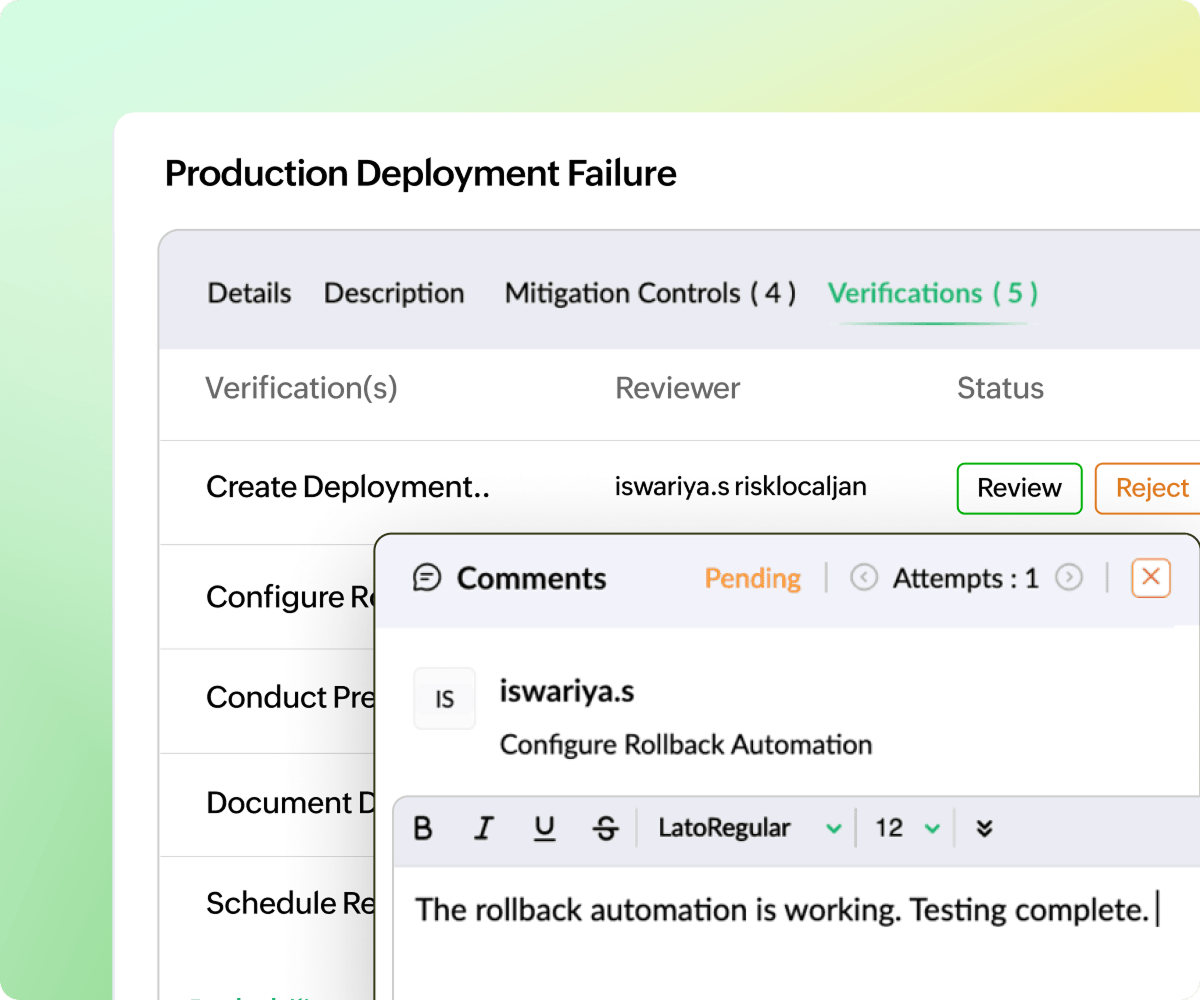
Execution and impact validation
Confirm whether your response strategies are delivering the intended impact. Assigned reviewers can assess linked work items to ensure mitigation controls and action plans are executed accurately and effectively.
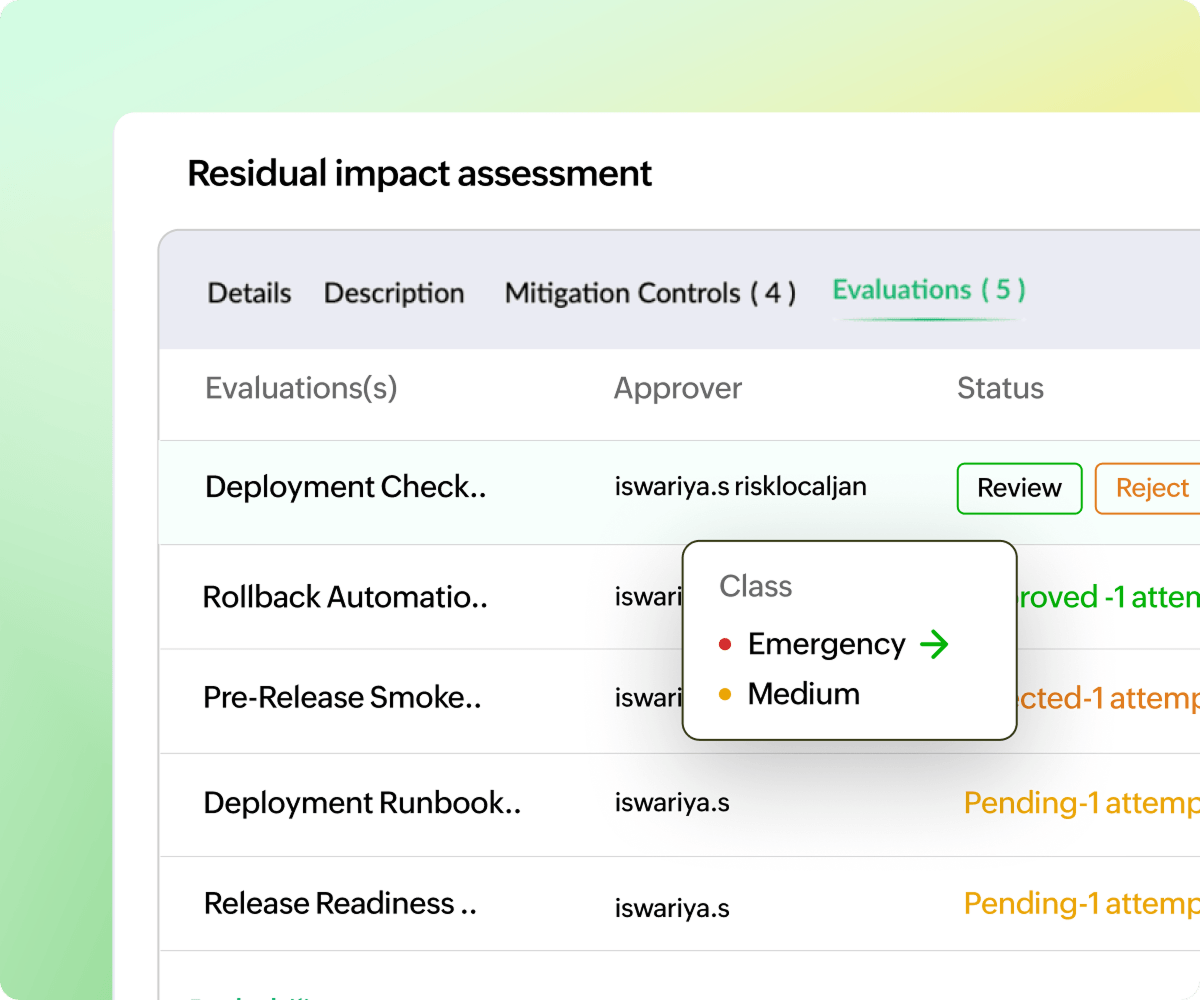
Residual impact assessment
Measure what remains after taking action. Review risks and opportunities after executing response plans, record residual probability and impact, and confirm whether risks are within tolerance and opportunities remain on track.
Risk and opportunity dashboard
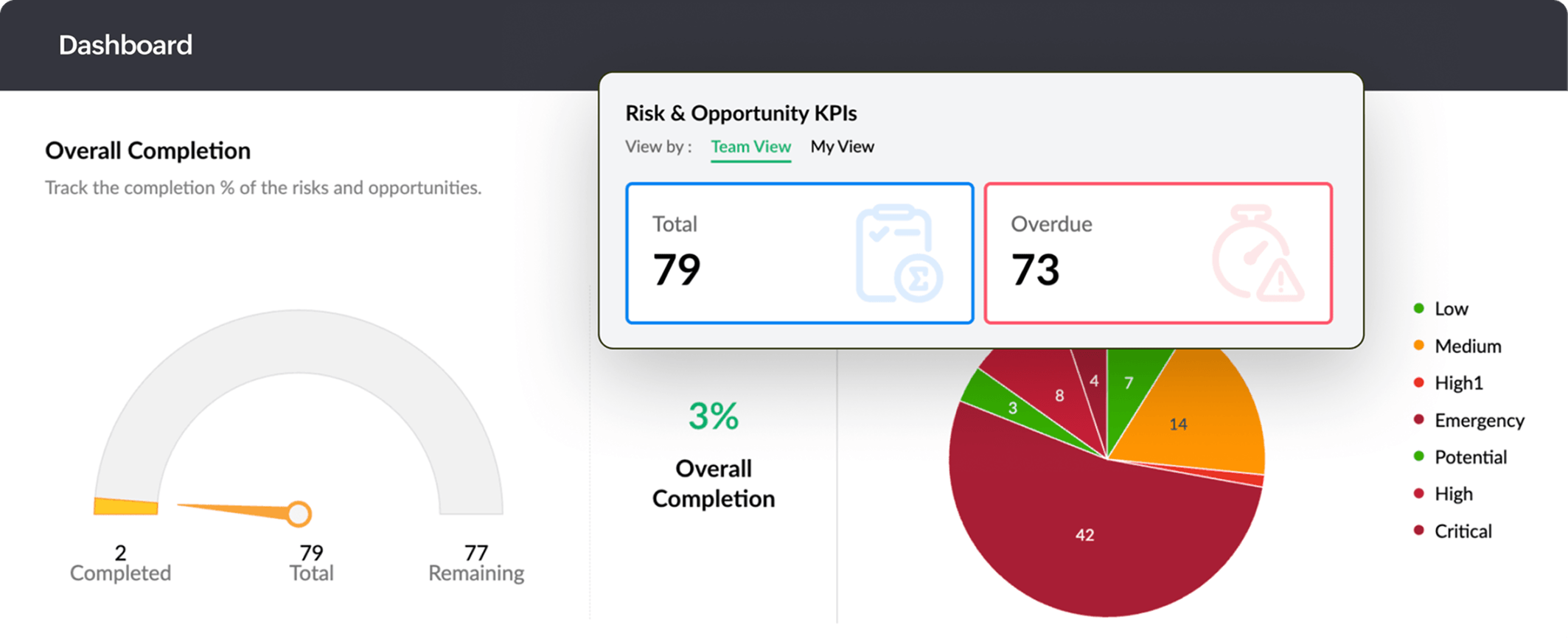
Track completion, evaluate KPIs, and monitor overall statistics for inherent and residual classes across multiple projects in your workspace. Zoho Sprints provides a comprehensive dashboard to visualize progress, user engagement, and other key metrics in one place.