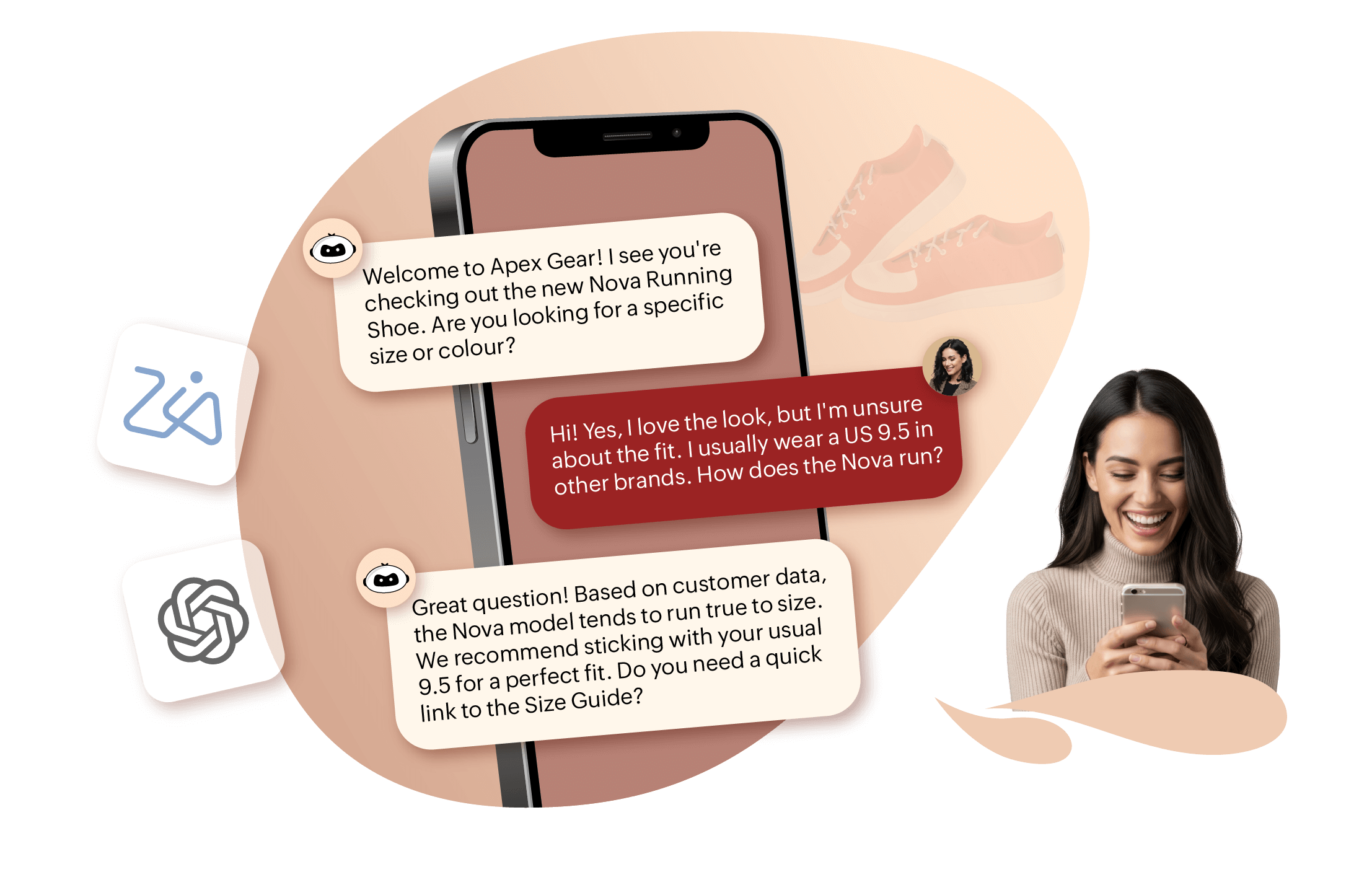
Live chat has been around for years. Most websites have it, and most customers expect it. Yet, even with live chat, visitors often face delays, inconsistent responses, or unanswered questions—especially outside business hours. Technology alone doesn’t solve the problem; how it’s used by customers does.

This is where AI in live chat changes the game. Instead of just being a digital “wait in line” tool, AI understands what a visitor really needs, provides contextual guidance, and escalates to a human agent when needed. With platforms like our own Zoho SalesIQ, this becomes even more powerful—its AI engine interprets intent, sentiment, and behavior in real time to deliver faster, more accurate support. It doesn’t replace human touch—it enhances it.


Why traditional live chat falls short

Traditional live chat without AI has several limitations:

  • Limited availability: Agents work in shifts; customers shop 24/7. Visitors at midnight often see “We’ll get back to you later.”
  • High response time: During sales or festive seasons, queues pile up. An ecommerce store might lose dozens of carts in the time it takes one agent to answer.
  • Multilingual limitations: Traditional live chat struggles to support global customers who speak different languages. Agents may not be fluent in every language your audience uses, leading to the need for expensive language-specific teams. A retail brand selling to LATAM, MENA, and APAC customers can’t realistically hire native speakers for every region—and this often results in lost sales and frustrated visitors.
  • Agent burnout: A SaaS company with global customers may find agents stretched thin, leading to inconsistent tone and errors.
  • Scaling costs: Adding more staff to meet demand means higher hiring and training costs. A growing travel portal, for example, can’t afford a 2x headcount every peak season.
  • Unclear performance: Without analytics, managers can’t track how effective conversations really are.

💡 SalesIQ tip: Track real-time chat volume, response time, and agent performance using live chat metrics to spot where automation can help.


What is meant by having AI in live chat?

AI in live chat means embedding intelligence into every customer interaction. Instead of human-only chat, SalesIQ’s AI bots understand intent, respond instantly, and hand off to agents when deeper conversations are needed.

AI in SalesIQ’s live chat works by:

  • Interpreting user intent with Natural Language Processing (NLP)
  • Responding instantly using curated knowledge (FAQs, KBs, or integrated apps)
  • Escalating to humans when depth or empathy is required
  • Learning from previous chats to improve future responses
  • Detecting sentiment and routing conversations intelligently

In practice, an AI live chat system listens to visitor queries, provides helpful replies (drawing on FAQs, product info, etc.), and escalates complex issues to humans when needed. AI chat is about augmenting live chat with “always-on” automation that understands and answers customers around the clock.


AI features in SalesIQ’s live chat

Modern AI live chat systems like Zoho SalesIQ combine many smart features to automate and optimize the customer journey:

  • NLP: Chatbots use NLP to understand user intent and phrasing. This lets the system detect what a visitor wants (e.g., order status, pricing) and provide accurate answers. SalesIQ bots understand visitor queries in plain language—no rigid keywords.

    Example: A visitor types, « Puis-je retourner mes chaussures si elles ne me vont pas? (Can I return my shoes if they don’t fit?)». Instead of searching for keywords, the bot understands intent (“returns policy”) and provides the right answer instantly.

  • Zobot—SalesIQ’s codeless bot builder: Create AI chatbots using Zobot, the drag-and-drop builder inside SalesIQ. Choose from templates or custom workflows— no coding needed. You can use templates or create custom chatbots quickly, enabling teams to launch AI bots in minutes.

    Example: A small retail store owner with no IT team can build a returns/exchange bot in minutes using drag-and-drop flows in Zobot.

  • Hybrid chatbots and AI models: Zoho SalesIQ supports both rule-based flows and AI-based models. You can start with a standard decision-tree bot, then add AI: for instance, plug in a ChatGPT model to answer queries beyond your static FAQs. This hybrid approach ensures reliability (for common questions) while offering rich, human-like dialogue for unexpected queries.

    Example: A SaaS company plugs in OpenAI’s GPT model to handle complex, open-ended questions like “What makes your platform better than competitors?” while letting rule-based bots handle FAQs.

  • Bot building across platforms: SalesIQ allows you to leverage other bot-building platforms for advanced automation. You can integrate bots built on third-party platforms into your SalesIQ workflow, combining the strengths of multiple AI engines. This flexibility lets businesses pick the right AI model for their specific needs.

    Example: A healthcare provider can use a HIPAA-compliant Dialogflow bot for patient queries and connect it to SalesIQ, while using SalesIQ's Answer Bot for general FAQs.

  • Automations and workflows: AI live chat can trigger back-end actions. SalesIQ lets you automate tasks like adding leads, creating support tickets, or scheduling demos directly from the chat. These integrations save time by completing routine tasks automatically as conversations happen. For example, when a visitor provides an email, the bot can automatically create a lead in CRM, send a follow-up email, or generate a support ticket—all without human intervention.

    Example: A real estate bot qualifies leads by asking budget, location, and move-in timeline—then automatically creates a CRM record and books a property viewing.

  • Multilingual and multi-channel support: AI chatbots can converse in many languages and on different platforms. Zoho SalesIQ’s AI chat supports real-time translation and works across web chat, WhatsApp, Instagram, Facebook Messenger, and more. You create one bot flow that works globally, instantly switching languages or channels to match the customer.

    Example: A travel site receives inquiries in Spanish, French, and Japanese. SalesIQ instantly translates queries and replies in the visitor’s language across web chat, WhatsApp, and Instagram DMs.

  • Sentiment analysis and predictive routing: SalesIQ’s AI detects customer emotions—positive, negative, or neutral—during conversations and uses predictive intelligence to route them to the most suitable agent or department based on sentiment, chat history, and behavior. This ensures faster responses, empathetic handling of critical cases, and overall better customer satisfaction.

Zoho SalesIQ’s AI features also include advanced analytics. SalesIQ uses AI to analyze chat data, spotting trends or drop-offs in bot conversations to improve performance. By leveraging external AI engines (IBM Watson, Zia, Dialogflow, etc.) as plug-ins, SalesIQ ensures its chatbots stay on the cutting edge of language intelligence.


Key benefits of AI-powered live chat

AI brings far more to live chat than faster replies—here are the capabilities that truly transform customer engagement.

Turning conversations into customer intelligence

Every visitor interaction becomes a data point that reveals patterns: what products attract the most questions, where visitors hesitate, and which answers convert best. With SalesIQ’s visitor tracking and lead scoring, businesses can go a step further: identify high-intent visitors in real time, monitor their navigation paths, and feed this insight into CRM or marketing systems. Over time, your chat system evolves into a live source of customer intelligence, helping you refine campaigns, onboarding flows, and even product strategy.

Engaging visitors before they ask

Traditional chat waits for visitors to initiate. AI anticipates. With SalesIQ’s Triggers, you can detect behavior—time spent on a page, scroll depth, cart value—and proactively start meaningful conversations. The AI assistant reaches out to the right visitor, at the right moment, with personalized context, increasing engagement and reducing drop-offs.

Personalization that feels natural

AI remembers context — not just within a session, but across visits and channels. Combined with SalesIQ’s visitor history, CRM integration, and custom bot flows, it can greet returning customers by name, recall past conversations, and tailor answers based on their preferences or purchase stage. This creates a sense of continuity that most static chat systems can’t offer.

Seamless handoff to humans when it matters most

AI doesn’t try to do everything. Its strength lies in knowing when to pass control. With SalesIQ’s sentiment analysis and predictive routing, emotionally charged or complex queries are automatically routed to the right agent. Agents receive full context—chat history, visitor data, and sentiment cues—ensuring quick, empathetic resolutions and higher satisfaction.

Building a system that learns with your business

Unlike rigid chat flows, SalesIQ’s AI and chatbot framework grows smarter with every interaction. It adapts to changing FAQs, seasonal trends, and product updates — reducing manual upkeep for your team. As it learns from outcomes, it fine-tunes responses and routing logic automatically, keeping your customer engagement both current and effective. And when the bot doesn’t have an answer, you stay in control—you can choose whether it should transfer to an agent, capture details, trigger a workflow, or offer alternate suggestions.

For general live chat perks, see live chat benefits and live chat checklist.


Use cases: AI in live chat across industries

SalesIQ's AI in live chat can be used in virtually any industry to automate support and sales:

  • Manufacturing: Share product catalogs, qualify B2B leads, provide order/shipment updates and technical support via chat.
  • Ecommerce: Recommend products based on browsing, answer sizing or stock questions, and reduce cart abandonment with instant help.
  • Travel and Hospitality: Book trips, send itinerary details, handle cancelations, and give 24/7 assistance even when staff are offline.
  • Real Estate: Instantly qualify property inquiries, schedule viewings, provide financing info or area details, and answer FAQs around the clock.
  • Finance: Respond to questions about accounts, transactions or product offerings (loans, insurance, etc.), and route complex issues to human agents.
  • Restaurants and Retail: Take table reservations or food orders, handle menu questions, and update on delivery/pickup status without a phone call.
  • Education: Provide course information, answer admission FAQs, assist with enrollment steps or schedule tours anytime.
  • Automotive and Telecom: Schedule test drives or service appointments, suggest phone/data plans to prospects, offer billing support and outage updates, and create tickets for advanced help.
  • SaaS and Tech: Capture signups, qualify trials, schedule demos, and provide instant onboarding help and troubleshooting around the clock.
  • Any business that needs instant engagement with visitors can leverage AI in live chat to save time and capture more opportunities.


AI-powered live chat vs. Traditional live chat

AI chat and human live chat differ in key ways:

  • Response speed: AI chatbots respond instantly every time. Human agents are fast too, but response times can vary depending on current chat volume and workload.
  • Query handling: AI bots excel at answering straightforward questions quickly, while human agents are better at handling complex or nuanced issues.
  • Personalization and empathy: AI chat offers a friendly experience, but it can’t truly feel the customer’s mood or tailor emotional support. Humans naturally adapt tone and provide empathy in conversation.
  • Availability: AI chat is available 24/7 for any visitor anywhere. Human live chat is limited to support hours (unless you build a huge global team).
  • Consistency: Chatbots deliver consistent answers every time. Humans may slip or give varied information after long shifts; chatbots never get tired.
  • Cost and scalability: Maintaining a large, multilingual human team is expensive. An AI chat solution can scale up easily (handling many chats at once) without proportional cost increases.
AttributeAI-powered live chatTraditional live chat
Availability24/7 instant responseLimited to business hours
ScalabilityHandles 1000s of chats simultaneouslyNeeds more staff for higher volume
ConsistencySame tone and info every timeVaries by agent fatigue or shift
Cost efficiencyOne bot = dozens of agent hours savedHigh staffing and training costs
PersonalizationLearns visitor behavior; proactive engagementReactive; waits for customer to ask
IntegrationAutomates CRM, helpdesk, and workflowsManual entry required

In practice, the best solution is often hybrid: use AI to handle routine inquiries, and let human agents jump in for escalations. This way, you get the efficiency of AI and the personal touch of humans working together.


Wrap up: The AI power of Zoho SalesIQ

To wrap up, Zoho SalesIQ transforms the traditional live chat experience by deeply integrating Artificial Intelligence across its platform.

This powerful combination of human agents and Zobot (AI-powered chatbots) ensures customers receive instant, personalized, 24/7 engagement.

To add it up, SalesIQ uses AI to streamline operations through:

  • Workflow automation: Automatically capturing lead data into CRM, raising support tickets, and booking appointments based on visitor input.
  • Actionable intelligence: Providing agents with real-time alerts on key visitor behaviors and offering managers comprehensive live performance analytics.

By leveraging its own intelligence (like Zia) and integrating with external engines (like ChatGPT and IBM Watson), SalesIQ effectively turns every customer chat into a strategic opportunity for lead capture and conversion.

Get started

FAQs on AI in live chat

Can AI live chat replace human agents?

AI live chat is a powerful complement to human support, but it doesn’t fully replace humans. AI bots can handle many routine queries automatically, but they lack the empathy and deep understanding of a live agent. In practice, complex or sensitive customer issues should be handed off to human agents to ensure quality and care.

How does AI live chat improve sales and conversions?

AI live chat boosts sales by engaging visitors instantly and guiding them through the funnel. Chatbots can answer product questions, suggest relevant items, and recover abandoned carts in real time. By qualifying leads and automating follow-up (such as scheduling demos or applying discount codes), AI chat shortens the sales cycle and increases conversion rates.

Is AI live chat secure?

Yes. Reputable AI chat solutions use strong security measures to protect data. For example, Zoho SalesIQ encrypts all chat messages and data both in transit and at rest, and complies with industry standards (even offering HIPAA support for healthcare chats). Your customer’s personal information stays secure under these protocols.

How easy is it to integrate SalesIQ into my website

Integration is very easy. Zoho SalesIQ provides a small JavaScript snippet that you add to your website’s HTML. Once added, the live chat widget is immediately active on your site. From there, you can customize its appearance and settings via the SalesIQ dashboard without any additional coding.

Does AI live chat support multiple languages?

Absolutely. AI live chat platforms typically support multilingual interactions. Zoho SalesIQ, for example, offers real-time chat translation and can detect visitor language on the fly. You can set up chatbots to work in multiple languages (SalesIQ supports over 30), allowing global customers to interact in their preferred language.