

- HOME
- Accounting
- How to become a Chartered Accountant in India: A step-by-step guide
How to become a Chartered Accountant in India: A step-by-step guide
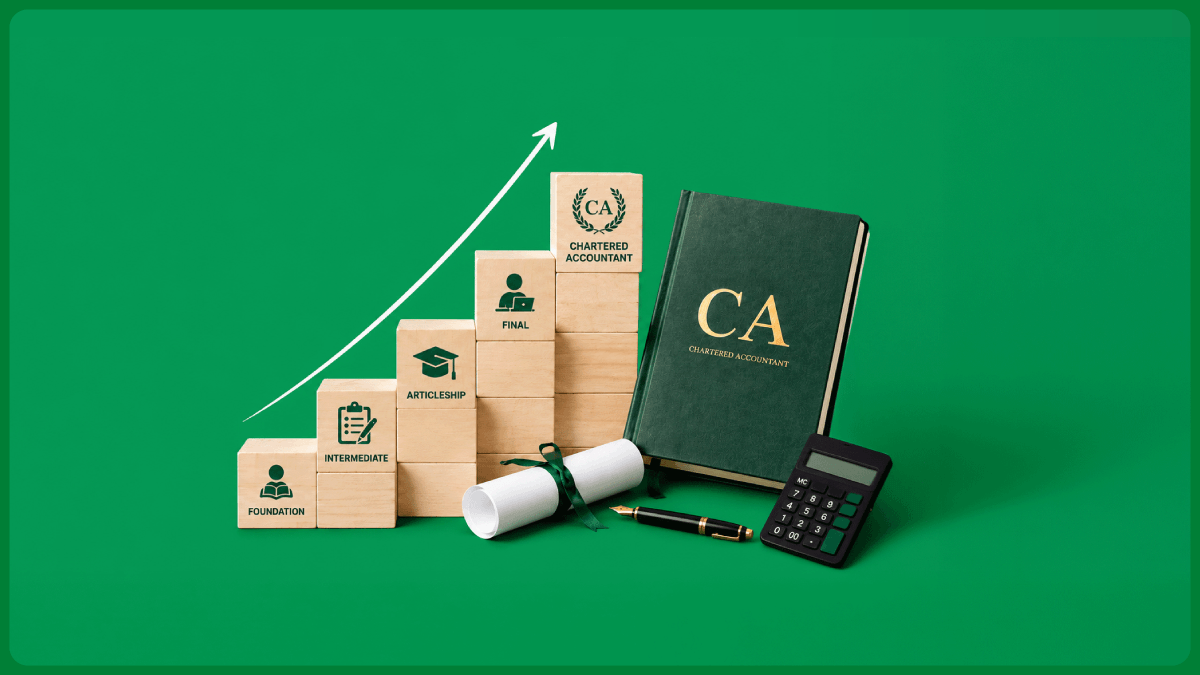
Every year, lakhs of students across India dream of becoming Chartered Accountants. It's a journey that demands dedication, resilience, and a commitment to lifelong learning. At the end of it lies more than a qualification, it opens the door to becoming a trusted advisor who helps businesses navigate finance, compliance, and growth.
Yes, becoming a CA in India is one of the most respected and challenging professional journeys you can take. It requires discipline, consistency, and the ability to survive conversations where relatives repeatedly ask, "So, when are you clearing your next level?"
But beyond the exam pressure and study schedules lies a profession that shapes businesses, influences financial decisions, and helps organizations navigate an increasingly complex world of taxation, compliance, reporting, and growth.
If you're wondering how to become a chartered accountant in India, this guide will walk you through the process, step by step.
Why become a chartered accountant?
Let's start with the obvious question.
Why do thousands of students choose the CA path every year despite knowing it's demanding? Because the rewards extend far beyond the designation.
Chartered accountants are among the most trusted business advisors in the world. They help businesses stay compliant, optimize taxes, improve profitability, manage risks, raise capital, and make informed decisions.
Today, CAs are not just auditors and tax professionals. They are startup advisors, CFOs, consultants, entrepreneurs, fintech leaders, and strategic business partners.
In a world where every organization runs on financial decisions, understanding finance is a superpower. Chartered accountancy helps you build it.
Step 1: Register for the CA Foundation course
The CA journey typically begins after Class 12 with the CA Foundation course.
Think of Foundation as the entry gate into the profession. It introduces you to the fundamentals of accounting, business laws, economics, and quantitative aptitude.
Students from commerce, science, and the arts backgrounds can all pursue the CA path. While commerce students may have a slight head start in accounting concepts, many successful CAs have come from non-commerce backgrounds.
At this stage, the objective isn't mastery. It's understanding the language of business. Once you start seeing accounting everywhere, there's no going back.
Step 2: Clear the CA Intermediate course
After clearing the Foundation course, you'll move to the CA Intermediate course.
This is where the course becomes more professionally focused. You'll begin exploring the technical areas that form the backbone of the accounting and finance profession.
Subjects include:
Accounting
Corporate and other laws
Cost and management accounting
Taxation
Auditing
Financial management
Intermediate often marks the transition from academic thinking to professional thinking. You'll start understanding why tax planning matters, how businesses make financial decisions, and why auditors insist on documentation for what feels like everything.
More importantly, you'll learn one of the most valuable lessons in the CA journey: Consistency beats intensity. Studying for eight hours a day for one week rarely beats studying two hours a day for six months.
Step 3: Begin your articleship
Ask any qualified CA what taught them the most during their journey and many will say it was their articleship.
Articleship is practical training under a practicing chartered accountant. This is where accounting moves from theory to reality. You'll work on real assignments, interact with clients, and learn how businesses operate behind the scenes.
Depending on your firm and assignments, you may gain exposure to:
Statutory audits
Internal audits
Tax compliance
GST filings
Financial reporting
Due diligence
Business advisory
Risk assessments
Articleship teaches technical skills, but it also develops professional skills that no exam can measure. You'll learn how to manage deadlines, communicate with clients, solve problems under pressure, and navigate situations where there isn't a model answer available.
For many professionals, articleship becomes the most transformative part of the CA journey.
Step 4: Prepare for the CA Final
By the time you reach the CA Final, you've already built a strong foundation of knowledge and practical experience. Now comes the final academic challenge.
The CA Final syllabus focuses on advanced topics such as:
Financial reporting
Advanced auditing
Direct and indirect taxation
Corporate and economic laws
Strategic financial management
Unlike earlier levels, success here depends heavily on your ability to apply concepts in complex business situations. The examination expects you to think like a professional—not just a student. Fortunately, your articleship experience often makes these concepts easier to understand because you've already seen many of them in action.
Step 5: Become a chartered accountant
After clearing the CA Final and completing the training requirements prescribed by the ICAI, you'll be eligible to become a member of the Institute of Chartered Accountants of India.
And just like that, after years of preparation, practical training, mock tests, revisions, and enough highlighters to open a stationery store, you can earn one of India's most respected professional designations: chartered accountant.
It's a moment every CA remembers, not because the journey ends, but because a new one begins.
How many years does it take to become a CA in India?
For students starting after Class 12, the journey generally takes around 4.5 to 5 years under the standard pathway.
The exact timeline depends on examination schedules, training requirements, and individual progress.
While the journey requires patience, it also provides something many qualifications struggle to offer: a powerful combination of technical knowledge and real-world experience.
CA vs. CMA vs. ACCA: Which qualification should you choose?
Many students compare CA with certified management accountant (CMA) and Association of Chartered Certified Accountants (ACCA) before making a decision.
Choose CA if you want to:
Build a career in accounting, auditing, taxation, or practice.
Work closely with Indian regulatory and tax frameworks.
Become a practicing professional.
Pursue leadership roles in finance.
Choose CMA (Certified Management Accountant) if you want to:
Focus on cost accounting and management accounting.
Work extensively in manufacturing and operational finance.
Specialize in cost optimization and performance management.
Choose ACCA (Association of Chartered Certified Accountants) if you want to:
Build an internationally focused accounting career.
Work with multinational organizations.
Explore opportunities in global finance and reporting.
There's no universally "best" qualification. The right choice depends on your career goals, industry interests, and geographic aspirations.
What can you do after becoming a CA?
The image of a chartered accountant has changed dramatically over the last decade. Today's CAs are helping businesses navigate AI adoption, digital transformation, global expansion, regulatory changes, and strategic growth.
Career opportunities include:
Public practice
Audit and assurance
Tax consulting
Corporate finance
Investment banking
Risk advisory
Business consulting
Financial planning
Startup advisory
CFO and finance leadership roles
Global capability centers (GCCs)
Fintech and SaaS companies
Some CAs build firms, some build careers, and some build companies. The qualification gives you the flexibility to choose.
The skills that will define the next generation of CAs
Technical expertise will always be important, but the most successful CAs of the future will bring much more to the table.
Businesses today expect professionals who can combine financial knowledge with technology, communication, and strategic thinking. That means developing skills such as:
Business advisory
Data analysis
Communication
Problem-solving
Technology adoption
Client management
AI-assisted accounting workflows
The future belongs to professionals who can transform financial data into business insights. And that makes chartered accountants more relevant than ever.
Frequently asked questions
Can I become a CA after Class 12?
Yes. The most common pathway is to register for CA Foundation after completing Class 12 and then progress through Intermediate, articleship, and the Final.
Can science students become chartered accountants?
Absolutely. Students from science, commerce, and arts backgrounds are all eligible to pursue CA.
Is chartered accountancy difficult?
CA is challenging, but it is achievable with consistent preparation, discipline, and a structured study plan.
How many attempts are allowed in CA?
Students can continue appearing for examinations subject to the ICAI's regulations and registration validity requirements.
Is CA better than an MBA?
They serve different career goals. CA focuses on accounting, taxation, auditing, and finance, while an MBA provides broader management and business education.
Can a CA start their own firm?
Yes. Many qualified chartered accountants establish their own practice and provide audit, taxation, compliance, and advisory services to clients.
Final thoughts
The CA journey isn't easy; it wasn't designed to be. That's precisely why the qualification continues to command respect across industries.
Every exam you clear, every audit file you review, every tax return you prepare, and every challenge you overcome contributes to becoming a professional who can be trusted with some of a business's most critical decisions.
If you're considering chartered accountancy, don't focus solely on the letters you'll eventually add after your name. Focus on the knowledge, perspective, and opportunities you'll gain along the way.
Becoming a chartered accountant isn't just about earning a designation. It's about learning how businesses work, how decisions are made, and how you can help organizations grow with confidence.