






When city systems don't share the right data, residents feel the friction.
Rising resident expectations and growing service volumes across Canada are testing the limits of municipal technology. Software is often procured one department at a time, solving specific pain points as they arise. The result: residents repeat themselves as operators re-enter data across systems. Requests stall between siloed departments. Leadership makes decisions based on inconsistent data sources.
The challenge isn't just connecting information across service lines. It's doing so while protecting the data governance and access controls that sensitive records require.
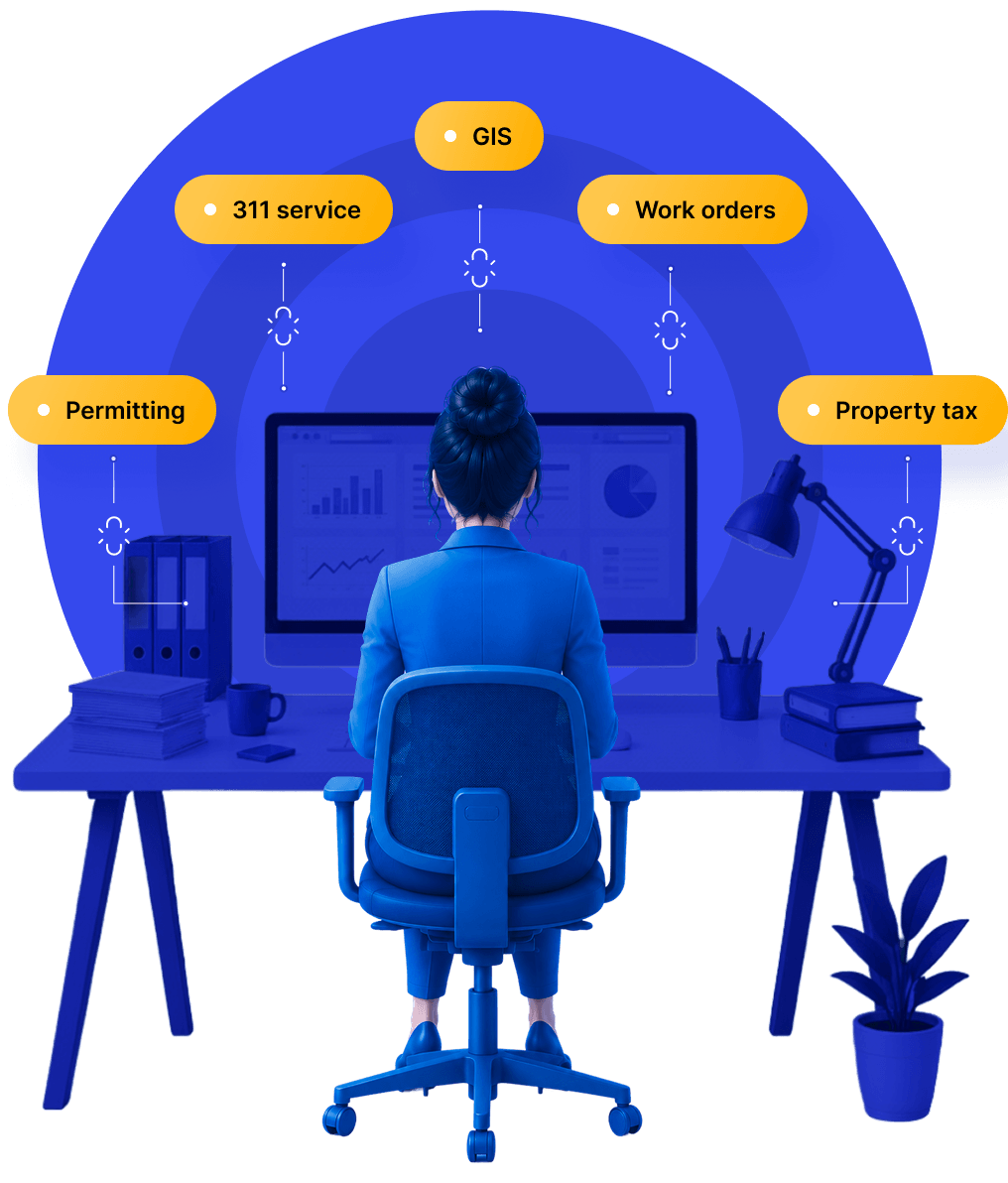
Zoho connects every part of the Municipal Experience.
The Municipal Experience framework (MX) is Zoho's approach to digitizing and improving your city's interconnected experiences. Residents resolve more issues on first contact. Businesses open more quickly. Operators save time for more impactful work. Leaders see a real-time view of the performance data that proves it.
Resident Experience
How every constituent experiences government: reporting issues, accessing services, receiving updates, providing feedback.
- 311 service mgmt
- Self-service portals
- Omni-channel intake
- Satisfaction tracking
- Notifications
- Knowledge base

Business Experience
How local businesses navigate licensing, permits, and compliance across multiple departments to open, operate, and expand within the municipality.
- Permit applications
- Business licensing
- Compliance tracking
- Inspection scheduling
- Grant management
- Renewal workflows

Operator Experience
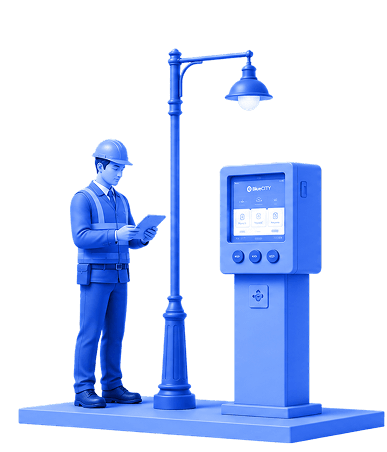
How the people who deliver municipal services every day use the tools and workflows behind every resident and business interaction.
- Workflow automation
- Work-order routing
- Mobile inspections
- Task management
- Cross-department circulation
- Internal collaboration
Governance Experience
How CAOs, city managers, department heads, and council members monitor performance and allocate resources across service lines.
- Dashboards
- Resource allocation
- Council reporting
- Trend detection
- Audit trails

How Zoho powers MX
Our native integrations and built-in identity access management empower cities to eliminate unnecessary tech fragmentation without compromising the data boundaries that sensitive records require.
One identity, managed securely
The same resident is recognized across every app (311, permits, inspections, etc.) without merging their data into a single database.
Built-in compliance controls
Data access is controlled by role. Each department sees what it needs while staying compliant with privacy laws.
AI that works on connected data
Intelligent routing, predictive analytics, and automated triage all require a shared data foundation like the one built natively on Zoho.

Canadian data centres by default
Zoho operates Canadian data centres so citizen data is stored and processed domestically. Data sovereignty is a standard part of the platform, not a premium add-on. Plus, Zoho is a Supply Ontario Vendor of Record (VOR) for CRM—a designation that reflects our broader commitment to serving the Canadian public sector at every level.

Start with your solution of choice, then scale up as your needs evolve.
Here are a few of the ways municipalities are modernizing on Zoho. Bring us your specific challenge, and we'll show you what's possible.
SOLUTION
311 omni-channel service
SOLUTION
Licensing & permitting
SOLUTION
Economic development & grants
SOLUTION
Standards & licensing
SOLUTION
Reporting & surveying
SOLUTION
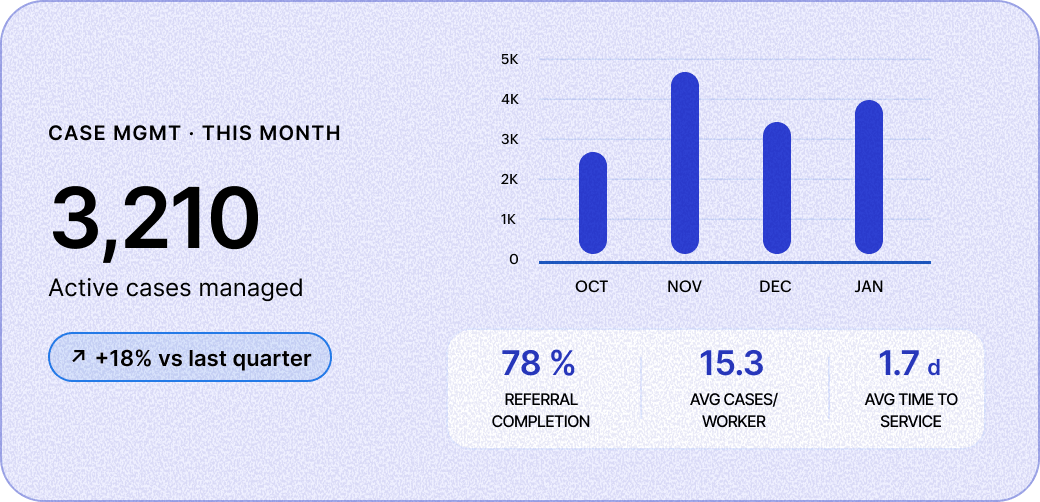
Case management & social services
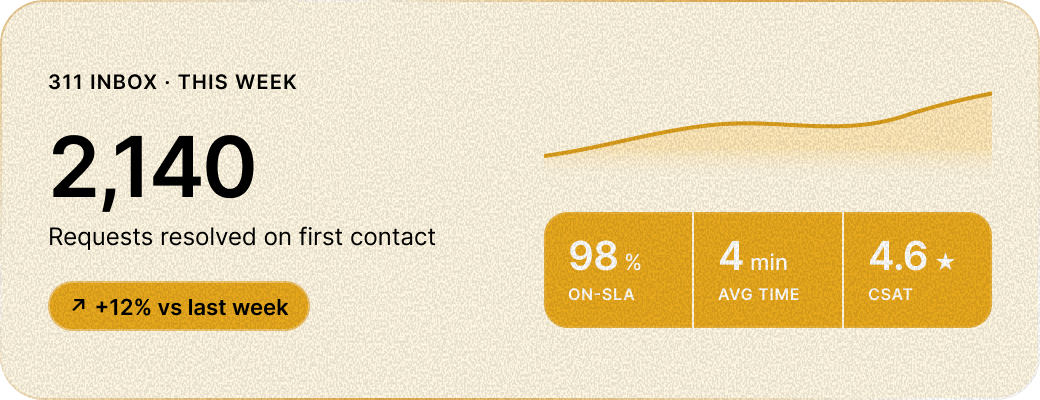
One digital front door. More first-contact resolutions.
Manage every service request, inquiry, and complaint across phone, web, chat, and mobile. Automated routing, real-time updates, and AI-assisted resolution — all built into user-friendly interfaces.
Online applications for faster approvals across departments.
Move permits and licenses online with self-service portals, automated cross-department routing, mobile inspections, and real-time tracking. Zoho integrates with GIS and existing city systems.
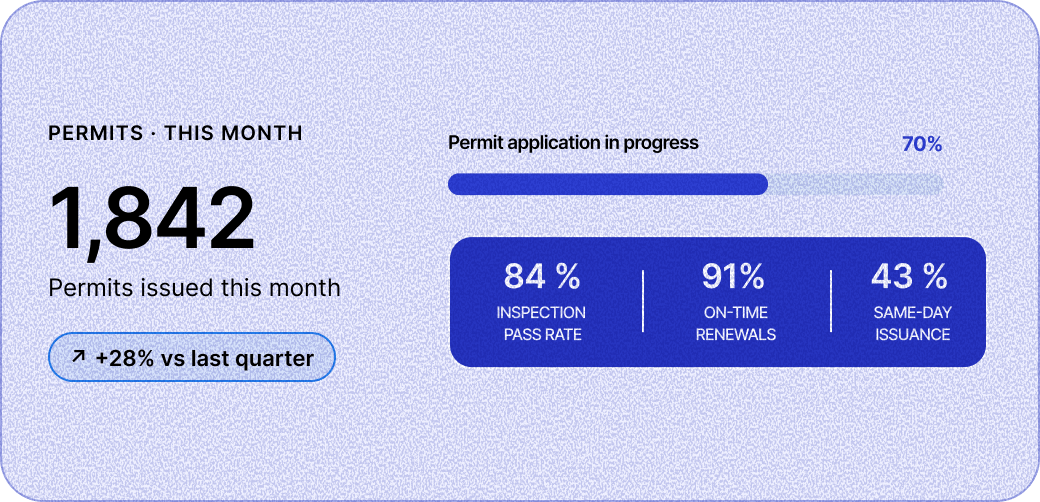
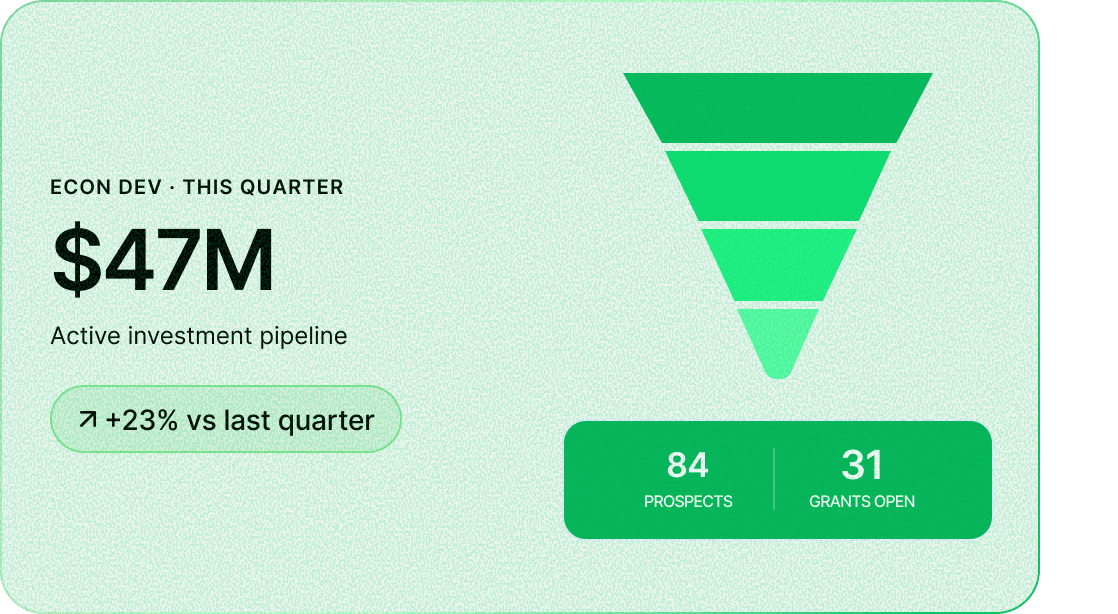
Manage the full business lifecycle in one place. Help businesses thrive.
Track investors, prospects, and grant applicants from first contact through permitting in one CRM. Automated workflows, incentive management, and live pipeline dashboards keep economic development teams connected, informed, and accountable.
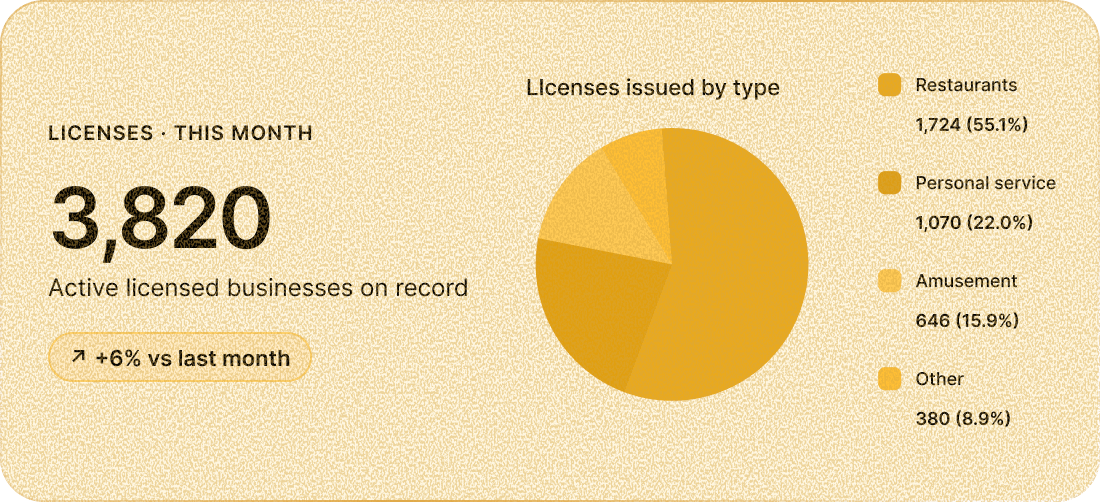
Enforce standards confidently. Keep every license, complaint, and inspection on track.
Issue and renew licenses for every regulated business and trade category while managing by-law complaints — property standards, noise, health and safety, and more — through automated workflows and a unified officer dashboard.
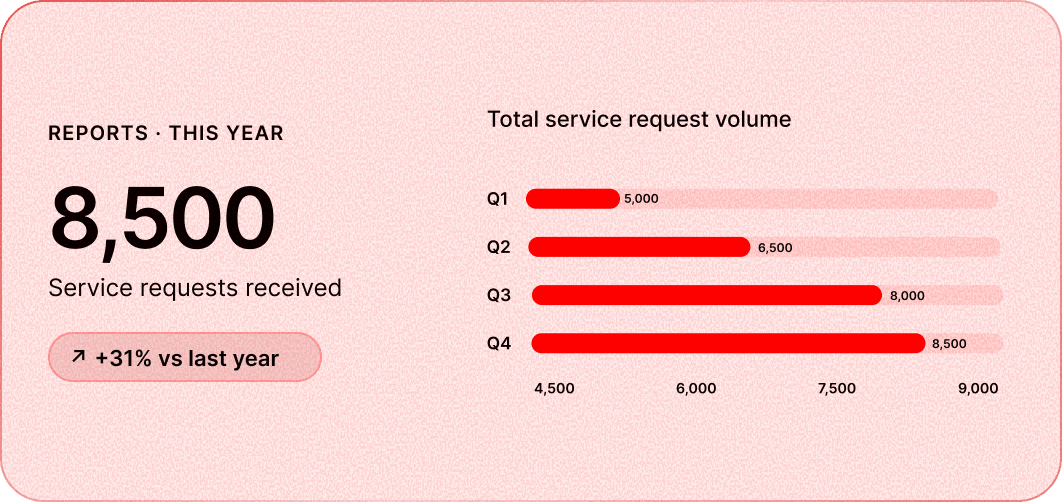
Live dashboards. Decisions backed by data.
Give councillors, the mayor's office, and city clerks real-time visibility into service request volumes, SLA performance, and department activity — without waiting on manual reports. Survey citizens on sensitive issues and feed responses directly into your analytics layer. Connects with existing BI and ticketing tools.
Meet residents where they are. Resolve every case from end to end.
From financial assistance and employment support to housing referrals and health services, caseworkers manage the full client journey in one place. Online booking and video appointments replace in-person visits. Structured workflows ensure nothing stalls between service tiers.
WHAT MUNICIPAL LEADERS HAVE TO SAY ABOUT ZOHO
The combination of [Zoho's] depth and breadth of service offerings, their competitive pricing, and the flexibility of the platform made this the right call.
 Chris Watson
Huron County Economic Development Officer
Goderich, Ontario
Security and connectivity are built into the architecture, not bolted on.
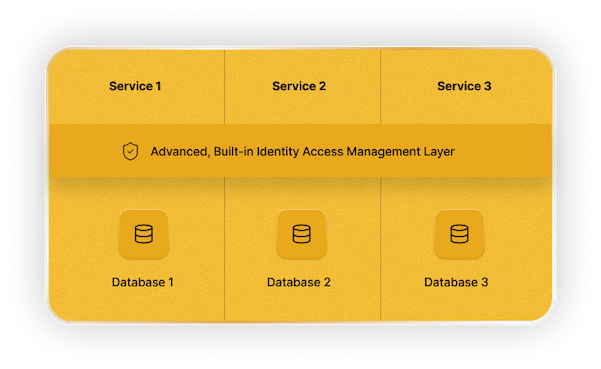
Our built-in Identity Access Management acts as both a bridge and a firewall between secure, separate-by-design data layers, eliminating the cost and complexity that other vendors introduce.
Zoho's Municipal Experience framework
Multiple services built on top of natively interconnected, first-party apps
Data is stored in separate databases by default; sharing must be configured intentionally
No risk of sensitive records being shared by accident
One vendor relationship, one contract, one support team
A proven company grounded in deep municipal expertise.
As a privately held company for over 30 years, Zoho brings long-term reliability and deep expertise in the way Canadian cities deliver services.
World-class privacy & security
Our software is SOC 2 Type II certified. Zoho never monetizes customer data.
SOC 2 · ISO 27001Partnership backed by experience
Our ecosystem includes Canadian system integration partners, solutions experts, and in-house staff hired from municipal government.
CANADIAN SI NETWORKUnbeatable value
40-50% lower licensing and implementation costs than comparable platforms, without compromising on capability or compliance.
TRANSPARENT PRICING

Frequently Asked Questions
If you have anything else you'd like to ask, reach out to us.
Yes. We're a fit for both smaller municipalities with straightforward needs and large public sector organizations managing complex operations. Our platform is modular, so many municipalities begin with something simple: a better way to handle calls, a 311 intake form, or a permit tracking workflow. You activate what you need today and expand when you're ready. Simplicity is often the best starting point. A focused deployment delivers faster results and builds the internal confidence to grow.
Yes. Zoho's API-driven architecture supports secure integration with the systems municipalities most commonly use, including GIS platforms, authentication systems (Active Directory, Azure AD), asset and work management platforms, financial systems, and enforcement tools. A low-code middleware layer allows your team to build and maintain custom data transformations and workflow connections without heavy IT involvement. The Zoho Marketplace also provides pre-built connectors to hundreds of common enterprise applications, reducing custom development needs.
Zoho's licensing model is based on per-user, per-module subscriptions—you pay for what you use, and costs scale with your actual deployment rather than requiring large upfront commitments. Compared to legacy enterprise platforms, Zoho is typically 40–50% less expensive than the competition on both a per-user and total cost of ownership basis.
Zoho Canada works with a network of Canadian systems integration partners with public sector expertise who handle configuration, deployment, training, and ongoing optimization. A single-module deployment is typically live in weeks rather than months. The process follows four phases: discovery, configuration and testing, data migration, and training and go-live. These run in parallel rather than strictly sequentially to keep timelines short. Thanks to Zoho's architecture, data migrated into one module is immediately accessible across all connected modules. There is no secondary migration between applications and no reconciliation work required after go-live.
Every municipality's configuration is based on its unique priorities. The deployment process begins with a discovery phase that maps your existing service landscape, identifies the highest-friction citizen journeys, and designs the configuration around how your municipality actually operates. Whether the entry point is 311 modernization, permit and licensing management, economic development CRM, or operational workflow automation, the platform is configured to your specific service catalogue, departmental structure, and workflow requirements before go-live. Zoho's ease of use and low-code/no-code architecture enables fast and simple customizations. This increases the time to value far quicker than other solutions and much more cost effectively.
Zoho's ecosystem of apps can be configured so that events in one module automatically trigger actions in another. Intelligent routing directs service requests to the correct department based on intent, location, and service type. It can also route calls based on agent availability and skillset. AI-powered knowledge assistance surfaces next-best-action recommendations for agents. Automated citizen status updates, escalation rules, and SLA management reduce manual coordination across departments without requiring custom development.