A well-designed knowledge base plays a critical role in customer experience. Successful knowledge starts with careful planning, understanding who it’s for, what it should contain, and how information should be structured.
The steps involved in planning a robust Kbase are broadly categorized into the following parameters:
- Defining goals and audience
- Identifying the type of content
- Scope and content strategy
Defining goal and audience
Clear goals help determine the tone, depth, and format of the content.
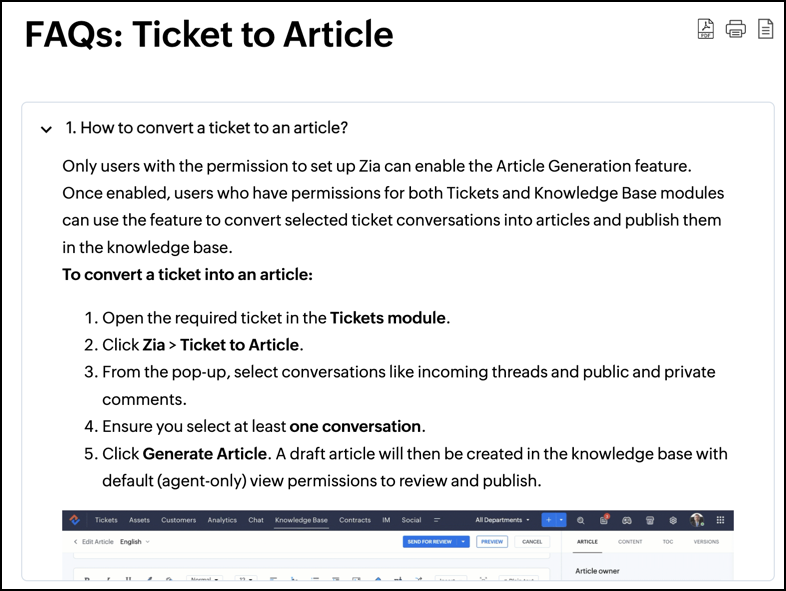
Let's take the example of an FAQ. Frequently asked questions are written in a question-answer format where the answer is concise, solution oriented, includes step-wise instruction, and is written in a conversational tone.
On the other hand, a user guide explains the usage, talks about the model type, provides detailed installation instructions, describes the limitations, and sometimes elaborates details that are applicable to a specific geographical location. An installation guide or product manual is often formal and uses technical language.
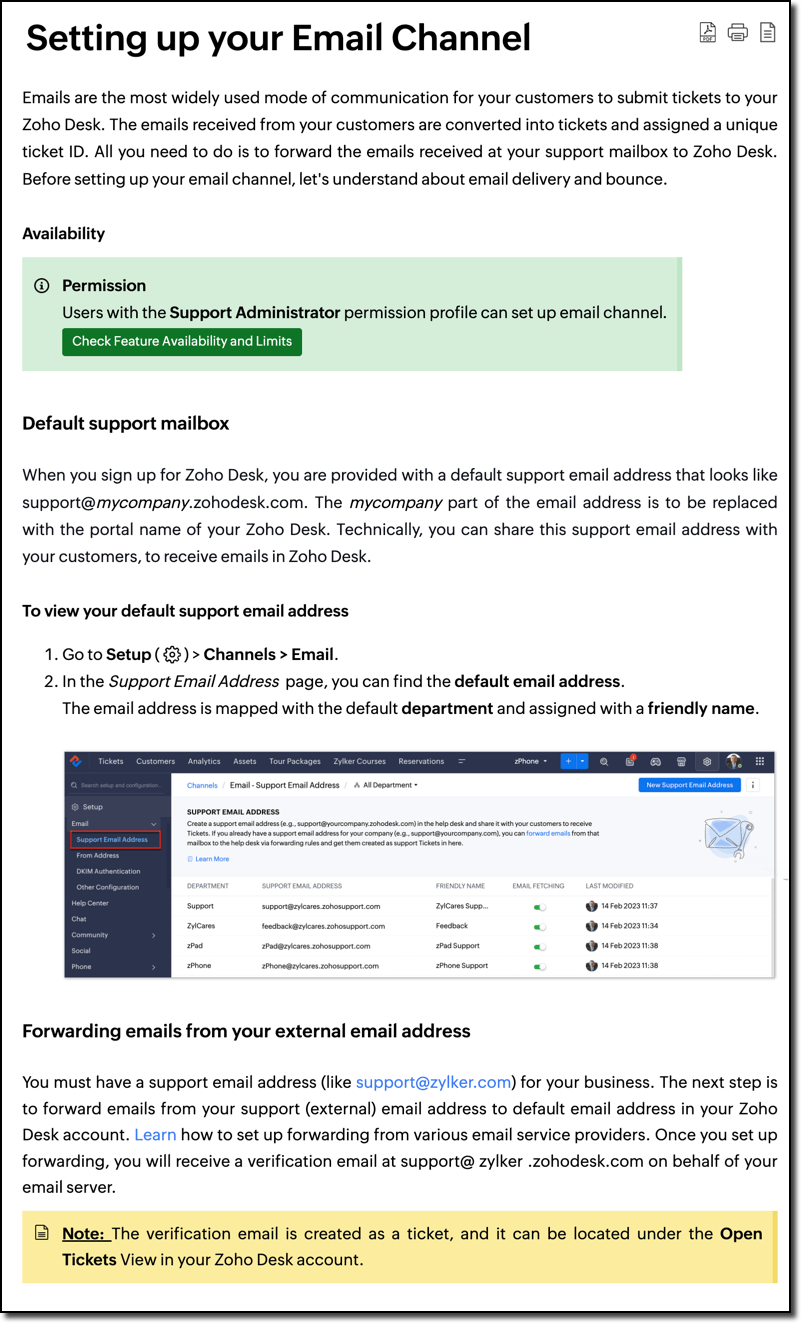
Both types of content differ in their style, tone, and depth according to the intended purpose.
While an FAQ is designed to solve routine problems, a user guide helps to educate the user about the product or service and provides them with the information to use them in the right way.
If the goal is clear it is easier to determine the audience for the content. A KB comprises two types of content: one for the customers and the other for internal users.
To determine the audience, start by answering these simple questions:
- Is your knowledge base designed for customers who need quick answers?
- Or is it for internal teams who require access to detailed procedures and policies?
- Does the content have confidential information that customers shouldn't see?
- Is the content useful only for a selected user group?
Answer to these questions will decide the way you write the article, what information you include or exclude, and who can see the content.
Identifying the type of content
If you want customers to fix recurring problems on their own, you can create a troubleshooting guide with commonly asked questions and publish it on the help center. Likewise, if the article is about a product usage then a detailed how-to guide with clear steps and images would allow customers to easily setup. Depending on the requirement you may also require articles that clearly explain the concept and give information about specific domains which significantly improves user adoption.
If your employees need a reference article on the pricing details, additional charges, and steps to set up process workflows, then you can create easy-to-read, step-by-step short articles that explain a particular concept. Lengthy articles with too many concepts should be avoided as they slow down the process of problem solving. Content that is exclusive for employees must be private and should not be published in the help center.
Depending on the audience, the way you structure the content in the article will also vary. For example, customer-facing articles are simple and task-focused, while internal documentation are more detailed and process-driven.
Scope and content strategy
The goal of building a knowledge base is to promote self-service for customers and effectively deflect support tickets for frequently occurring problems that have been solved previously. It saves a customer's time spent waiting in the support queue. It means the articles in the KB should address the customer pain points and include real-world requirements.
Before starting to write the content its important to list down the:
- Common queries that are received.
- Kind of problems people face.
- Their feedback about the product or service.
- Business use cases.
- Industries to which the customers belong.
These categorize as the voice of customers and addressing them through KB truly resonates with their needs. Some of the valuable sources of information are support tickets, community or forums, frontline feedback, and public discussion platforms.
Customer queries hint at the real-time problems users are facing, which provides a constant source of potential material for FAQs. The resolutions provided to the customers are best examples of troubleshooting tips for others who encounter similar issues, and their feedback tells you the type of information people are looking for.
Therefore, finding the right source of information helps to plan for a knowledge base in a better way.