If you're in any customer-facing role, you know that while meetings or appointments are constant, the way they're scheduled continues to change, especially with the evolution of technology.
Despite this universal reliance on appointments, the actual booking process differs across industries and departments. While emails and phone calls are the norm, advancements in scheduling software and AI are rapidly transforming the way appointments are scheduled.
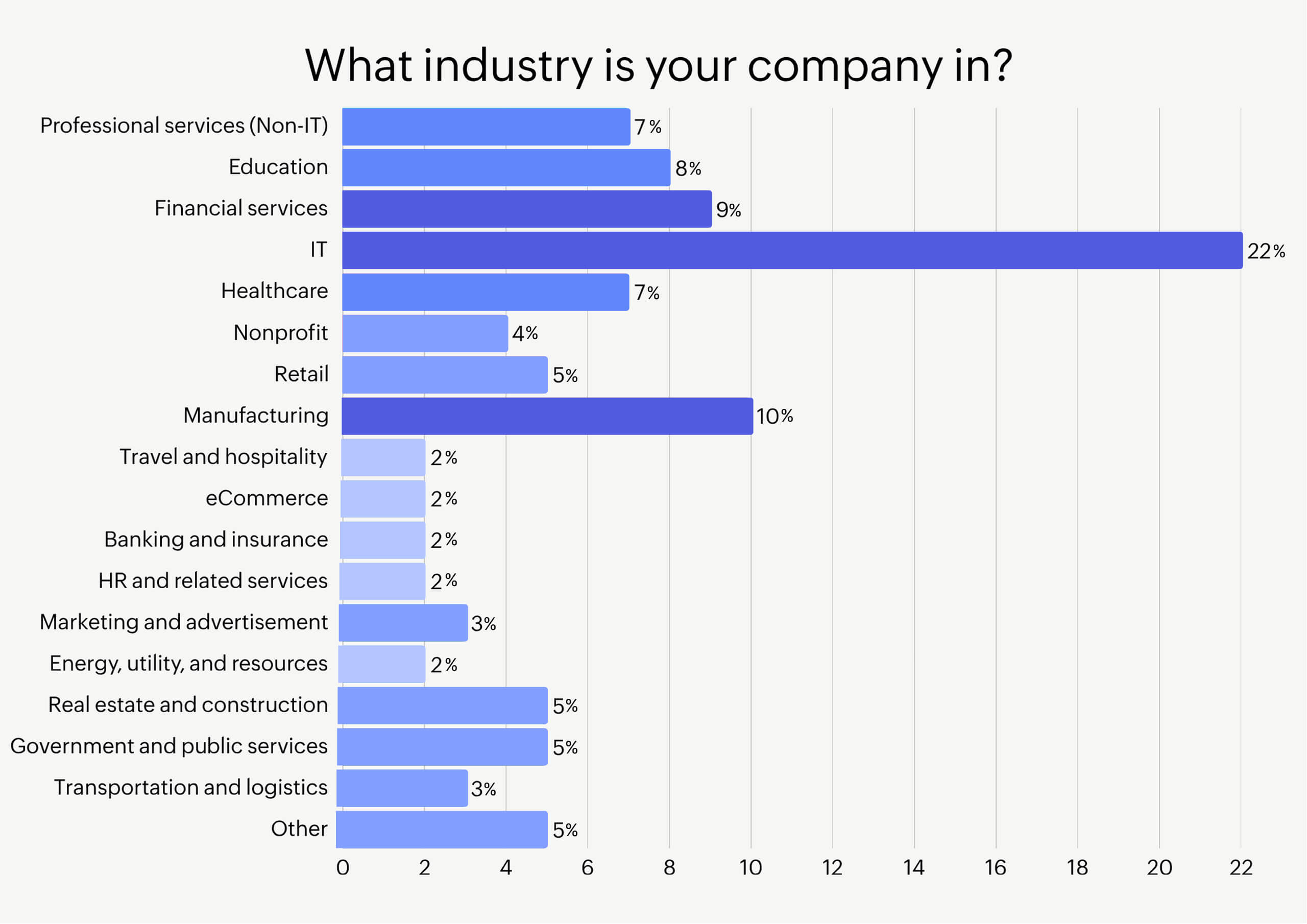
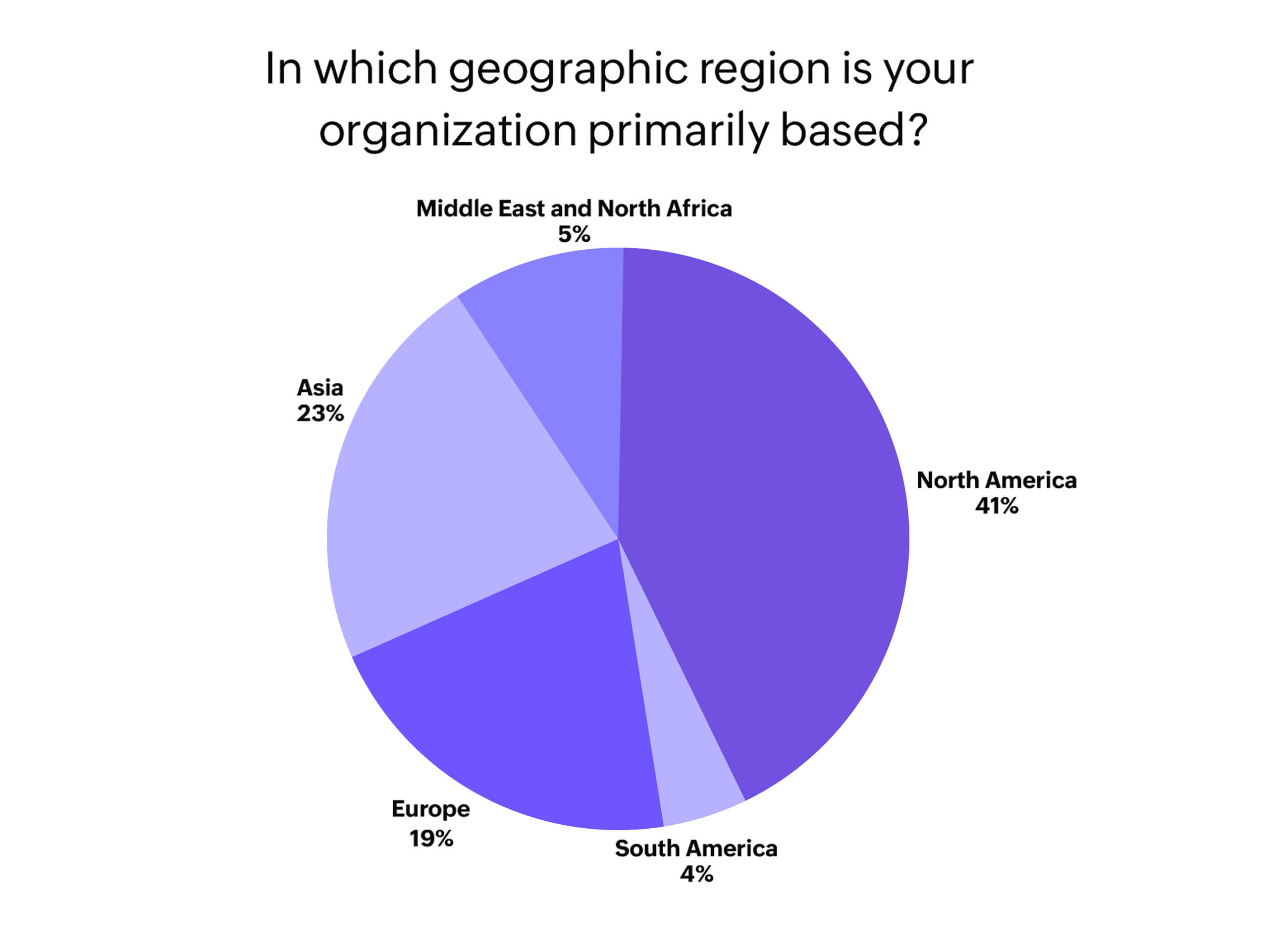
At Zoho Bookings, we wanted to know more. We partnered with CINT, the world's largest global research marketplace, to survey professionals from various departments—like healthcare, finance, professional services, ecommerce, IT, and more. Our goal was to understand how teams around the world schedule meetings and appointments.
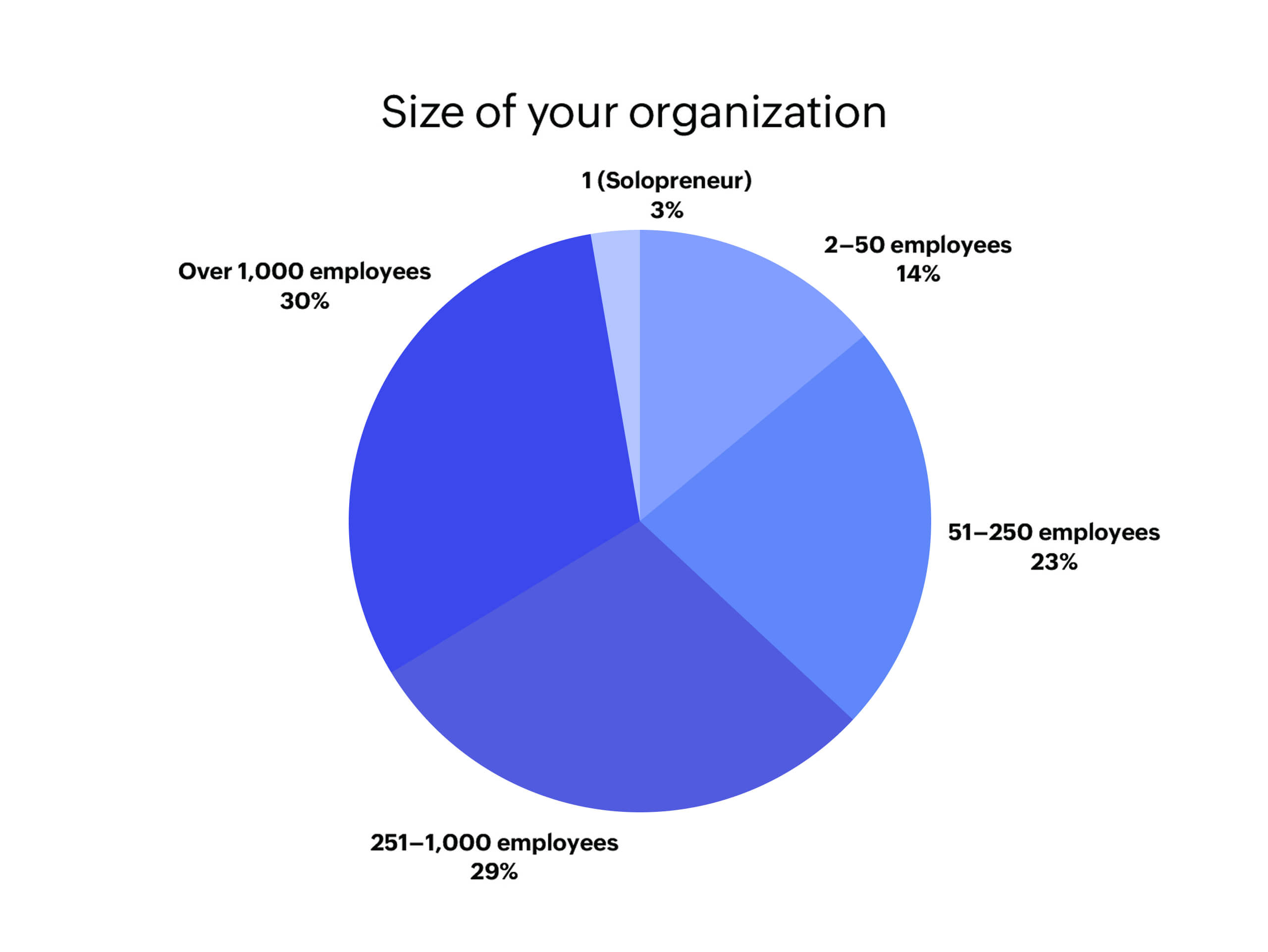
The survey participants were a mix of professionals from different business sizes, split into the following categories:
- 1–250 employees Small and medium sized businesses (SMBs)
- 250–1,000 employees Mid-market businesses
- 1,000+ employees Enterprise businesses
Here's what we found:
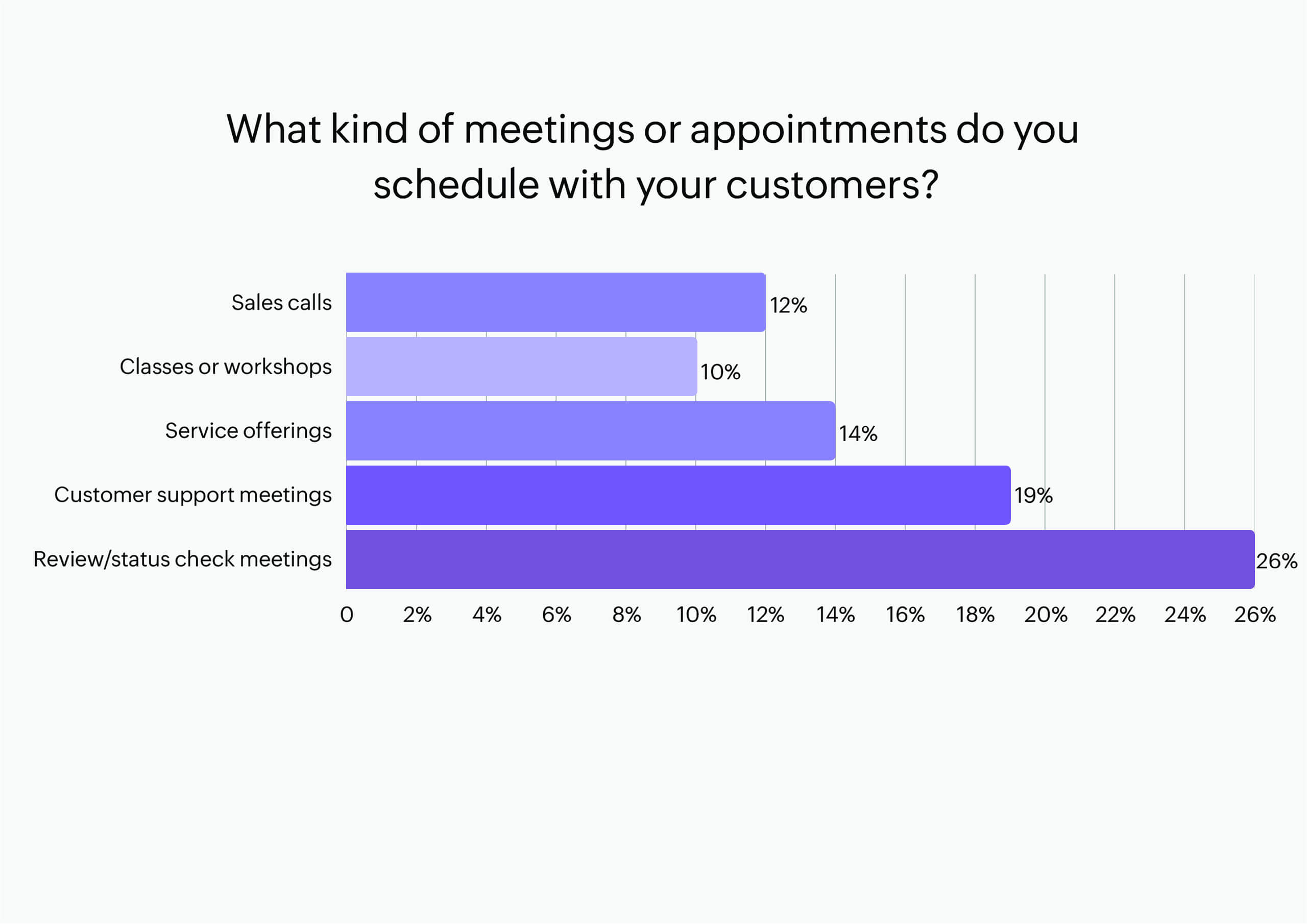
- Nearly 45% of scheduled meetings are for sales, service offerings, or consultations.
- 79% of businesses schedule meetings daily or weekly.
- 43% of sales and marketing professionals regularly schedule one-on-one meetings with prospects
- 20% of enterprise businesses face increases in administrative costs around manually scheduled appointments.
- 41% of SMBs struggle with back-and-forth scheduling.
- 30% of businesses using scheduling software book appointments in less than an hour.
- 62% of mid-market businesses improved their meeting management using scheduling software.
- 65% of companies now offer both in-person and virtual appointments.
- 30% of businesses saw an increase in sales and revenue after adopting scheduling software.
- 66% of organizations believe that AI will enhance scheduling automation.
Businesses are switching to scheduling software
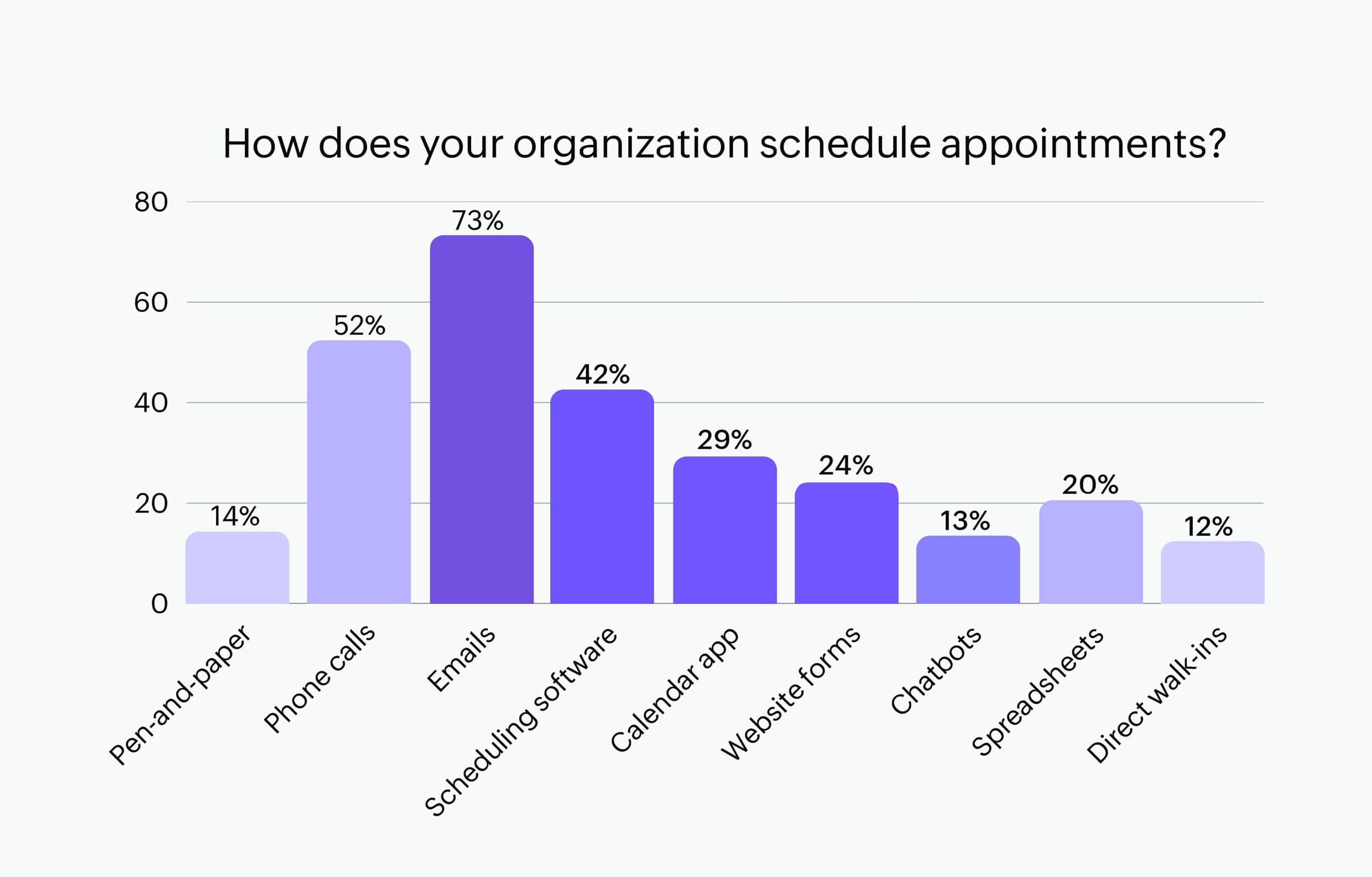
It's no surprise that nearly 79% of global businesses, regardless of size, schedule meetings daily or weekly. Even with the rise of new technology, approximately 73% of respondents continue to use email for scheduling, and 52% rely on phone calls to schedule meetings with leads or customers.
But this conventional approach has its setbacks. Time-consuming coordination and calendar conflicts are two of the most common problems. Our study confirmed this: 44% of businesses cited back-and-forth scheduling as a major scheduling challenge, and 36% of respondents found double bookings as the next largest challenge.
Interestingly, similar trends prevail across different departments within an organization.
Appointment scheduling challenges across various departments
Department
Sales and marketing
HR and recruiting
Finance
Customer success
IT
Admin and operations
Scheduling meetings daily or weekly
84%
80%
75%
82%
86%
72%
Scheduling via email
70%
69%
75%
70%
77%
73%
Scheduling via phone call
57%
48%
56%
57%
52%
47%
Back-and-forth scheduling
45%
45%
45%
45%
45%
41%
Double bookings
36%
36%
38%
40%
44%
29%
Customer-facing teams switching to scheduling software
Among the many ways to schedule appointments, 42% of businesses utilize appointment scheduling software to streamline booking processes.
This trend indicates a shift away from manual and complex booking systems in favor of more reliable tools.
Scheduling software like Zoho Bookings enables customers to book their preferred time slots directly through a booking page, eliminating delays. It also prevents double bookings and conflicts by syncing with your calendar.
How scheduling software benefits businesses
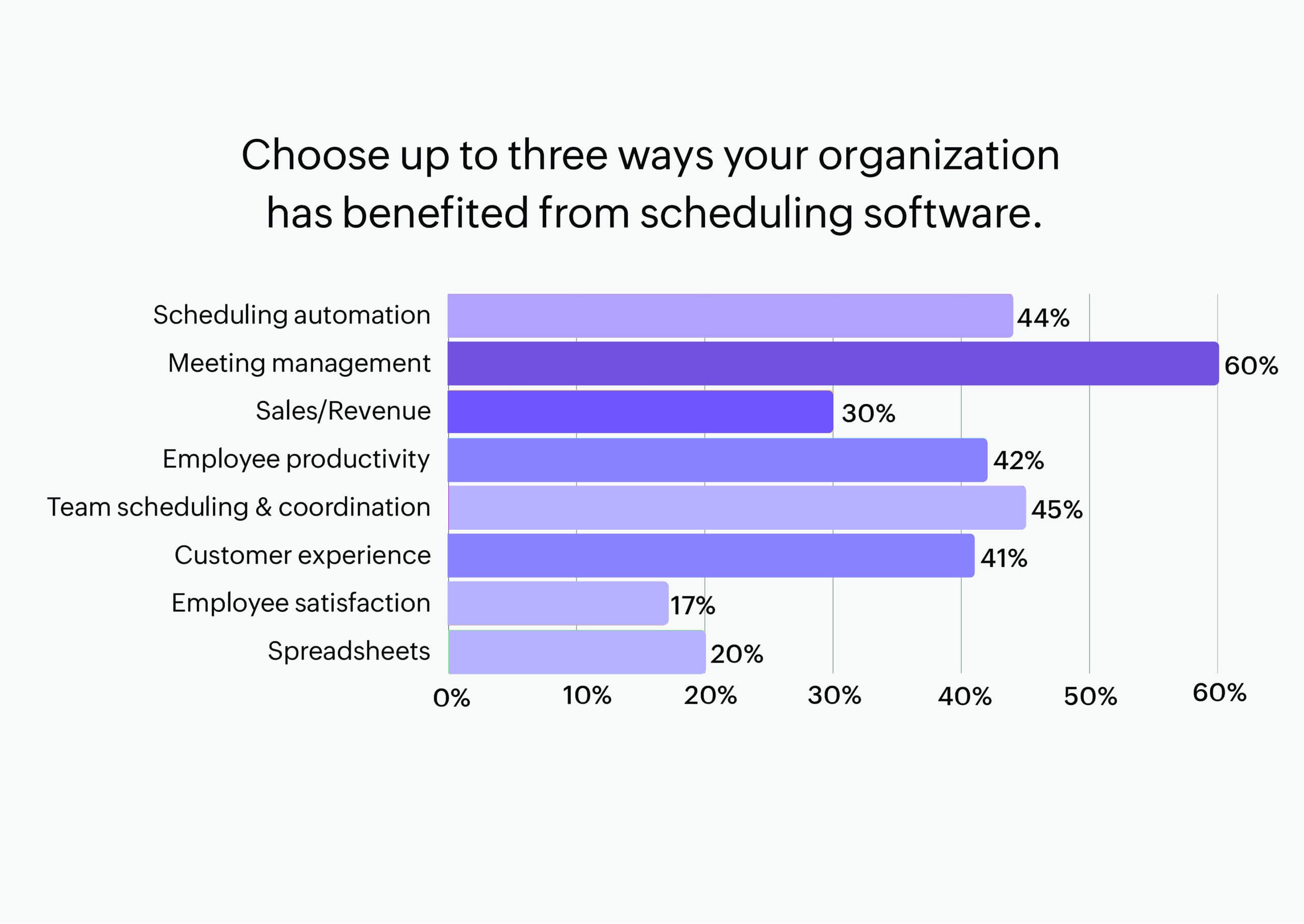
- 44% of businesses reported improved appointment scheduling automation after switching to scheduling software.
- 60% of businesses find they manage their meetings well with scheduling software.
- Businesses that implemented scheduling software saw a 30% increase in sales and revenue.
- 42% of businesses saw an increase in employee productivity through better appointment management.
- 41% of businesses enhanced their customer experience by automating the appointment booking process through scheduling software.
Benefits of using appointment scheduling software across various departments
Department
Sales and marketing
HR and recruiting
Finance
Customer success
IT
Admin and operations
Using scheduling software
41%
43%
43%
51%
51%
35%
Improved scheduling automation
45%
39%
38%
43%
44%
45%
Better meeting management
63%
54%
69%
54%
60%
57%
Improved team scheduling and coordination
31%
46%
44%
54%
48%
48%
Increased employee productivity
36%
46%
44%
39%
47%
44%
Enhanced customer experience
35%
45%
42%
51%
41%
42%
Providing an exceptional customer experience is a necessity
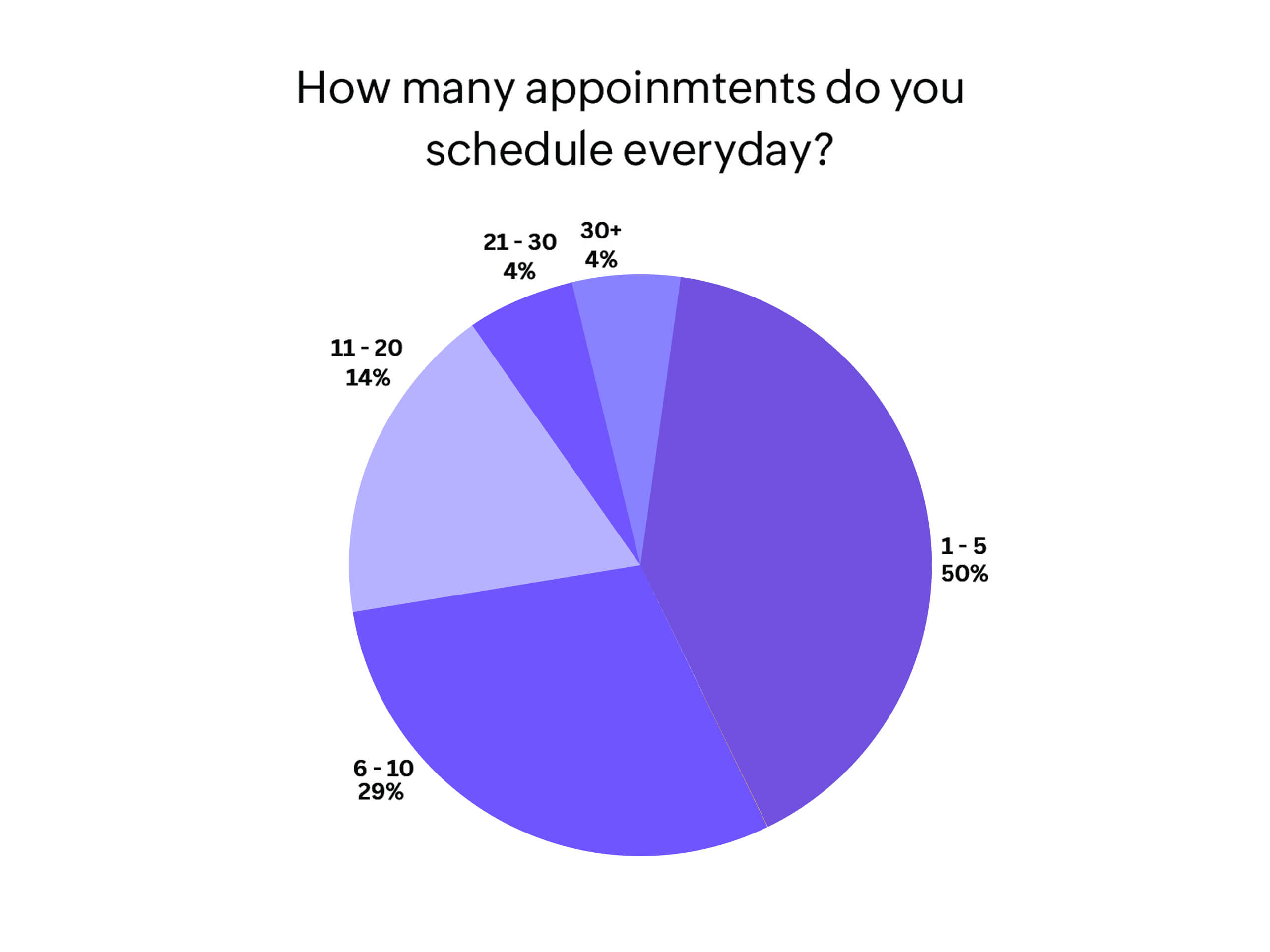
Based on our study, we found that 50% of businesses schedule between one and five appointments every day, and 29% of businesses schedule between five and ten appointments every day.
Imagine spending hours scheduling each appointment with prospects instead of automating it with scheduling software. This wastes valuable time and delivers a poor booking experience.
In fact, 40% of organizations take more than one hour to schedule appointments via email, and 23% of them take more than six hours! That's a lot of time for you to lose leads to competition.
As a bonus, 27% of organizations reduced administrative costs by automating crucial tasks related to meetings that would otherwise require manual human intervention.
Overcoming scheduling challenges with automation
Although 48% of businesses that schedule appointments manually are satisfied with their current setup, there are hidden obstacles that slow their growth.
Here's a data comparison highlighting the challenges businesses face with manual scheduling and the benefits they gain after switching to scheduling software.
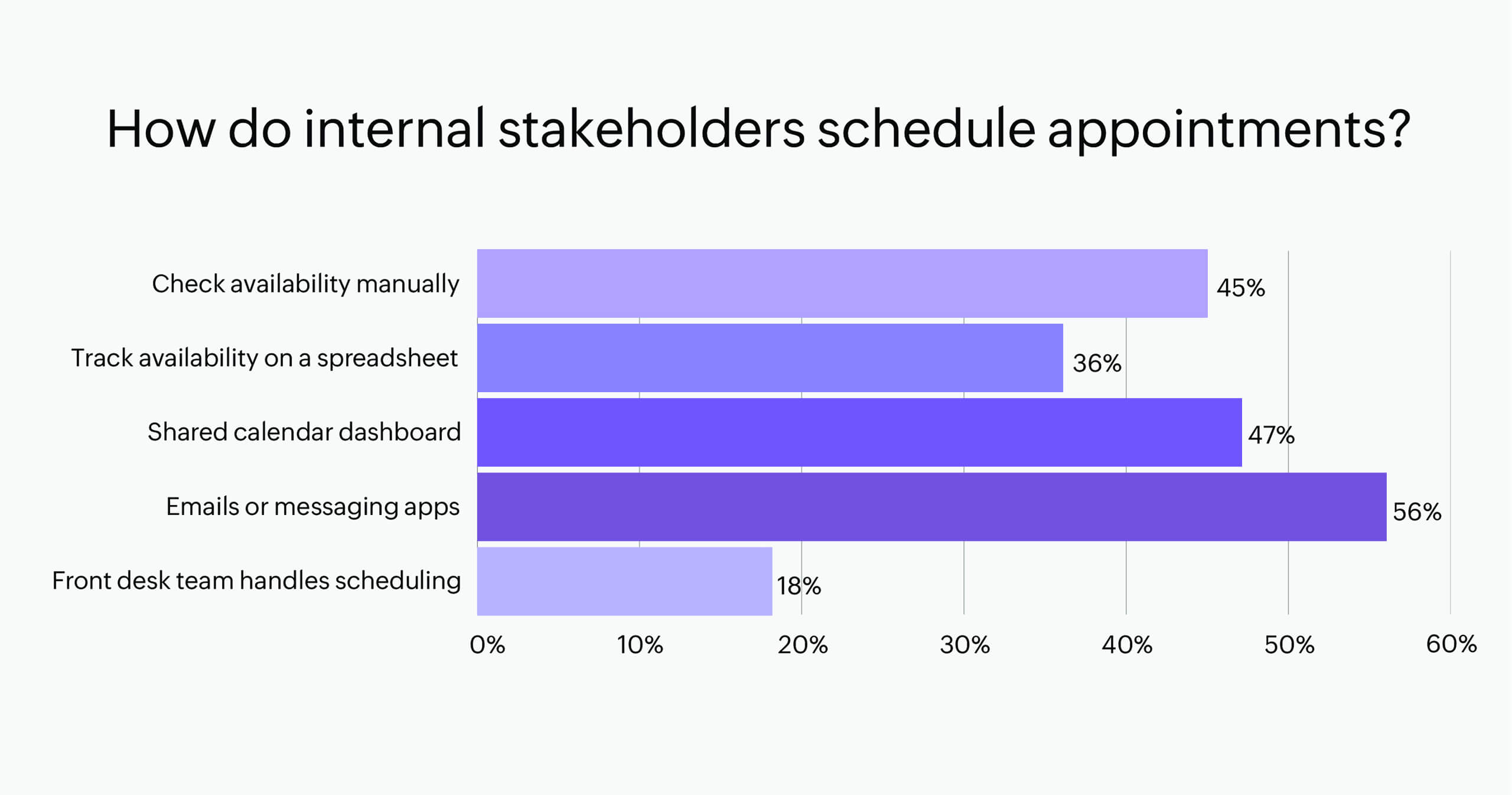
Interestingly, we also found that scheduling meetings internally came with its own set of challenges:
- 56% of businesses collaborate internally on messaging apps or emails to schedule meetings.
- 45% manually check availabilities with other stakeholders.
- 36% still rely on spreadsheets to check meeting availability.
- 47% have a shared calendar setup to check colleagues' available times.
As a bonus, 27% of organizations reduced administrative costs by automating crucial tasks related to meetings that would otherwise require manual human intervention.
How appointment scheduling differs according to company size
Appointment scheduling processes vary based on the size of the business. 42% of SMBs schedule appointments within an hour, which is higher compared to mid-market or enterprises.
Challenges faced across business sizes
Challenges
Back-and-forth scheduling
Increased no-shows
Double-bookings and calendar conflicts
Uneven team schedules
SMBs
41%
29%
29%
24%
Mid-market
45%
28%
43%
32%
Enterprise
46%
30%
40%
32%
Apart from these common challenges, 28% of mid-market businesses report that they face inefficient resource management when scheduling appointments. And 20% of enterprise businesses face an increase in administrative costs around manually scheduling appointments.
Benefits of using scheduling software
After using appointment scheduling software:
- 46% of SMBs automated tasks around their meetings.
- 62% of mid-market businesses improved their meeting management.
- 34% of enterprise businesses increased their sales and revenue.
- 46% of mid-market businesses enhanced their customer experience.
- 44% of enterprise businesses saw an increase in employee productivity.
- 46% of SMBs and 47% of enterprise businesses enhanced team scheduling and coordination.
By using scheduling software, 53% of SMBs are able to prevent double-bookings, 53% of mid-market businesses provide better customer service, and 54% of enterprise businesses avoid time-consuming scheduling.
Welcoming AI-assisted scheduling
As AI becomes increasingly integrated into almost every sales and marketing app, it's amplifying productivity and impact across the funnel. 32% of organizations already use an AI tool or feature to schedule meetings.
Imagine AI routing meetings to sales reps, configuring email workflows, or suggesting meeting times based on your booking history. That offers an excellent advantage for your customer-facing teams.
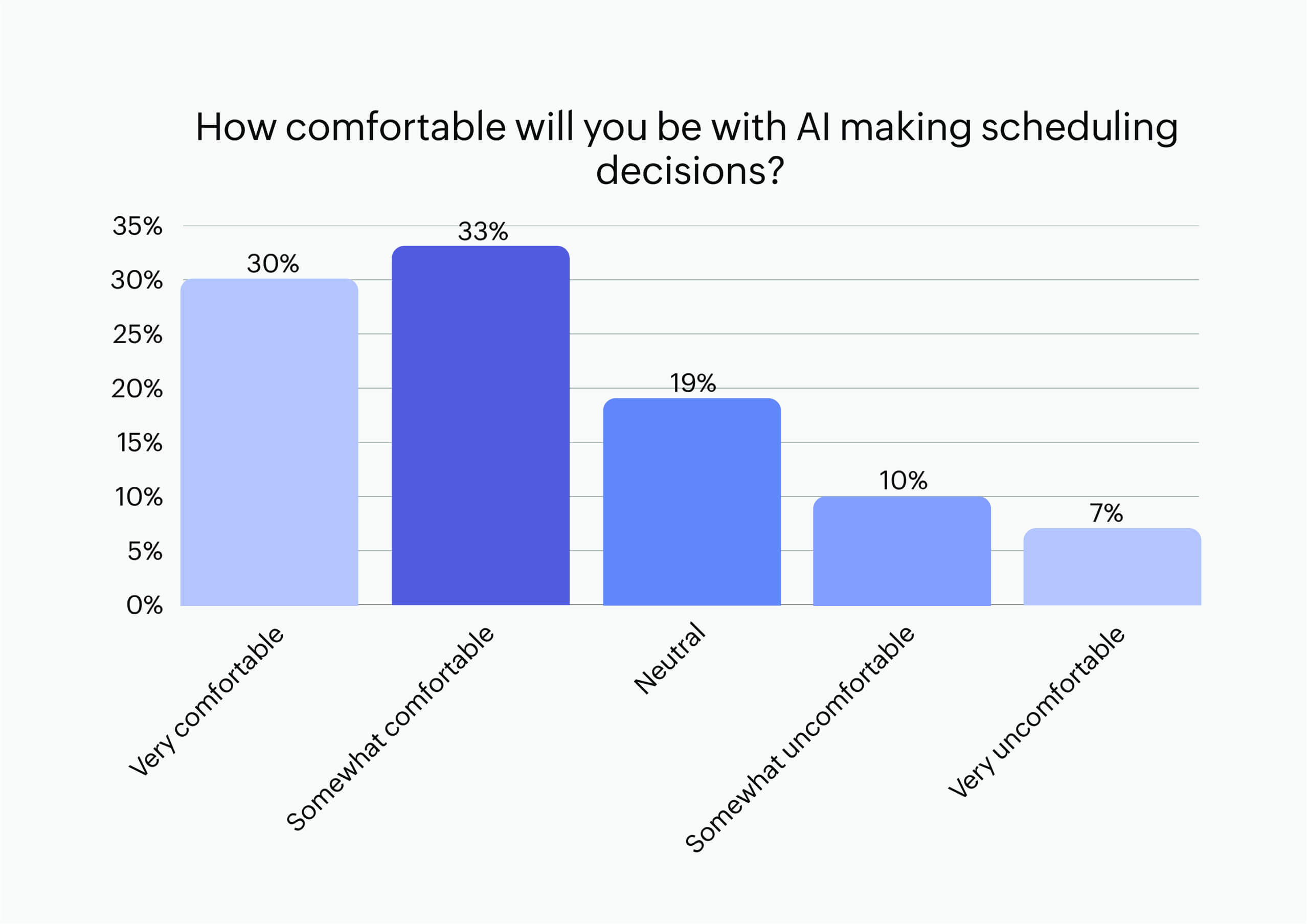
Organizations are optimistic about AI-powered scheduling recommendations: 63% say that they are comfortable with AI suggesting meeting times or helping reschedule meetings if necessary.
When broken down by business size, 20% of SMBs, 39% of mid-market businesses, and 34% of enterprises stated that they'll be comfortable with using AI for scheduling appointments.
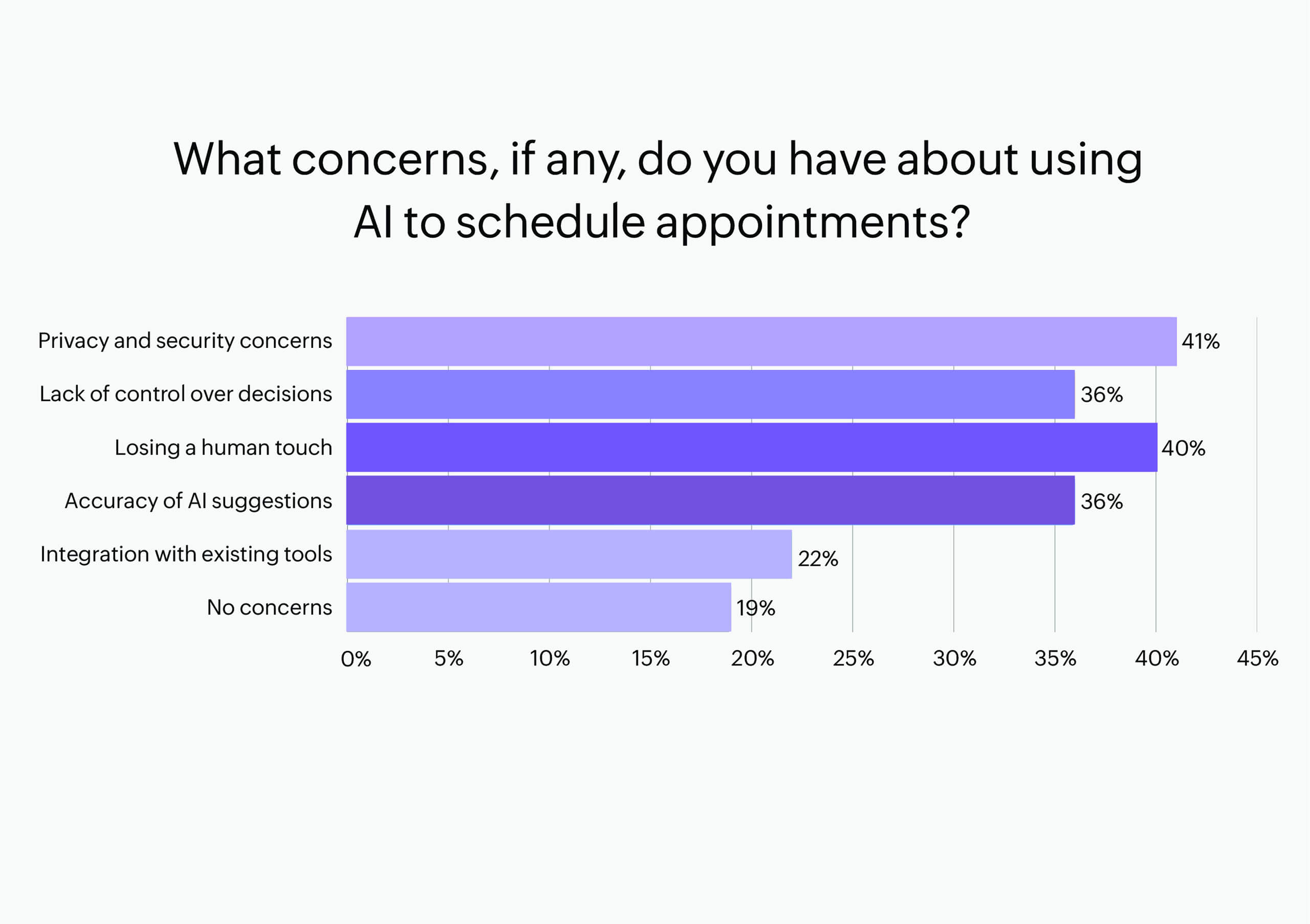
Although businesses are welcoming AI, there are a few concerns that could be roadblocks to their adoption of AI-powered scheduling:
- 45% of enterprise businesses have concerns about privacy and security.
- 43% of SMBs are worried about losing a human touch when offering preferred meeting times.
- 36% of mid-market businesses are unsure about the accuracy and reliability of AI suggestions.
- 36% of businesses are concerned about the lack of control over the decisions made by AI.
A well-integrated tech stack
Similar to how team collaboration fuels business growth, an integrated tech stack increases productivity and offers actionable insights. For sales and marketing teams, this means more efficient operations.
Our study suggests that 43% of organizations using scheduling software expect more integrations with other business applications—particularly CRMs—so that meeting data is synced properly across their tech stack.
Are you ready to meet the future of scheduling?
The right scheduling software can make a world of difference in how your sales and marketing teams connect with leads. With minimized back-and-forth, they can qualify, engage, and convert leads more efficiently across different channels.
63% of organizations say scheduling software helped them streamline and manage their meetings more constructively.
Get started with Zoho Bookings and empower your teams to close deals faster with automated scheduling.
Sign up now