How to plan and execute a successful trade show

Learn how trade show planning differs from other events, and why centralized tools become critical as expos grow in size and complexity.

Trade shows always look and feel exciting from the outside. They are full of colorful booths, busy aisles, conversations, and deals getting closed with quick handshakes. But anyone who has ever worked behind the scenes knows the truth. A successful trade show is not built on enthusiasm alone. It is built on careful, detailed, and often exhausting planning.

Just booking a venue and inviting exhibitors is not trade show planning and won't give you the results you need. It is about shaping an experience in which hundreds or thousands of moving parts come together simultaneously, without friction. Exhibitors need clarity. Attendees need direction. Vendors need coordination. And organizers need visibility into everything, all at once.

We'll walk you through trade show planning from the first idea to the final day on the show floor. Instead of throwing another checklist at you, we will focus on how decisions connect, how timelines overlap, and why centralized planning becomes non-negotiable as events grow in size and complexity.

How to plan and execute a successful trade show

A beginner's guide to trade show planning

Why trade show planning needs a structured approach

Trade shows are not like other events, like conferences or meetups. They are more complex events. You are not just dealing with speakers or sessions. You are dealing with spaces, booths, goals, foot traffic, and logistics, all at the same time.

If you do not use a structured approach in trade show planning, many small problems can quickly escalate. For example, you won't get much traffic if you have a delayed booth setup, inadequate signage can impact visibility, and inadequate communication can impact relationships. A small mistake can quickly escalate and impact the entire trade show.

A structured approach is helpful in trade show planning because it allows teams to view the event as a system rather than a set of isolated tasks. When planners understand how different elements connect, such as how booth layout can influence exhibitor satisfaction or how session timing affects attendee engagement, they can make better decisions during planning.

It also allows teams to plan in phases rather than react in real time. Clear timelines help organizers anticipate bottlenecks rather than scrambling to fix issues on event day. Progress can then be monitored using simple metrics such as milestone completion rates or task deadlines.

Finally, a structured approach helps manage multiple stakeholders involved in a trade show. Since different teams and vendors operate on different timelines, a framework keeps everyone aligned. This alignment can be tracked through metrics such as stakeholder response times or exhibitor onboarding progress.
From concept to commitment: Laying the foundation of your trade show

A trade show begins with a concept or an idea. But it is not until it is anchored in purpose and scope that it can begin to take shape.

Before you start worrying about logistics or working with exhibitors, you first need to know what kind of trade show you're creating and why it needs to exist.

At this stage of trade show planning, the most important questions are not operational. They are strategic.

  • What industry or community is this trade show serving and what problem does it solve for them? A focused purpose helps you attract the right exhibitors and audience, rather than trying to appeal to everyone.
  • What does success look like for this trade show? Does it look like foot traffic, qualified leads, new partnerships, deal signings, or something else? Your answer will impact every decision you make along the way.
  • How big does this trade show want to be for its first year? There's a big difference between overestimating the size of a trade show, which leads to wasted resources, and underestimating it, which leads to overcrowding.

Once this clarity is in place, planning becomes far more grounded. You are no longer making assumptions. You are making informed trade-offs.

This is also when you'll start exploring the options available to you using a dedicated trade show planning tool.

Building realistic timelines and budgets that don't fall apart

Trade shows have long planning cycles, and that is not accidental. The more exhibitors and partners you involve, the earlier decisions need to be locked.

When you're building a trade show plan, a realistic timeline is not about starting early. It's about leaving enough time for all the moving parts to work together.

Planning timelines that reflect real dependencies

Trade show planning unfolds through a series of operational dependencies. The venue typically needs to be confirmed early because the floor layout, booth allocations, and exhibition space sales cannot move forward without knowing the physical constraints of the venue. Once exhibitors begin signing up, onboarding becomes a critical phase—especially for first-time participants who need time to review contracts, understand branding guidelines, finalize booth specifications, and prepare operational requirements.

Marketing activity should accelerate only when there is enough clarity about exhibitors and event features. Promoting a trade show too early, before key participants or experiences are confirmed, can create expectations that the event may struggle to meet.

For this reason, experienced organizers do not treat trade show planning as a series of rigid milestones. They manage overlapping phases instead: exhibitor sales continue while logistics planning begins, marketing ramps up while exhibitor support systems are tested, and operational readiness evolves alongside audience promotion.

Budgeting beyond obvious line items

Budgeting for trade shows is a source of discomfort for most teams, which is unsurprising since many costs are not immediately apparent.

Fixed costs such as venue rental, basic infrastructure, and staff form the foundation of the budget. For example, booth space alone can cost $100–$200 per square foot, and the total cost of exhibiting can range from $15,000 to over $100,000 depending on booth size and design.

The more surprising costs are usually the variable ones. Services like electricity, internet, or equipment setup are often billed separately, and power drops may cost $150–$550, while internet connectivity can range from $500–$1,500 depending on bandwidth requirements.

Exhibitor costs can also fluctuate depending on customization and booth placement. Premium locations, such as entrances or corner booths, can increase prices by 20–50%, which is why experienced planners usually maintain a contingency buffer in their event budgets.

Exhibitor coordination: The heart of trade show success

Exhibitors are more important for your trade show than you might think. They are the engine that drives a trade show's success. The exhibitor experience not only affects how the show feels, but also affects their desire to return next year.

Exhibitor coordination is one of the most challenging aspects of planning a successful trade show as it involves aligning exhibitors' expectations, information, and timelines.

Onboarding exhibitors without confusion

Exhibitors need clarity during trade show planning, not a constant stream of follow-ups. When communication is fragmented across emails, spreadsheets, and different teams, exhibitors often end up asking the same questions repeatedly, which slows down coordination. A better approach is to provide a single point of reference where exhibitors can easily access essential information, including booth details, setup schedules, and branding guidelines. This reduces confusion and improves response times.

At the same time, trade show planning must be flexible because changes are inevitable. Booth upgrades, team size adjustments, or last-minute branding updates occur frequently, and the planning system should reflect these changes instantly and accurately. It is also important to recognize that different types of exhibitors have different needs. Sponsors, standard exhibitors, and partners should not receive the same level of information or access, and organizing communication accordingly helps ensure each group gets only what is relevant to them.

Tools like Zoho Backstage's exhibition management capabilities support this by providing each exhibitor with a dedicated space to manage information, updates, and coordination without confusion.

Supporting exhibitor visibility and outcomes

Exhibitors do not participate in trade shows just to secure a booth; they expect measurable outcomes. When organizers provide clear floor plans, exhibitors can better understand foot traffic patterns and plan their engagement strategies accordingly. Visibility opportunities such as digital promotion or featured placements, can further expand their reach beyond the physical booth.

At the same time, lead tracking and follow-up planning should begin during the event planning stage rather than after the show ends, ensuring exhibitors are prepared to convert opportunities quickly. When exhibitor coordination is treated as an ongoing partnership rather than a one-time transaction, satisfaction improves, and the likelihood of future participation and renewals increases.

Trade show logistics: Where planning meets reality

Trade show logistics is one of the most crucial aspects of your event plan. This is one of the most stressful parts, and you'll have to manage many tasks during the setup and teardown phases.

Logistics is not just about moving people or goods from point A to point B. It is also about timing, access, sequencing, and even anticipating contingencies.

Managing setup and teardown smoothly

The days leading up to a trade show and the period immediately after it are often the most hectic. Realistic setup schedules are essential because overlapping access windows for multiple exhibitors can lead to congestion, delays, and even safety risks. Clear communication helps prevent last-minute confusion. Everyone involved in setup or teardown should know when to arrive, what materials to bring, and where to go.

Teardown also requires careful coordination, as rushing the process can lead to damage, lost materials, or logistical issues. A centralized view of trade show logistics makes it easier for planners to coordinate these moving parts and avoid relying on fragmented tools like scattered spreadsheets or messaging threads.

Handling on-site movement and access

Once the show begins, logistics shift toward efficiently managing movement and access. Entry and check-in processes must be designed to handle high traffic smoothly because slow entry can reduce early footfall and affect exhibitor satisfaction. Access control also becomes critical, particularly for areas such as VIP lounges, premium exhibitor zones, or restricted sessions.

Managing these zones carefully ensures that different attendee groups have the access they need without disrupting the overall flow. Real-time visibility into attendance and movement can help teams respond quickly to crowded or underused areas, keeping the event experience smooth for both exhibitors and attendees.

Extending the hybrid trade show beyond the physical floor

Modern trade shows are no longer limited to physical venues. Even fully in-person events now include digital layers that extend their reach and value. Virtual exhibitor booths allow remote audiences to interact with brands without being physically present, while live streaming and on-demand content keep sessions accessible even after the event ends.

Digital networking tools also help participants connect beyond the show floor. By combining physical and digital engagement, hybrid formats allow exhibitors to capture leads from both in-person and virtual audiences, extending the event's impact beyond the show days.

Zoho Backstage's virtual expo management features help organizers blend physical and digital experiences without running two separate systems.

This integration becomes especially valuable when exhibitors want measurable engagement data rather than just footfall estimates.

Why centralized planning tools matter at scale

As trade shows grow, complexity increases much faster than team size. Processes that work for a 20-booth expo often break down when the event scales to 200 booths, making coordination significantly harder. This is why centralized planning tools become essential, not for convenience, but for control. A single source of truth helps reduce miscommunication across teams, vendors, and partners, ensuring everyone works with the same information.

Real-time data also allows planners to make decisions based on what is actually happening during the event rather than assumptions. Over time, integrated analytics turn trade shows into learning systems where insights from one edition help improve the next.

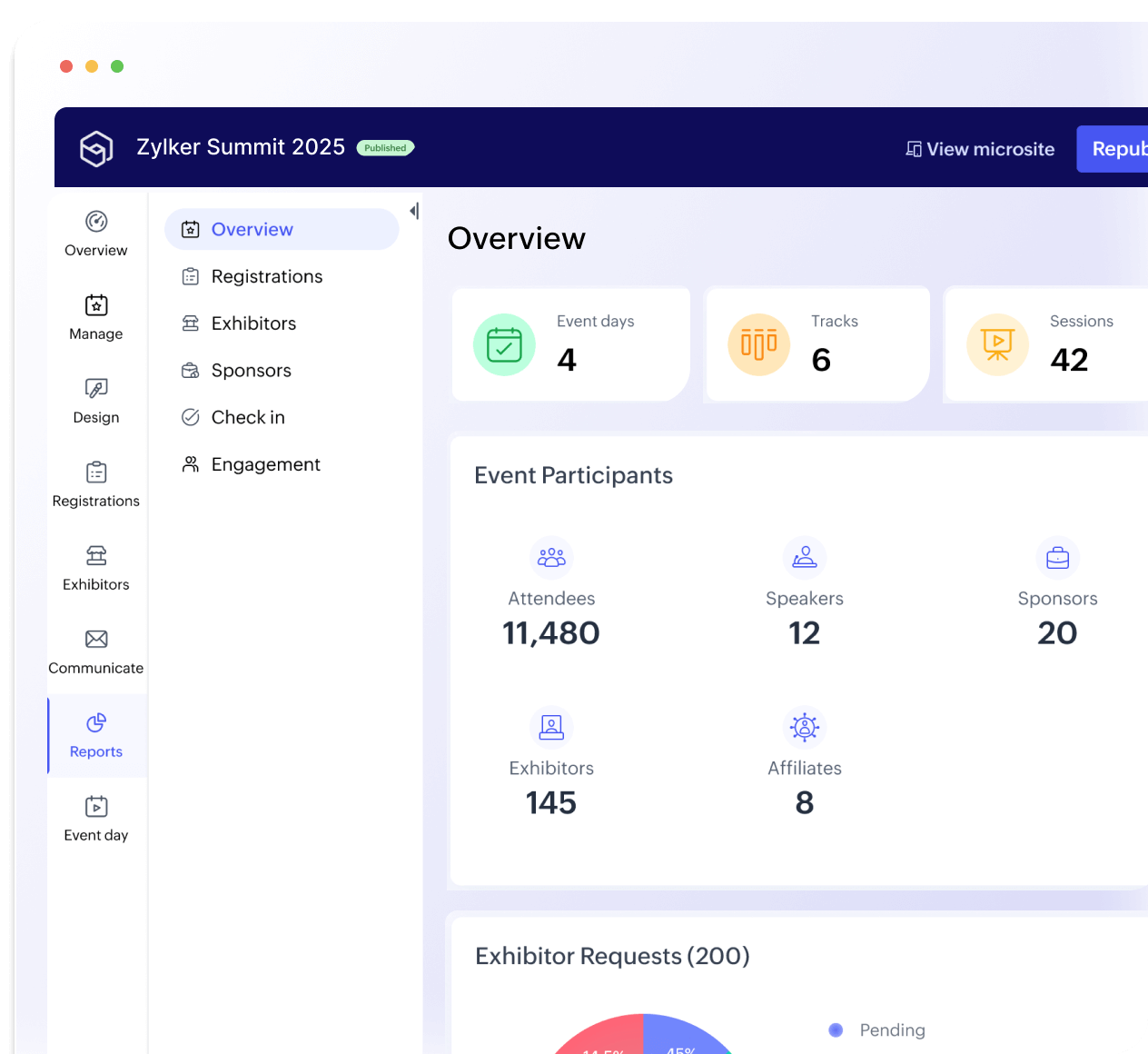
Zoho Backstage supports this approach by bringing planning, ticketing, exhibitor management, check-in, engagement, and analytics into one connected system, reducing tool sprawl and allowing organizers to focus more on the event experience than on coordination.

Host seamless trade shows with Zoho Backstage

Trade shows are inherently complex. Coordinating exhibitors, managing venue logistics, aligning marketing timelines, and preparing for onsite execution involves many moving parts. But when the planning structure is clear, complexity does not turn into chaos.

Successful organizers approach trade show planning with a combination of realistic timelines, thoughtful budgeting, strong exhibitor coordination, and carefully managed logistics. When these elements are supported by the right systems, even large-scale expos can operate in a structured and predictable way.

This is where planning tools begin to make a real difference. Platforms like Zoho Backstage bring together trade show planning, exhibitor coordination, onsite management, and post-event analytics into a single environment. Instead of juggling multiple systems or fragmented communication channels, organizers can manage the entire event lifecycle from one place, while exhibitors and internal teams stay aligned.

For teams planning trade shows that need to scale without increasing operational stress, a centralized approach can significantly reduce coordination overhead while improving visibility across every stage of the event.

FAQ

Ideally, exhibitors should receive access as soon as their contracts are signed. Early access gives them enough time to submit booth details, upload branding assets, and review setup guidelines without feeling rushed. It also reduces last-minute coordination issues for organizers and helps ensure all required information is submitted well before the event.

One of the most common mistakes is underestimating trade show logistics. Elements such as freight movement, power requirements, and load-in schedules often seem straightforward but require careful coordination. When these details are overlooked, they can lead to avoidable delays, setup congestion, and frustration for exhibitors.

Yes, the same planning framework can be applied to smaller regional expos. The difference lies in adjusting timelines, budgets, and logistics scale to match the event's size. Even for smaller shows, maintaining centralized coordination helps keep exhibitors, vendors, and internal teams aligned.

Clear cut-off dates and automated reminders are usually the most effective solutions. When exhibitors have visibility into pending tasks and upcoming deadlines, they are more likely to respond on time. Structured workflows also reduce the need for constant manual follow-ups from the organizing team.

Yes, especially when centralized planning tools are used. Organizers can duplicate elements like floor plans, exhibitor information, and workflow structures from previous events. This significantly reduces setup time for future editions and allows teams to focus on improving the event experience rather than rebuilding everything from scratch.