Trade show marketing strategies that drive real attendance

Learn how content, partnerships, and coordinated promotion can turn your trade show into a high-engagement marketplace, not just a crowded floor.

If you think trade shows fail because of poor-looking booths or small venues, you're wrong. Most trade shows underperform for a simple, but far more costly, reason: not enough relevant people show up, or the right ones don't show at all.

Trade shows can still deliver real buying power to businesses. According to Trade Show: Data Reports 2026 by WifiTalents, over 80% of attendees at trade shows are decision makers with purchasing authority. Not only that, more than two-thirds of these attendees represent new prospects for exhibitors. Clearly, this is an audience most marketers would love to tap into effectively.

But there is a catch here. Trade show marketing does not begin when the doors open, and it certainly does not end when they close. In reality, the success of a trade show is shaped by what happens before, during, and long after the event.

For example, research shows that 76% of attendees arrive at trade shows with a pre-planned agenda, and exhibitors who run pre-event marketing campaigns can improve the quality of the audience they attract by up to 46% and increase lead conversions by nearly 50%.

This means attendance and engagement are rarely a matter of chance. You can have headline exhibitors, a solid floor plan, and months of operational planning behind you. But if your marketing does not build anticipation before the event, maintain visibility during it, and convert interest afterwards, everything else becomes damage control.

Empty aisles, bored exhibitors, and low lead numbers are usually symptoms of poor promotion, not poor planning, especially when your event is competing for attention alongside social feeds, webinars, and virtual events.

We'll break down proven trade show marketing strategies that help you attract exhibitors, right attendees, drive attendee registrations, and keep the momentum alive even after the event ends.

Trade show marketing strategies

A comprehensive guide to trade show marketing strategies

Why trade show marketing needs a different approach today

Trade shows are multi-dimensional marketplaces. On one side, you have attendees who are evaluating whether it's worth their time to travel, block their calendars, and step away from their daily work. On the other hand, you have exhibitors considering whether the investment will translate into real conversations and boost the pipeline. Then there are sponsors, who are weighing in with visibility as well as ROI. This is an entire marketing ecosystem and requires more specificity.

If you use a generic message - " Join us for an exciting expo" for all, it will connect with no one.

Effective trade show marketing begins with understanding the flow of value inside the event. Attendees are looking for value in discovering, learning, and networking. Exhibitors are looking for value in generating leads, visibility, and business opportunities.

Modern expo promotion strategies are shaped by a few clear realities. Attendees now decide faster and expect immediate clarity about value. When someone sees your event promotion, they quickly evaluate whether it is relevant to them, and if the benefit is not obvious in the first few seconds, they move on. This is why long descriptions without clear outcomes rarely work anymore, while promotions that quickly highlight what attendees will gain tend to drive stronger engagement and registrations.

At the same time, exhibitors expect clear ROI before committing to a booth. They want to understand who the attendees are, how engagement will be driven on the floor, and what tools are available to capture and follow up on leads. When organizers clearly communicate audience quality, engagement opportunities, and lead-capture support, exhibitor confidence and early participation typically increase.

Another important shift is that digital channels now strongly influence physical attendance. Social proof, online content, email campaigns, and industry conversations shape whether people decide to attend in person. Events that consistently build visibility and momentum online usually see higher interest and better turnout.

This is why promotion cannot be treated as an afterthought. It must be designed as intentionally as the floor plan itself, ensuring both attendees and exhibitors clearly see the value of showing up.
Pre-event trade show marketing strategies: Build real demand

Most of your trade show's success will be determined weeks before the event even starts. By the time booths are being set up, many attendees have already decided which booths to visit, what questions to ask, which aspects to consider, and so on.

Focus on audience clarity, not channels

Before you start thinking about advertising or emails, you need clarity on who you are speaking to and why they should care. Channels can amplify messages, but they can't fix unclear messaging.

For your attendees, your messaging needs to revolve around tangible outcomes, about problems they can solve, trends they can learn about, and people they can meaningfully connect with. "Join us for the biggest expo" does not resonate unless you provide any value.

For your exhibitors evaluating audience quality, they want to know who will be walking in, how your event engagement will kick off, and whether their conversations will realistically convert into business opportunities. When your messaging is clear and relevant, and you avoid generic communication, every promotional channel works better.

Use content-led promotion to educate before you sell

One of the most effective expo promotion strategies is preparing your audience with useful insights before asking them to register. Instead of immediately pushing sign-up links, strong trade show promotion builds interest through content that helps attendees understand the value of participating. When people feel informed, they are more likely to engage with intent.

Publishing short blog posts, interviews, or videos featuring exhibitors allows attendees to preview what to expect on the show floor. Similarly, sharing industry insights or panel previews positions the event as a learning opportunity rather than just a selling environment. Featuring exhibitors within this content also encourages them to promote the event within their own networks, expanding reach organically.

Consistency becomes easier when content, website updates, and communication are managed together. Zoho Backstage's event website helps organizers maintain aligned messaging by allowing them to publish updates and automate communication from one place.

Build partnerships that expand your reach naturally

Partnerships are often overlooked in trade show marketing, yet they play a major role in building credibility and extending reach. Industry associations, for example, can position your event as relevant and trustworthy because their audiences already value their recommendations. This type of endorsement often carries more weight than direct advertising.

Media collaborations further strengthen visibility by sharing your event story through interviews, newsletters, and more organic editorial content. Exhibitors can also become effective promoters when provided with structured promotional kits that make it easier for them to communicate consistently.

When multiple partners actively contribute to promotion, your marketing feels more credible and less dependent on paid channels. This collaborative approach helps expand reach while strengthening audience trust.

Segment and personalize your email campaigns

Email marketing remains one of the most effective tools for driving registrations, but relevance determines results. Attendees and exhibitors evaluate events differently, so communication should reflect their specific priorities.

For attendees, messaging should focus on learning opportunities, networking value, and the practical outcomes they can gain. Exhibitors, meanwhile, are more interested in audience quality, engagement potential, and lead opportunities. When messaging reflects these motivations, engagement improves naturally.

Timing also matters. Early emails should focus on building awareness, while later messages can highlight the value of the session or last-minute benefits that encourage action. Automation helps support this process by triggering communication based on user behaviour. Zoho Backstage's automation features allow organizers to deliver timely, relevant messaging while simplifying campaign management.

On-site and live trade show marketing strategies that boost engagement

Promotion does not stop when the event starts. In fact, some of the most effective trade show marketing happens during the event itself.

Turn your show floor into a marketing channel

Promotion should continue actively once the event begins, because the show floor itself can become one of your strongest marketing assets. Every interaction, session, and booth visit is an opportunity to reinforce value and guide attendee participation more intentionally. When attendees clearly understand where meaningful experiences are happening, they are more likely to explore the event more deeply.

Clear signage, timely announcements, and live updates help attendees navigate the show floor with confidence and purpose. Instead of passively walking through aisles, they can make informed decisions about which sessions to attend and which exhibitors to engage with.

Empower exhibitors to market actively during the event

Exhibitors are not just participants; they actively contribute to the event's vibrancy and engagement. When exhibitors are equipped with simple lead capture tools and clear visibility opportunities, they feel more confident initiating conversations and promoting their offerings. This confidence often translates into more engaging booth experiences and stronger attendee interaction.

Encouraging exhibitors to promote live demos, exclusive previews, or limited-time offers through event channels can further increase activity on the show floor. Access to attendee engagement insights also helps exhibitors refine their approach in real time, allowing them to focus on interactions that generate the most interest. When exhibitors feel supported by the event's technology and structure, they are more likely to actively contribute to the event's overall success.

Use hybrid and virtual extensions to widen reach

Physical attendance limitations should not restrict your event's visibility or reach. Hybrid elements allow audiences who cannot attend in person to still participate meaningfully, keeping them connected to your brand and event ecosystem. Live streaming key sessions or product demonstrations ensures that valuable content reaches a broader audience while also generating interest for future editions.

Virtual booths and digital interaction opportunities further extend exhibitor visibility beyond the physical venue. These interactions also create content that can be reused later for continued engagement. When hybrid participation is included as part of your promotion strategy, it helps maintain relevance beyond the event dates and strengthens long-term demand generation.

How integrated platforms simplify trade show marketing execution

Running trade show promotions across emails, websites, social channels, exhibitor tools, and analytics can quickly become overwhelming. This is where integration makes a real difference.

When promotion, registration, exhibitor management, and analytics live in one system, coordination becomes easier. This lets marketing teams update messaging without worrying about mismatched information across channels, and exhibitors get consistent tools for promotion, lead capture, and follow-up. This lets organizers gain visibility into what's working and where interest is dropping off.

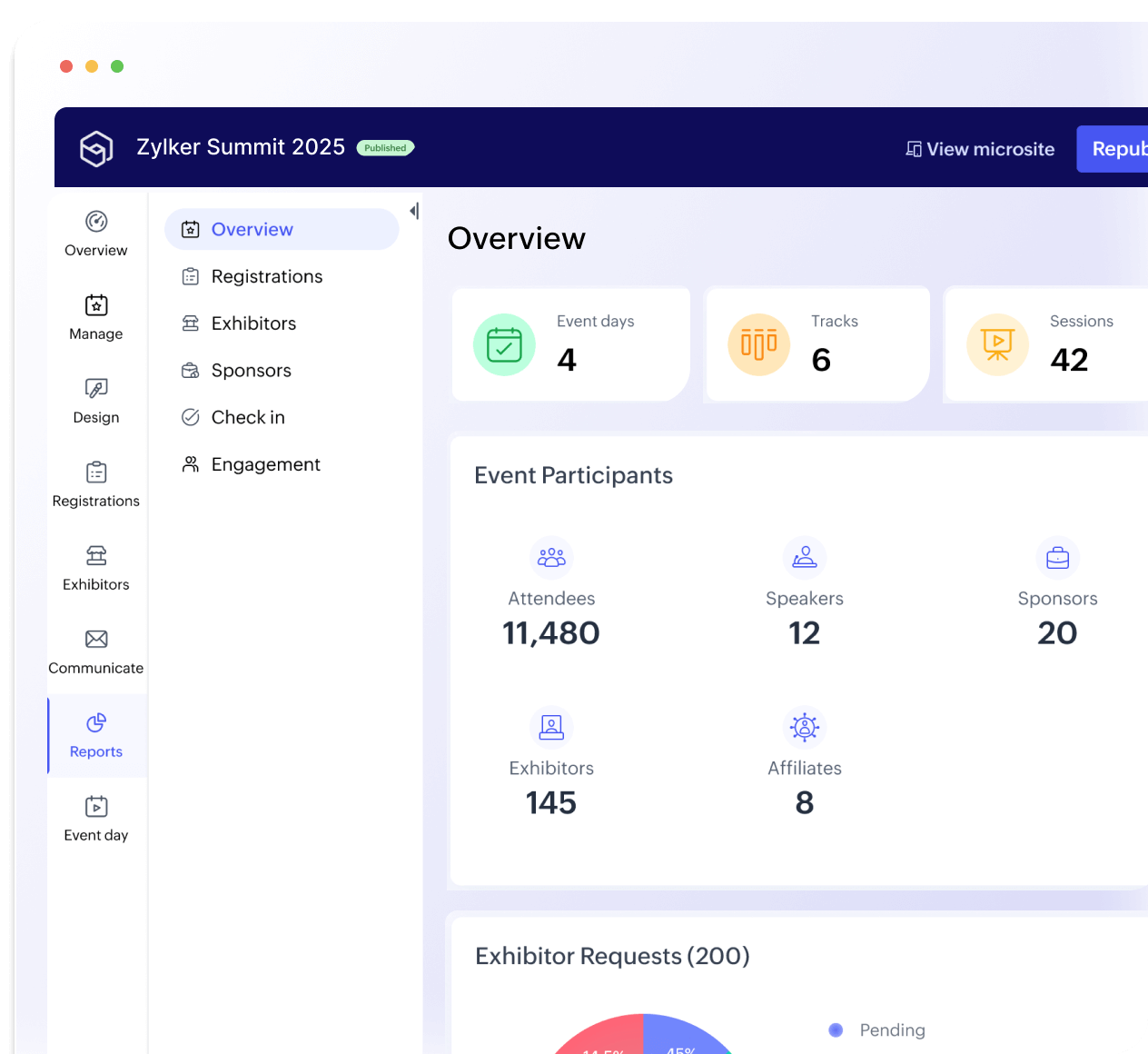
Zoho Backstage supports this coordinated approach by bringing together promotion, check-in, exhibitor tools, engagement, and analytics. Instead of juggling multiple platforms, organizers can focus on driving demand and improving experience.

Make your trade shows stand out with Zoho Backstage

Effective trade show marketing is not about doing more. It's about doing the right things, in the right order, with clarity and consistency.

When expo promotion strategies are built around real value, partnerships, and content, attendees show up informed and excited. When exhibitor marketing is supported with the right tools and data, exhibitors engage more deeply and see stronger returns.

The most successful trade shows treat promotion as a continuous process, before, during, and after the event. And when that process is supported by integrated platforms, demand generation becomes structured instead of stressful.

If you want your next trade show to feel busy for the right reasons, start by rethinking how you market it. Zoho Backstage allows organizers to plan, promote, run, and analyze trade shows from a single system, keeping trade show marketing aligned with real-time data, exhibitor activity, and attendee behaviour. This coordination enables demand generation strategies to be executed consistently throughout the event lifecycle.

FAQ

Ideally, trade show marketing should start 10–12 weeks before the event. This gives you enough time to build awareness, introduce key themes, and gradually warm up your audience, rather than rushing promotions at the last minute. An early start also helps you test messaging, highlight speakers or exhibitors, and adjust campaigns based on your audience's initial response.

In most cases, exhibitors should not receive individual attendee data before the event. Pre-event access is usually limited to aggregated insights such as attendee industries, job roles, or company sizes. Detailed attendee information should only be shared after consent-based interactions, such as badge scans, meetings, or form submissions during the event.

You can still promote your trade show by focusing on industry themes, challenges, and the problems the event will address. Highlight early-confirmed exhibitors, speakers, or partners while clearly communicating that the exhibitor lineup is continually growing. This approach builds anticipation and positions the event as a gathering point for the industry, even before the full list is finalized.

Paid advertising is not always essential, especially if your event already has strong industry connections and engaged communities. Many trade shows generate significant interest through content marketing, partnerships, and exhibitor-led promotion. Paid ads are most effective when used strategically to amplify campaigns that are already performing well.

Registrations alone don't tell the full story. Effective measurement should include exhibitor lead quality, session attendance and engagement, booth interactions, and attendee feedback. You can also track indicators like repeat attendance intent, meeting bookings, and post-event sales conversions to understand the real business impact of your marketing efforts.