The event planner's guide to speed networking events

Speed networking transforms conference networking from random encounters into structured, high-value connections. This guide shows you how to get it right.

Speed networking solves a problem most event planners don't talk about: traditional networking excludes people. The extroverts dominate conversations while the introverts hover near the coffee station. Junior professionals struggle to break into circles of senior executives. First-time attendees leave without a single meaningful connection.

Speed networking levels the field. Lake Forest College's annual speed networking event connected 350 students with 160 professionals across nine rotations—creating 4,500 interactions in one evening. And this matters, because 85% of jobs get filled through networking, not applications.

We'll show you how to create these structured networking experiences for conferences, trade shows, and professional events of any size.

How to plan a speed networking event

Speed networking guide: Planning & strategies

What is speed networking, and why should event planners care?

Speed networking is timed rotations where participants meet multiple people in preset intervals—usually 3-5 minutes per conversation. Here's how it works:

  • Attendees are assigned seats or stations based on pre-event matchmaking
  • A timer starts, and conversations begin
  • When time's up, a signal (bell, buzzer, announcement) prompts one group to rotate
  • The process repeats until everyone has met their scheduled contacts

By the end of the session, the average participant meets 8-10 people in 60-90 minutes. In traditional networking, that drops to 2-3.

This matters because your attendees are keeping score. They paid to be there, took time away from work, and they're measuring ROI in connections made. Traditional networking leaves that to chance. The outgoing person who works the room walks away with 15 business cards. The quieter professional who's actually a better fit for half the people in the room leaves with two. Speed networking fixes that math.

💡 The business case comes down to retention and differentiation.

Attendees remember connections, not keynotes. When registration opens next year, they're asking themselves, "Did I meet anyone worth my time?" Speed networking gives them an answer. For sponsors, it's even more direct—station-based formats guarantee conversations with qualified attendees instead of hoping someone stops by the booth.

Choosing the right speed networking format for your event

Speed networking might sound simple—set a timer, rotate participants, repeat—but there are different ways to structure those rotations depending on what you're trying to accomplish. Here are the three formats that you might want to try:

1. The round robin model, or one-on-one rotations

When to use: Mentor matching programs, investor-founder speed dating, specialized industry meetups

This is the format most people picture when they hear "speed networking." Participants sit across from each other at tables, talk for 3-5 minutes, then one group rotates clockwise while the other stays put. It's straightforward and works well for 20-50 people when the goal is depth over volume.

That means about 10 contacts per hour, which is fine when quality matters more than quantity. But there's a hard constraint: you need an even number of participants.

⚠️ Don't use round-robin for audiences over 50—the rotation logistics get messy fast. And don't use it when participants have vastly different experience levels. Pairing a first-time founder with a 20-year executive creates awkward conversations where neither person gets value.

2. Station-based model, or fixed host rotations

When to use: Exhibitor/attendee connections, recruiter events, mentor programs with clear expertise gaps

Station-based flips the rotation. Instead of everyone moving, "hosts" stay at fixed stations while participants rotate through on a schedule. This works when you have a clear divide between the people with expertise (recruiters, mentors, exhibitors) and the people seeking it (job seekers, mentees, prospects).

And the benefits are clear:

  • For hosts, it's less chaotic than working a trade show floor—conversations are guaranteed, not hoped for.
  • For participants, pre-matching using registration data routes them to relevant stations instead of whoever's next in rotation.

‼️ This only works when there's a clear host/visitor dynamic. If everyone's a peer looking to collaborate, station-based creates an artificial hierarchy that doesn't serve anyone.

3. Group-based, or table rotations

When to use: Large conferences (100+ attendees), peer learning sessions, knowledge exchange over transactional connections

Tables of 4-10 people discuss together for one round, then individuals rotate to new tables to join different groups. You're meeting multiple small groups throughout the session, not stuck with the same people. This format reduces the pressure of one-on-one interactions while still creating diverse connections. So it's perfect for collaborative discussion rather than rapid-fire pitches.

But don't use this when attendees need private conversations: recruitment pitches, sales discussions, or anything sensitive. Group dynamics kill confidentiality and vulnerability.

💡Pro tip: Success depends on how you compose tables. Use AI matchmaking software to group people by complementary profiles, not random assignments. The difference between productive discussions and awkward small talk comes down to who's sitting together.

Best practices for planning a speed networking event

Plan speed networking backwards: start with who needs to meet whom, then choose the format that makes those connections happen. Here are the five tips to keep sessions from turning into expensive chaos.

1. Define your goals and success metrics

Start with what you're actually trying to accomplish. While networking is the intended activity, the goal could be lead generation, mentorship matching or partnership exploration. The distinction matters because it determines format:

  • Transactional outcomes like sales or recruitment work best in round-robin where conversations are private and focused.
  • Learning and knowledge exchange work better in group-based formats where multiple perspectives add value.

So, before you pick a format or send invitations, answer three questions:

  • Does this support a core event KPI?
  • Are attendee roles complementary enough to create value?
  • Can you schedule it early in the agenda when energy is high?

Then set measurable KPIs such as number of meaningful connections made, post-event meetings booked within 30 days, deals that move forward in the pipeline.

2. Select your format and participant mix

Your goals from step one tell you which format to use. If you need transactional connections—sales leads, recruitment conversations—round-robin works for 16-30 people. If you have experts meeting seekers, station-based handles 20-50. If you're running peer learning at a conference, group-based scales to 100+.

But format is the easy decision. The harder part is curating who shows up. Use registration forms to capture role, industry, goals, and experience level. This data lets you create intentional matches instead of random pairings. 30 well-matched people will create more meaningful connections than 100 attendees who have nothing to offer each other.

Some questions you can ask are:

  • What are you hoping to get from speed networking? (leads, partnerships, mentorship, learning)
  • What can you offer other participants?
  • What experience level best describes you? (early career, mid-level, senior, executive)
  • What type of people would be most valuable for you to meet?

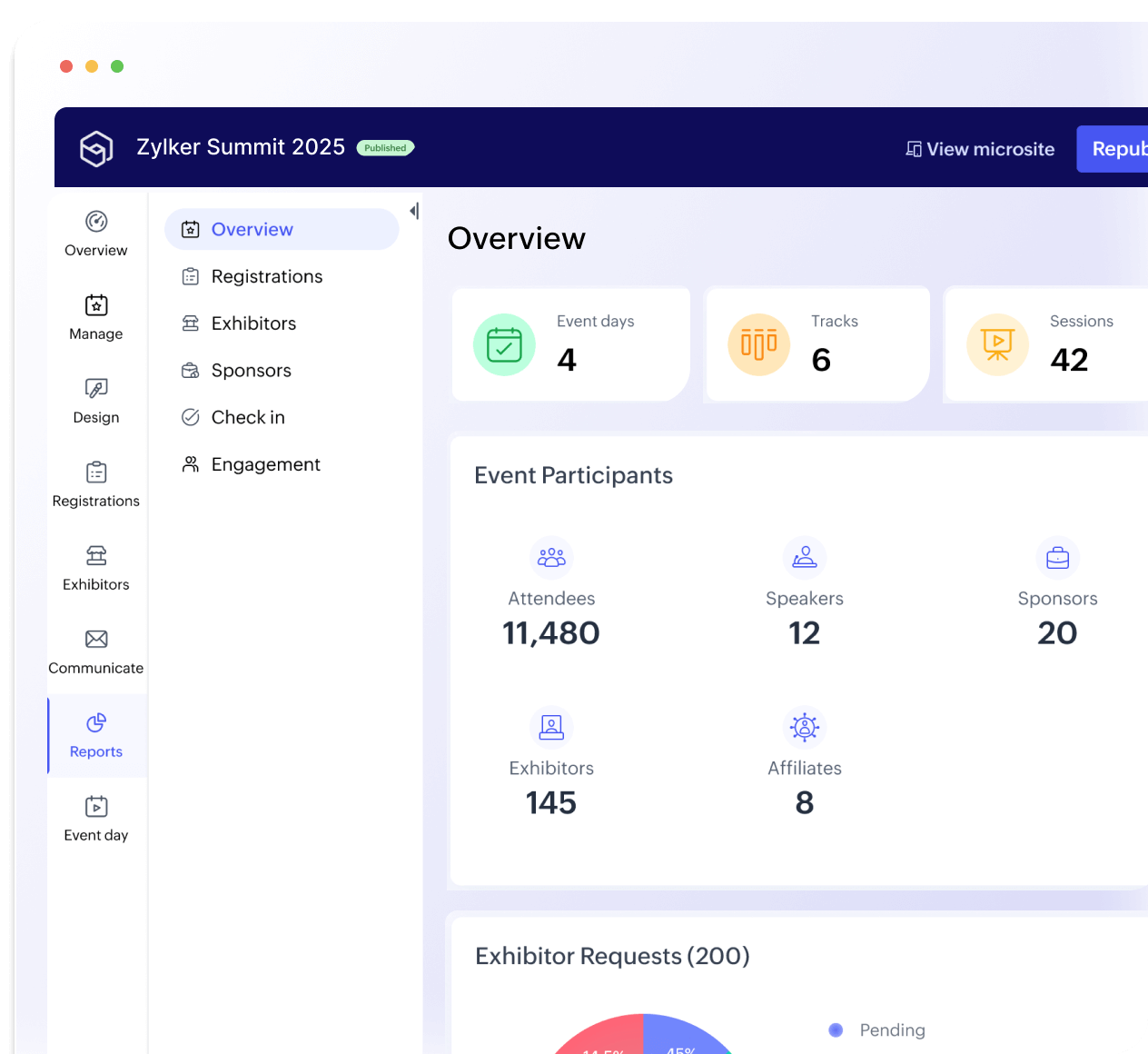
You can use Google Forms for this, but most event management platforms, including Zoho Backstage, offer custom registration forms that are a lot more flexible for events. Backstage, for example, also includes custom functions and integrations (low/no-code), so you can either do advanced segmentation directly or sync your data with AI matchmaking or speed networking platforms.

💡 Pro tip: Categorize attendees into segments that go deeper than broad roles. Not just "investor-founder," but "seed-stage B2B SaaS founders" and "Series A enterprise investors." The more specific your segments, the easier it is to create matches that feel intentional.

3. Choose the right event tech

Manual matchmaking works fine when you're coordinating 15-20 people. Beyond that, you're spending hours in spreadsheets trying to avoid scheduling conflicts and ensure everyone meets the right people.

This is where event technology actually earns its keep. AI matchmaking uses the registration data you collected—industry, role, goals, interests—to create pairings that make sense. But beyond, matchmaking, we suggest you look for some others like:

  • Networking features like QR scanning for quick contact exchanges or options to book longer meetings right there
  • Post-event surveys to grab feedback while it's fresh, not three days later when people barely remember
  • Ticketing and check-in so you know who actually showed up and aren't waiting on no-shows
  • Floor plans that show participants exactly where table 7 is instead of having them wander around lost
  • CRM integration to track who followed up, who booked meetings, and which connections turned into actual business

💻Taking it online: Virtual speed networking works the same way, but instead of rotating tables, you're rotating breakout rooms. Most web-conferencing and virtual event software already have this feature built-in. For example, we call this a Lounge in Zoho Backstage, and here's how you can make it work for speed networking:

  1. Create as many lounges as you would tables in real-world events, and set a capacity based on your format.
  2. As time runs out, send a push notification telling participants to switch to their next assigned lounge.
  3. Repeat until all scheduled conversations are complete.

4. Finalize the logistics

You've picked your format, got your participant list, and your tech is ready. Now comes the tricky part: execution.

Everything starts with time. Keep each conversation to three to five minutes—long enough to exchange context, short enough to move on without friction. And cap the session at 90 minutes. Past that, energy drops and the later rounds stop producing anything useful.

But even that can get tiring. So build buffer times. A few minutes after every few meetings so people have the space to reset and take notes. Without it, conversations bleed over, people fall behind, and the structure you planned disappears in real time. And schedule speed networking early or mid-day, not at the end when everyone's checked out.

And then, there's the room layout. Match it to your speed networking session format. For example:

  • Round-robin: Long tables with facing chairs
  • Station: Booth-style setups with hosts staying put
  • Group: Numbered round tables

You can map this out in advance using the floor planner in your event management software. Laying out tables, stations, and numbering ahead of time makes rotations easier to explain and easier to run on the day. You can also share the layout with attendees in advance so they arrive knowing where to go.

💡 Pro tip: Run a 2-minute practice round first. Let participants do one rotation to understand mechanics—where to sit, when to move, how signals work.

5. Prepare your attendees

Most speed networking problems show up before anyone walks into the room. When people don't understand the format, they hesitate, fall behind, or spend the first rotation figuring out what's happening instead of talking.

We've found it helps to set expectations in two passes:

  • About a week out, send a short what to expect note explaining the format, timing, and how rotations work.
  • Then, 24–48 hours before, send personalized schedules so people know who they'll meet and where to go.

On the day, take five minutes before the first round to walk everyone through how it's going to work. Run through one example so people can see when to start, when to stop, and where to move next, and answer questions while you still have the room. We also suggest you keep visible countdown timers in multiple locations or on screens, an assign a moderator who's strict on time limits—so one long conversation run doesn't throws off the entire schedule.

Get everyone to the right table at the right time with Zoho Backstage

Getting the right people in the room, matching them intentionally, and moving everyone through the session without friction is what separates sessions that feel productive from ones that feel chaotic. And Zoho Backstage helps you by doing all the heavy lifting.

Registration data feeds matchmaking. Floor plans show people exactly where to go. Check-in tells you who actually showed up. And you have a ready-made backup plan if you want to take it virtual.

So, if speed networking is part of your next event, sign up for free and see how Zoho Backstage supports it in practice.

Frequently asked questions

Each conversation in a speed networking event should run 3-5 minutes. That's long enough to exchange context and figure out if there's mutual value, short enough that you're not stuck if there isn't. The total session caps at 90 minutes. Beyond that, you're fighting fatigue, not creating connections.

Match complementary roles, not similar ones. Pairing two founders wastes both their time—pair them with investors or customers instead. Then give participants real conversation prompts beforehand. "What do you do?" doesn't really give them much space for real conversations

For in-person events, automated matchmaking based on attendee profiles matters most—random pairing wastes everyone's time. For virtual sessions, you need breakout room management that actually works without manual shuffling.

Beyond that, the logistics make or break execution: check-in systems that track who showed up, real-time schedule adjustments when someone no-shows, and announcements so attendees stay up to date on realtime changes. If your platform can't handle those fundamentals, you'll spend the event troubleshooting instead of fostering connections.

Start by tracking interaction volume and contact exchanges. They tell you if your logistics worked. But the real measure comes at 60-90 days: did any connection become a hire, client, partnership, or active mentorship? That's the difference between a busy event and a valuable one.