Social media event marketing: How to build buzz and drive attendance in 2026

Learn how to promote events on social media with strategies that drive real registrations and how event management platforms can simplify social sharing and streamline event marketing.

Even the most well-planned events can fall flat if people don't know they exist. You've secured the venue, locked in speakers, and built a compelling agenda—but if your target audience isn't aware, those seats stay empty. Low visibility means low registrations, which means wasted budget, disappointed sponsors, and an event that never reaches its potential impact.

And social media plays a big role in event discovery. According to Kepios, there are now 5.24 billion social media users worldwide. That's nearly 64% of the global population.

Well, social media can already be a key part of your event marketing plan. But the real challenge is doing it effectively without spreading yourself too thin or wasting budget on tactics that don't convert.

In this guide, we dig into which social media platforms actually matter for your event, what content drives ticket sales (not just likes), and how to build buzz before, during, and after your event.

Social media event marketing

A comprehensive guide to marketing events on social media

Why social media event marketing actually works

Half of the adult population from around the world now visits social platforms specifically to learn about brands and consume the content they share. That number has steadily grown from 47.7% in late 2022 to 50% in 2025.

Your potential attendees aren't just scrolling for entertainment anymore; they're looking for things to do—and events to attend. Here's why social media is such a powerful channel for event promotion:

  • Discoverability: People are already searching for events on social platforms. TikTok now acts like a search engine for things to do. LinkedIn is now also a social networking platform for professionals. Users often find events by following creators or pages with shared interests or common professional domains.
  • Cost efficiency: Unlike print or TV, there's no big upfront investment. Most of the platforms allow free setup to a considerable extent. Organic posts only need your time and creativity. Paid ads let you target specific demographics with small daily budgets, promising moderate to high ROI
  • Direct access to your audience: There's no need to rent email lists or buy ad space. Social platforms let you talk to your prospective audience directly, so you start building relationships before the event even begins.
  • FOMO creation: Social media is built for creating urgency. Sharing updates like "500 tickets sold" or short attendee testimonials builds trust and urgency to be a part of the event. And behind-the-scenes clips can make your followers feel like they're missing out if they don't join.
  • Viral amplification: Every attendee can become a promoter. A single post, endorsement, or tag can expose your event to hundreds of new audiences. User-generated content plays a more authentic role than ads and helps you reach audiences who already trust their recommendations.

In short: social media meets your audience where they are, costs less than traditional event promotions, and makes every post an opportunity to drive more buzz.

Finding the right social media platforms for your event

When promoting an event, "spray and pray" is not a strategy that gives you desired outcomes. You don't need to be everywhere. You need to be where it counts. And two or three strong channels that are integrated into your larger event marketing strategy and supported by real-time ticketing tools that track sales and attendee engagement will sell more tickets than six half-hearted feeds.

Here's how to decide where to focus your social media event marketing efforts:

Facebook

Best for: Community events, older adults, established audiences, large community groups

Facebook still works, especially when your event relies on RSVPs, updates, and social proof. Its event tools also make it easy for attendees to see who's attending, invite friends, and share it with their local community groups, where they can engage and stay in the loop.

Use it to:

  • Create event pages with RSVP and reminder features
  • Run targeted ads using precise demographic filters
  • Build community groups for returning attendees
  • Share detailed posts and updates

It's great for festivals, fundraisers, community events, workshops—anything that benefits from an engaged, returning community.

A recent survey of marketers says that Facebook remains the most effective social media marketing platform.In the same survey, 22% of the respondents said that Facebook has the largest return on investment (ROI), followed by Instagram, YouTube, and TikTok (16%), and LinkedIn (7%).

Take the Garden Club of Austin, for example. It's an active community of local gardeners. Gardening-related events are posted regularly, and anyone searching for "gardening events in Austin" is likely to come across their page and discover your events in the process

Instagram

Best for: Lifestyle events, visual brands, audiences aged 18–34

If your event looks good, Instagram should show it off. The platform thrives on eye-catching visuals and authentic interaction.

Use it to:

  • Post Stories with countdowns, polls, and questions
  • Create Reels for behind-the-scenes moments
  • Share carousels to highlight multiple event angles

Instagram is a great platform for concerts, art shows, food festivals, or any event where vibe and aesthetics matter.

A brand that really gets Instagram is Frieze—a global contemporary art organization. A quick scroll through their Instagram feed shows why their events are so popular—the energy, color, and atmosphere practically invite you to join the next one

Optional: add an image of their Grid with the caption: Frieze's IG feed proves visuals can sell a vibe (and tickets).

TikTok

Best for: Gen Z, entertainment-focused events, trends

TikTok isn't just for dances—it's the preferred search engine of two out of five Americans. Authentic, relatable videos often outperform polished productions here—especially if you can hop on a trending sound. Like Too Chillz, who use popular TikTok sounds to promote their events' atmosphere and vibe.

Please use a VPN to view the link and embed a video, if required

Use it to:

  • Join trending challenges or use viral sounds
  • Post short clips (15–60 seconds) with hooks in the first 3 seconds
  • Keep it raw and genuine—phone-shot over studio-shot

TikTok works best for anything that thrives on energy and personality—music festivals, comedy shows, interactive experiences.

LinkedIn

Best for: B2B events, professional development, thought leadership

LinkedIn is where professionals go to learn and connect. If your event adds career value, then it can be your most effective event marketing channel.

Use it to:

  • Share insights, takeaways, or industry trends
  • Publish articles or thought pieces
  • Reach decision-makers directly

LinkedIn is ideal for conferences, seminars, webinars, and networking events focused on professional growth.

At Zoho, we rely heavily on LinkedIn to promote our flagship event, Zoholics—especially through posts from our teams, speakers, and attendees. It's also where we see the highest engagement.

Design: A collage of LI posts by Backstage team members with the Caption: The Backstage team on LinkedIn—about Zoholics.

X (Twitter)

Best for: Live updates, tech, and news-related events

X (formerly Twitter) is where your audience goes to see what's happening right now, follow breaking updates, and join live conversations. Whether you're sharing session highlights, quick announcements, or live reactions, X lets you keep attendees—and those watching from afar—engaged in real time.

Use it to:

  • Share real-time highlights, quotes, or takeaways from presentations
  • Post reminders like "1 day to go!" or "Don't miss our keynote at 10 AM" to keep your event top of mind.
  • Use relevant hashtags and threaded posts to create discussions and surface trending topics

Promote tech summits, academic events, or multi-session conferences where live updates keep engagement high.

Event Tech Live—a top event for planners—uses X as a real-time highlight reel, posting about sessions, speakers, and everything attendees need for a great experience. These posts take little effort but are highly effective at keeping people informed and engaged.

YouTube

Best for: Educational and content-rich events; post-event session replay libraries and event reels

YouTube gives your event longevity. It's your home for all event recordings, highlight reels, and behind-the-scenes content. Valuable content lives here long after the lights go out, letting attendees rewatch sessions.

Use it to:

  • Upload full sessions or highlight reels
  • Share speaker interviews and panels
  • Host educational content or livestreams

YouTube is great for conferences, keynotes, or any event where you want a permanent archive of sessions, highlights, and behind-the-scenes content that attendees and prospects can revisit later.

At Zoho, we upload sessions from all our events to the main brand account—but categorize them in playlists. This improves discoverability, watch time, and overall engagement.

(Here's our Zoholics UK playlist, if you want to know what Zoho's all about.)

PlatformBest ForWhy It WorksPro Tip
FacebookCommunity events, older adults, established audiencesEvent tools help manage RSVPs, updates, and social proofFocus on building a community—searchable pages attract new attendees organically
InstagramLifestyle events, visual brands, audiences 18–34Rewards high-quality visuals and authentic engagementKeep a consistent aesthetic—visual vibe sells both the experience and tickets
TikTokGen Z, entertainment-focused events, trendsActive discovery; trends and sounds boost visibilityAuthentic, raw content outperforms polished videos—hook viewers in the first 3 seconds
LinkedInB2B events, professional development, thought leadershipProfessionals seek insights, networking, and career growthEmployee, speaker, and attendee posts drive higher engagement than brand-only posts
X (Twitter)Live updates, tech, news, multi-session eventsReal-time posts keep audiences engaged and informedLow-effort live updates maintain excitement and build FOMO during the event
YouTubeEducational or content-rich events; post-event archivesHouses sessions, highlight reels, and behind-the-scenes content for long-term engagementOrganize videos into playlists to improve discoverability, watch time, and engagement

Social media content strategy: What to post before, during, and after an event

A smart social media strategy covers three phases: before, during, and after your event. Each phase has a clear goal—build awareness, engage attendees, and extend impact—so your content drives registrations and keeps your audience connected.

Pre-event social media marketing: Some tips

Here, you focus on content that drives awareness, interest, and finally registrations:

  • Save-the-date announcements: Let your audience know when and where the event will happen.
  • Countdown posts: Remind followers how many days remain until the event.
  • Speaker or performer spotlights: Introduce key participants with short bios or fun facts.
  • Behind-the-scenes teasers: Share setup, planning, or sneak peek content.
  • Early-bird promotions: Encourage registrations with limited-time offers or giveaways.

Social media marketing tips for activities during an event

Keep energy high with real-time updates and immersive content like:

  • Live updates and highlights: Share key quotes, session takeaways, or short clips.
  • Stories and reels: Show the energy, crowd, and atmosphere in real time.
  • Interactive polls: Let followers vote or ask questions during sessions.
  • Reminders for upcoming sessions: Keep everyone on schedule.
  • User-generated content: Encourage attendees to share their experience with your event hashtag and repost the best content to your channels.

Pro tip: Use social walls to amplify engagement

Think of social walls as a live feed of your event's social buzz. They show posts, photos, and videos from attendees, speakers, and fans, making everyone feel part of the action.

At Zoho Backstage, we make this easy. You can integrate with Walls.io to automatically pull social content and display it on your event microsite. No manual updates, just a live, dynamic feed that keeps attendees engaged before, during, and after your event.

Post-event social media marketing tips

Extend your event's value by sharing highlights, key takeaways, and more to maintain engagement and momentum:

  • Event recap videos or photo collages: Showcase highlights and memorable moments.
  • Thank-you posts: Appreciate speakers, sponsors, and attendees.
  • Key takeaways or insights: Share actionable tips or session summaries.
  • User-generated content: Repost attendee photos, testimonials, or videos.

Automate social media event marketing with technology

Running social media for an event doesn't have to be a manual and stressful task. With the right tools, you can automate posts, maintain consistency, and boost engagement across platforms.

1. Social media marketing tools: Platforms like Zoho Social let you schedule posts, track engagement, and monitor conversations in real time. They help you plan campaigns, post consistently, and measure what's working.

2. GenAI for post generation: Tools like ChatGPT can assist in creating captions, copy variations, or even full post drafts quickly. You can generate content ideas, tailor messaging for each platform, and save hours of writing time.

3. Design tools: Canva, Crello, or Adobe Express make creating professional graphics, Stories, and videos simple, even for non-designers.

4. UTM builders: Generate unique registration links for each social platform using UTM parameters (e.g., ?utm_source=linkedin). This lets you track which channels drive the most registrations.

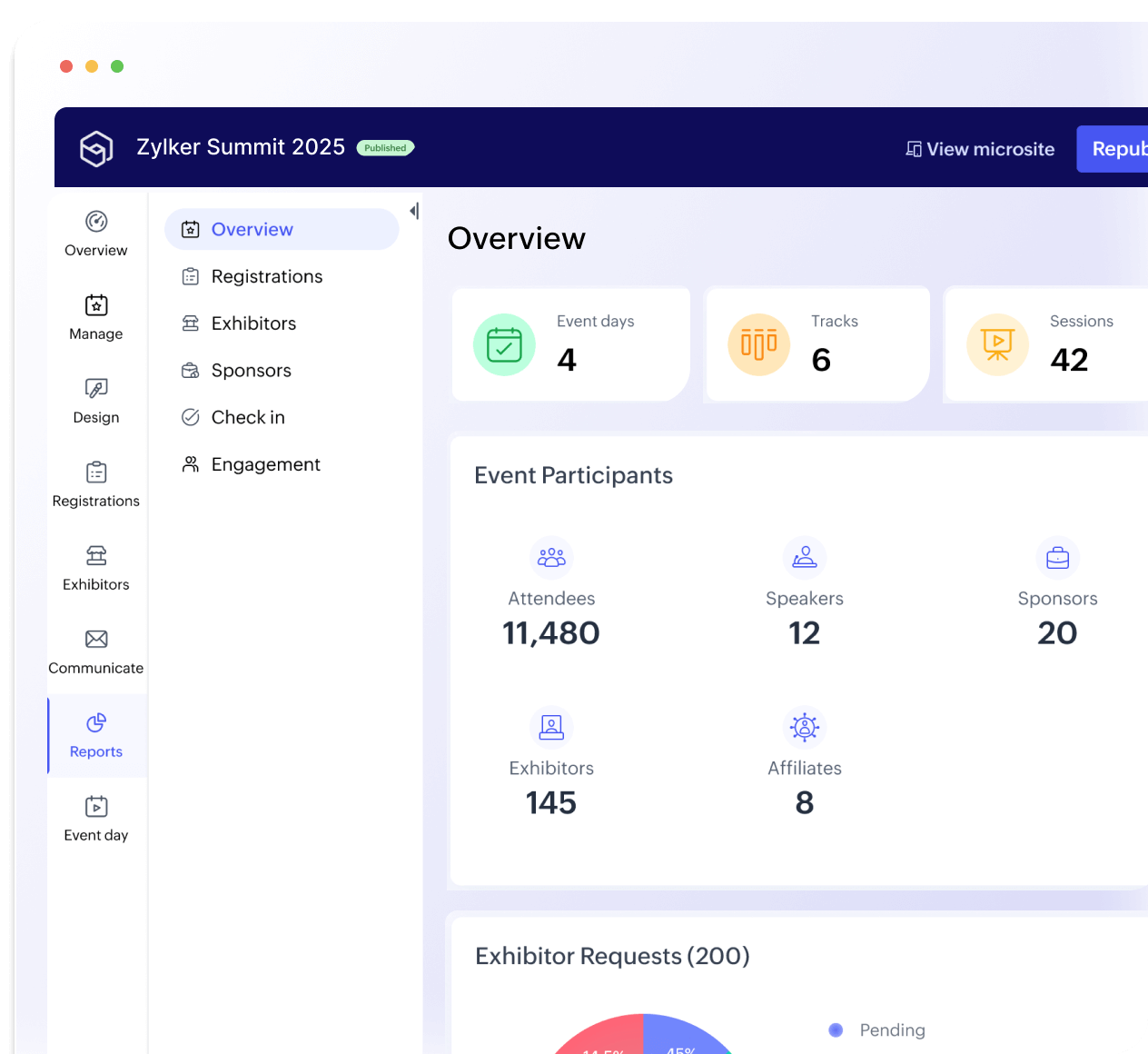
Even your event management software can help. For example, with Zoho Backstage, you get ready-made templates for X, Facebook, and LinkedIn that you can share with a single click. This is perfect for the busy pre-event days when you want to stay visible in attendees' feeds with polished, low-effort posts. You can also use the built-in affiliate marketing feature to create custom registration URLs for different social channels.

Speed up event social promotions with Zoho Backstage

Social media is where your audience spends time and decides which events to attend. Sharing updates, behind-the-scenes content, and engaging posts can help your event get noticed and build real interest.

And event software like Zoho Backstage makes this easier. It integrates social media sharing directly into the platform, allowing you to publish templated posts for X (formerly Twitter), Facebook, and LinkedIn with just a click. But that's not all.

Beyond social media tools, Zoho Backstage handles the full event management picture. Build a branded event website, manage registrations, send automated emails, and track who's engaging with your content.

Planning a hybrid conference? Virtual seminar? In-person workshop? Zoho Backstage gives you the tools to plan, promote, and run your event without juggling multiple platforms.

FAQs

Start promoting your event about 6–8 weeks in advance for large conferences or festivals, and 3–4 weeks for smaller gatherings. Begin with teaser posts or save-the-date announcements, then share more details—like speakers, sessions, or giveaways—as the event gets closer. The goal is to build steady excitement instead of rushing last minute.

You can promote your event through organic posts, paid ads, influencer partnerships, and user-generated content. Share updates before the event to create buzz, post live content during the event to boost engagement, and follow up with highlights or thank-you posts afterward. The key is to plan your content calendar around the event timeline so every post has a clear purpose.

It really depends on where your audience spends their time. LinkedIn works best for professional or B2B events, Instagram for lifestyle or visual experiences, TikTok for younger audiences, and Facebook for community-focused gatherings. Rather than trying to be everywhere, focus on two or three platforms where your ideal attendees are most active.

Yes, they do—just in a smarter way. Hashtags help your content get discovered by the right people rather than just increasing reach. Create a unique branded event hashtag that's short and easy to remember, and use it consistently across all platforms so attendees can follow and join the conversation.