How to sell out expo booths: A practical guide

Selling out expo booths is part sales strategy, part floor design, and part timing. Here's how successful organizers turn lukewarm interest into hot demand and confirmed exhibitors.

Most expos don't fail because there isn't demand. They fail because booth sales start too late, pricing feels confusing, or exhibitors don't clearly see what they're getting for their money.

If you've ever stared at a half-empty floor plan two weeks before your expo opens, you know the feeling. You have footfall projections, marketing plans, and sponsors lined up. But exhibitor confirmations are slow. Emails go unanswered. And every conversation ends with, "Let me get back to you."

At this point, it's easy to assume there is no demand. But in reality, your booth sales have stalled for a different reason; the opportunity was not presented in a way that made the decision easy for exhibitors. Selling expo booths isn't about pushing harder. It's about removing friction and making the value obvious.

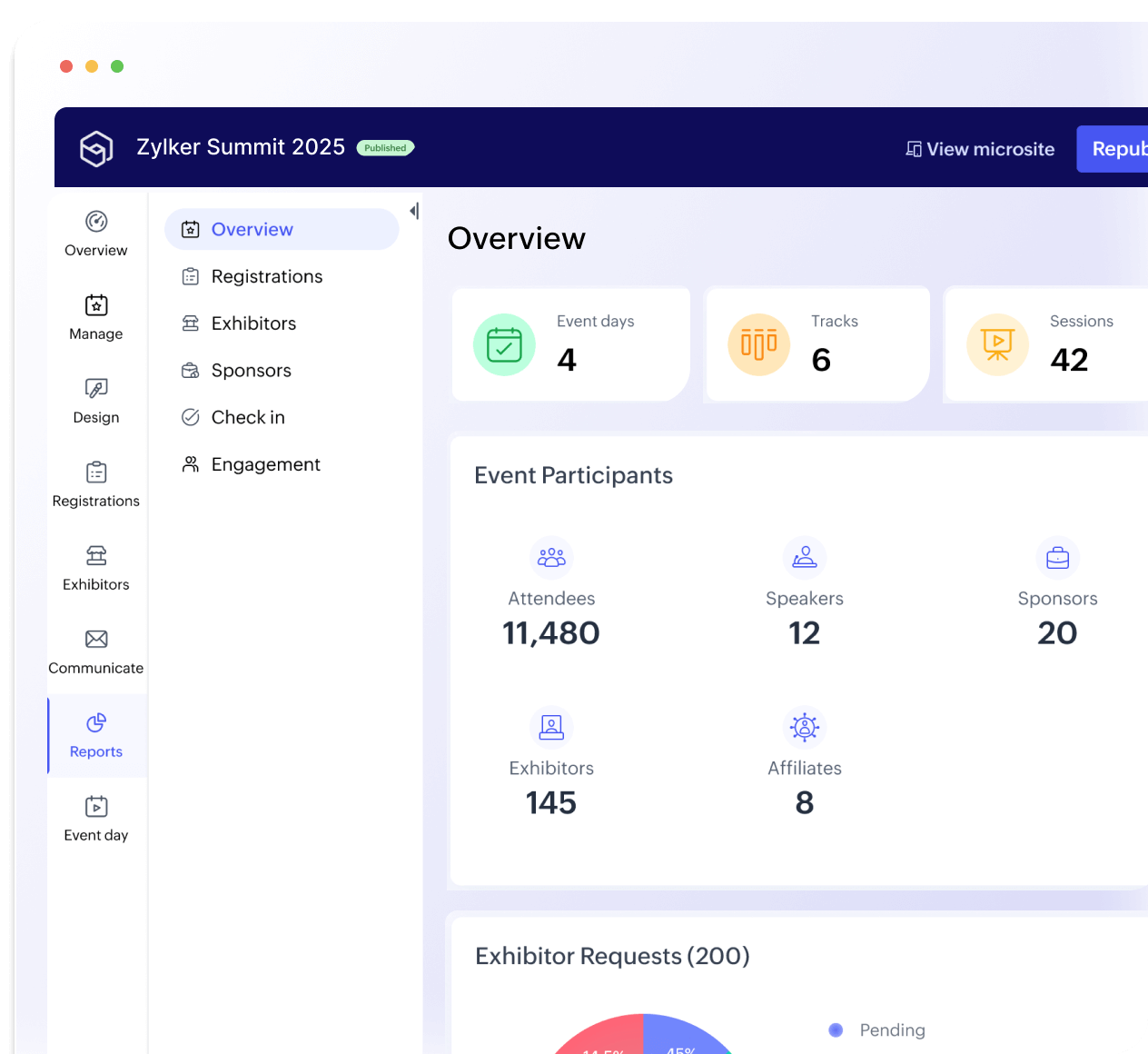
We'll explore how successful organizers go beyond mere persuasion to a structured presentation that helps build exhibitor momentum early on and how digital tools, including Zoho Backstage, help organizers streamline booth sales without adding operational chaos.

Ultimate guide to selling out expo booths

Selling expo booths: Strategies that actually work

Why selling expo booths is harder than it looks

At an expo, exhibitors expect visibility. Attendees need value in terms of knowledge, networking, and fulfillment of their business goals. If everyone gets what they want, or hope to, everyone wins. But in reality, exhibitors are asking tougher questions about ROI, audience quality, and how much visibility they'll actually get. This shows they are more cautious than ever.

Marketing teams want proof that helps them make a stronger case for exhibitor attendance. Sales leaders want ROI, not just logo placement. This means your exhibitor sales strategy must do more than list booth sizes and prices.

One of the biggest reasons for booth sales to stall is uncertainty about audience quality and footfall. When exhibitors aren't clear on who will attend or how relevant that audience is, the risk feels high. So instead of saying no, they delay by asking more questions, pushing decisions internally, or simply going quiet.

Another issue is pricing that doesn't clearly connect to value. If booth costs aren't tied to visibility, location, or tangible benefits, exhibitors struggle to justify the spend. This often leads to long back-and-forth conversations or last-minute discount requests, not because the price is too high, but because the value isn't obvious enough.

The third friction point is how booths are presented. Static floor plans and scattered email conversations make it hard for exhibitors to visualize their presence or compare options. At the same time, organizers end up managing everything manually, which slows down the entire process.

These are not demand problems. Their clarity and presentation gaps are where your exhibitor sales strategy needs to focus first. Selling expo booths becomes much easier when you shift the conversation from "buy a space" to "invest in visibility and leads."

What should your exhibitor sales strategy focus on first?

Before you even start outreach, you need to be clear about what you're selling and why someone should care. This is the foundation of a strong exhibitor sales strategy. Most organizers jump straight into selling without noticing where things actually start breaking down.

First, conversations go quiet. Exhibitors seem interested, but delay decisions because they're unsure about the audience, who's attending, how relevant they are, and whether the footfall will justify the spend.

Then pricing starts dragging things out. Not because it's too high, but because it's unclear. When exhibitors can't connect cost to visibility or outcomes, they hesitate or push for discounts.

And finally, the process itself slows everything down. Static floor plans and scattered emails make it hard to visualize options, while organizers juggle updates manually. This is usually where booth sales lose momentum, and where your strategy needs to step in first.

Start by defining the right exhibitor value

Exhibitors don't buy booths; they try to understand what they'll actually get from being on your expo floor. That's why how you communicate audience value matters so much. Instead of listing broad details, strong organizers show a clearer picture. By presenting what types of attendees are expected, how they typically behave on the floor, and what opportunities exist beyond just standing at a booth. This includes lead capture, networking moments, and post-event data.

If this is left off the table, conversations stall as exhibitors try to fill in the gaps themselves.

When you make this value easy to grasp upfront, sales conversations become faster and more direct, leading to fewer clarifying calls, fewer pricing objections, and quicker internal approvals from exhibitors.

How to increase booth sales with proven strategies

Booth sales often slow down not because of demand, but because organizers start too late, when the floor plan is still empty, and every conversation feels like a cold pitch. practical steps that consistently help organizers sell more booths.

Start exhibitor outreach earlier than you think you should

This is where most organizers lose time without realizing it. You finalize the venue, lock in sponsors, and only then start exhibitor outreach, by which time the floor plan is still empty, and every conversation feels like a cold start.

Starting earlier changes how momentum builds. When you reach out with even a draft floor plan, early exhibitors begin picking spots, and that activity itself becomes a signal. As a few booths get booked, others can see movement on the floor, preferred locations start filling up, and decisions become easier because the event starts to feel real, not hypothetical.

Instead of a single announcement, outreach works better as a series of announcements. You first put the event on their radar with dates and audience context, then give them something to react to, like a basic floor layout and pricing structure, and finally open bookings once there's enough clarity to make a decision. This way, each step gives exhibitors more confidence rather than overwhelming them all at once.

When done right, this doesn't just create urgency; it gives you a clearer booking pipeline, better visibility into demand, and a more predictable booth sales timeline.

Use tiered booth pricing instead of flat rates

Flat pricing often creates friction in ways that aren't immediately obvious. When every booth is priced the same, exhibitors start questioning what they're actually paying for. A booth near the entrance clearly offers more visibility than one tucked in a corner, but if both cost the same, the value feels uneven. This leads to hesitation, internal pushback, or conversations that revolve around discounts instead of outcomes.

What exhibitors are really trying to do is map cost to opportunity. They naturally evaluate booths based on three things: location of the booth, how much space and flexibility is offered in design, and what additional visibility or benefits their choice has over other participating logos. A spot near high-traffic areas or stages signals higher footfall. Larger or corner booths suggest more branding potential. Adding elements like featured listings or lead capture tools makes the investment feel more complete, not just physical space.

When these differences are clearly structured into pricing, decision-making becomes easier. Exhibitors don't need to negotiate or seek justification; they can quickly assess what fits their goals and budget. Premium options feel intentional because the added exposure is visible, while smaller booths still feel like valid choices rather than leftovers.

This is where transparency plays a critical role. When pricing is clearly tied to location, size, and benefits, it removes the need for back-and-forth explanations. Exhibitors can understand the logic on their own, which builds trust and makes sales conversations more straightforward and faster to close.

Let the floor plan do the selling for you

A floor plan is not just a map. It's one of your strongest sales tools. When they look at it, they're not just picking a space; they're trying to understand movement, visibility, and how close they'll be to high-interest areas. They mentally place themselves on the floor and ask, "Will people pass by here?" or "Is this close enough to where activity is happening?"

This is where static PDFs fall short. A flat layout doesn't show how traffic might flow, which areas are already in demand, or how the floor is evolving over time. So exhibitors end up asking for clarifications, requesting multiple versions, or delaying decisions because they can't fully visualize their presence.

Interactive floor plans change this completely. When exhibitors can see real-time availability, booked booths, and proximity to key zones such as entrances or stages, they start making decisions visually rather than via email.

In fact, studies on decision-making show that visual information is processed significantly faster than text, which is why dynamically updating layouts tends to speed up evaluations and reduce back-and-forth.

The real challenge for organizers is keeping this information updated manually. Floor plans change, booths get reserved, and communicating those updates across emails or files quickly becomes inconsistent. An event management software that keeps availability live and lets exhibitors explore options on their own removes this dependency, so instead of asking questions, they move closer to booking.

Bundle booths with sponsorship opportunities

A common reason exhibitors hesitate is that a booth, on its own, feels like a passive investment. They're not always sure what they'll get beyond standing space, which makes it harder to justify the cost internally.

This is where bundling changes the conversation. Instead of selling just a booth, organizers package it with visibility and engagement. For example, a booth near a high-traffic aisle, paired with logo placement in event emails and a short product demo slot, gives exhibitors something more concrete and an active role in the event experience.

Exhibitors naturally evaluate these bundles as a whole. They look at how visible they'll be before, during, and after the event, and whether the package helps them generate leads or start conversations. When these elements are already grouped together, they don't have to piece together value across multiple options or request custom combinations, and it's easier to assess and decide.

This also simplifies decision-making on their side. Instead of going back and forth to understand add-ons or negotiate inclusions, they can quickly match a package to their goals and budget. The conversation shifts from "what do we get?" to "does this package work for us?", which tends to move much faster.

This approach becomes even more relevant for hybrid and virtual expos. When physical booths are combined with digital visibility, such as virtual listings, session integrations, or post-event engagement, exhibitors gain extended reach beyond the venue itself. The event then becomes more than just a one-time presence, but a broader opportunity to connect with audiences across formats. If you're planning to scale beyond in-person setups, try a virtual expo management software to help you package and deliver this extended value more effectively.

How data and visibility influence exhibitor decisions

Exhibitors are no longer comfortable committing based on assumptions or broad promises about footfall. Most teams today are under pressure to justify every event expense, often needing internal approval from marketing, sales, or finance before signing off. A booth is no longer seen as a branding exercise, but instead, is expected to contribute to pipeline, leads, or measurable outcomes.

This is why data has become a key part of the sales conversation. Exhibitors want to understand who will attend, how engaged they are likely to be, and what kind of results they can realistically expect. Without this, the decision feels risky, and conversations tend to stall or get pushed into "we'll revisit later."

When organizers bring in clear audience insights, past performance metrics, or even early registration trends, it reduces that uncertainty. It gives exhibitors something concrete to evaluate internally, making approvals faster and conversations more focused on fit rather than doubt.

Share audience and performance data early

Exhibitors today are expected to justify event spending much more rigorously than before. A booth is no longer approved just because "we've always attended" or "it's a known event." Marketing and sales teams are now asked to explain who they'll meet, what kind of leads they can expect, and how the investment ties back to the pipeline or revenue. Without that clarity, even interested exhibitors tend to delay decisions.

This is why how organizers present data during sales conversations matters. Instead of broad claims about footfall, strong organizers walk exhibitors through specific numbers, like past attendance, audience breakdowns by role or industry, and engagement patterns from previous editions. They also highlight movement: how the event has grown over time, what kind of attendees are already registering, or which segments are showing the most interest. In early conversations, even partial data, like registration trends or ticket sales velocity, helps make the event feel more tangible and less speculative.

This clarity directly supports internal approvals on the exhibitor's side. When a marketing manager can take concrete data back to leadership, like who they'll meet, how many potential interactions to expect, and what outcomes are realistic, it becomes much easier to justify the spend. Instead of relying on assumptions, they're making a case with evidence, which speeds up approvals and reduces back-and-forth during the decision process.

Show how you'll track and report exhibitor performance

One of the biggest reasons exhibitors hesitate is the pressure to prove ROI internally. Marketing teams are expected to show what came of it rather than solely attending events for formality. How many leads were generated? Were they relevant? Did those conversations turn into real opportunities? Without clear answers, even a well-attended expo can feel like a risky investment.

This is where reporting becomes part of the sales conversation, not just a post-event activity. Organizers who explain upfront how leads will be captured, how interactions will be tracked, and what kind of data exhibitors will receive after the event make the decision easier. It shifts the conversation from "we hope this works" to "here's how you'll measure success." When exhibitors know they'll walk away with structured data, they feel more confident committing early, rather than relying on footfall estimates or anecdotal feedback.

It also aligns with exhibitors' expectations post-event. Instead of merely a presence on the floor, they expect a clear report they can take back to their team that shows what actually happened and whether it was worth it.

A simple checklist to help you sell out expo booths

Booth sales don't fall into place on their own; they depend heavily on how well things are planned before outreach even begins. Breaking this down into a few key areas makes it easier to manage.

Sales preparation

Start by getting clear on what you're offering. Your exhibitor value proposition should be easy to explain. What kind of audience will attend, what exhibitors can expect, and why it's worth their time. If this isn't clear internally, it becomes much harder to communicate during sales conversations.

At the same time, plan your outreach in advance. Know when you'll announce the event, share the floor plan, and open bookings. This avoids rushed communication and gives exhibitors enough time to evaluate and respond.

Pricing and floor planning

Your pricing and layout need to work together. Tiered pricing should feel logical, with clear differences based on location, booth size, and added visibility. When this is unclear, conversations tend to get stuck in negotiation.

Floor plans should be ready early and reflect actual availability. If exhibitors can see how the floor is shaping up and where activity is likely to happen, it becomes easier for them to choose and commit.

Exhibitor experience

Think beyond just selling space. Bundling booths with visibility features, such as branding, sessions, or lead capture, helps exhibitors see the bigger picture.

Also, make the process easy to navigate. Tracking booth availability, contracts, and payments in one place reduces confusion and keeps conversations moving. When exhibitors don't have to chase updates or clarify details repeatedly, they're more likely to move forward confidently.

Post-event clarity

Decide in advance how you'll measure success for exhibitors. What kind of data will they receive? How will leads or interactions be tracked? Setting this expectation early makes the investment feel more structured and less uncertain.

When this level of preparation is in place, booth sales become more predictable and easier to manage. It also builds stronger exhibitor relationships because instead of figuring things out along the way, you're offering a clear, well-organised experience that exhibitors can trust and return to.

Build an expo exhibitors want to invest in with Zoho Backstage

Before moving to dedicated tools, most organizers manage booth sales across spreadsheets, emails, and shared documents. A booth might get marked as "reserved" in one file but still appear available in another. Follow-ups depend on manual tracking, so some exhibitors get too many reminders while others slip through. Floor plans are updated and re-shared multiple times, leading to confusion about what's actually available. As the number of exhibitors grows, this quickly turns into a coordination problem rather than a sales process.

What changes with an integrated system is not just visibility, but how smoothly these moving parts come together. Booth availability updates in real time, so there's no second-guessing or double-booking. Sales teams can see where each exhibitor stands without digging through email threads. Floor plans, bookings, and payments stay connected, which reduces the need for constant back-and-forth.

Zoho Backstage fits into this workflow by bringing these elements into one place. Instead of switching between systems or manually updating information, organizers can focus on moving conversations forward, knowing that the underlying data, availability, and communication are already aligned.

FAQ

Ideally, exhibitors should see a draft floor plan at least 6–8 weeks before bookings begin. Even a preliminary layout, past event floor plan videos, or suggested layouts created using an event management platform can help them visualize the space early and make faster decisions.

Custom requests are common, especially from larger brands, so it helps to plan for them in advance. Instead of handling each request from scratch, create a flexible structure, and define a few customizable zones or allow limited size variations while keeping pricing anchored to your existing tiers. This way, you can accommodate high-value exhibitors without disrupting your floor plan or entering open-ended negotiations.

Gradual price increases work well when they're planned and communicated upfront. For organizers, this creates a clear sales rhythm, and early buyers lock in booths when the floor is still open and pricing is lower, while later buyers come in with a better sense of demand and available spots. Early buyers feel rewarded for committing when the event is still taking shape, and late buyers understand they're paying a premium for limited availability and clearer visibility on how the floor is filling up. This reduces last-minute negotiations and helps you maintain pricing discipline instead of offering reactive discounts.

Set a clear hold policy for reserved booths from the start. For example, block a booth for 3–5 days after verbal confirmation, then automatically release it if payment isn't completed. Communicate this timeline upfront in your emails and proposals, and send one structured reminder before the deadline. This keeps the floor plan moving, avoids long inactive holds, and ensures serious exhibitors don't lose out to delayed decisions.

Instead of flat discounts, offering added value works better. Extra visibility, lead-capture access, or featured listings feel more premium and help protect your booth pricing while still encouraging new exhibitors to commit.