Pop-ups look effortless from the outside. That's the point. But the spontaneity people experience is the result of decisions made weeks or even months in advance. Here are the eight decisions that go into making one work.
1. Choose the right location
Location sets the context before anyone walks through the door. A protein bar launching outside a gym doesn't need to explain itself. A yoga pop-up in the middle of a city plaza works because it's unexpected.
You're borrowing a familiar space and doing something it wasn't designed for, and people notice. So ask yourself where your audience already spends time, and whether showing up there actually makes sense for what you're selling. A busy corner full of the wrong people doesn't move the needle.
And for ticketed events, how easy it is to get there matters. A stunning venue that's a 40-minute detour from public transit will cost you attendance regardless of how good the experience is inside.
Chanel's Winter Garden pop-ups are a good example. Held in places like Covent Garden in London and Cadillac Fairview in Canada during the holiday season, the locations were already doing the work — high foot traffic, Christmas décor, shoppers in a buying mindset.
2. Design an engaging theme
Chanel's winter scenes worked because the theme matched the product, the season, and the audience's headspace. That alignment is what a good theme actually does. Picking one that works means thinking about three things at once:
- What you're selling
- Who's showing up
- What's worth photographing
The Museum of Ice Cream started as a roving pop-up in NYC's Meatpacking District in 2016. It had color-drenched rooms, sprinkle-filled pools, and a giant banana swing. The fine art world hated it. People lined up around the block anyway. It now has seven permanent locations worldwide. The theme was strong enough to outlast the format.
3. Get your licenses and permits
Permits are where most first-timers lose time. Depending on your location and format, you may need public assembly permits, temporary structure approvals, or noise licenses. Food adds another layer: hygiene certificates, health inspections, refrigeration, and storage.
A café-style activation, like the ones Anthropic and Cursor ran, comes with the full operational weight of a food service business.
The logistics can be tricky, too. You're building something in a space that wasn't designed for any of it. So know exactly how long you have the venue before and after the event, who's handling transport, and what the fallback is if something doesn't arrive on time.
And if any part of your activation is outdoors, add weather backup to your event contingency plan as well.
4. Leverage event technology
The less your team manages on the day, the more present they can be with attendees. That's the case for automation at events. Some areas worth automating for pop up events are registration payment processing, social media capture, email marketing, and post-event data collection.
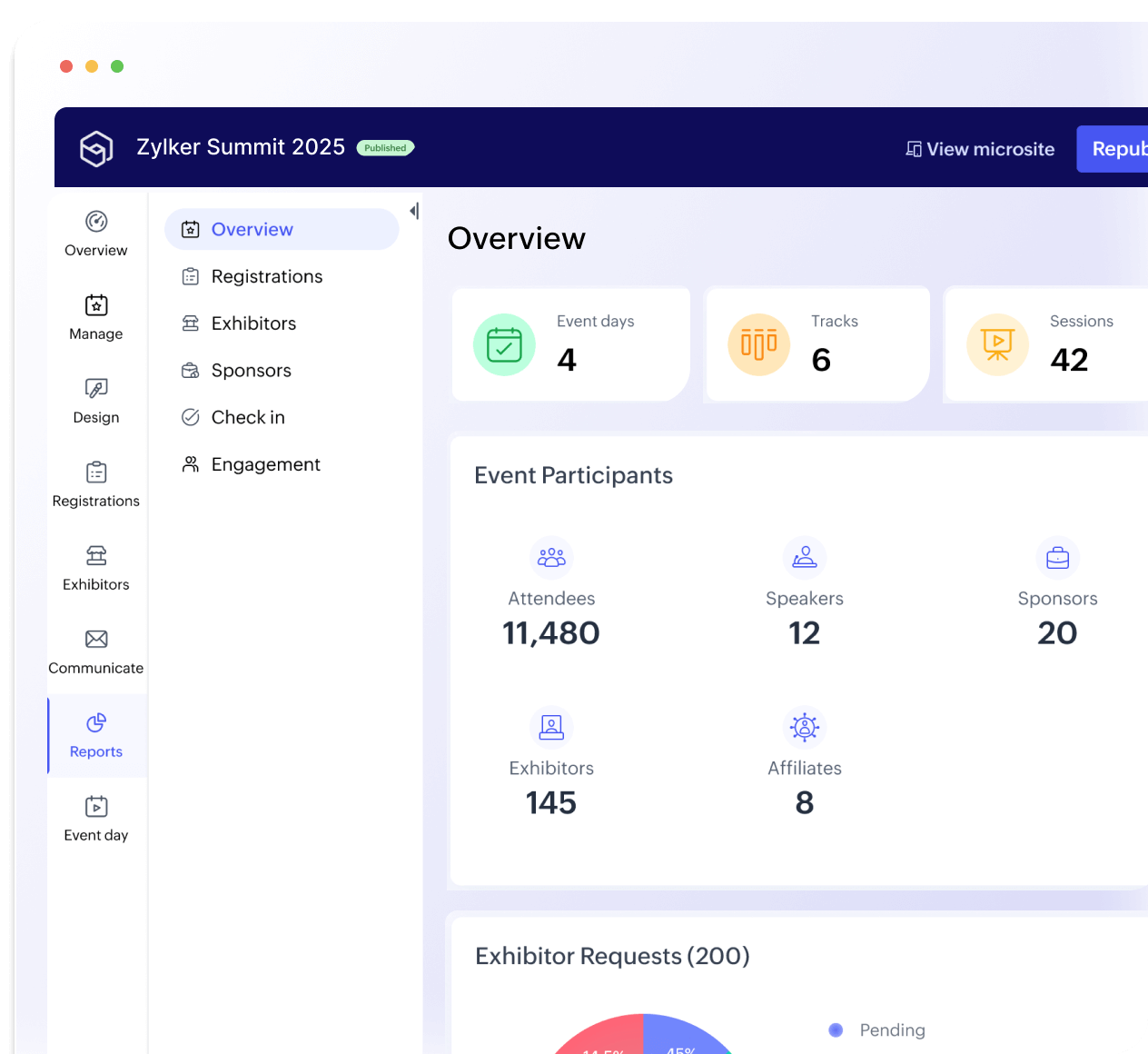
And even better if you can do all of these with a single event software platform. Otherwise, you're just replacing manual work with tool juggling. All-in-one event software—like Zoho Backstage—keeps ticketing, attendee tracking, event listings, and analytics under one roof.
When something goes sideways on the day, and something usually does, you're not switching between five dashboards to find the problem.
5. Partner with the right people
A pop-up is a resource-intensive format for what is, by definition, a temporary event. Partnerships are how you manage that math.
The most straightforward version is a shared venue. A bakery and a coffee shop can co-host a weekend pop-up, splitting the cost of space, décor, and promotion while each bringing their own audience.
Done right, the partnership can also add something the brand can't get done on its own. Boots' Beauty House Party is a good example. GHD ran the hairstyling station. Sacheu sent professional makeup artists to share tips and techniques. Boots didn't have to staff or fund either experience—and attendees got something more valuable and credible than a brand talking about itself.
6. Make it Instagram-worthy
Every attendee at your pop-up is a potential distribution channel. Are you giving them anything worth posting?
This doesn't mean slapping a neon sign on a wall and calling it a photo moment. The setups that actually get shared are the ones that feel like a natural part of the experience. TULA Skincare's tropical-themed pop-up with its colorful balloon installations worked because the aesthetic was consistent throughout, not just in one designated corner.
So think visual contrast, interactivity, and branded props that don't feel like branded props. An event-specific hashtag can also give you a way to track social media buzz your event is creating while people are posting. And incentives like discounts and giveaway entries can help nudge attendees to post.
💡One underused tool is the social wall. A live feed of attendee posts displayed on a screen at the event. It creates a feedback loop where seeing other people's content encourages more posting. And if you're using Zoho Backstage, its native integration with wall.io pulls this together without needing a separate setup.
7. Design for portability
The best pop-up concepts are built to move. If you've designed something that only works in one specific venue, you've limited your options before you've even run it once. You need a modular setup that can compress into a van and expand into a 500-square-foot experience in a new city, not a one-off installation. Especially, if you're planning to run the same concept across multiple cities or markets.
For brands with limited budgets, pop-up trucks are a good option. While a truck limits how much you can do inside, it removes almost every logistical barrier to showing up somewhere new.
8. Double down on the POP factor
The line outside a Rhode Beauty pop-up became its own story. Instead of treating the wait as a problem to manage, the Rhode team made it part of the experience by handing out drinks, food, and freebies for people standing outside.
Today, the queue is the experience as much as the pop-up.
That's the logic behind surprise elements. They create moments that feel unscripted, even when they aren't. This is the difference between an event people attended and an event people talk about. So treat "surprise" as a design principle. Change something daily, and you give people a reason to come back.