Small experiences, big impact: A guide to hosting micro events

From VIP roundtables to exclusive workshops, see how micro events boost audience engagement and convert prospects into loyal customers without impacting your budget.

The world of events keeps getting bigger and louder. More noise, more digital screens, more superficial handshakes that lead nowhere. And somewhere along the way, real connection has become a luxury.

That's exactly why micro events are becoming popular. These aren't your typical conferences where you're one face in a sea of name tags. As Laura Schwartz tells Eventex:

"Micro salons give a moment for groups of anything from five to 10 to 20 people to really converse. And, of course, who doesn't enjoy some bubbly?"

She calls it a top event trend for 2026—and for good reason. It's a meaningful brand experience on limited budgets.

In this guide, you'll learn what makes micro events so powerful, how to plan one that actually delivers results, and why some of the smartest brands are skipping the auditorium for something way more intimate.

Complete guide to micro events

Micro events explained: How businesses succeed with small gatherings

First, what are micro events?

Micro events are small-scale gatherings designed for quality over quantity. This means 10-50 attendees though some stretch to 100, depending on the format. They're short and focused—anywhere from 1-2 hours to half a day—which makes them easier to plan, attend, and actually get value from.

Here's how they typically break down:

Educational and skill-building events

Think workshops, training sessions, and hands-on learning experiences. These are designed to teach attendees something tangible—a new skill, a better way to use your product, or insights they can immediately apply to their work.

Sales and customer engagement events

These are all about moving the needle. Executive roundtables, exclusive product demos, VIP dinners—formats that give your team face time with decision-makers in a setting where relationships actually develop. It's less about the hard sell and more about building trust in a room where everyone matters.

Networking and community-building

Sometimes the goal isn't education or closing a deal. It's just bringing the right people together. Industry meetups, peer groups, and intimate dinners—these events create space for genuine connections. This is the kind of event where people exchange real ideas, not just business cards.

How we do it at Zoho

At Zoho, we lean into all three types of micro events depending on what we're trying to achieve.

  • For product education and customer engagement, we run roadshows and regional product workshops—bringing hands-on training directly to users in different cities so they can learn in a focused, interactive setting.
  • When it's about sales and high-level networking, our CXO-focused events—like CHRO Roundtables—bring leaders together to share challenges and solutions. It's part conversation, part relationship-building, and it works because the group is small enough for everyone to contribute.
  • For brand and community building, we host community meetups around the world. Just the right people in the room having real conversations over a meal.

And of course, individual product teams also run mini virtual events to announce feature releases and such.

The business impact of micro events

Going small doesn't mean thinking small. When you focus on the right people in the right setting, the business outcomes from micro events speak for themselves.

You convert prospects through genuine conversations

At large conferences, your sales team gets five minutes with a prospect in a crowded booth. There's no time to dig into pain points, no space to build trust, and no real conversation. But when you're sitting across from 15 decision-makers at a roundtable or hosting an intimate product demo for qualified leads, the model shifts.

There's room for questions that matter. And the trust that comes from being treated like a priority, rather than a pipeline number. In fact, according to a survey by DemandGen Report, more than 60% of buyers and prospects favor short-form, digital events when it comes to engaging with brands.

You focus on one persona—and goal—per event

Large events try to please everyone. So you either end up with generic content that sort of works for everyone but doesn't really land with anyone—or a multi-session track that's tough to plan, budget for, and actually get attendees to show up to.

Micro events let you go narrow. Take the Zoho Finance team's "Let's Talk Finance Over Dinner" event in Palo Alto. We partnered with ICAI San Francisco and brought together a small group of finance professionals for a panel on AI in accounting and advisory services.

You save on the event venue and production

A 300-person, three-day conference costs close to $150,000 before you even factor in speakers, travel, or marketing. Micro events cost a fraction of that. You're not renting out convention centers or coordinating multi-day agendas. And if something changes—schedules shift, a speaker drops out, you need to reschedule—it's way easier to pivot.

And when you do have budget to spare, you can put it toward things that actually elevate the attendee experience. Take the example of Gilt City's summer pool party during Lollapalooza weekend in Chicago. They set up a custom Havaianas bar where guests could design their own flip-flops. It wasn't B2B, but the principle applies—especially for community-building events.

In short, when your guest list is 30 people instead of 300, you can afford to make it personal.

You make attendees feel like insiders

Limited seats create exclusivity. People feel selected, not mass-invited. They know they're in the room for a reason and that they won't get lost in the crowd. Take Apple's invite-only "Apple University" experience for student creators. Only 16 creators from around the world were invited. As one attendee, Heaven Marleyy, tells People, "I got the email and thought it was spam at first."

That's how exclusive it felt—too good to be real.

💡Pro tip: Build that feeling of exclusivity early with RSVPs. When people have to actively confirm their spot—rather than just showing up—it signals that your event matters. You get a real headcount where every seat stays intentional. And many event tech platforms (including Zoho Backstage) have the RSVP feature built in — so it's quite easy to set up as well.

5 best practices for hosting impactful micro events

If anything, micro events require more intentionality—because when there are only 20 people in the room, everything matters. Here's how to get it right.

Be strategic about who, why, and what

Micro events work because they're focused, but that only happens if you're intentional from the start. Start by aligning your stakeholders. Get sales, marketing, product, and leadership in the same room and agree on the objective.

Once you know the goal, figure out who needs to be there. Build detailed personas—demographics, job titles, pain points, what they care about. A workshop for product managers should look nothing like a roundtable for CFOs. The more specific you are about who you're targeting, the easier it is to design something that actually resonates.

Then map your event to the right stage of the funnel:

  • Top-of-funnel events focus on awareness and education
  • Middle-of-funnel is about nurturing and building trust
  • Bottom-of-funnel is where you close deals

Each stage needs a different approach, and trying to do all three in one event is how you end up with something generic.

Finally, don't try to do everything at once. Start with one or two formats, master them, then expand. You'll learn what works faster, and your team won't burn out trying to execute five different event types at once.

Design for intimacy and interaction

The whole point of a micro event is that it doesn't feel like a typical conference. So don't design it like one.

Start with the venue. It should match the tone you're trying to set. A sleek boardroom says something different from a cozy restaurant or an art gallery. Think about what aligns with your brand and what makes sense for the conversation you're trying to have:

  • If you're hosting a casual networking dinner, don't pick a sterile conference room.
  • If it's a high-level executive roundtable, a private dining room works better than a noisy bar.

Then think about the invitation itself. This isn't a mass email blast. Have someone important send it—your CEO, CMO, or whoever carries weight with your target audience. A personal invite from a real person signals that the event matters and that the attendee was specifically chosen to attend.

And don't assume networking will just happen. Schedule it. Set aside dedicated time with structured introductions so people aren't awkwardly standing around wondering who to talk to. Pair attendees for quick one-on-ones, do roundtable intros, or create breakout groups if you're on the larger side of micro (50-100 people). These keep conversations intimate, even as the crowd grows.

Choose the right technology

When you're running multiple micro events throughout the year, the last thing you want is to manage five different tools just to get one event off the ground. Registration in one platform, emails in another, and check-in on a separate app can become messy quickly.

This is where all-in-one event management software—like Zoho Backstage—makes a difference. A single platform handles registration, ticketing, check-in, and communications without you jumping between tabs.

But not all event software is built the same. Here's what to look for:

  • Does it integrate with your existing stack? The platform needs to talk to your CRM, marketing automation tools, and sales systems. If data doesn't flow automatically, you'll waste hours on manual updates and lose visibility into what's working.
  • Can you segment and personalize at scale? Micro events rely on relevance. You need to filter attendees by job title, industry, past behavior, or custom fields—and send targeted communications without starting from scratch each time.
  • Is security and compliance baked in? If you're handling registrations globally or working with enterprise clients, GDPR and CCPA compliance aren't optional. It's not exciting, but it's a question both legal and IT will ask.
  • Does the vendor actually support you? Platform features matter, but so does the team behind them. Look for responsive support, clear documentation, and a vendor that understands events—not just software. When something breaks 24 hours before your event, you need answers fast, not a ticketing queue.

With micro-events especially, you need to choose something that grows with you—not something you'll outgrow in three months.

Build templates so you aren't starting from scratch every time

If you're running micro events throughout the year, you shouldn't be rebuilding the same registration form or rewriting the same email sequence every single time. That's a waste of time and energy.

Build templates for the stuff that doesn't need to change. Landing pages, registration forms, email invites, reminder sequences—create them once, then reuse and tweak as needed. Same with workflows. Map out your pre-event, during-event, and post-event touchpoints, then templatize the process so your team knows exactly what needs to happen and when.

Don't forget compliance. Make sure your templates include data privacy protections—GDPR, CCPA, whatever applies to your audience. Build it in from the start so you're not retrofitting compliance later.

Here again, the right event management software can help. For example, at Zoho, we use Spaces to organize events by brand and audience. Each Space acts as a central hub with its own branding, payment gateways, team members, and custom domains.

So our community events run under one Space, Zoholics under another. And they all have their own templates for everything from the website to landing pages, and registration forms.

Track metrics across the funnel

Micro events give you a tighter feedback loop than large conferences, but only if you're actually tracking the right metrics. And what you measure depends on where the event sits in your funnel.

  • Top of funnel: You're trying to get in front of new people. Track new leads acquired, follow-up meetings scheduled, and registration-to-attendance rates. If they're not engaging after the event, the event didn't land.
  • Middle of funnel: You're moving people closer to a decision. Track opportunities created, pipeline growth, and engagement rates. Are attendees coming back for more events, asking deeper questions, or requesting demos? Engagement here matters more than headcount.
  • Bottom of funnel: Track deal velocity—how much faster deals close when prospects attend. Then, compare lead-to-opportunity and opportunity-to-close times for attendees versus non-attendees. The gap should be obvious.
  • Customer events: The goal shifts to retention, expansion, and adoption. Track expansion revenue as if customers are upgrading or adding seats after your event? Customer events should make people stick.

💡Build institutional knowledge through documentation and data

Every micro event is a test. The more you document, the smarter your next event gets. Store this in your event management platform, your CRM, or a shared doc. Just make sure it's accessible to your team. Over time, you'll build a playbook that takes the guesswork out of planning and lets you replicate what works.

Ready to build a micro-event strategy?

The challenge isn't whether micro events work—it's executing them consistently without your team drowning in logistics. When you're running finance dinners in three cities, customer workshops every quarter, and monthly product demos, the operational overhead adds up fast. You need a system that makes repeatability easy, not exhausting.

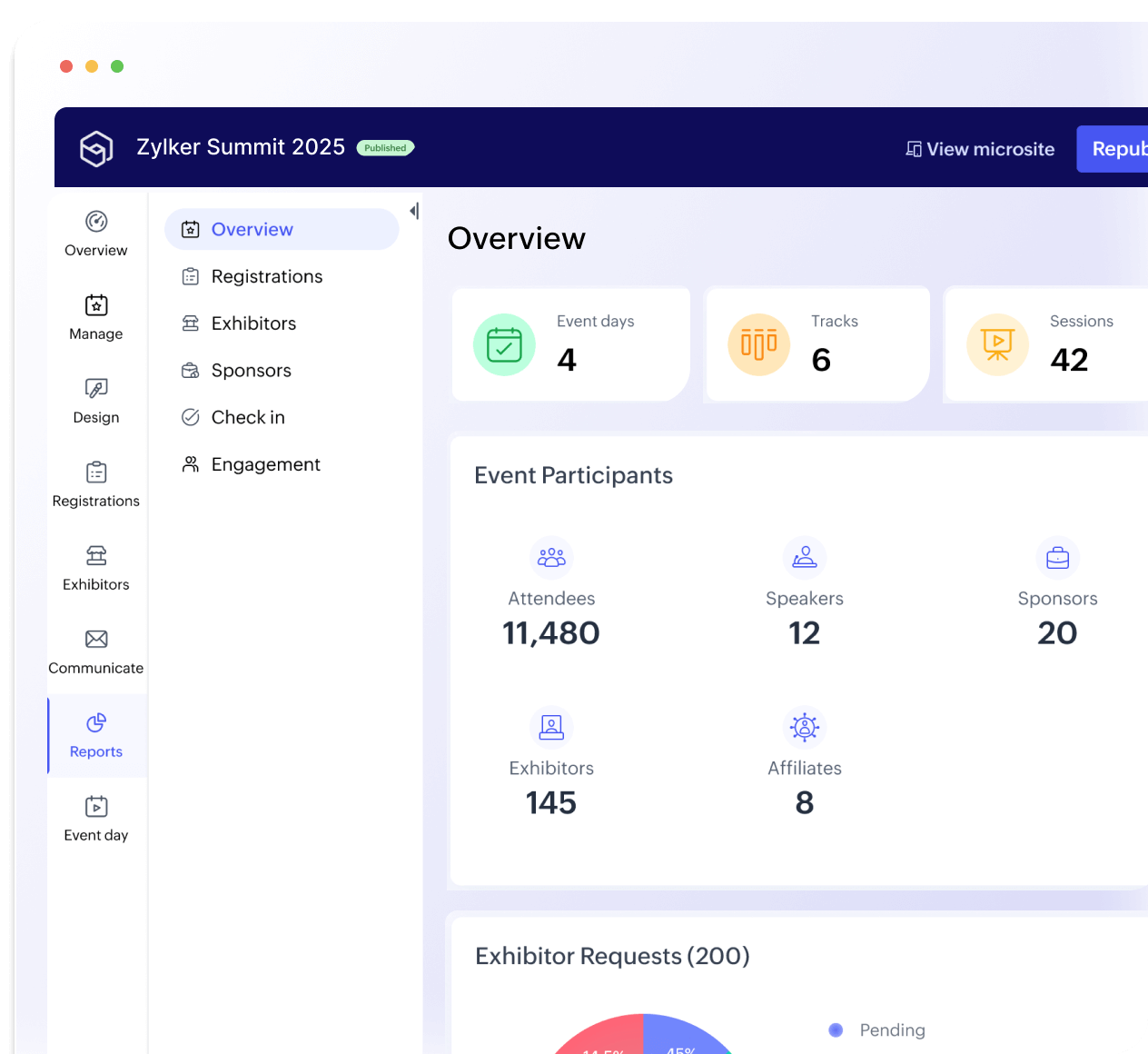
That's where Zoho Backstage comes in. We built it because we run micro events all year—roadshows, roundtables, community meetups—and we needed a platform that could keep up without forcing us to reinvent the wheel every time. With features like Spaces for multi-brand organization, reusable templates, CRM integration, and real-time dashboards, you can run multiple micro events throughout the year without starting from scratch every time or losing track of what actually drives results.

Frequently asked questions

Pretty much any business that needs to build relationships to close deals will benefit from micro events. B2B companies, SaaS platforms, consulting firms, agencies. If your sales cycle takes months and involves multiple conversations, or you're trying to educate customers so they actually use your product, micro events are perfect for that.

Executive roundtables, product demos, customer workshops, VIP dinners, lunch-and-learns, webinars, networking meetups. Basically anything designed for 10-100 people with a specific goal—education, building relationships, moving deals forward. The format changes based on what you're trying to accomplish.

For micro events, focus on simplicity and control: fast registration and check-in, targeted email/SMS communication, CRM integrations, and basic analytics. You'll also want reusable templates, easy attendee segmentation, and compliance built in. The right software should reduce setup time and help you run repeatable, high-touch events without operational drag.

This depends on what you're trying to do. Roundtables and dinners are great for relationship-building. Workshops and demos work for education. Webinars work to reach more people at the top of the funnel. We suggest you pick the format that matches your goal and actually gives people a reason to engage.