Most marketing still treats events like a funnel—bring people in, generate leads, move on. It's linear, and once the event ends, the value drops off quickly. What actually happens with good corporate events is different.
Someone attends, gets familiar with the brand, has a meaningful conversation or tries the product, and if the experience is strong enough, comes back—or brings others.
That's the flywheel. Each event connects to the broader customer journey. And over time, events become a point where customers, partners, and teams intersect. You're strengthening relationships and giving people a reason to keep coming back—so the impact doesn't stop when the event ends.
Awareness: Building trust and brand depth through events
You can reach people, but it's hard to get them to actually pay attention, let alone care. This means awareness is a lot harder than most people think. Events change that dynamic. When someone chooses to attend, they give you their time willingly.
That's where the brand starts to feel more real. Conversations replace messaging, and people get a sense of how you think, not just what you sell.
That's why at Zoho, we use a revenue metric to track awareness. It is how many apps do event attendees use at least once a month? That number tells us how deeply someone understands and trusts the ecosystem. Because when people attend, they also hear about how the Zoho ecosystem works in its entirety—how all of our products connect to create better business workflows.
Over time, that leads to broader adoption, which is a more concrete signal that awareness is actually working.
Pipeline: Turning event interactions into product adoption
Pipeline is where events move from awareness to action. But it's not just about capturing leads, it's about helping people get closer to actually using the product.
At Zoho, this happens through more focused formats. Roadshows, for example, are smaller and more targeted. You get time for real conversations, not just quick interactions. Regional product workshops are built around showing specific use cases and answering questions in context. And most importantly, they're both localized—like, for example, a 100% Arabic event in Egypt.
Advocacy: How events create returning communities
Advocacy shows up when people come back. At Zoho, we track this directly—what percentage of attendees return for the next event. Because our goal is to give people a reason to keep coming back year after year.
A lot of it comes down to peer learning—customers talking to other customers, sharing how they use the product, and helping each other solve problems. Devi Sambamoorthy, for example, talks about attending Zoholics Dubai for the third time because it feels like meeting familiar people again, almost like reconnecting with a community she's grown into.
Source: LinkedIn
Then there are events like Zoho Inspire, which build on this further, especially for partners. They're both learning how to use the product better and how to take it to their own networks. That's where advocacy starts to extend beyond the event itself.
What this looks like IRL:
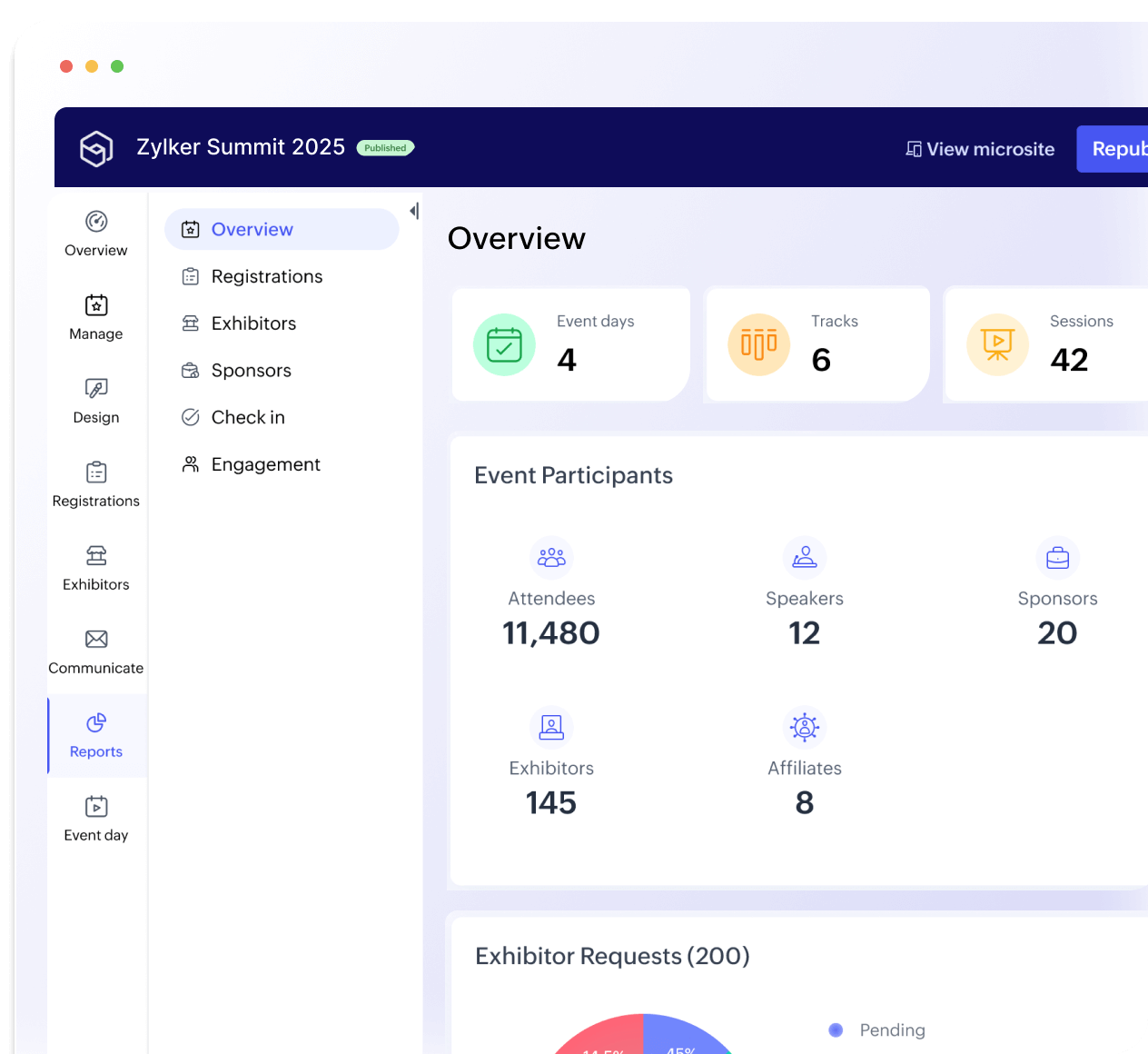
Zoholics started as a small meetup and grew into a global program running hundreds of events a year. Over time, it stopped being about a few big moments and became more about staying in touch with customers consistently across regions. That's also what led us to build our own event software—Zoho Backstage. We needed something that could keep up with that scale and variety.
As we kept doing this, we realized one format wasn't enough. So we added more. Zoho Day, for example, is an invite-only event for analysts where we share our product vision, upcoming releases, and where we're headed next. In fact, this is where we first announced Zoho Backstage's virtual platform in 2021. It was during the pandemic, when events went virtual—we held the event on Zoho Backstage so analysts could experience it first-hand. And happy for us, they loved it.
Then there are smaller formats—product dinners, roundtables, community meetups—each one designed for a different kind of conversation.
Design events with a clear purpose
Not every event should try to do everything. At Zoho, different formats are designed for specific outcomes. Some are meant to introduce the brand in new markets, others to build community, and some to drive pipeline.
For example, in Uganda, we ran three different events with three different goals. A CX summit focused on getting the right people in the room and starting conversations in a new market. "Brunch with Zoho" was more about community—short agenda, open Q&As, and customer stories. And Discover Zoho leaned more sales-focused, with structured interactions, meet-and-greets, and lead capture built into the flow.
They each had their own target audience and success metrics:
- CX Summit: Targeted new-market decision-makers and measured by the quality of conversations and initial interest generated.
- Brunch with Zoho: Brought together users and prospects and measured by engagement levels and repeat participation—we ran one of these every month.
- Discover Zoho: Focused on high-intent prospects and we used Zoho Backstage's own lead capture app to track the quality of leads from each of these events.
Over time, these formats work together by bringing people in, engaging them, and moving them forward based on where they are.
Extending engagement beyond single events
What happens after the event matters just as much as what happens during it. If there's no follow-up, most of the context drops off quickly. At Zoho, we do this in a couple of ways.
Repeat attendees might get discounts or group invites, and over time, access to smaller, more focused formats like dinners or roundtables. It's a way to keep the same people engaged while also going deeper with them.
That continuity is what keeps the relationship moving—not just from one event to the next, but across formats and levels of involvement. This is what you'd call a 360-degree event strategy.