How to become an event technologist? A career guide to get you started

The definitive guide to understanding the role of an event technologist, the skills required, and how technology is shaping modern event careers.

A few years ago, event technology meant microphones, projectors, and maybe a Wi-Fi password written on a paper near the registration desk. If things worked, great. If not, people just adjusted.

That world doesn't exist anymore.

Today, events run on software. Registration happens online. Tickets are scanned using QR codes. Badges are printed live. Attendees use mobile apps. Sessions are streamed. Engagement is tracked. Leads are captured. Reports are expected the very next day.

As a result of this shift, a new role has quietly become one of the most important in events: the event technologist.

If you've ever helped fix a check-in issue during an event, set up badge printing or kiosks, managed a virtual or hybrid session, or explained to someone why two tools were not syncing, you are already doing parts of an event technologist's job.

We'll explain what an event technologist really is, why this role is growing fast, and how you can build a real event technology career step by step.

How to become an event technologist

The ultimate guide to become an event technologist in 2026

Why are event technologists so important nowadays?

Events have evolved significantly over the past decade. Previously, events were less virtual and more in-person. The event plans focused on location, catering, and speakers. Event technology existed, but it wasn't very advanced, and it played a very minor role. But nowadays, event technology is the backbone of every event.

As more and more events start looking for event management solutions like online registration and approval, QR code check-in, live badge printing, mobile apps for schedules and networking, virtual platforms for streaming, engagement tools such as polls and Q&A sessions, and analytics dashboards for reporting and so on, event technology plays a far bigger role in event management than ever before.

But here's the problem: event organizers can work with humans and create experiences, and it is the IT teams who know the systems and infrastructure needed to deliver memorable events. So, in reality, event managers and organizers need someone who is familiar with both aspects, creating and delivering exceptional event experiences. This is where an event technologist fits in.

The role of an event technologist is to ensure that the technology at the event supports and enhances the successful execution of the event plan, and does not hinder it. An event technologist is also responsible for ensuring that the technology they choose is suitable for a particular event and that they use it to its full potential.
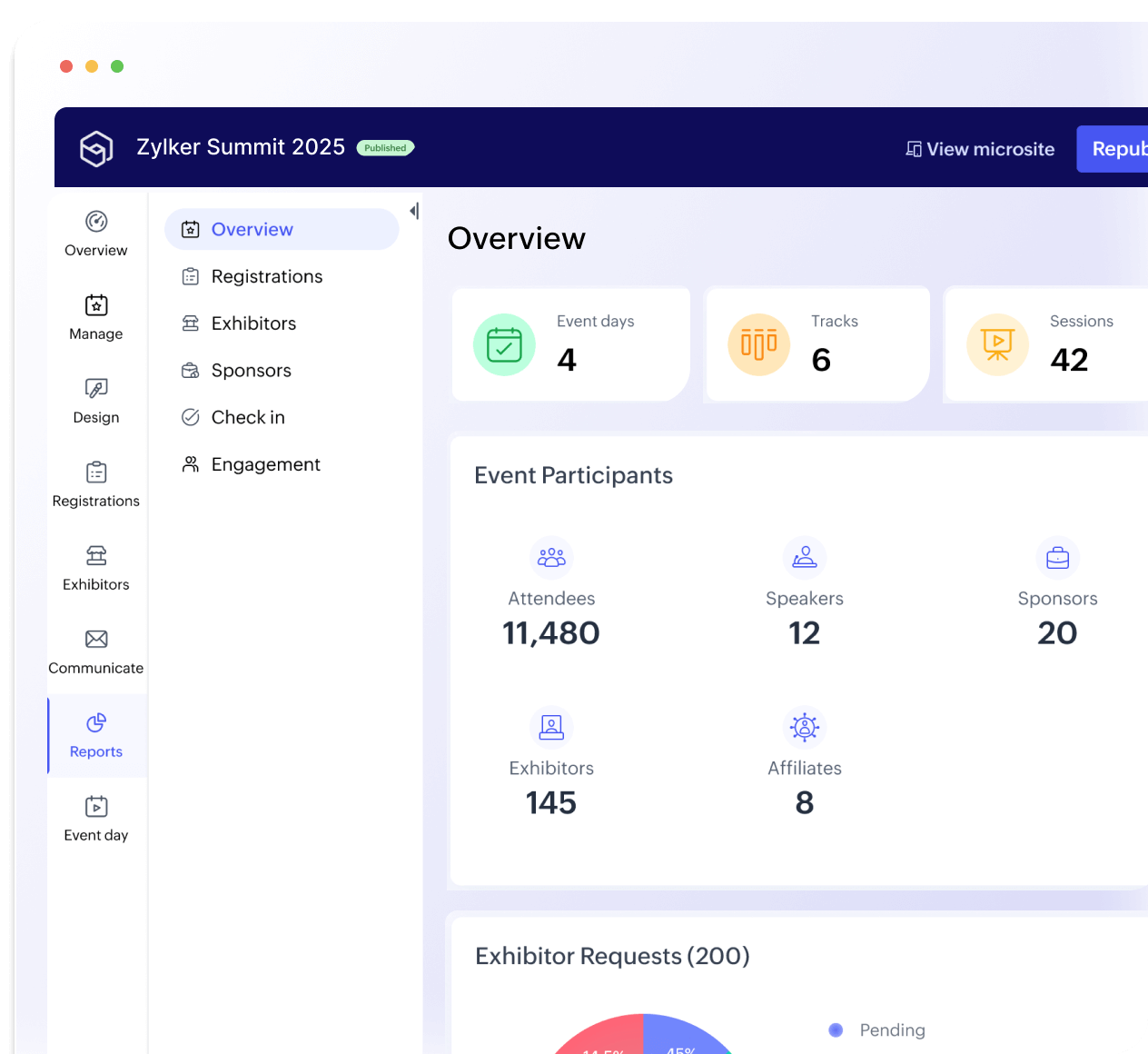
What does an event technologist actually do?

An event technologist is a professional who ensures technology functions as required for a particular event.

They are not simply "the tech people." They are the link between planning, doing, and analysis. Their work begins well before the event date and continues well after it. Here's what an event technologist does before, during, and after the event:

Before the event

Before an event, an event technologist is deeply involved with event planning and preparations.

  • They help determine the right event management platform for registration, ticketing, check-in, badge printing, mobile app usage, virtual sessions, and analytics, based on the event's size and type.
  • They also support workflows that move attendee data from registration through check-in to access control.
  • They test systems using real-world event scenarios, not demo scenarios. They include simulating peak check-ins, walk-ins, reprints, and last-minute changes.
  • They help plan for contingencies, such as when the internet goes down or the speakers don't arrive on time.

During the event

During the event, the role of an event technologist.

  • They track real-time systems, including analytics dashboards, badge-printing queues, session access, and engagement systems. This assists in identifying issues before the attendees even realize.
  • They assist the ground teams in resolving problems quickly without causing panic and avoiding escalations.
  • They ensure compliance with access rules, especially in the VIP section, paid workshops, and restricted sessions.
  • They collaborate with suppliers, event staff, and event planners so that technology does not hinder decision-making during live events.

After the event

After an event, an event technologist focuses on analysis and learning.

  • They analyze data such as attendance figures, engagement levels, lead scanning, and drop-off points.
  • These assist teams in generating clean reports for sponsors, stakeholders, and internal teams without spending days cleaning up messy data.
  • They share insights from the event to ensure smoother, faster execution at the next one.

If you notice an event that feels beautifully planned out and flawlessly executed, then it's all because of a good event technologist.

Why an event technology career makes sense right now

Having an event technology career right now makes sense because events are no longer run by instinct alone. They are driven by systems, data, and automation.

In the past, event planners measured success based on things like:

  • How full the room was
  • How loud the audience applauded

However, nowadays, here's what describes a successful event:

  • How quickly did check-in occur
  • Number of people attending sessions
  • How long people were engaged
  • How many leads were captured
  • What sponsors gained from the event

A successful event relies on technology, and that's what event technologists do.

Here's why demand for event technologists is rising rapidly. Hence, here are some reasons why event technologists are in demand:

  • The nature of events has become more complex. Now, even smaller events use ticketing, QR-based entry, mobile apps, and engagement platforms. Someone has to integrate all these elements.
  • Hybrid events have grown significantly in prominence and won't stop anytime soon. Companies need event technologists to ensure their events run smoothly, both in person and virtually.
  • Sponsors want actual data, not estimates, and brands need concrete reporting on event visitor flow, interactions, and lead quality. It is possible only when systems are correctly configured.
  • Teams do not need more tools, and companies are adopting all-in-one event platforms. So, they also need someone to use these platforms effectively.

5 Important skills every event technologist should have

An event technologist doesn't need technical knowledge. They just have to be tech-fluent. This involves understanding how the tools will function under the real conditions of an event.

Here are the key skills every event technologist needs to have:

1. Platform and system understanding

An event technologist should know how an event platform functions from beginning to end.

These include:

  • How registration forms handle data and what may happen when fields are missing or incorrect.
  • How different types of tickets impact prices, access, and reporting.
  • The connection between QR code and the check-in, badge, and sessions process.
  • How mobile apps retrieve agenda, speaker, and session information.
  • How analytics dashboards determine engagement and attendance.

The key skill is not button-clicking. The key skill is realizing how one action affects another.

For instance, if a change in ticket types means that someone's badge privileges and session permissions should also change. If this is not done automatically, there's a design flaw that the event technologist should detect early on.

2. Understanding real event flow

Event flows are never linear. People attend early, late, and/or at the same time.

The event technologist needs to understand these things:

  • Entry bottlenecks and peak periods.
  • How even a 5-second delay can lead to long queues when handling many participants.
  • How badge errors impact both access and security.
  • Effects of delays on the whole event schedule

This is a skill acquired through observing things closely. It is not something you learn from a guide or manuals.

The more you understand the flow of people through an event, the better you can design systems to support the flow.

3. Data awareness and accuracy

If you want to use data, you need to clean and organize it. An event technologist should feel at ease with:

  • Finding duplicate attendance records.
  • Understanding why check-in numbers may not match registration numbers.
  • Understanding the formula for engagement metrics.
  • Exporting and validating reports prior to dissemination.

It is an important skill because "bad" data undermines trust. "Good" data builds trust and confidence among sponsors and leaders.

4. Troubleshooting and calm thinking

Events are high-stress situations. Anything can go wrong, and they usually do. An event technologist should:

  • Remain calm if something doesn't work.
  • Repair problems discreetly without alerting others.
  • Take immediate action to maintain, avoid, or upgrade the system.
  • Communicate clearly to planners and staff during high-pressure times.

This is more important than having the technical skills. The best event technologists are not the ones with the most skills. They're the ones who are the calmest.

5. Communication and teamwork

Technology impacts each team. An event technologist also works with event organizers, marketing teams, sales teams, sponsors, and vendors.

They need to articulate their knowledge in terms that nontechnical people can understand and provide solutions to these limitations. The ability to say, "Here's what's possible and here's what's risky" is a strong skill in this process.

How to start your event technology career (step by step)?

There's no specific degree that makes you an event technologist. The shift happens when you move from executing tasks to owning systems, and anticipating failure before it happens.

Step 1: Own the system, not the task

Stop "helping" with registration or check-in. Start configuring ticket logic, approval workflows, badge access levels, and session capacity rules yourself. Learn how CSV imports, field mapping, and access permissions affect the live event experience.

This teaches you dependency thinking, how one misconfigured rule can block VIP access or oversell a session.

Real scenario: At a 1,500-attendee event, VIP badges must unlock a private lounge. If access logic is wrong, VIPs get denied at the door. That failure is public. When you own the system, you prevent it.

You shift from operator to system owner.

Step 2: Test for failure, not for features

Don't test under normal conditions. Simulate 300 people arriving in 20 minutes. Run three badge printers at once. Switch networks mid-check-in. Trigger ticket upgrades onsite.

Measure check-in speed, printer lag, and sync delays between the check-in app and backend dashboard.

Real scenario: Breakfast ends early and 350 attendees rush check-in. Wi-Fi slows. Printers queue. If you haven't stress-tested the setup, you're troubleshooting in front of executives and sponsors.

This is where you become the risk-mitigation layer leadership depends on.

Step 3: Understand how data moves

You don't need to code, but you must understand APIs, webhooks, CRM sync logic, deduplication rules, and what happens when integrations fail.

If attendee data doesn't sync properly, marketing loses attribution, sales loses lead context, and sponsors question reporting accuracy.

Real scenario: A webhook fails during peak registrations and 200 leads never sync to the CRM. Sales prepares outreach the next morning with incomplete data. If you can't trace the failure point, you're not yet operating as a systems thinker.

This is where you evolve into a data architect and cross-functional translator.

The mindset shift for an event technologist

Event tech mistakes are visible and immediate. If registration fails, people see it. If badge access breaks, doors don't open. There is no quiet recovery window.

An event assistant asks, "Is this set up?" An event technologist asks, "What breaks under pressure?"

That mindset of anticipating failure before 2,000 people walk through the door, is what defines the role.

That difference sounds small, but it changes how you think every day. You stop focusing on completion and start focusing on consequences. You don't just confirm that the check-in app works; you ask what happens if the internet drops. You don't just upload attendee data, you ask what happens if duplicate records trigger access conflicts at badge scan points.

You begin thinking in failure and contingency scenarios:

  • What if 40% of attendees arrive in the first 15 minutes?
  • What if a speaker is upgraded to VIP onsite?
  • What if a sponsor needs real-time lead data during the event?

Instead of reacting to problems, you design buffers, backups, and fallback workflows. You add offline check-in modes. You keep spare printers ready. You prepare manual override processes for badge access. You build dashboards that let you spot sync failures before anyone else notices.

The real shift is this: you stop being a task executor and become a systems guardian. Leadership doesn't just rely on you to "run the tech." They rely on you to protect the attendee experience, the sponsor investment, and the brand reputation.

Building a future-proof career as an event technologist

The events industry will continue to grow and evolve, but one thing is clear: technology is now permanent. Hybrid formats, data-driven decisions, and automation are not trends. They are the new baseline.

An event technologist is no longer a niche role. It is becoming a core part of modern event teams.

If you're serious about becoming an event technologist, reading is only half the work. The real learning happens when you actually start building events, testing flows, and breaking things safely before they break on event day.

Zoho Backstage gives you a single platform to explore how modern events are planned, ticketed, checked in, streamed, and measured. From QR-based check-ins and live badge printing to mobile apps and post-event analytics, you get to see how everything connects in one system.

FAQs

No, a formal technical background is not required. Many event technologists start in event planning, production, or operations and gradually develop technical expertise through hands-on experience.

Coding is not mandatory for most event technology roles. What's more important is understanding how different platforms integrate and how data flows between systems. Event technologists often work with vendors, IT teams, or developers rather than writing code themselves.

Yes, many event technologists work as independent consultants or in remote roles. Virtual and hybrid events especially create opportunities for remote platform management, troubleshooting, and attendee support. Even for in-person events, much of the technical planning and system setup can be handled off-site.

If you already work in events, you can begin transitioning within 6–12 months by intentionally building event tech skills. This includes learning registration platforms, event apps, ticketing systems, and data analytics tools. Gaining hands-on experience with real projects significantly accelerates the learning curve.

No, event technology plays a crucial role in events of all sizes. Even small and mid-sized events rely on smooth registration, check-in, communication, and attendee engagement tools. Strong tech execution improves efficiency, reduces manual errors, and enhances attendee experience.