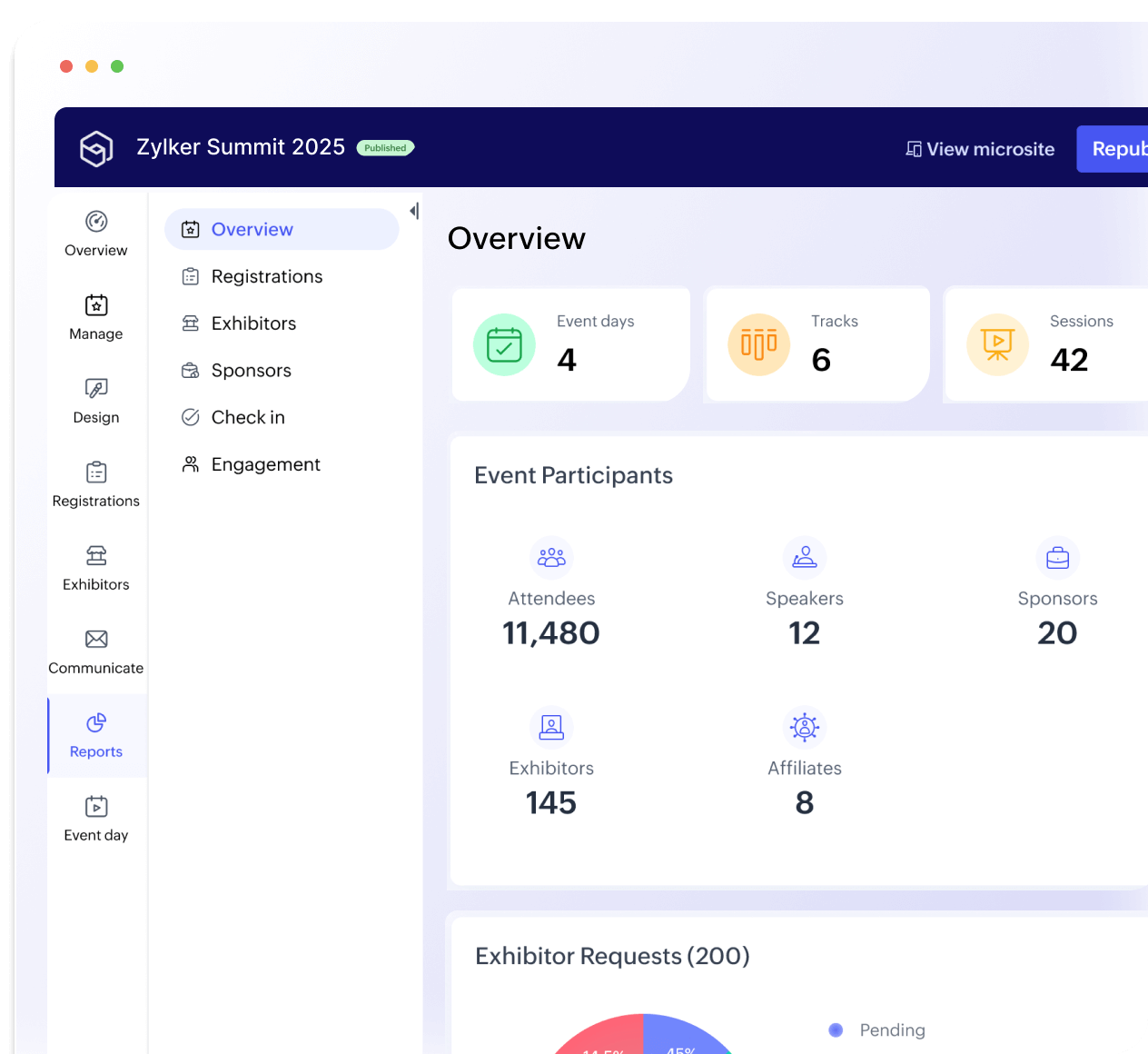
Here are eight ways to design and make a high-converting event website for maximum event registrations:
1. Start with a clear purpose
The biggest mistake most event planners make? Jumping straight into designing the website without clarity in the objective, and most importantly, what does their intended audience want to see?
Ask yourself:
- What's the main goal of this website? (registrations, ticket sales, sponsor signups?)
- Who is my audience? (students, professionals, C-levels?)
- What's the one message I want every visitor to take away?
Once you know the purpose, align your design and writing with it. If your event targets professionals, for example, your tone should be sharp and confident. If it's a creative summit, maybe go playful and colorful.
With Zoho Backstage, you can define all of this upfront and then choose a theme that resonates with your audience. The no-code website builder lets you customize every page with different colors, banners, and fonts to match your brand without juggling multiple tools. You don't have to be a designer at all. All you need to focus on is what story your event should tell and how to sell it to your target audience.
2. Craft a design that guides the eye
According to research, the average attention span of consumers is just 8 seconds. So, your design should guide, not overwhelm. Keep things intuitive:
- Hero section first: This is prime real estate on your website. Show your event name, date, and a clear CTA. A background image consistent with your brand and theme of the event or a short looping video will add the right touch of gravity to your event marketing efforts. Make sure these elements are consistent throughout your marketing collateral, too, including emails, flyers, roll-ups, and ads.
- Simplify navigation: Use a single top bar with links like "Agenda," "Speakers," "Tickets," and "FAQ."If you need to add more information, use accordions and dropdowns judiciously.
- Prioritize white space: Give elements room to breathe. Clutter kills conversions.
- Use brand colors smartly: Highlight CTAs with your brand's color and accents so they stand out naturally. Your event website should be as close to your actual website and feel like an organic extension to build and maintain credibility.
With no-code drag and drop sections, adjustable spacing, and multiple previews before you go live with your event details, Zoho Backstage offers an event website builder that helps you create an online setup for your event in no time.
3. Write copy that speaks to real people
You know who your audience is. Now talk to them like you actually know them.
Instead of saying, "Our conference provides opportunities for collaboration across industries.", say "Meet people who get what you do, and could help you do it better."
That's how high-converting event websites talk. They feel human. Real. Relatable.
Focus on:
- What attendees gain. ("Learn how to scale your business from the people doing it.")
- What makes your event different? ("No boring sessions. No endless slides. Just raw, practical insights.")
- Social proof. Use testimonials, attendee numbers, or logos from past sponsors to build trust.
4. Nail your call-to-actions (CTAs)
CTAs are where conversions happen. The biggest myth? That one "Register Now" button is enough.
Here's what works better:
- Place primary CTAs (Register/Tickets) at the top and bottom of each major page.
- Use micro CTAs in between, like "View agenda," "Meet our speakers," or "See ticket types."
- Keep the message consistent but not repetitive.
And don't bury them with elements and iconography. Bright buttons, simple copy, and clean spacing make a huge difference.
With Backstage, you can A/B test CTAs by easily duplicating your event page and trying variations before you go live. It's small tweaks like this that separate average event websites from high-converting event websites.
5. Show, don't just tell
If people can see what your event feels like, they're halfway to registering.
Use:
- Photos from past events
- 15-second teaser clips
- Speaker highlight reels
- Short stats like "2,000+ attendees last year" or "Rated 4.9/5 by past participants"
Backstage lets you upload videos, photo carousels, and dynamic content blocks. It also automatically optimizes your site for mobile, so even if someone's scrolling through your event on their phone, the visuals load fast and stay sharp.
And yes, fast load speed matters a lot as well. According to Google, if your site takes more than 3 seconds to load, over 50% of users leave before seeing your content.
6. Build trust with transparency
High-converting event websites always build trust upfront. Be honest, be transparent, and be comprehensive, leaving no doubts, and addressing anything new with quick-read FAQs.
Add:
- Pricing breakdowns (no hidden costs)
- Speaker credentials (short bios with LinkedIn links)
- Refund and cancellation policies
- Event security and safety guidelines: When visitors know what they're signing up for, they feel confident clicking "Register."
Backstage simplifies this part by letting you create custom forms and approval flows for registrations. You can manage ticket tiers, discount codes, and even restrict duplicate entries, all within the same dashboard.
7. Make it social (and mobile)
Social proof doesn't just mean reviews; it's also about showing activity like "shares", "reactions," and "comments," and all the buzz surrounding your event. Add:
- Live social feeds from X (Twitter) or Instagram.
- "Share" buttons beside your event details.
- Countdown timers to build urgency.
The Backstage mobile event app syncs automatically with your event site, giving attendees access to real-time updates, personalized schedules, and networking suggestions. So, you're not just getting registrations; you're building an engaged community even before the event starts.
And yes, that engagement loop leads to higher conversion rates for your next event too.
8. Use data to iterate and improve
A good event website doesn't stay static. You learn from every click.
Keep an eye on event metrics like:
- Bounce rate
- Average session duration
- Clicks on CTAs
- Drop-off points in the registration form
If most users are dropping off before checkout, maybe your form's too long. If the bounce rate's high, your hero section might not be communicating value fast enough.
With Zoho Backstage, built-in event analytics let you track performance in real time, seeing how many people viewed your pages, where traffic came from, and how many completed registration. It's insight without needing extra integrations or spreadsheets.