Why does the event value collapse after the event day?
Most event teams plan intensely for a specific date. The agendas are finalized, speakers aligned, and logistics, from ticketing to check-in, run smoothly. The event website looks sharp. The RSVP management is under control. The event check-in process runs without long queues. Badge printing is seamless. The live sessions are interactive. The event app is buzzing.
Then the event ends.
What happens next is fragmented execution. Recordings are uploaded elsewhere. Follow-up emails are sent in isolation, and lead data is exported without a unified strategy. That is the exact moment where the structured momentum of utilizing the event as a strong lead magnet breaks.
The problem is not effort; it is the lack of lifecycle thinking.
If the same systems used during the event are not designed to support post-event engagement, even successful events quickly lose impact. Extending the event lifecycle means that the same infrastructure used during the event should support structured engagement afterwards.
For example, if you have already built a powerful event website using a website builder, that site does not need to disappear. It can evolve into an on-demand knowledge hub. If you used an advanced ticketing system, those same segmentation layers can inform personalized post-event journeys. If your attendee engagement tools collected real-time polls, Q&A data, and session ratings, that insight should shape future content and micro-events.
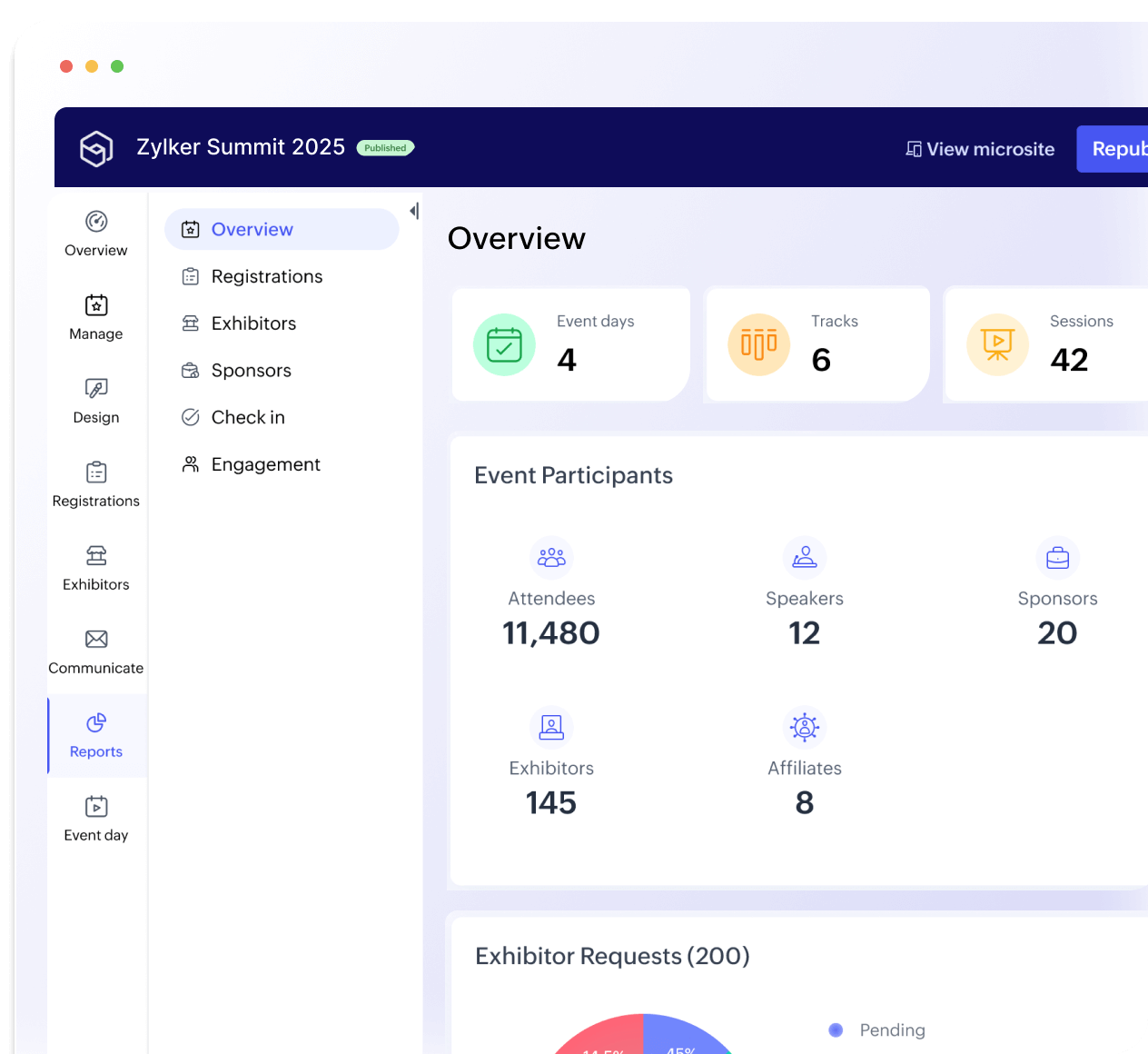
Zoho Backstage's analytics feature plays an important role here. It centralizes session performance data, attendance behavior, engagement depth, and sponsor interactions in one place. That continuity of data becomes the foundation for everything that follows.