How to create immersive event experiences that redefine audience engagement?

Event planners today have to shift from giving out agendas to creating memorable experiences. Here's how you can craft immersive, interactive, and unforgettable experiential events that audiences remember (and share).

We are living in the era of fragmented focus, with attention spans hovering around 8.25 seconds, shorter than that of a goldfish. What's worse is that users are always multitasking and switching between apps ( research claims the number is 12 apps per hour!), with an average viewing time of just 1.7 seconds on mobile before deciding whether to engage or scroll past.

You want your event audience to stop scrolling and look up. To get off their phones. To step into your event and actually feel blown away with curiosity, surprise, connection, interest, and ultimately, buy into your idea. That's the goal and dream of every event planner, scribbled on the whiteboard even before the event planning starts.

But most event planners struggle to make that happen. And that's exactly what experiential events are for! Experiential events can turn passive doom-scrolling audiences into active participants. And when done right, immersive experiences don't just look cool on Instagram; they move business needles: awareness, leads, loyalty.

So, if your event feels like another PowerPoint marathon, people tune out. But if you create immersive experiences that engage all senses, spur emotions, and build an instant (in seconds) connection, that's when you win hearts and ROI.

Experiential events

A comprehensive guide on experiential events in 2026

What are experiential events?

Initially thought of as "nice-to-haves" and relegated to a corner, experiential events today aren't just "fun add-ons." They're carefully designed environments that let people interact with your brand, your story, and each other.

Think of it as the difference between telling and showing. A speaker talking about sustainability is fine. But an event that lets attendees walk through a life-sized carbon-neutral installation? That's what people remember, because it spurs them into action, rather than just passively listening.

At their core, experiential events are about:

  • Emotional connection: Triggering feelings that last longer than swag bags.
  • Participation: Letting people do, not just see.
  • Storytelling: Every touchpoint, from lights, layout, and sound, tells a part of the brand story.
  • Technology: Using digital tools to amplify engagement before, during, and after.

Why experiential events matter more than ever

Event managers know the struggle: budgets are tight, sponsors want visibility, and audiences expect magic. In that mix, experiential events stand out because they deliver something measurable: engagement.

  • Memorability: People remember emotional experiences longer than facts because emotions create stronger cognitive connections. When attendees feel something, whether it's awe during a keynote reveal or excitement from an interactive demo, they're more likely to recall your event and brand long after it's over.
  • Shareability:98% of attendees create social content at experiential events because these moments give them something worth talking about. A striking installation, a surprise performance, or even a clever photo booth becomes instant share fuel, amplifying your event's reach beyond the venue through authentic, user-generated buzz.
  • Loyalty: Experiential events foster loyalty because they make attendees feel genuinely connected to your brand. When participants experience value, joy, or belonging firsthand, it shifts perception from "I attended an event" to "I'm part of this brand's story." That emotional resonance turns one-time visitors into repeat advocates.

It's no longer enough to host a conference; it's about creating a shared story with your event participants. When your audience walks away thinking, "I was part of something big/new/amazing/," that's an impact.

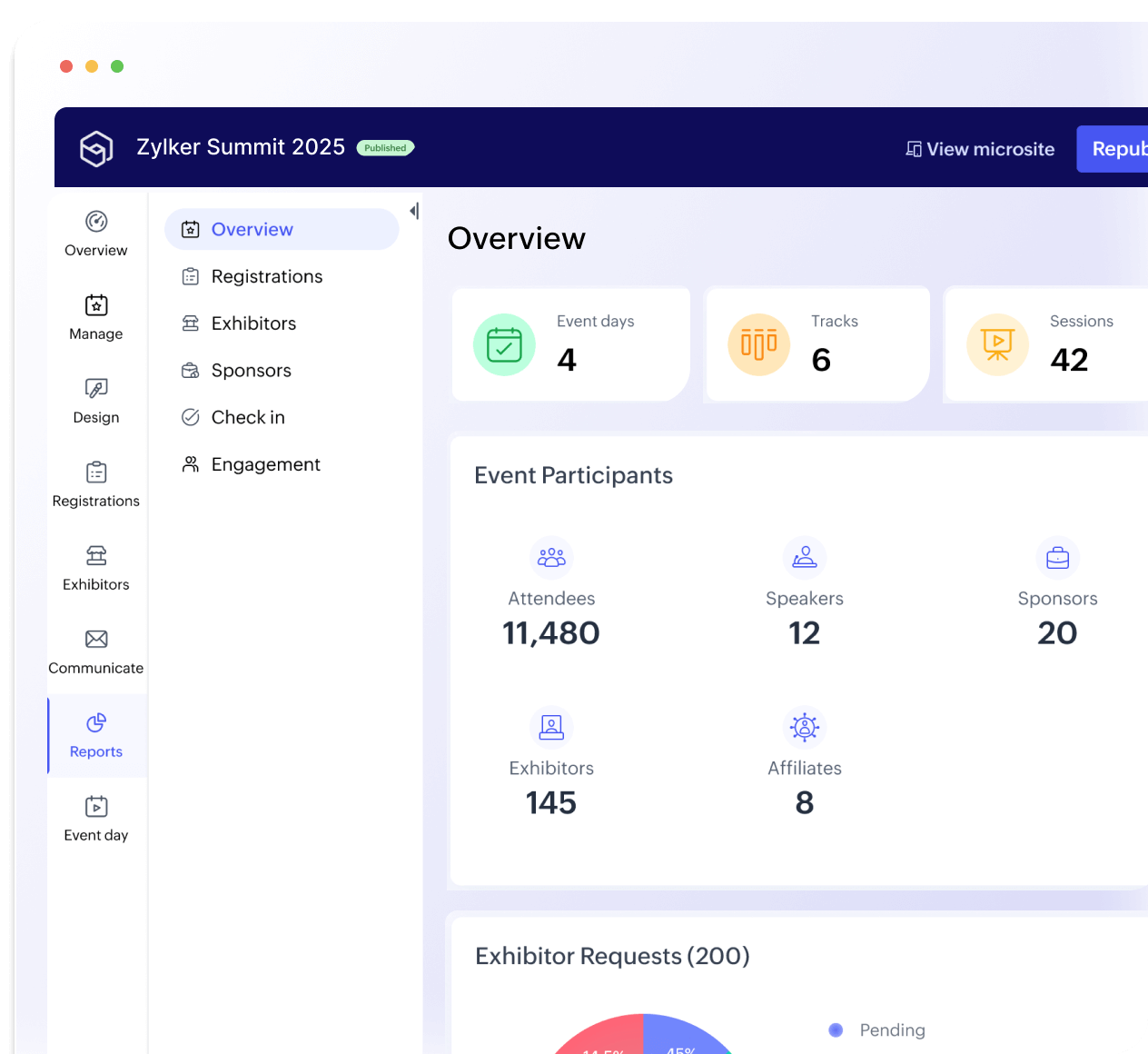
With custom-branded event sites, streaming, gamification, and networking tools, Zoho Backstage makes it possible to design connected experiences that make engagement feel effortless.

The different types of experiential events (and when to use them)

There's no one-size-fits-all playbook for event planners. Depending on your audience, goal, and scale, here's how you can shape your next immersive event experience:

1. Brand activations

Perfect for product launches or awareness campaigns. These events turn a brand into an experience, like pop-ups, sensory booths, or interactive demos.

How Backstage helps: With Zoho Backstage, you can create branded event microsites with zero code, manage on-site registrations, and track engagement in real time.

2. Conferences with immersive zones

Traditional conferences are fading fast. Modern planners are turning keynotes into experiences, with breakout lounges, AR demos, and interactive voting.

Example: Adobe MAX lets attendees test creative tools live in digital playgrounds, which is an example of how experiential design meets learning.

How Backstage helps: With Backstage's multi-track agenda and session management, you can easily schedule immersive zones and guide attendees through personalized schedules via mobile apps.

3. Hybrid experiences

Since 2020, hybrid events have evolved from a necessity to a strategy. They combine physical presence with digital access and expand reach, keeping remote audiences engaged.

How Backstage helps: Backstage's built-in webcasting and live streaming tools allow planners to host virtual and hybrid experiences without needing external platforms. You can also sync polls, chats, and Q&As to give remote attendees a sense of belonging.

4. Employee and internal events

Experiential isn't just for customers. Internal events designed to experience a concept or a theme can transform company culture. You can try interactive workshops, gamified learning, or storytelling sessions to ensure your employees feel part of the bigger picture and see themselves act on it before it becomes a standard norm.

Example: Google's "Campfire" sessions bring teams together for open discussions that mix virtual and physical participants.

How Backstage helps: Backstage's RSVP and private-access tools let you create secure, employee-only events that still feel personal and dynamic.

5. Trade shows and expos

In trade shows, exhibitions, and expos, brands try to display their products and let people see, touch, and experience them in real life. Previously, trade shows and expos used to be only visual. However, nowadays they have become more sensory. Brands nowadays use sound, visuals, and touch to attract visitors.

Example: CES 2024 saw VR-powered booths where attendees could interact with prototypes instead of reading specs.

How Backstage helps: Zoho Backstage's expo management suite offers interactive floor planning, exhibitor brand pages, and lead capture tools to help exhibitors connect meaningfully with attendees.

Why are immersive event experiences so effective?

Event planners are, in a way, behavioral designers. You're not just handling seating arrangements and equipment; you're shaping emotions and influencing thinking. Experiences that activate multiple senses (sound, touch, sight) increase retention and emotional recall.

In other words, you know that when people feel, they remember it longer.

Here's how planners can use that insight:

  • Create anticipation: Tease audiences and pique their interest with email and social campaigns.
  • Design flow: Use lighting, layout, and transitions to build emotional peaks.
  • Trigger action: End with something attendees can do, like a challenge, pledge, or shareable moment.

And when all that emotional storytelling is managed through technology and delivered on a centralized platform like Zoho Backstage, you can be sure of a seamless and well-coordinated event experience that also captures every data point to see what truly resonated.

How to integrate tech into experiential events (without killing the vibe)?

Nobody wants an event that feels like a tech demo. People want the event to be easy to attend and navigate. To make this happen, you'll need to integrate tech very subtly without affecting the attendees. Once you're able to do that, your tech will enhance the experience instead of overshadowing it.

Here's where planners are focusing in 2026:

  • Mobile apps: The majority of events now rely on apps for navigation, networking, and updates.
  • AI matchmaking: Smart algorithms recommend people to connect with before, during, and after the event for networking
  • Gamification: Leaderboards, live polls, and challenges make participation fun, not forced.
  • Analytics: Real-time dashboards help you see which sessions or booths draw the most engagement.

The goal? Use tech to remove friction and make every touchpoint feel natural.

A step-by-step guide for planners to design experiential events

Here's a quick blueprint to help you design your next experiential event that doesn't just look good; it feels good:

Step 1: Start with your "why"

What do you want attendees to feel or do after? The more specific your goal, the easier it is to design for it.

Step 2: Build a narrative

Think of your event as a movie. Each segment adds to the story. Even a product demo can feel cinematic when there's a clear emotional arc.

Step 3: Layer the senses

Don't rely on visuals alone. Soundscapes, lighting, textures, and even scent (yes) deepen immersion.

Step 4: Integrate feedback in real time

Use Backstage's built-in polls and surveys to gauge reactions during the event and adapt instantly.

Step 5: Keep engagement going post-event

Backstage lets you share recordings, highlights, and recap emails, so the story doesn't end when the lights go off.

How Zoho Backstage supports experiential event success

Zoho Backstage takes care of nearly everything else that shapes the attendee journey. Here's how Zoho Backstage supports experiential event success:

  • Event website builder: Create stunning, multilingual event sites with no coding. Perfect for brand storytelling.
  • Custom registration forms: Collect exactly the info you need, like attendee preferences, dietary needs, and session interests.
  • AI-powered networking: Match attendees, sponsors, and exhibitors who share goals.
  • Mobile event app: Give attendees real-time schedules, gamified challenges, and push notifications to keep them in sync.
  • Check-in and badging: Speedy QR check-ins that keep queues short.
  • Analytics dashboard: Visualize engagement metrics that show what worked.

So instead of juggling ten platforms, you can design, manage, and measure immersive experiences all in one place.

Build your next immersive event with Zoho Backstage

Experiential events aren't a trend; they're the future of connection and a right step in the direction of meeting your audiences where they are. Audiences don't just want to attend events anymore; they want to belong to them. And when your experiences are built with intention, creativity, and the right tech, they don't just engage; they convert.

So if you want to create immersive experiences that make people stop scrolling and start remembering, it's time to try a platform built for that world.

FAQs

Track engagement metrics like dwell time, participation in interactive zones, social media mentions, and post-event surveys, all of which can be monitored through Zoho Backstage's analytics.

Focusing too much on aesthetics and forgetting the emotional or narrative flow, as great experiential events tell a story that connects every element. Keeping it agile and real-time helps, and ensuring that you keep your event details updated at all times with an event management system that matches your shifting requirements is a game-changer.

Absolutely. Remote attendees in a hybrid event crave to get the same level of engagement and want their presence to be acknowledged. With Zoho Backstage's live streaming, chat, polls, and hybrid session tools, for example, you can create real-time interaction that mirrors in-person engagement.

Ideally, 3–6 months in advance, depending on complexity. You'll need time to prototype experiences, test tech setups, and align and automate your event flow to the maximum.

Use lighting, sound, and digital engagement tools creatively. Simple tactics like live polls, themed layouts, and gamification (available in Backstage) can transform the experience without inflating budgets.