6-12 months before the exhibition
This is where you build the foundation on which everything else depends. Lock down your venue, set your event ticket pricing, and get booth sales moving before competitors book the same exhibitors or your preferred dates are taken over by some other event. The decisions you make now determine whether you're coordinating a smooth event or firefighting avoidable problems six months from now, and here is how you can kick off the exhibition planning process:
Define your exhibition strategy and goals
- Set attendance targets (exhibitor count, attendee count, attendee-to-exhibitor ratio) and your expected quantified outcomes (business generated, leads created, and so on)
- Define exhibitor and attendee eligibility criteria
- Review competitor shows and identify gaps you can fill or potential common issues and concerns you may have as well, and prepare your brief for exhibitors
- Build a line-item budget (venue, marketing, staff, technology, 10–15% contingency)
- Set pricing strategy (early-bird, standard, late registration tiers)
💡Pro tip: Do the math from the exhibitor's side.
For example, if your top exhibitors expect around 30 qualified conversations, a plan with 200 attendees and 40 exhibitors won't get you there. At a 4:1 ratio, most booths see 10–15 real conversations at best, and that shortfall shows up later as discount pressure or exhibitors not rebooking.
Secure and contract your venue
- Calculate required square footage (100 sq ft per exhibitor + 30% for aisles)
- Account for demo areas, lounges, registration, and sponsor zones
- Verify loading dock capacity and union labor requirements
- Confirm dock hours, marshalling yards, and early delivery rules
- Check storage availability and fees for empty crates
- Review venue-exclusive vendor restrictions (catering, AV, internet)
- Check Wi-Fi density limits and hardline availability
- Negotiate setup days (minimum 2–3 days for exhibitors)
- Secure a venue contract with flexible cancellation terms
- Include force majeure and rebooking clauses
- Confirm insurance, security, cleaning, parking, and cloakroom scope
⚠️ Don't treat accessibility as an afterthought.
Plan for event accessibility alongside floor space and logistics. That means confirming accessible parking, step-free routes from arrival to show floor, accessible toilets in every active hall, and clear policies for service dogs.
Some venues already support this in practical ways. ExCeL London, for example, recognises the Hidden Disabilities Sunflower Scheme. This scheme lets people with non-visible disabilities signal they may need more time, space, or help. If your venue supports it, brief your team on what it means. Accessibility only works when the people on the floor understand it.
Vet and contract vendors
- Select a general service contractor (confirm equipment inventory and minimum $2M liability insurance)
- Choose a registration and badge-printing system that supports both pre-registration and on-site check-in
- Select a lead retrieval solution with CRM integration for post-show follow-up
- Contract a show directory provider and lock print deadlines early
- Hire signage and wayfinding designers familiar with large-format venue constraints
- Set up an exhibitor self-service portal for booth selection, utilities, and add-ons
- Confirm scope, deliverables, timelines, and escalation contacts in every vendor contract
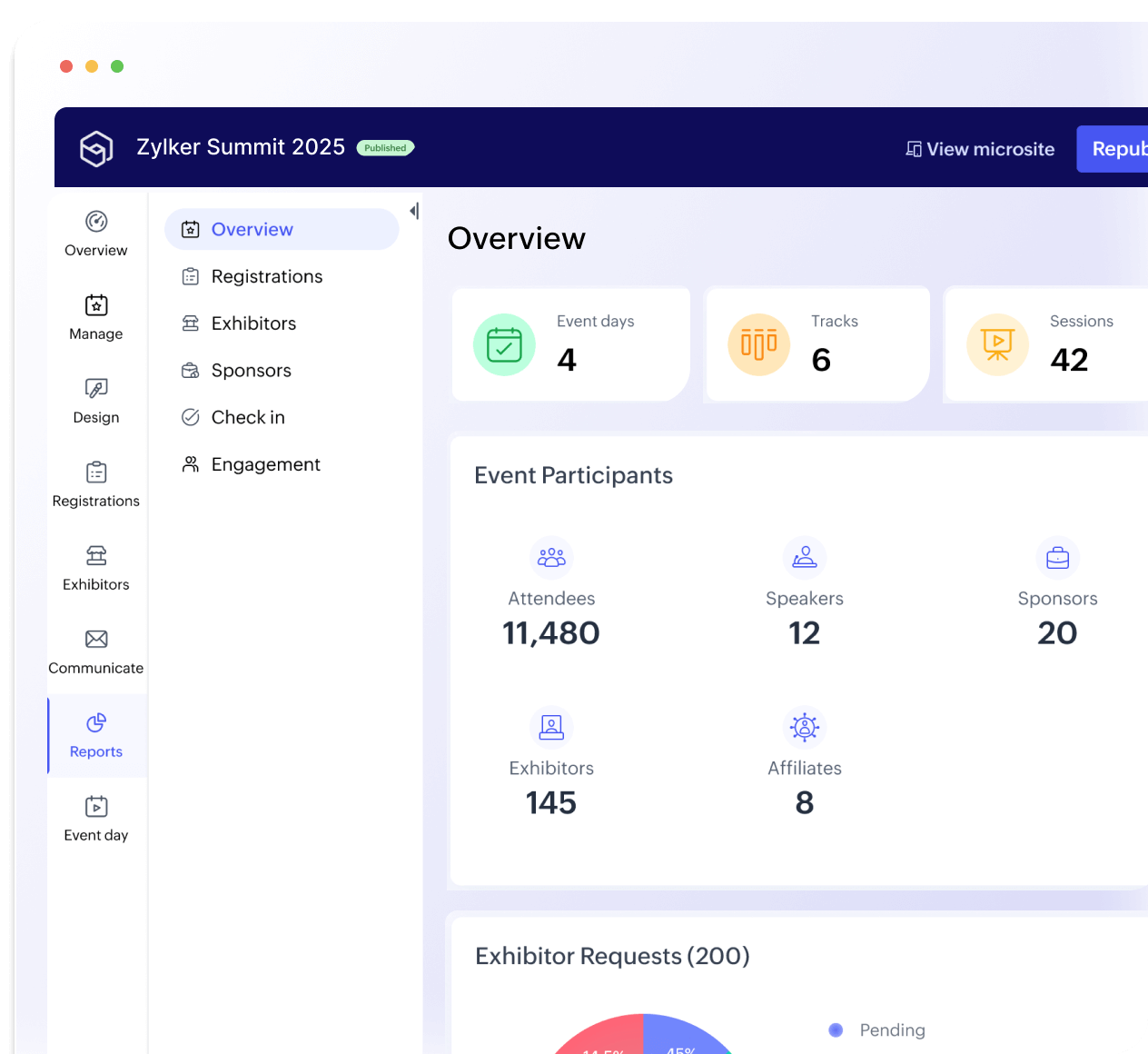
‼️If you're trying to avoid juggling five different tools on show day, an all-in-one expo platform like Zoho Backstage can cover a lot of this in one place—registration, badges, floor plans, exhibitor portals, and on-site tech support. It won't replace every vendor, but it does simplify the setup when things get busy.
Design your floor plan and launch booth sales
- Design the floor plan using 10×10 booth units with clear, logical numbering
- Set aisle widths early (10–12 ft main aisles, 8 ft secondary, 6 ft minimum sides)
- Place registration, lounges, catering, and service areas before selling booths
- Price premium locations (corners, entrances, main aisles) separately
- Identify high-traffic zones and position premium exhibitor spots
- Define booth types (space-only vs. shell scheme vs. turnkey)
- Create packages with clear value and limits
- Booth placement and branding inventory
- Speaking or content opportunities
- Lead access and data visibility
- Price utilities independently (power, internet, rigging, extra furniture)
- Build sponsorship inventory (badges, bags, app placements, charging stations)
- Release the floor plan with pricing tiers clearly marked
- Leave buffer space for late sales and plan layout flexibility for year-over-year growth
Pro tip: Use exhibition management software with a built-in floor planner instead of locking this in spreadsheets or static PDFs. Tools like Zoho Backstage let you design the layout visually, assign booths directly on the map, and update availability in real time as sales come in.
That matters once exhibitors start asking for swaps, upgrades, or late additions—changes that are painful to manage manually but routine in real events.