Common event ticketing challenges event planners have to face (and how to fix them)

If ticketing problems keep slowing down your events, this guide shows you the exact solutions to simplify sales, reduce errors, and deliver a better attendee experience.

Last month, an event organizer told us something that stuck with us. She said, "My event wasn't ruined by the speakers or the venue. It was ruined by ticketing."

Her refund requests skyrocketed in a single morning. A payment gateway froze funds mid-campaign. A group booking duplicated itself three times. She spent more energy emailing her ticketing provider than planning the keynote.

And honestly? Her story isn't rare. It's becoming the norm. Event ticketing issues have turned into one of the biggest hidden threats for organizers because the cracks only show when the pressure hits.

And the worst part is, these issues don't show up one at a time. They stack. They collide. They quietly sabotage event ticket sales management while you're trying to juggle venues, vendors, speakers, and sponsors at the same time.

Event ticketing is the process that controls cash flow, attendee flow, forecasting, and the entire chain of event operations. If this process gets stuck, everything else feels unstable, no matter how strong the rest of your event planning is.

Let's explore what ticketing challenges event managers face today, why these problems exist beneath the surface, and how a centralized, reliable event management software simplifies tracking, payments, security, approvals, and reporting, so you stop firefighting and finally run ticketing like the revenue system it was always meant to be.

Common event ticketing challenges

A detailed guide on how to fix modern event ticketing challenges

Why do ticketing failures happen in the first place?

If you look closely at most event ticketing issues, you'll notice they never originate from the ticket itself. Your event's ticket is just the output. The real problems lie in the processes that sit beneath the surface, such as payments, approvals, data handling, integrations, attendee identity verification, and sales tracking.

Fragmented systems create fragmented ticketing

A surprising number of organizers still depend on one tool for selling tickets, another for approvals, another for promo codes, and spreadsheets to "tie everything together." This split-stack setup makes it nearly impossible to control error points.

For example, when your payment gateway is separate from your ticketing dashboard, a single failed transaction can appear as a "lost sale" in one system and a "pending attempt" in another. That's how duplicate registrations and orphaned payments happen, which are two of the most frustrating event ticketing challenges you'll ever encounter as an organizer.

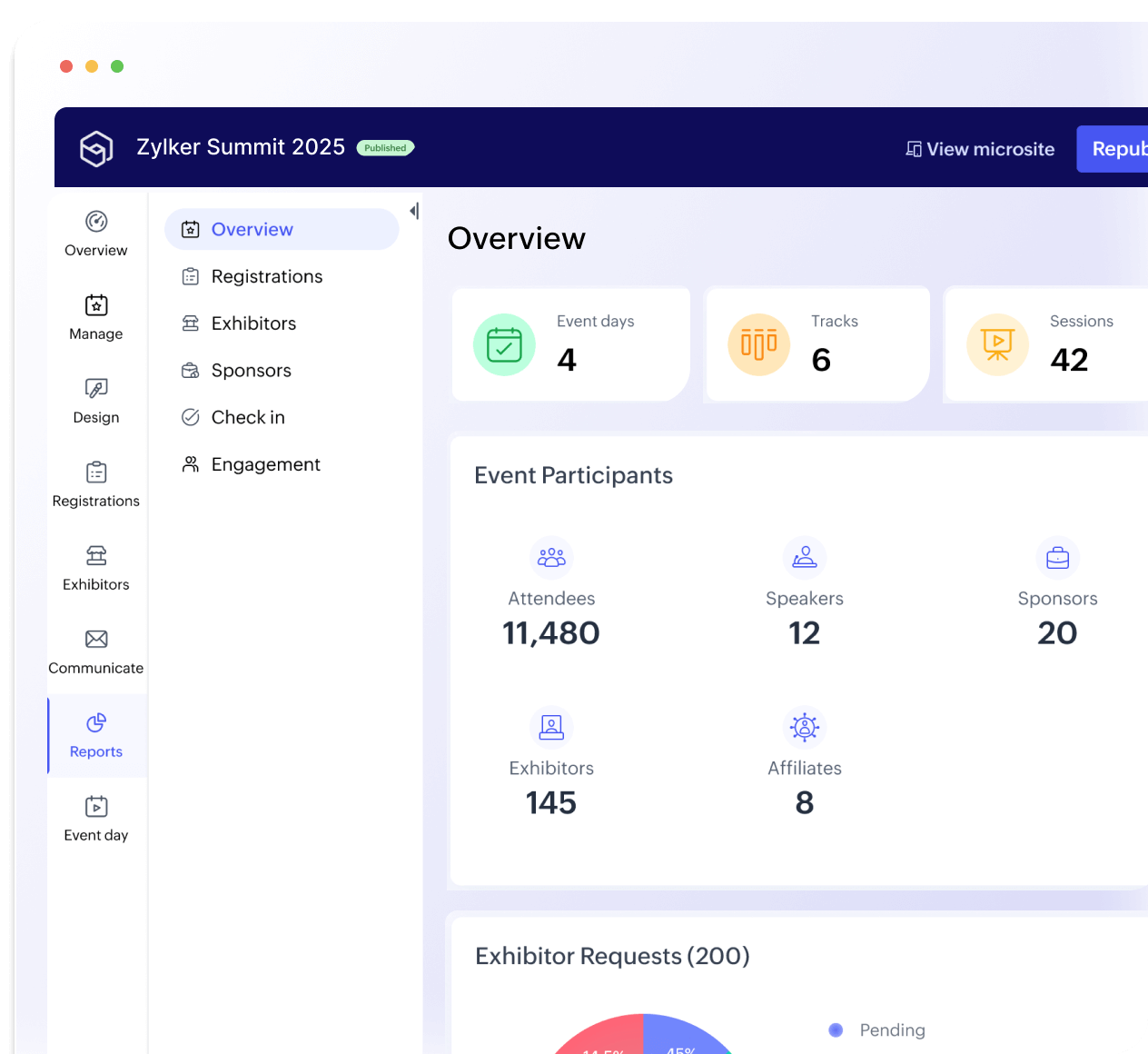
Using a centralized platform like Zoho Backstage removes this disconnect. Every step, from activation dates and auto-generated promo codes to attendee approvals, lives under the same roof, which means far fewer gaps for mistakes to slip through.

Approval delays and attendee identity gaps

Another major source of ticketing failures is manual approvals. When approvals depend on emails, spreadsheets, or messages bouncing between team members, the delay spills directly into your attendees' experience.

There's also the accuracy problem: every manually approved list is one step away from mis-typing a name, forgetting a field, or green-lighting a duplicate entry. These mistakes turn into operational headaches later, like incorrect badges, incorrect access permissions, or mismatched attendee profiles.

Systems that provide pre-approval workflows inside the ticketing process help reduce this friction. When the approval logic is built into the system, you avoid the confusion, and attendees move through the funnel with less friction and far fewer errors.

Refund and cancellation chaos

Refunds sound simple until you've lived through a messy cycle. Most ticketing systems handle refunds poorly for three reasons:

  • They don't record refund reasons in a structured way.
  • They don't sync the refund history with attendee profiles.
  • They don't unify refunds with revenue reports.

This makes refund management one of the most time-consuming event ticketing issues because you're left hunting through email threads, bank statements, and mismatched receipts.

When centralized software connects refunds directly to revenue and analytics dashboards, you get the full picture in one place, like refund volumes, patterns, and their impact on overall event revenue. That clarity not only speeds up the process; it also helps you understand whether your refund rates signal a deeper content or pricing issue.

The most common event ticketing challenges event planners face

Every organizer faces ticketing problems, but the underlying reasons differ. Below is a deeper look at the core issues that impact events of every size, whether you're running a small workshop or a 20,000-attendee expo.

1. Fraudulent bookings and chargebacks

Fraud is no longer an edge-case problem; it's a rising trend across the entire event industry. Studies show a nearly 22% YoY increase in ticketing fraud, particularly across large public events and multi-tier ticket structures.

Fraud shows up in different ways:

  • A single attendee using multiple email IDs to bypass ticket limits.
  • Scammers using stolen cards to buy tickets that later result in chargebacks.
  • Duplicate QR codes printed or resold unofficially.
  • Fake "support agents" convincing attendees to pay on external links.

These aren't minor hiccups. Fraud directly hits your revenue, and worse, it erodes trust.

Centralized ticket management with automated detection reduces these vulnerabilities. Systems that generate unique QR codes, enforce approval gates, and track identity patterns reduce the risk before it becomes a financial loss.

2. Payment failures and blocked transactions

Payment failures don't just cost you a sale; they cost you momentum. Research shows that up to 31% of customers abandon checkout due to complicated checkout processes. And most never return. If this is true for e-commerce sites, it could be even more relevant to events, where attendees are committing something more important: their time.

The reasons vary:

  • Gateway downtime
  • Currency mismatches
  • Insufficient retry logic
  • Wrongly flagged transactions
  • OTP delays
  • Regional gateway conflicts

And here's the complication: many failures don't show up in your dashboard. They live inside the payment processor's logs, far away from your event team's visibility.

A centralized environment that supports multiple gateways, instant reconciliation, and real-time failure alerts can bring those "invisible lost sales" back into your field of vision. Because when you can see payment failures clearly and the reason behind them, you can address them before audience confidence drops.

3. Promo code misfires and discount conflicts

Promo codes are supposed to boost sales.
Instead, they are often the cause of ticketing breakdowns:

  • Codes that expire at the wrong time
  • Discounts applied to the wrong ticket classes
  • Multiple-use bugs that cause revenue leakage
  • Manually entered codes that result in typos

When promo logic sits outside your main ticketing engine, errors multiply, and every error eats directly into your margins. And when you're also paying a commission on every ticket sold, the losses compound even faster. A single faulty promo code can wipe out both your discount strategy and the revenue you were counting on, especially when ticketing systems and pricing logic don't talk to each other in real time.

This is exactly why a unified event management software matters.

With Zoho Backstage, promo codes are part of a tightly integrated ticketing workflow. You set rules once, and the platform enforces them consistently across ticket types, channels, and audience segments. No expired-too-early codes, no discount misfires, no revenue slip-ups.

And when it comes to cost transparency, Backstage removes another common source of stress: unexpected platform fees as with zero commission, you can be assured your in-hand revenue is matching your ticket sales.

4. Group ticketing complications

Group bookings usually attract high-value attendees, but they're also among the top challenges in event ticketing. Issues show up like:

  • Partial group payments
  • Incomplete attendee details
  • Duplicate entries within a group
  • Group leader vs. member access mismatches

When group ticketing isn't automated, your team spends days manually fixing records.

A well-designed event ticketing system collects complete data per attendee, syncs group approvals, and ensures individual access rights, even when a single person pays for everyone. That's how you maintain both- ticketing convenience and clean attendee data.

5. Ticket scalping and unauthorized reselling

Scalping, where people buy tickets solely to resell later, is no longer limited to concerts and sports events. Conferences, workshops, and even invite-only networking events are now targets. The challenge causes loss of control.

Common problems include:

  • Tickets being resold at inflated prices on third-party platforms
  • Attendees entering with tickets registered under someone else's name
  • Speakers, sponsors, or VIPs losing access due to duplicate or resold tickets
  • Brand damage when attendees blame you for unfair pricing

Once tickets leave your ecosystem, enforcement becomes messy. You're left dealing with angry attendees, gate confusion, and reputational fallout.

A controlled ticketing environment that ties tickets to verified attendee identities, limits transfers, and tracks reassignments helps shut down unauthorized resale before it spreads. When ownership is traceable and transfers are rule-based, scalping stops being profitable, and that alone deters most abuse.

6. Poor visibility into real-time ticket performance

Selling tickets isn't just about how many you sell. It's about when, to whom, and why. Yet many organizers operate with delayed or surface-level data.

This lack of visibility shows up as:

  • Not knowing which campaigns are actually driving conversions
  • Missing sudden drop-offs during checkout
  • Over- or under-promoting ticket tiers without demand signals
  • Realizing too late that pricing needs adjustment

By the time reports are downloaded and reviewed, the opportunity has already passed. And in fast-moving sales cycles, delayed insight is almost as bad as no insight at all.

A centralized dashboard with real-time analytics changes that dynamic. When ticket sales, traffic sources, and drop-offs are visible as they happen, organizers can adjust pricing, promotions, and outreach while demand is still active, not after it cools off.

7. Last-minute changes and on-ground access issues

No event runs exactly as planned. Speakers drop out. Sessions move. Venues change entry points. But ticketing systems often struggle with last-minute updates.

This creates issues like:

  • Attendees showing up with outdated access information
  • Incorrect QR codes or badge data at check-in
  • Manual overrides slowing down entry lines
  • Staff scrambling to verify access on the spot

At scale, even small access errors snowball into long queues, frustrated attendees, and a poor first impression, before the event even begins.

A flexible ticketing system that syncs updates instantly across tickets, emails, and check-in apps keeps everyone aligned. When changes propagate in real time, access remains smooth, staff stays in control, and attendees experience the event, not the chaos behind it.

How centralized ticketing systems simplify the entire workflow

The biggest misconception about ticketing is that software simply "sells tickets." In reality, modern platforms act as the operational command center for your whole revenue pipeline, like tracking payments, monitoring attendance, managing approvals, automating promo codes, ensuring identity accuracy, and helping you make sense of sales patterns across different ticket types.

A well-designed central system like Zoho Backstage doesn't just prevent event ticketing issues; it changes the entire rhythm of your ticketing workflow. Instead of chasing errors, your team finally gets to plan and operate from a stable foundation.

One source of truth for all ticketing information

When your ticketing, payments, approvals, promo codes, attendee lists, and check-in flows live inside one platform, every operation becomes traceable. There's no more guessing where a sale got stuck, why a payment failed, which attendee record is correct, or whether a refund has updated itself in the main dashboard.

This is where a centralized event ticketing software can help you. It not only helps you sell tickets; it stitches together all surrounding processes, activation dates, expiry rules, payment logs, ticket classes, approval toggles, group ticket data, and even discount codes into a single unified ticketing data system offered by your event management platform.

When the entire lifecycle sits inside one platform, you never have to worry about chasing information across tools or manually maintaining accuracy. And that makes consistency one of your event's biggest hidden strengths.

The actual payoff here is stability. Once your data stops moving in pieces, your event operations stop breaking into pieces as well.

1. Better control over refunds, cancellations, and modifications

Refunds are often the most underestimated ticketing task. They look simple from the outside, but internally they affect revenue reports, attendee confirmations, and seat allocations. If your refund process is not integrated with your ticketing system, the entire structure becomes unstable.

A centralized system lets you:

  • Assign refund reasons in structured fields
  • Track refund history per attendee
  • Sync refunds instantly with payment logs
  • Update revenue charts and seat availability in real time

Instead of treating refunds like isolated tasks, the platform treats them as a part of the sales lifecycle. When refunds become predictable and traceable, they stop feeling like a threat.

This matters because attendees judge an event's professionalism long before they see the stage. A smooth refund experience becomes a subtle trust signal. And in a competitive event space, trust is currency you can't afford to lose.

2. Fewer errors through automated checks and approval logic

Human error is normal. But in ticketing, even the most minor oversight, such as mistyping an attendee name or approving the wrong ticket class, can create cascading operational issues later.

Centralized platforms add automated checks that validate entries, prevent duplicate registrations, and route approvals directly within the system. What used to be handled through email chains and manual spreadsheets becomes a predictable flow with minimal room for error.

This also affects how attendees experience your event. When their registration goes through smoothly, with accurate details, correct ticket tier, and explicit confirmation, they start their journey with confidence. And that confidence affects how they engage with your event, how they talk about it, and whether they return.

The real payoff here is not just efficiency; it's consistency. Consistency builds trust, and trust builds long-term attendance.

3. Fewer disputes, fewer chargebacks, fewer headaches

Chargebacks and disputes don't just cause financial loss; they cost time. They require documentation, evidence, verification, and often communication with multiple parties.

Centralized ticketing minimizes disputes because:

  • Attendee identities are verified at multiple points
  • Every ticket has traceable data fields
  • QR codes are uniquely generated and harder to duplicate
  • Refund logs and modification logs stay tied to each attendee

When your ticketing system creates a complete identity trail, fraud attempts lose their power. Even legitimate disputes are resolved faster because you finally have the full picture at your fingertips, like purchase time, payment method, session access history, and previous interactions.

The payoff here is simple: you reduce friction with your audience and protect your revenue with far less effort.

How to fix event ticketing problems and improve attendee experience?

Ticketing isn't just revenue. It's the first real interaction an attendee has with your event. If this experience is confusing, inconsistent, or unreliable, attendees carry that memory with them into the event and sometimes beyond.

Let's look at how fixing event ticketing issues directly improves the attendee journey, not just your backend operations.

1. Clearer communication throughout the ticketing cycle

Attendees expect clarity. They want to know whether their ticket was confirmed, whether their payment succeeded, what to do if something fails, and how to access their session details.

Traditional ticketing systems leave attendees guessing. A centralized system sends confirmations, receipts, updates, and instructions in real time. When information moves fast, doubts disappear.

This level of communication makes your event feel professional, dependable, and attentive. Attendees reward clarity with loyalty, and loyalty with repeat attendance.

2. More accurate access control at the venue

When ticket details sync automatically with check-in systems, you avoid errors like:

  • Wrong access permissions
  • Session mismatches
  • Invalid badges
  • Duplicate attendees trying to enter premium areas

A structured system makes sure the right people enter the right zones without interruptions. And when check-in is smooth, the event begins with calm rather than chaos.

The payoff is emotional as much as operational: attendees feel taken care of from the moment they arrive.

3. Faster entry through QR scanning and structured data

Long lines at check-in damage the attendee experience before the event even starts. When your ticketing data syncs with your entry systems, QR scans become instant and reliable.

Because all ticket classes, approvals, and identity checks already exist in the system, entry becomes a predictable flow rather than a bottleneck.

This matters because first impressions shape how attendees remember your event. A fast check-in rarely gets praised, but a slow check-in always gets noticed.

Make your ticketing workflow smoother with Zoho Backstage

Solving event ticketing challenges is not about adding more tools; it's about removing friction. When everything from payments to promo codes to identity checks to reports is housed in a single controlled system, your entire ticketing lifecycle becomes smoother, clearer for your team, simpler for your attendees, and stronger for your revenue.

Zoho Backstage offers this kind of structure by bringing ticketing, approvals, payments, custom forms, instant check-ins, discount logic, QR-based access, and analytics into one integrated space. And because it's built to scale, it gives organizers the clarity they need without adding complexity.

If you're ready to turn your ticketing process into a predictable, reliable engine that supports your event rather than interrupting it, there's a clear next step.

FAQs

Check for gateway failures, expired promo codes, or approval backlogs. These hidden blockers often cause unexpected dips in sales momentum.

Use systems that generate unique, scannable QR codes tied to each attendee profile, making forwarded confirmations unusable at check-in.

Yes, centralized platforms highlight abandoned registrations so you can re-engage those potential attendees before the window closes.

Use software that syncs modifications across badges, payment logs, and access permissions instantly to avoid inconsistencies on-site.

Enable validation checks during registration, such as email uniqueness, phone verification, and approval toggles, to prevent duplicates from entering your system.