Here are eight event technology trends that event planners should know about:
1. Artificial Intelligence: The planner's new best friend
AI isn't just a buzzword anymore; it's the quiet transformative force behind smarter events.
Imagine matching attendees automatically with relevant people, generating personalized session recommendations, or even predicting drop-offs before they happen at your event. That's AI at work, moving you a level up from random to purposeful networking.
With tools like Zoho Backstage's AI-powered matchmaking engine, planners can empower attendees to network based on shared interests, roles, or session choices. AI chatbots are also changing the attendee experience. Instead of scrolling through pages for answers, guests can get instant replies about schedules, speakers, or venue directions. Organizers get real-time insights into trending topics, popular sessions, and engagement patterns.
AI doesn't replace the human touch; it enhances it. It gives planners more time to focus on what actually matters: crafting memorable experiences, not drowning in logistics.
2. Automation: Doing more, stressing less
Event management involves hundreds of repetitive tasks. Sending reminder emails, updating attendee lists, tracking payments; it's exhausting.Automation is what keeps planners sane.
Modern event management software automates email updates, ticket confirmations, and even post-event feedback forms. That's time back in your day, and fewer chances for human error.
Automation also plays a huge role in event marketing.You can set up pre-scheduled promotional campaigns, push notifications for last-minute updates, and reminders for session starts, all triggered automatically.
The result? Better coordination, less chaos, and more time to focus on creativity.
Some event teams save up to 30% of their total planning hours by automating routine workflows.
3. AR and VR: Turning audiences into explorers
According to reports, the AR/VR market is expected to reach $11.6 billion by 2027.
Why? Because people remember immersive experiences longer than static ones.
In the end, AR and VR aren't just cool; they're powerful tools for storytelling, engagement, and accessibility and the secret ingredient to whipping up unforgettable event experiences.
Imagine walking into a trade show and seeing interactive AR floor maps guiding you to the right booth. Or joining a virtual conference where you can "walk" around, chat with exhibitors, and attend sessions in a fully 3D environment.
That's what event tech innovation looks like today.
Zoho Backstage's integration with virtual event platforms makes it easier to host hybrid experiences, where in-person and remote audiences feel equally connected. Tools like Backstage OnAir even allow real-time polls, Q&A, and interactive presentations for virtual attendees.
4. Sustainability tech: Because green is the new gold
The event industry has a waste problem. Every year, conferences and expos generate millions of tons of waste, mostly from printed materials, travel emissions, and single-use products. But the tide is turning.
Modern event tech helps organizers reduce their environmental footprint with a smarter approach. Digital ticketing and check-ins eliminate paper, plastics and resources. Virtual participation cuts carbon emissions from travel. Automated reminders reduce physical signage. Even real-time data analytics help forecast attendance more accurately, so you produce just enough materials, not too many.
Zoho Backstage offers digital registration tools that keep everything online, reducing unnecessary waste. And with features like QR-based check-ins and digital badges, an online agenda on your event app, you can say goodbye to plastic lanyards and agenda printouts.
According to reports, 59% of attendees prefer events that demonstrate a commitment to sustainability. The message is clear: eco-conscious events aren't just better for the planet; they're better for your business.
5. Data and analytics: The invisible engine behind smart decisions
It's impossible to improve what you can't measure.
That's why analytics is one of the most critical event technology trends right now. Modern platforms collect almost every type of engagement data, like how long attendees stay in a session to which polls got the most responses.
This data isn't just numbers; it's a roadmap. It tells you what resonated, what didn't, and where to double down next time.
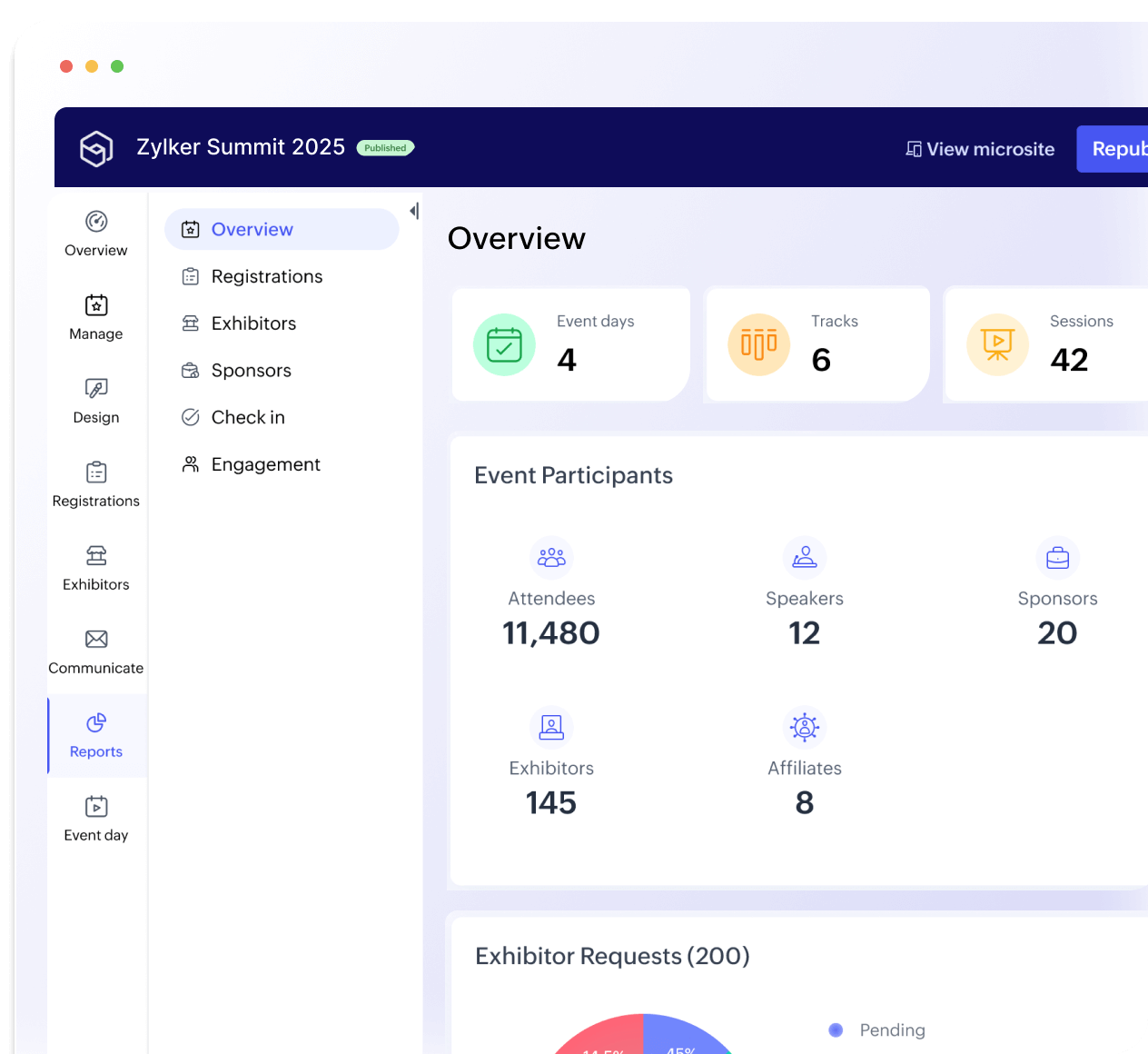
Zoho Backstage's built-in event analytics dashboard gives organizers a 360° view of their event performance. You can track ticket sales, attendee engagement, and even identify your most popular sessions.
6. Hyper-personalization: Because no two attendees are the same
If your event offers a one-size-fits-all experience, it's already outdated.
Today's audiences expect personalization in everything, from Netflix suggestions to Spotify playlists. So why should events be any different?
Event technology now allows organizers to create individualized experiences. Attendees can build their own agendas, receive content suggestions, and even get networking recommendations that actually matter.
Most event management software uses AI to tailor event experiences, highlighting sessions and people that align with each attendee's goals or interests. It also helps you segment audiences for targeted communication, whether you're sending out a sponsor offer or a session reminder.
7. The rise of hybrid-first event models
Hybrid events are here to stay. They aren't just a post-pandemic trend.
Hybrid formats allow attendees to choose how they want to participate, virtually or in person, without missing out on the experience.
This model requires advanced event management software that can sync seamlessly. They can let you manage in-person sessions, live streams, virtual networking, and analytics in one platform.
It's no longer about separating audiences; it's about uniting them under one digital roof.
And that's what makes hybrid-first planning the most strategic move an event planner can make today.
8. Ticketing tech: Smart, simple, and zero commission
There have been a lot of trends in the event ticketing industry. It has evolved from simple entry management to a full-blown marketing opportunity.
From dynamic pricing, promo codes, and gated sessions, ticketing is now where revenue strategy meets attendee experience. Platforms like Zoho Backstage provide zero commission ticketing and advanced options like pre-approval, promo code generation, and flexible payment modes.
And with integrations that simplify data flow across marketing tools, you can track conversions, optimize pricing, and understand what drives ticket sales, all in one dashboard.
These eight trends are not just topics for your next water-cooler conversations. They're the foundation of events that succeed today and thrive tomorrow. Understanding them is the first step; the next is figuring out how to future-proof your entire event strategy so your experiences stay relevant, resilient, and remarkable.