What is event production? A practical guide for modern teams

Event production is what turns event ideas into real experiences. This guide explains how planning, logistics, technology, and live coordination work together to deliver events that run as intended.

When people attend a well-run event, they notice the speakers, the atmosphere, and the ideas being shared, not the coordination behind it. But event teams know that event production involving floor plans, lighting setups, session transitions, stage cues, attendee flow, technical rehearsals, and vendor alignment is responsible for such a successful event.

Event production is the backbone that transforms an event plan into a real, functioning experience. It covers everything from logistical planning and technical setup to live coordination during the event itself. Without strong production management, even the most exciting event concept can fall apart during execution.

Operational complexity is one of the top challenges faced by event planners today. As events grow more sophisticated, the need for structured event production has become even more important.

We'll explain what event production entails, how it works from early planning through live execution, and how event teams can structure production systems to keep everything running smoothly.

Event production guide

Event production: A complete guide to planning & execution

Why event production is the backbone of successful events

Most event strategies begin with big ideas. A company wants to launch a product. A community wants to host a conference. A brand wants to create a memorable experience for its audience.

The concept stage focuses on themes, speakers, marketing, and attendee experience. But translating that concept into a working environment requires a completely different layer of planning.

Event production connects all the operational elements that make the event possible. It ensures that the venue layout supports attendee movement, that speakers know when and where to appear, that audio and visual systems work properly, that check-in lines move quickly, and that every session transitions smoothly.

Without production planning, events quickly become chaotic.

For example, a slow registration system, a keynote with technical issues, or an overcrowded breakout session can quickly disrupt the experience. These situations rarely happen due to the team's lack of creativity or foresight. They occur because the production layer was not properly structured.

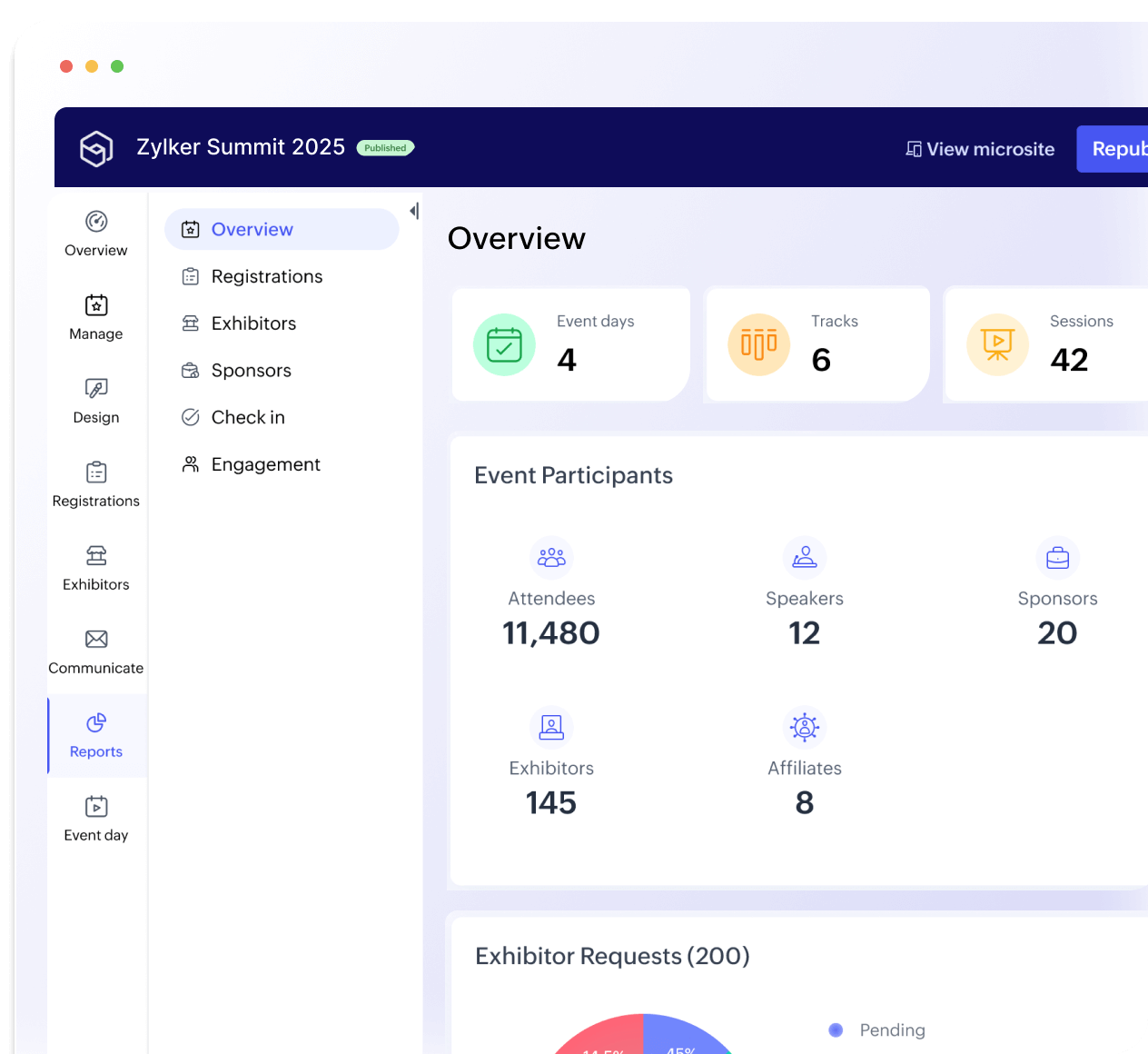
Large multi-track conferences often rely on live attendance tracking to redistribute room capacity in real time. Tools like Zoho Backstage's analytics can give production teams real-time visibility into attendance patterns, session engagement, and capacity trends, thus helping them respond quickly as the event unfolds.
Plan event production before your event planning begins

One of the most common mistakes event teams make is treating production as a final step. In reality, production planning should begin as soon as the event concept takes shape. When production is considered early on, many potential problems can be avoided before they even arise.

Production planning starts with understanding the event environment. Teams need to evaluate the full venue layout, expected attendee volume, session formats, networking zones, and technical infrastructure. These decisions shape everything that follows.

A well-structured production plan usually includes timeline development, vendor coordination, equipment planning, rehearsal schedules, and contingency planning. These elements ensure that every team member understands their responsibilities and that nothing critical is overlooked.

Technology simplifies early production planning. For example, an event website created through a website builder becomes the central information hub for attendees, while ticketing systems help track registration patterns and help event teams estimate capacity needs. RSVP tools provide early visibility into attendee commitment, allowing teams to plan resources more accurately.

These systems provide operational visibility long before the event day arrives. However, production planning doesn't stop here. Cross-team collaboration, in which event managers, logistics teams, and technical specialists come together to streamline the event, is an important part of production planning.

This is how event planners ensure that audio-visual setup, stage design, lighting systems, and presentation management are aligned with the agenda structure. If you start the production planning process early, you will have a lot more flexibility in the event of adjustments required during the event. Session formats, room layouts and attendee flow strategies all have the required flexibility instead of the event getting locked into rigid logistics.

Coordinate logistics, technology, and teams for smooth execution

Event production is rarely handled by a single group. It requires coordination between multiple teams, vendors, and technical partners.

Production teams often manage venue staff, audio-visual technicians, registration coordinators, security teams, stage managers, and speaker support teams. Each group has different responsibilities, but their work must align perfectly during the event. This coordination becomes much more complex once your events have multiple stages, parallel sessions, exhibition areas, and networking spaces.

Platforms like Zoho Backstage bring these moving parts into a single system—supporting check-ins, badge printing, and attendee engagement while reducing coordination gaps across teams. Backstage's event check-in systems help reduce congestion at entry points, badge printing ensures attendees can quickly access different zones within the venue, and attendee engagement tools allow speakers to interact with audiences through live questions and polls.

Centralized communication becomes critical when multiple teams need to respond to schedule shifts in real time. If a session runs late, organizers can update attendees through the event app. And if breakout rooms reach capacity, then organizers can monitor participation using the analytics dashboard.

These adjustments help maintain a smooth attendee experience even when unexpected changes occur.

Production coordination is ultimately about maintaining flow. Attendees should never feel confusion about where to go, what session is happening next, or how to interact with speakers and exhibitors. When production systems are aligned, the event feels organized without appearing overly controlled.

Manage live event operations with precision

The real test of event production happens during the live event.

Months of planning converge into a short window where everything must operate in sync. Speakers need to arrive on time. Presentations must load correctly. Sessions must start and end on schedule. Attendee movement between rooms must remain smooth.

Production teams usually run events from a central command structure. Stage managers coordinate with speakers. Technical teams monitor audio and video equipment. Registration teams manage check-in flow. Engagement teams track attendee interaction.

Real-time visibility becomes essential.

Attendee engagement tools also play a major role in live production. When participants ask questions, respond to polls, or react to presentation slides, speakers gain immediate feedback about audience interest.

This dynamic interaction improves the quality of discussions and keeps sessions engaging. Many teams operate from a central control room or dashboard during live events. Live event operations are also where contingency planning for the events proves its value. Unexpected delays, technical issues, or schedule adjustments are common in large events. Production teams must remain flexible and prepared to respond quickly.

When systems are connected and communication channels remain clear, these challenges can be handled smoothly without disrupting the attendee experience.

Integrate sponsors and exhibitors into the production environment

Sponsors and exhibitors are essential contributors to many events. Their participation supports event funding, networking opportunities, and industry engagement.

Event production teams need to ensure that sponsor activities integrate naturally into the event environment.

This integration begins during planning. Zoho Backstage's sponsorship management tools help track sponsor commitments, booth allocations, and promotional placements. These details must align with the venue layout, attendee flow, and event schedule.

During the event, lead capture tools allow exhibitors to collect attendee information through badge scanning or digital interactions, reducing manual follow-ups. When sponsor data is integrated with analytics dashboards, organizers can also understand how attendees interact with sponsor spaces. This insight helps improve future event design by identifying which areas attract the most attention.

Sponsors benefit when their presence feels relevant rather than intrusive. Production planning ensures that sponsor activations align with attendee interests and contribute to the overall experience.

Automation features can also support post-event follow-ups by ensuring that captured leads move smoothly into CRM systems without manual effort.

Build a production framework that evolves with each event

Event production improves with experience. Every event generates operational insights. Teams learn which session formats work best, how attendees move through the venue, which engagement activities drive participation, and how sponsor activations perform.

Capturing these insights is essential for long-term improvement. Below is a simplified production lifecycle that many event teams follow:

Production PhaseKey FocusInfrastructure SupportOutcome
Pre-event planningVenue coordination, vendor alignment, system setupWebsite builder, ticketing system, RSVP managementSmooth foundation with all logistics aligned
Event preparationTechnical setup, rehearsals, and attendee communicationEvent app, automation toolsFlawless readiness and minimized last-minute issues
Live executionSession delivery, engagement monitoring, and attendee flowAttendee engagement tools, analytics dashboardsSeamless event experience with high engagement
Post-event reviewOperational insights and improvement planningAnalytics reports, lead capture dataActionable insights for future optimization

This framework helps production teams transform each event into a learning cycle.

Reimagine event production with Zoho Backstage

Event production is no longer limited to stage lighting and technical equipment. Modern production involves managing digital systems, coordinating hybrid experiences, guiding attendee journeys, and ensuring that every operational detail supports the event's goals.

When production systems are fragmented, teams spend valuable time managing tools instead of focusing on the attendee experience.

Zoho Backstage brings these operational layers into a single system. From building event websites and managing ticket sales to handling RSVP confirmations, event check-ins, badge printing, and attendee engagement, Zoho Backstage integrates production systems into a single environment. When combined with analytics, automation, sponsorship management, and Zoom integration, event teams gain the visibility they need to coordinate complex events with confidence.

If your events involve multiple sessions, hybrid formats, or large audiences, a unified production platform can simplify coordination and improve visibility.

FAQ

Event production covers all operational activities required to plan and execute an event successfully. This includes venue coordination, audio-visual setup, stage management, attendee registration systems, session scheduling, technical rehearsals, and live event coordination.

Essential event production tools include ticketing platforms, RSVP systems, and website builders to streamline planning and manage registrations efficiently. For execution, event apps, communication tools, and audience engagement platforms help ensure smooth coordination and an interactive attendee experience. After the event, analytics dashboards and lead capture tools provide valuable insights to measure performance and improve future events.

Event planning focuses on concept development, marketing strategy, and program design. Event production focuses on the operational execution of those plans, ensuring that logistics, technology, and technical systems work smoothly during the event.

Production planning should begin during the early stages of event planning. Starting early allows teams to align venue layout, technical infrastructure, and attendee flow with the event agenda before operational constraints appear.

Digital event management platforms help production teams coordinate logistics, manage registrations, monitor session engagement, and track attendee behavior in real time. This visibility improves decision-making and reduces operational complexity.

Analytics help event teams understand attendance patterns, session engagement levels, and sponsor interactions. These insights allow organizers to refine future event production strategies and create more efficient event experiences over time.