Want to make sure your corporate events flow smoothly without a glitch? Try following the event planning timeline template we have laid out for you:
10–12 months before the event
If you are one of the few lucky ones where the event is a regular fixture and can be planned way ahead of its actual date, you can start with this first timestamp, where you have at least 10-12 months before the event. Some may argue that other, closer events may need your attention and prioritizing, but the regular events have their way of spinning out of control, despite their predictability and expected outcomes. This is a great time to plan an event that surpasses your past events as well as audience expectations.
Think of it this way: what went wrong last time that you can fix this year? Maybe the venue was too small, the agenda felt packed, or registrations opened too late. Use those learnings to refine your plan.
Here are a few things worth doing 10–12 months out:
- Set the vision: Clarify the purpose and success metrics of the event (is it about ticket sales, leads, or community engagement?).
- Block the venue: Popular locations get reserved months in advance, so this is the right time to lock one down if you can.
- Sketch a rough budget: Even if the final numbers aren't set yet, draft an approximate allocation for big-ticket items like venue, AV, and marketing.
If you're planning a 500-attendee conference, you should book a convention center a year ahead of time to leave room for flexibility.
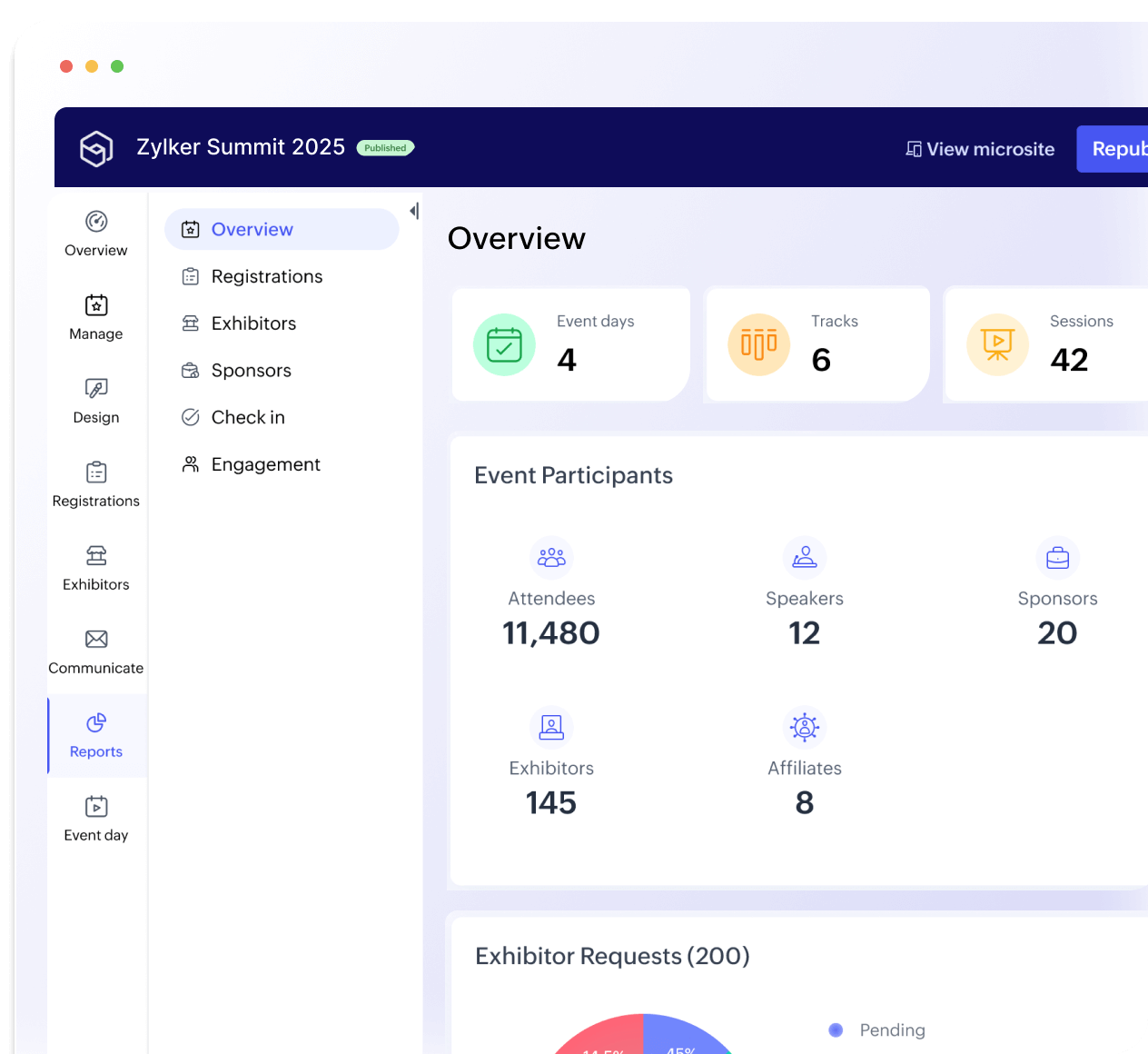
Around the same time, you can get started with the event webpage promoting your event in advance, even when the plans are still underway. Using an intuitive website builder, like the one built into Zoho Backstage, you get to grab people's attention and create a buzz.
6 months before the event
During this time, the event starts to shape up. This time is really important as most stakeholders and attendees start to get involved. By this point, your event is no longer just a concept; it's beginning to take real shape. The groundwork you laid earlier now turns into concrete plans, and this is when the excitement truly builds.
Six months out is often considered the "make-or-break phase" for most events, because this is when the majority of stakeholders begin to actively engage and decisions start carrying weight.
At this stage, you're moving from the broad strokes of planning into the operational core of your event. Everything you do in the next few months directly impacts your ability to deliver on time and on budget. But without deadlines, common issues include:
- Sponsors delaying deliverables, forcing designers to rush.
- Speakers canceling late, making it impossible to publish the agenda.
- Marketing pushed aside until it's too late to build momentum.
Here are the key tasks during this time:
- Finalize the speakers and their topics.
- Invite exhibitors and sponsors.
- Design sponsorship packages and exhibitor manuals.
- Launch early-bird tickets.
- Start your promotional campaigns (emails, blogs, social media).
- Open call for abstracts or session proposals, if needed.
Tip: Use multiple channels to promote your event. According to a survey, email marketing leads to 76% of event registrations, and social media contributes to 60%.
You can use Zoho Backstage to build custom forms, reduce duplicate sign-ups, and track registrations, with 0% commissions on tickets.
3 months before the event
If your event is 3 months away, you need to convert prospects into registered attendees. But if you don't follow a timeline, then that could lead to:
- Low registrations because the agenda isn't published.
- Missed sponsorship opportunities because deliverables weren't showcased.
- Marketing campaigns that fizzle because they started too late.
Here are the key tasks during this time:
- Announce the final agenda with session timings.
- Publish speaker bios and sponsor profiles on your event website. Most people sign up only after they've seen the speakers for an event and the topic they'll be speaking on
- Accelerate marketing and promotion with countdowns, videos, and behind-the-scenes clips.
- Launch your event mobile app.
- Incentivize people with networking opportunities or other offers to increase early sign-ups.
1 month before the event
This time is all about making sure everything goes smoothly without any problems. Without planning, you'll often see:
- Teams working overtime, leading to burnout.
- AV or hybrid tech issues only discovered days before.
- Attendees not reminded, resulting in no-shows.
Here are the key tasks:
- Finalize catering, AV, and technology installation.
- Book travel and accommodation for speakers.
- Train volunteers and your team.
- Send out personalized email or SMS reminders to attendees.
- Practice rehearsals and hybrid streaming configurations.
Tip: Hold a "red team" rehearsal. In a "red team" rehearsal, you invite a small team to test the event experience and highlight areas of weakness in advance.
A week ahead of the event
In the week before your event, your focus should only be on being prepared. Working without an event planning timeline could lead to:
- Badges not printed.
- Unfinished booths.
- Attendees getting confused about logistics.
Here are the key tasks:
- Print badges and signs.
- Install exhibitor booths and demo areas.
- Review emergency procedures.
- Send a "Know Before You Go" email with maps, FAQs, and parking information.
With an event management software like Zoho Backstage, you can scan QR codes for hassle-free entry, print on-brand badges instantly, and monitor attendance in real time.
Day of the event
On the day of the event, you should reach the venue early and make sure that everything you've planned in the past few months is exactly the way you want it to be. Most event planners who don't follow a timeline face these problems:
- Attendees waiting in long lines at registration.
- Sessions running late because of poor coordination.
- Teams scrambling to communicate updates.
Here are the key tasks:
- Make sure tech-related things are in order.
- Double-check broadcasting, audio-visuals, and ticketing items.
- Place delegates and volunteers to greet attendees at registration desks.
- Follow the decided schedule for the event.
- Broadcast live announcements and updates.
- Capture instant feedback through polls and surveys.
By incorporating event technology, you'll be able to reach your attendees where they are. For example, with Zoho Backstage, you can use dedicated mobile apps to notify attendees of any updates, or you can configure WhatsApp communication to reach where they are most active.
After the event
After your event is over, you should think from an ROI point of view and start analyzing the event to see if it met your objectives. Here's what you should do:
- Send thank-you letters to guests, speakers, and sponsors.
- Publish on-demand recordings and post-event material.
- Do a detailed cost analysis and reassess your budget.
- Gauge attendee satisfaction with surveys.
- Clear payments for all suppliers.
- Analyze registrations, session attendance, engagement, and ROI.
- Give feedback/praise to your team for doing a great job overall.
Real-time analytics gives you end-to-end visibility into your event engagement and ROI, so you can optimize future events.