6 event networking trends to look out for in 2026

AI matchmaking, micro-formats, and pre-event engagement are among the top event networking trends reshaping the industry. Here is what planners should do differently.

Most event planners assume attendees show up to network for the same reason sponsors show up to exhibit — commercial opportunity. A 2025 Freeman report found that 61% of organizers believe identifying commercial opportunities is why their attendees network.

But 1 in 3 attendees describe networking at events as "too salesy." That is not a minor disconnect. Event organizers may be designing for a motivation that their attendees do not actually have.

The good news is that the data on what actually works is getting sharper. Here is what the 2026 event networking trends are telling us.

Event networking trends

Event networking trends every organizer must know

What actually changed in event networking (and when)

For a long time, putting people in a room counted as networking. Throw in a cocktail hour, maybe a speed networking session, and the box was ticked. Then, attendees stopped playing along.

Many of today's attendees have built their entire professional lives through screens. According to AllWork, nearly 1 in 5 have never worked in a traditional office. They want face-to-face connection—genuinely—but they have never developed the muscle memory for it.

No hallway chats, no water cooler banter, no instinct for walking up to a stranger at a reception and making it feel natural. For this group, an open mixer is just an uncomfortable room. That makes it the organizer's job to design the conditions where the right people find each other, while also giving attendees a "serendipitous" experience.

And that's what we'll be exploring in the business event networking trends below.
1. Pre-event networking has become the main event

The event app used to be where you checked the schedule. Now it is where relationships actually start. The shift matters because arriving with context changes everything. Attendees who arrive having already exchanged messages, browsed profiles, and booked meetings do not need the cocktail hour to break the ice. The ice is already broken.

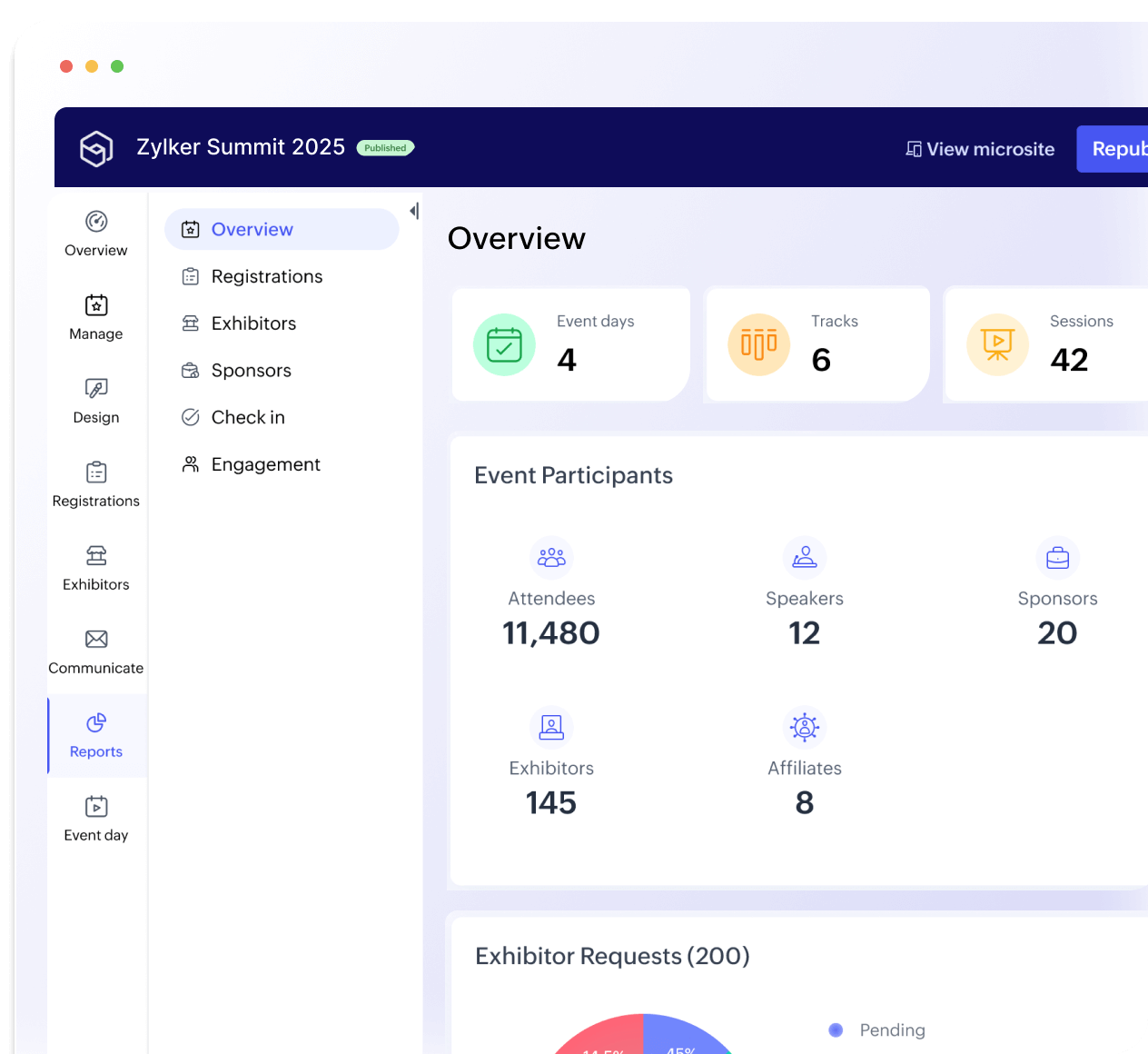
Pro tip: Ask attendees to complete their profiles at registration, not after. You can also run discussions around specific topics before the event opens. Zoho Backstage, for example, comes with discussion rooms. Here, you can set up public channels for different conversations—almost like building a community around your event.

2. AI matchmaking is now the baseline

Not long ago, AI matchmaking was the thing forward-thinking events did to stand out. Now it is closer to the standard attendees expect at any business event or trade show. The problem is that most events are not getting the results they expect.

A 2023 study found that AI matchmaking is only as good as the quality of data collected from participants upfront. Bad profiles produce bad matches. If attendees fill in the bare minimum at registration, the algorithm has very little to work with—and the introductions it makes will reflect that.

So, choose a platform that makes it easy for attendees to build detailed profiles. In Zoho Backstage, for example, you support networking by creating a predefined list of interests, and attendees simply choose from it. This means no open text fields and no vague self-descriptions.

3. Micro-formats are outperforming large mixers

The logic behind the large mixer was always about volume. Get enough people in a room and useful conversations will happen. That math isn't working the way it used to, because attendees don't want to meet more people. A few quality conversations are what they want.

Smaller, micro events deliver that. When the room is already filtered by role, interest, or challenge, attendees spend less time figuring out whether a conversation is worth having and more time actually having it.

Take Zoho's own Finance team. Our "Let's Talk Finance Over Dinner" event in Palo Alto brought together a small group of finance professionals for a panel on AI in accounting and advisory services. This was just a specific group of people with a shared professional context and a focused conversation to anchor the evening.

4. Peer-to-peer connection tops access to speakers

There was a time when access to a keynote speaker was a genuine draw. You could not easily reach those people outside of an event context. That is no longer true. Most speakers have a podcast, a LinkedIn presence, a newsletter, or all three. Their ideas are available for free, on demand, before the event even announces its lineup.

What attendees cannot find outside an event is peers navigating the same pressures. Like a CFO figuring out how to structure an AI budget or a people lead managing a team that has never shared an office. You need to build your event around these conversations.

Pro tip: Build dedicated peer spaces, like role-based roundtables or even informal dinners where the guest list is curated by job function.

5. Attendees want purpose-driven networking

According to Freeman's XLNC report, 51% of attendees say effective networking is reason enough to return to an event. But nearly a third of professionals aged 23 to 46 say current networking formats actually detract from the experience—or increase anxiety.

These are professionals who showed up wanting to connect and left feeling like the event did not make it easy enough to do so. The fix is intentional design where there's a reason beyond "we are both here" to connect with another attendee.

Here's how Janet Dell, the CEO of Freeman puts it:

"Organizers have a responsibility to design intentional networking experiences that feel relevant, inclusive, and valuable. When we do that, we don't just bring people together—we also build communities, spark ideas, and fuel growth."

The most deliberate version of this is anchoring networking around a specific problem worth solving, like a "social impact question" that the room is collectively trying to answer. When attendees leave with a contact and a context, the relationship has somewhere to go.

6. Event planners are designing neuro-inclusive networking spaces

Pack enough sessions, mixers, and structured interactions into two days, and attendees get tired. Conversations get shorter, and the last hour of the conference produces nothing useful for anyone.

Neuro-inclusive design takes that seriously. Organisations like Eventwell in the UK have been pushing the events industry to treat mental wellbeing as a core design requirement, not a nice-to-have. Because if an attendee is overstimulated, anxious, or exhausted, no amount of matchmaking will produce a good conversation.

This means quiet rooms, no-phone zones, and scheduled social pauses built into the agenda — not squeezed into a spare corner of the venue. A 15-minute break between sessions is not dead time. It is what makes the next conversation worth having.

Pro tip: For virtual and hybrid event networking, build this into the platform. In Zoho Backstage, attendees can set their available meeting slots and leave gaps where they are not bookable. The boundary is built into the schedule so they're not emotionally drained.

Your next event deserves intentional networking. Zoho Backstage can help.

The trends all point to the same thing: attendees want structured, purposeful networking and the events that deliver it are the ones worth returning to. Good event technology is what makes that possible without it becoming a logistical nightmare.

Zoho Backstage is built for exactly that with pre-event profiles, AI matchmaking, meeting booking, and in-app chat in one place. And because attendees are sharing personal and professional data to make that work, it matters who holds it. Zoho does not sell attendee data to third parties. This matters more than most platforms will admit.

FAQ

Set your metrics before the event opens — the number of pre-scheduled meetings, connection acceptance rates, and the number of connections that progressed to a follow-up within 72 hours. Most event apps track this automatically. Headcount tells leadership the room was full. These numbers tell it was worth filling.

Ask who owns the attendee data, how long it is retained, and whether consent is collected at the individual level and not buried in event registration terms. Most vendors have not resolved this cleanly. If they cannot answer directly, that is your answer.

You can also look for data privacy-related features. Some event platforms, like Zoho Backstage, for example, let attendees send data access and deletion requests via the app, so you can manage them easily.

The more effective approach to welcome introverts is making structured formats the default for everyone. Consider pre-scheduled meetings with a set agenda, topic-led roundtables with a clear scope, async connection requests before the event opens. These reduce social pressure across the board. Introverts benefit most, but no one feels singled out.

It depends on what your event actually needs, but Zoho Backstage is worth serious consideration. It combines attendee matchmaking, in-app messaging, and meeting scheduling on a single platform, so attendees do not have to jump between tools.

For virtual and hybrid formats especially, having all of that in a mobile app removes the friction that usually breaks the connection before it can go anywhere.