If your event is a messaging stream, its content is the strong undercurrent that guides the flow of your entire event marketing efforts, whether it is before, during, or after the event. Smart event content planning begins early and continues long after the final session is over. The biggest mistake that teams often make is assuming that these three phases are different instead of being a part of one continuous process.
Before the event: Build anticipation and trust
Event content at the beginning of the event isn't just about communicating information like date, time, agenda, and venue to the attendees, but also about making it one that shouldn't be missed. This is where your event storytelling should actually start.
Here's what works well before the event:
- Speaker-driven teaser content that comes across as human, not promotional: Videos or quote cards where speakers discuss what they are looking forward to sharing are more effective than promotional trailers. Authentic energy is more appealing than promotional hype.
- Behind-the-scenes stories of planning and hard work: You can show what your team is doing behind the scene to build trust. It makes people believe there are real people working hard to deliver an amazing experience, not just to sell tickets.
- Educational blogs that answer attendee questions early: Posts like "What you'll learn from our data track" or "Who should attend this workshop" will help with quicker decision-making and fewer abandonment of the registration process.
- Social content that encourages engagement, not just clicks: Always use polls, speaker Q&As, and discussion topics can make your audience feel like they're part of the event even before it starts.
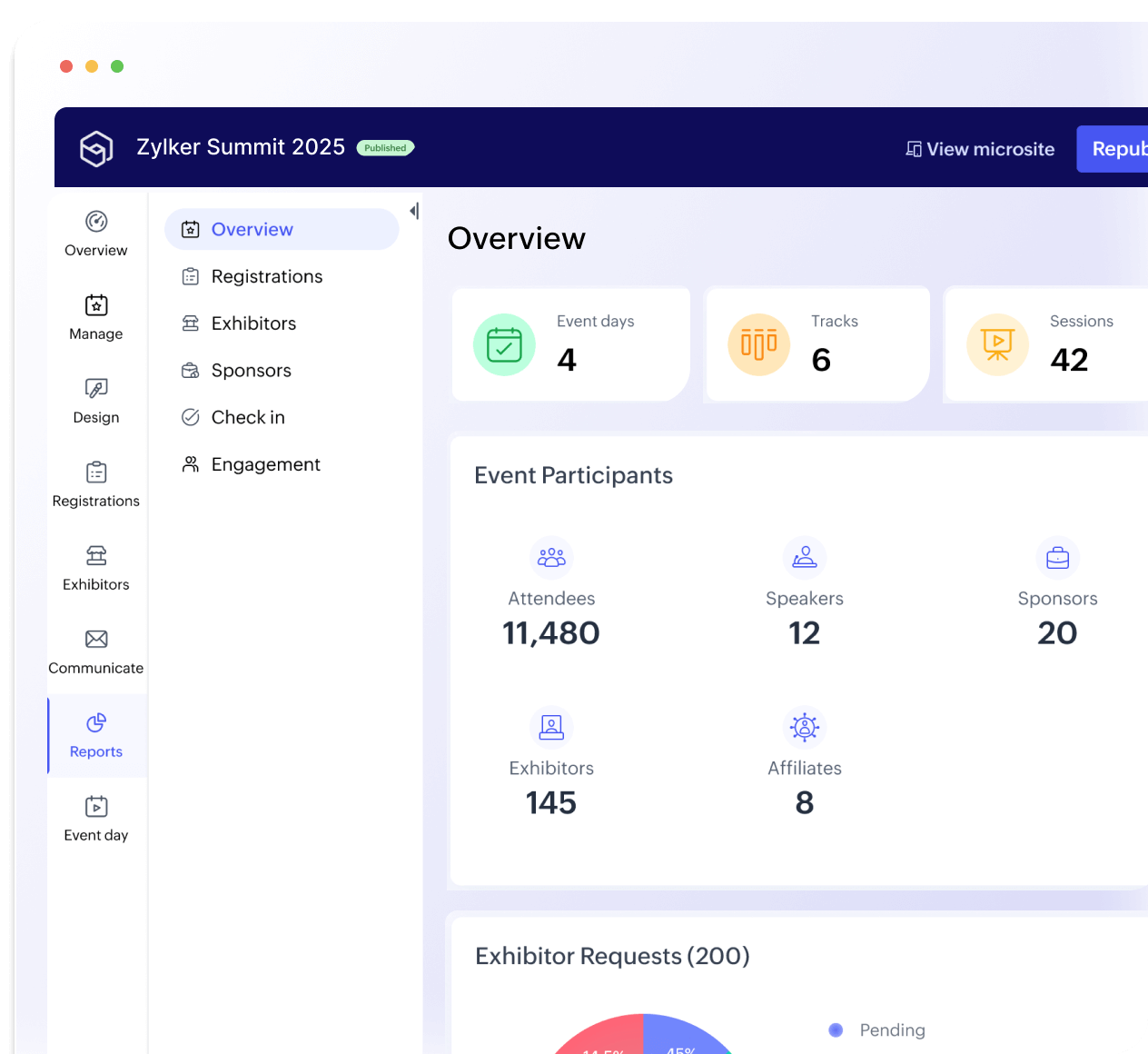
Your event website is a key part of this. It shouldn't be a simple factual listing but rather a guide to the story behind why your event exists and for whom. With Zoho Backstage's website builder, you can build mobile-optimized sites to showcase your agenda, speakers, and updates in real-time so your content always stays current.
During the event: Turn moments into shareable experiences
During the event, most event teams focus on running sessions, managing logistics, and coordinating speakers. They think that creating content is like a "nice to have." However, it is the main focus of your event and can be highly effective.
Your only job during the event should be to capture the audience's feelings and actions, not just their words.
Below are some content formats that are particularly suitable for events:
- Short video footage of sessions, crowd response: There is no need for full production in this case. Even footage that is brief and comprises audience applause, demos, and audience response can be used.
- Live polling and audience engagement that turns into content: The results of polls, trending questions, and audience feedback can be shared in real time. This helps engage distant audiences as well.
- Speaker sound bites that summarize key ideas in simple words: These are ideal for use in social stories or post-conference newsletters. They provide valuable content for those who have not attended the conference.
- Networking and booth activity photos: Depicting real conversations and product demonstrations makes the event look natural and unscripted.
For virtual and hybrid events, live streaming is a major component of your strategy. But there is more. You should be able to repurpose the session recordings and tools such as Zoho Backstage OnAir, which helps you live stream, record, and reuse content without requiring multiple tools.
After the event: Extend the story, not just say gratitude
Most post-event content stops at thank-you emails and photo albums. That is a missed opportunity. After the event, your content should help people remember what they learned, share what they enjoyed, and continue conversations that started at the event.
Here is what strong post-event marketing content looks like:
- Session recordings with short highlight edits: Long videos can be useful. However, short clips are what actually get shared and watched again.
- Topic-based recap blogs instead of generic summaries: Instead of "Event highlights," write posts like "3 lessons from our product strategy track" or "What leaders said about AI adoption."
- Speaker interviews about audience questions: These add new value instead of repeating what was already said on stage.
- Follow-up emails based on session interests and behavior: If someone attended marketing sessions, send them marketing resources, rather than generic thank-you notes.
Zoho Backstage's built-in analytics, session engagement data, and attendee behavior tracking help you manage your event much more smoothly. This helps you tailor your follow-ups instead of sending the same message to everyone.
If you are planning multi-channel follow-ups, you should opt for integrated event promotions to ensure your event's email, website, and social content work together.