Just as your event website or poster should have a clear visual hierarchy, your event badge should as well. Every element, like the name, role, logo, color, and any supporting information, has a purpose and has to be intentionally designed. Here's how to structure an event badge that supports both clarity and connection
1. Ensure the name takes center stage
It might sound obvious, but so many event planners get this wrong. The attendee's name should be the most visible element on the badge. Keep it in large, legible font (at least 24pt), ideally in a bold sans-serif typeface like Helvetica or Open Sans.
Why does the attendee's name have to be big on an event badge? Most networking interactions occur within 3–6 feet. People shouldn't have to lean in or squint to read it, which breaks the natural flow of conversation.
2. Add context, but don't overload
Company name and job title provide essential context, but they are secondary in terms of visual weight. They can be placed right below the name in a smaller, lighter font. The goal should be to provide sufficient detail while giving enough information for attendees to remember the person and where they fit within the event ecosystem. Use a smaller font size and lighter weight to maintain visual hierarchy.
The goal is to provide context without clutter or competing with the name.
3. Create/Support branding without distraction
Your conference badge design should reflect your event's visual identity without overshadowing attendee information. Make sure you use your event colors strategically. For example, your event logo should be subtly placed at the top or corner, use brand colors wisely, and maintain sufficient white space to ensure readability.
Think of the badge as a billboard for your event, but for one viewer at a time, with a very short span of attention. So it should be less visually noisy and feel polished.
4. Choose the right orientation and layout
Portrait layouts feel classic and formal, while landscape layouts offer more horizontal space for modern layouts and design creativity. Hybrid or multi-day events often prefer landscape because it accommodates sponsor logos, QR codes, and access zones without crowding the badge.
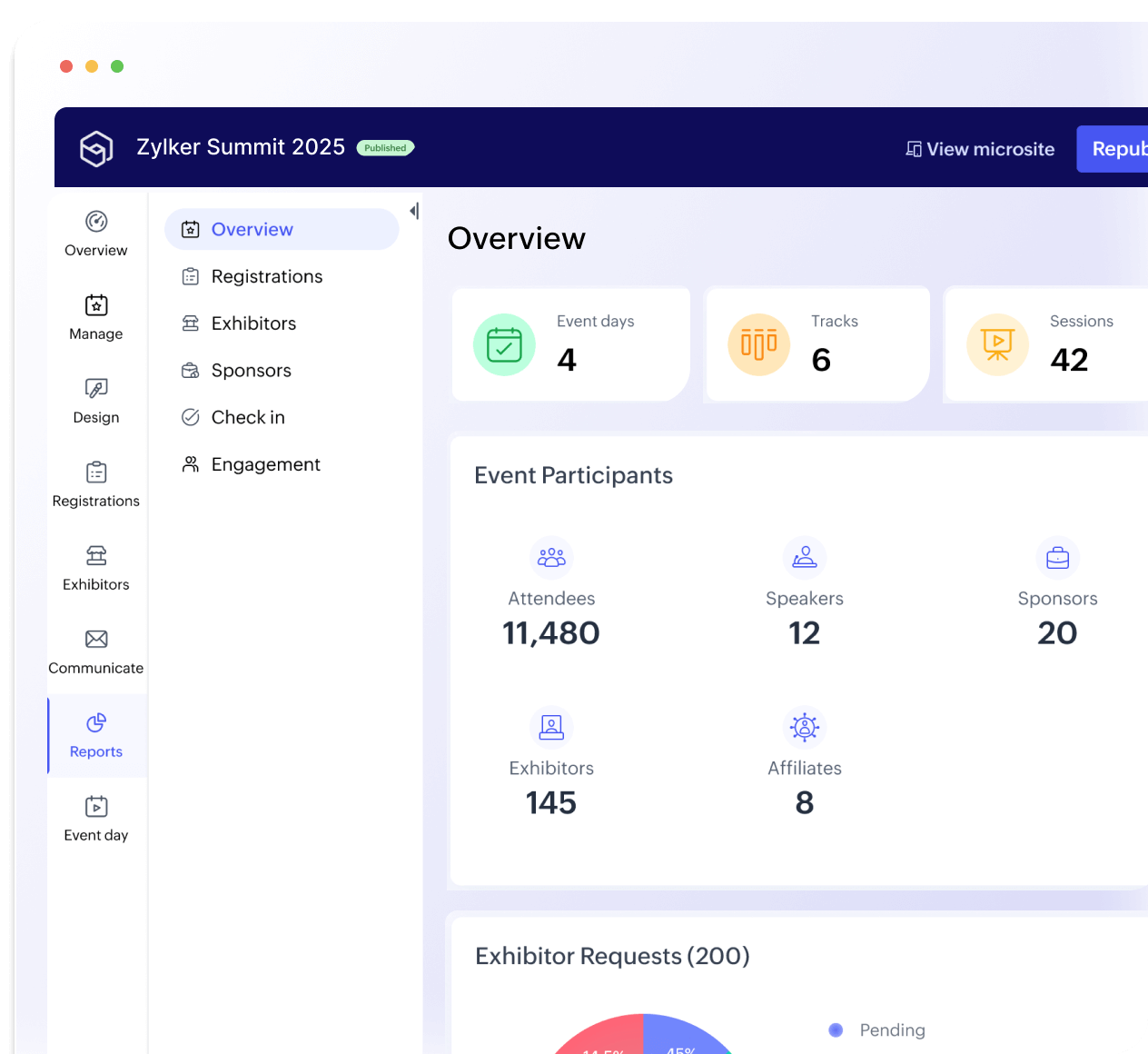
With Zoho Backstage's badge printing tools, you can experiment with both orientations and customize layouts and preview them instantly before printing- making it easy to choose what best fits your event format.
5. Use smart identifiers that seed up interactions
Role-based color-coding of the badges (e.g., Speaker, Exhibitor, Attendee, VIP) helps attendees instantly understand who they're talking to, and it also streamlines interactions and access control. Research shows that color increases information recognition by up to 80%, making it one of the simplest and most effective tools for onsite navigation
When someone spots a red badge, they instantly know it's an exhibitor; it cuts through guesswork and supports quick, confident interactions, exactly what your ideal outcome is during busy networking events. That's visual communication working at its best.