1. Build a clear event announcement message
Before thinking about channels or timelines, the first step is clarity. If your event message is unclear internally, no marketing strategy will fix it externally.
Every event announcement must answer three questions immediately. What is this event about? Who is it for? Why should someone attend?
Most announcements fail because they try to say too much. They list the agenda, highlight speakers, mention sponsors, and describe the venue all at once. Instead of clarity, the audience receives information overload.
A strong announcement message focuses on one central idea. This idea should capture the most compelling reason someone would attend your event. For a conference, it might be industry insights or networking opportunities. For a workshop, it might be skill development. For a product launch event, it could be something as simple as early access to innovation.
Once that core idea is clear, everything else becomes supporting context. The event website can provide additional details such as agenda, speakers, and ticket types. The initial announcement should focus on the primary value proposition that captures attention quickly.
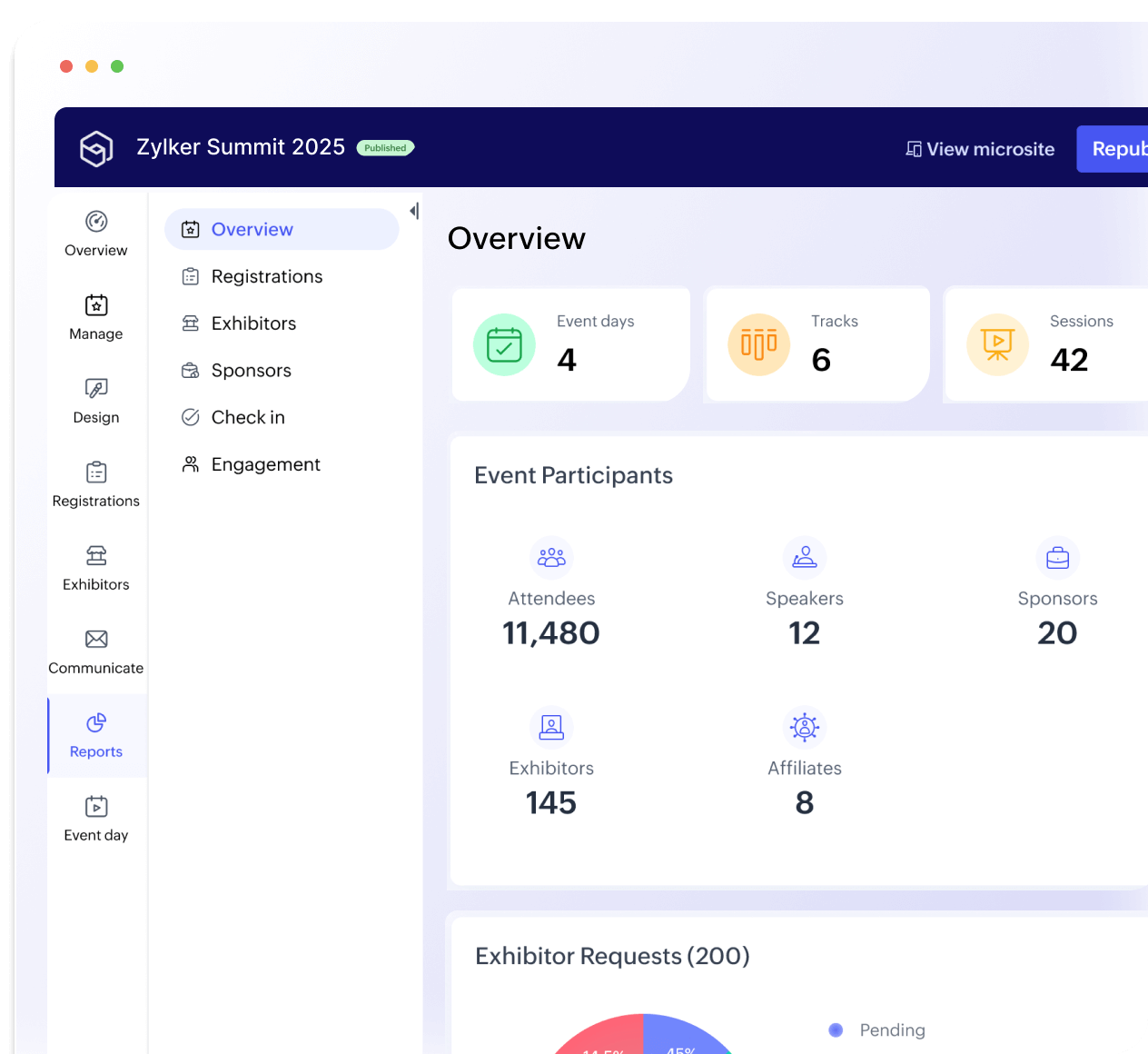
Structured event pages make this easier by separating the core message from supporting details. When attendees land on a page that clearly explains the event and offers a simple registration path, conversion improves. Zoho Backstage's website builder makes this process easier by allowing teams to create structured event pages that help visitors immediately understand the event's purpose.
2. Design an event announcement timeline
Announcing an event effectively requires multiple stages of communication. Each stage should reveal information gradually while maintaining audience interest.
A typical announcement timeline begins with a teaser phase. During this phase, the goal is to spark curiosity without revealing every detail. This can be done through short social media posts, early emails to loyal attendees, or notifications through your event app. The objective is to signal that something valuable is coming.
The next phase is the official announcement, where you introduce the event's purpose, theme, and registration details. The announcement should include a clear call to action directing readers to your event website, where they can learn more and register.
After the official announcement comes the reinforcement phase. This stage keeps the event visible through speaker reveals, agenda highlights, and community updates. These messages remind potential attendees about the event while gradually adding more reasons to attend.
Closer to the event date, the communication strategy shifts towards urgency. Early-bird ticket deadlines, limited-seat notifications, and final reminders encourage people who were considering the event to make a decision.
Event announcement timeline framework
A well-structured announcement strategy usually unfolds in stages. Each stage serves a different purpose and gradually moves the audience from awareness to registration.
| Announcement Phase | Timeline Before Event | Primary Objective | Key Communication Focus |
|---|
| Teaser announcement | 8–12 weeks before event | Build curiosity and early awareness | Short teasers, save-the-date notifications, early hints about theme or speakers |
| Official event announcement | 6–8 weeks before event | Launch registrations and explain event value | Core event message, event theme, registration link, event website launch |
| Speaker and agenda reveal | 4–6 weeks before event | Reinforce credibility and deepen interest | Highlight keynote speakers, session topics, and learning opportunities |
| Engagement and reminder phase | 2–4 weeks before event | Maintain visibility and encourage registrations | Agenda highlights, attendee benefits, community aspects of the event |
| Urgency and final call | 1–2 weeks before event | Convert undecided prospects into registrants | Early-bird deadlines, limited seats, final reminders |
When all these phases are coordinated correctly, the event announcement becomes a structured journey instead of just a single promotional message.
Automation helps maintain this cadence by ensuring each phase reaches the audience at the right time without manual coordination. Zoho Backstage's automation features and marketing tools help event teams manage this timeline efficiently. Scheduled emails, promotional banners, and automated reminders ensure that announcements reach the audience at the right time without requiring constant manual coordination.
3. Use multiple channels without fragmenting your message
Event announcements rarely succeed through a single channel. Audiences interact with content across email, social media, websites, and messaging platforms. Effective announcements use several channels, but they maintain a consistent message across all of them.
Email remains the most powerful channel for event announcements because it allows you to communicate directly with interested audiences. A well-designed announcement email will help you explain your event's purpose, introduce the theme, and guide readers to the event website to register.
Social media announcements serve a different role. They build visibility and spark conversation. Instead of repeating the same message as the email campaign, social posts can highlight specific aspects of the event, such as speaker announcements, industry topics, or networking opportunities.
The event website serves as the central hub connecting all channels. Every announcement should direct audiences to this page, where they can view the full event details, explore the agenda, and register via the ticketing system.
Zoho Backstage integrates these elements into one environment. Its marketing tools support social promotion, while the ticketing system and RSVP management allow visitors to register quickly once they reach the event website. This seamless experience ensures that interest generated through announcements converts into actual attendance.
4. Use data to refine your announcement strategy
One of the biggest advantages of modern event platforms is access to detailed analytics. Instead of guessing which announcements worked, event teams can analyze audience behavior and adjust their strategy accordingly.
For example, analytics can reveal which email announcements generate the most registrations, which social posts drive traffic to the event website, and which ticket types perform best.
Zoho Backstage's analytics feature consolidates this data into a single dashboard. Event teams can monitor registration trends, track promotional performance, and identify the messages that resonate most with their audience.
Consolidated analytics help teams understand what's working and adjust campaigns in real time. These insights are valuable for the current event and even more important for future ones. When you understand how your audience responds to announcements, you can refine your messaging, timing, and channels for the next campaign.