Why single emails are no longer effective for ticketing sales anymore
The email and inbox behavior that worked previously doesn't work nowadays. Today, supported by AI, people can browse their inboxes, read summaries without reading entirely, and save emails for later. Most often, email recipients can't remember a particular email or sender. For events, where buying a ticket is rarely an impulse purchase, just one email will never be enough to drive sales.
Another problem with single-shot emails is that they ignore how actual decision-making works. When people buy a ticket, they don't just make their decision instantly. There are multiple psychological touchpoints that prospective attendees navigate. If you don't follow this, there will be friction in the buying journey, and you'll lose out on sales.
Here's why only single or occasional emails will not help increase ticket sales:
- Attendees require repeated exposure before taking action: Your audience needs exposure, especially for higher-priced or multi-day events. According to studies, your customers need to see your marketing message at least 7 times before they can make a buying decision.
- Every attendee is different and has different concerns: Not every attendee is concerned about the cost of the ticket. Maybe they're concerned about the relevance, timing, or value for networking. A generic, single email cannot address all these concerns simultaneously.
- Timing matters more than volume: Someone who has just found out about your event is in a completely different mindset than someone who has already been to the ticketing page twice. Hence, a single email will never generate sales.
This is why a drip campaign email for a structured event performs better. It gives you the chance to pace the information you relay, earn trust, and align messages based on where the attendee is in their decision journey.
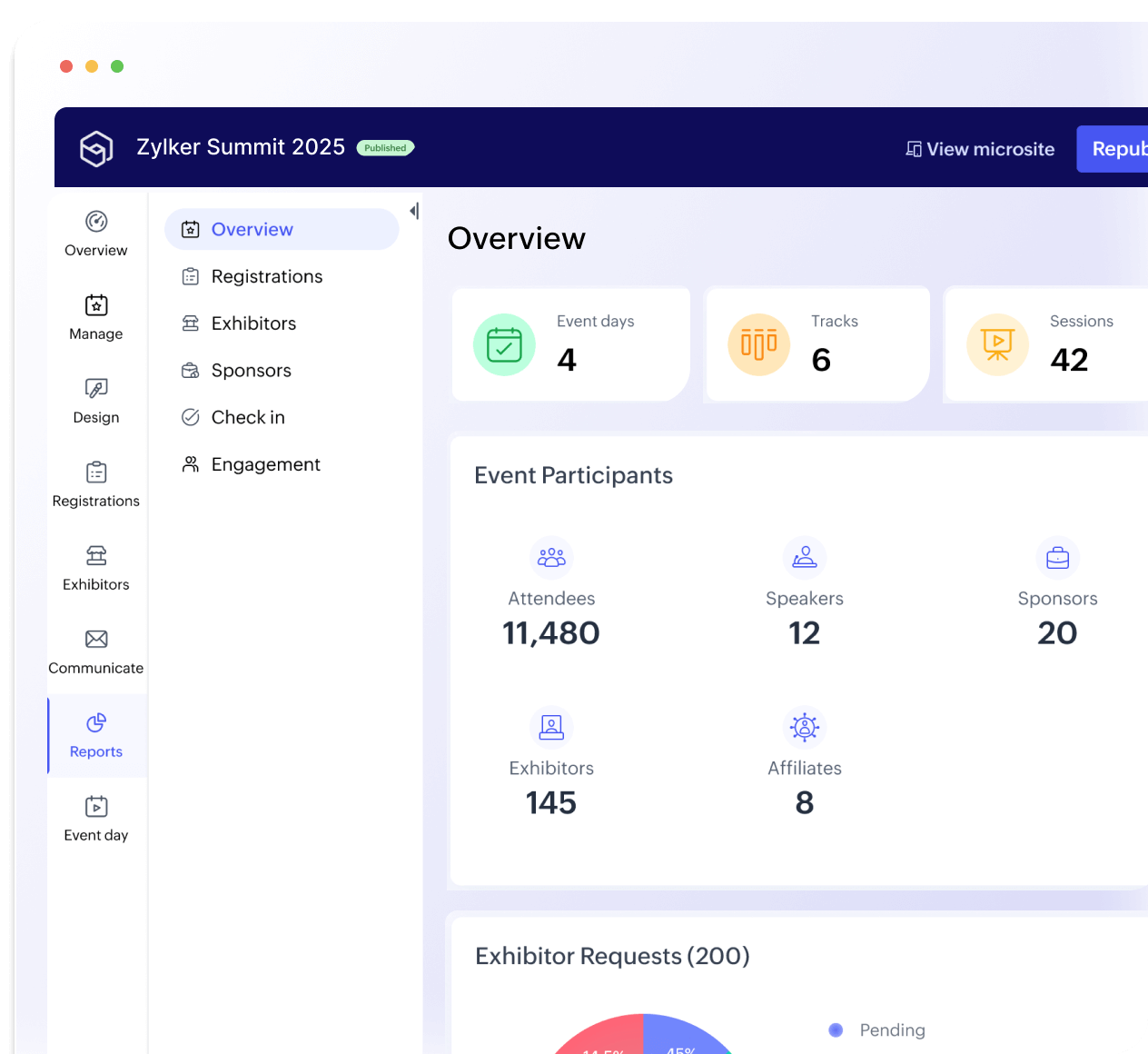
Zoho Backstage follows a similar approach to event email marketing. Instead of looking at email marketing as an isolated process, it offers a system of integrations, including ticketing, event data, segmentation, and automation that make campaigns relevant, rather than repetitive.