Great floor plans either guide attendees naturally through your event, while bad ones force them to figure it all out on their own. Let's look at the decisions that separate functional layouts from ones that create problems.
1. Define your event goals before you design
The venue's default layout most likely won't align with your event's outcomes and goals. For example, a networking event needs open circulation—people moving, pausing, regrouping. A conference session needs sightlines and space for note-taking. Trade shows need pathways that guide attendees past booths without making them feel herded.
These different types of events require different layouts to solve specific problems, which is why you start by finalizing what success actually looks like for your specific event. Are you looking for:
- Sponsor visibility?
- Maximum capacity?
- Comfortable networking?
While you can optimize for all three, the success depends on the type of venue you select. For example, an open warehouse offers layout flexibility but makes acoustic management a challenge. An event venue management checklist prepped early on to address these questions is perfect for avoiding poor event outcomes later.
Your event goals help you rule out venues that can't deliver, then guide how you use the space once you're in.
💡 Pro tip: Lock down your numbers early
Get the headcount at your kickoff meeting, not as the event approaches. If they're uncertain, ask for registration data from their last similar event. That's more accurate than projections based on hope. Then add a 10-15% buffer above confirmed headcount.
2. Design for natural attendee flow and real crowd movement
People don't move through events the way floor plans suggest. They gravitate toward light and open spaces, avoid narrow corridors even when they're technically the fastest route, and cluster near anything that feels like a destination—food, bars, photo setups.
Your job is to design your event floor plan by assessing how they actually behave, not how you presume they'd behave. That means balancing predictable bottlenecks with purposeful movement. Because if 300 people need to move from the keynote to breakouts, that route can't also be where the bar line forms.
Here are some practical tips to design traffic flow and manage congestion for attendees moving purposefully, and onlookers just wandering—as both these often happen simultaneously at events:
- Keep registration kiosks close to the main entrance, but leave enough buffer space so check-in lines don't spill into entryways or block attendee flow.
- Use a minimum of 6-foot aisles for two-way traffic without people turning sideways
- Spread food stations strategically or provide multiple service points so long lines don't block major circulation paths
- Put photo ops and sponsor activations along natural circulation paths, not in dead ends
- Create clear routes between session rooms so attendees moving from one room to another don't cross others in high-traffic zones
- Design extra standing or queue space near predictable bottlenecks like coffee stations or coat checks, so crowds don't spill into the main walkway
Finally, depending on your event type, we also suggest building separate VIP or performer routes when your main traffic flow can't absorb additional traffic.
⚠️ Designing for "maximum capacity" and "comfortable capacity" are different targets. Your venue might officially hold 500 people, but attendees start feeling crowded at 350. Similarly, fire code maximums assume people are standing still in an emergency—not networking, eating, or moving between sessions. So, don't confuse what's legally allowed with what may actually work.
3. Zone the space for engagement and visibility
Attendee flow tells you where and how people move. Zones tell you what happens when they stop. We suggest you start with the functional zones. These are: welcome/registration, main event space, F&B stations, networking areas, and so on. You can't move a restroom or relocate the kitchen, so those constraints determine where everything else can go.
Once those are locked in, add experiential zones—photo ops, interactive demos, quiet retreat spaces, VIP areas, and sponsor activations. And the placement matters equally. For example:
- Keep noisy areas (DJ booth, bar) away from presentation spaces unless you want your keynote competing with crowd noise.
- Position food away from high-traffic choke points—lunch lines shouldn't block the route to breakout rooms.
- Put quiet retreat or networking spaces far from registration where the constant announcements and check-in activity won't carry over.
- Place sponsors where circulation naturally leads people past them, not in corners that attendees will only visit on purpose.
Finally, leverage what the venue already gives you. Windows and views can become networking zones, and architectural features can complement photo backdrops.
⚠️Zones also create sight line problems.
A tall sponsor booth placed between registration and the main hall blocks wayfinding signage. Photo backdrops in high-traffic areas obstruct visibility of emergency exits. VIP lounges with frosted dividers make it harder for staff to spot issues.
So map zones with vertical elements in mind. What people can and can't see matters as much as where they can and can't walk.
4. Choose the right layout style for your event type
The event layout needs to match what attendees are actually doing. If they're taking notes, they need table space. If they're watching a performance, they need unobstructed sightlines. If they're networking, they need room to form and break conversation clusters without blocking pathways.
Our recommendation—start with the primary activity, then adjust for constraints. The venue layout and size, attendee count, and event goals already narrow down your options before you even start sketching.
Here's a cheatsheet we made for your reference:
| Event type | Layout style | Why it works | Limitations |
|---|
| Corporate presentations | Theater style | Maximizes seating capacity and directs focus toward the stage | Minimal interaction; back-row sightlines depend on room depth and risers |
| Training sessions | Classroom style | Provides table space for laptops and note-taking | Requires more square footage per person than a theater; reduces total capacity |
| Workshops/discussions | U-shape or horseshoe | Encourages discussion; all participants see each other and the facilitator | Not scalable beyond ~30–40 people; inefficient for larger groups |
| Large conferences | Herringbone/chevron | Angled seating improves sightlines and engagement compared to straight rows | Reduces overall capacity; requires more floor space |
| Formal dinners | Banquet rounds | Encourages table conversation; polished presentation | Lower seating density; some guests face away from the stage |
| Networking receptions | Cocktail/lounge | Promotes movement, mingling, and flexible use of space | Fatiguing over long durations; limited accessibility if seating is insufficient |
| Trade shows | Grid layout | Standardized booth arrangement, easy navigation, and scalable | Traffic can concentrate in the main aisles; premium sponsors lack differentiation |
| Trade shows (tiered sponsors) | Perimeter + island | Highlights premium sponsors in high-traffic central locations | Perimeter booths may receive uneven traffic if the flow isn't engineered |
Finally, while hybrid layouts may sound appealing, they often create problems. Mixing rounds with theater seating can make round-table attendees feel like VIPs while the theater section feels secondary. Similarly, combining a classroom with cocktail areas means one group is seated while others stand awkwardly nearby. Choose one primary layout and commit to it.
5. Plan for AV, lighting, and power early
Your event's technical requirements determine layout more than most planners realize. Here's an example: you design the perfect seating arrangement, only to discover that the venue has power on only one wall and your stage needs to be on the opposite side.
Start with power. Map every power outlet in the venue before you finalize anything. Count circuits, not just outlets—multiple outlets often share the same circuit, and overloading it mid-event may shut everything down.
⚠️ Extension cords and power strips help, but they create trip hazards if they cross pathways. So run cables along walls, tape them down with bright gaffer tape, or use cable ramps in high-traffic areas.
Audio comes next. Active speaker systems need individual power for each speaker, which limits placement options. Place speakers for even coverage—dead zones where attendees can't hear are worse than slightly imperfect sound everywhere. And don't forget to run sound checks from multiple positions, especially in the back and on the sides, where problems often show up.
Then move to lighting. Venues rarely provide enough light where you need it. You'll have to supplement the existing fixtures to achieve the atmosphere you want. Stage lighting should also be separate from ambient room lighting so you can adjust one without affecting the other.
Finally, presentation tech. Screen size and placement have to work from the back row, not just the front. Projectors require specific throw distances and mounting positions. Cameras for recording or livestreaming need clean sightlines without obstructing attendees.
There's Wi-Fi as well. One router in the corner won't support 500 simultaneous connections.
⁉️ When technical requirements conflict with design
Event technology and aesthetic goals rarely align perfectly, and there will always be tradeoffs. Speakers placed for optimal sound coverage might block sightlines to the stage. Or lighting that sets the right mood can wash out presentation screens or make it harder for attendees to see each other during networking.
You can't eliminate these conflicts entirely, but you can manage them during event planning instead of scrambling during setup. For example, you can test sightlines by marking speaker placements on your floor plan before you commit. Or compromise by dimming house lights during presentations and bringing them up between sessions.
So work through these decisions when you still have time to adjust the layout, not when your AV vendor is setting up and tells you the screen placement won't work.
6. Build accessibility into the plan
You can't design around event accessibility and safety. They're the constraints everything else has to fit within, not items you address if there's time and budget.
Start with the legal minimums because they're not flexible:
- Wheelchair-accessible routes require a minimum width of 36 inches. That means furniture arrangements must also leave 36 inches when chairs are pushed out.
- Ramps need a 1:12 grade maximum (for every 12 inches of horizontal distance, the ramp can rise no more than 1 inch)
- ASL interpreters need designated spots with clear sightlines to both the speaker and the audience
- Visual impairments mean signage needs high contrast, large text, and placement at consistent heights
- Accessible restrooms need routes that connect without stairs or narrow passages
- Accessible parking with clear signage and direct routes to the venue entrance
Verify these during your venue walkthrough with the floor plan in hand, not from your desk. Walk the accessible routes with a measuring tape and check door widths.
💡Some attendees need designated quiet spaces away from noise and overwhelm triggers. 85% of neurodivergent people skip events because they're worried about sensory overload. And while you can partner with organizations like EventWell to create these quiet rooms, you need to start discussions early.
7. Use technology and interactive mapping tools
Drawing floor plans by hand or in basic design software works until you need to make changes. Then you're redrawing layouts, manually updating booth assignments, emailing new versions to vendors, and hoping everyone's looking at the current file. The coordination overhead scales badly.
Floor planning software solves the iteration problem. Changes propagate automatically. Your exhibitor gets reassigned to a different booth—the floor plan updates, the confirmation email reflects it, and the website shows the new location. The result? No manual syncing across multiple documents and smooth event planning.
Another benefit of using a floor planner is the ability to visualise before committing. 3D walkthroughs let you spot sightline problems, traffic bottlenecks, and zone conflicts while you can still fix them. Seeing the layout from an attendee's perspective catches issues that may not be visible in a 2D diagram.
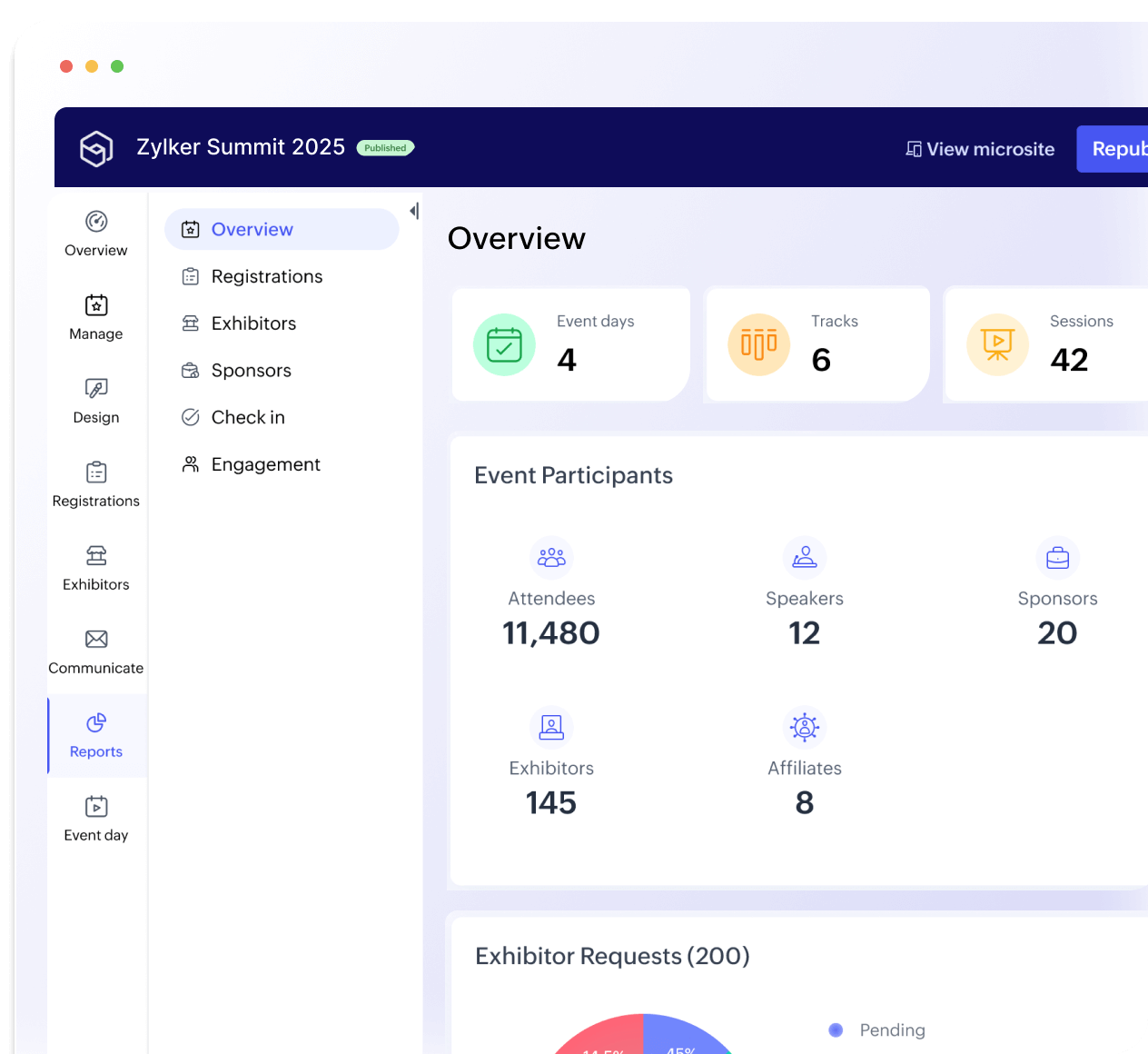
Zoho Backstage's floor planner, for example, lets you build layouts from scratch or upload existing plans. You can add booths and assign them to exhibitors, and the system automatically connects booth data to registration, lead retrieval, and your event website.
For attendees, the floor plan section on your event website or event app shows confirmed exhibitors and their locations. Even better, if it's a searchable directory, anyone looking for a specific company or category can find it without having to scan the entire layout.
So while floor planning software won't fix a bad layout, it makes iterating toward a good one faster and keeps everyone working from the same version.