Most brands show up at events with the same goal: stand out, attract the right audience, and create a lasting impression. Yet in crowded expo halls, conferences, and virtual events, many brands end up blending into the background. A booth, a banner, and a few brochures are rarely enough to make people stop, engage, or remember the brand once the event is over.
This creates a real differentiation problem. Events bring together hundreds of competing messages, limited attendee attention spans, and only a few seconds to spark interest. Many marketing teams struggle with the same challenges: attracting meaningful footfall, turning casual visitors into engaged participants, creating experiences that people actually talk about, and proving the event investment delivered real results.
At the same time, audience expectations have shifted. People don't just want information; they want experiences. According to the 91% of consumers say they have more positive feelings about a brand after participating in events or experiences, showing how powerful experiential marketing can be when done right. When attendees actively participate in a memorable experience, it changes how they think about a brand long after the event ends.
This is where brand activation comes in. Instead of focusing on booth decoration or passive promotion, brand activation is about creating meaningful, interactive experiences that help audiences connect with your brand in a memorable way.
Event brand activation ideas to truly connect with the attendees
What is brand activation and why experiential engagement matters
Brand activation is about creating moments where people interact with your brand in a meaningful way. It's not about showing your business logo everywhere.
Instead of telling people what your brand does, you let them experience it. That is why experiential marketing is so powerful at events. Events are already a place to be social, emotional, and interactive.
Here is why brand activation ideas work better than traditional booth marketing:
People remember experiences more than ads: Experiences can build a much stronger emotional memory than static visuals. When you let people participate, touch, or play with anything, they associate your brand with their memories, not just a logo they saw.
Engagement builds trust faster than messaging: If you let attendees try a product, join a challenge, or talk to a brand rep in a comfortable and safe environment, it helps them feel more human. It is a personal, engaging interaction that helps build comfort and credibility much faster than brochures can.
Social sharing multiplies your reach: You should try to put interactive installations, games, and creative setups to encourage people to crosspost them. You can leverage them to turn physical activation into digital visibility across platforms.
Data becomes easier to collect naturally: You can collect data from attendees by making them sign up for a game, scan a QR code, or join a session.
Nowadays, event brand engagement is no longer about how many people walked past your booth without stopping. Instead, it is measured by how many people stopped, interacted, shared, and later followed up.
Practical brand activation ideas for in-person, virtual, and hybrid events
Not all brands share the same goals. There are those which aim for awareness, others for lead generation, and others for product trial. That is why your brand activation ideas should always match what you want people to do next, not just what looks cool.
These are primarily in-person, virtual, and hybrid formats, each offering different experiences.
In-person event brand activation ideas
When you're hosting in-person events, your biggest advantage is that you can let people touch, move, and interact freely. The best activations should be more like mini-experiences within the event rather than marketing activities.
Here are execution-focused ideas that actually work on the ground:
Holographic product showcases
Use gesture-controlled hologram displays that project floating 3D visuals, allowing attendees to explore products or brand stories in a futuristic and highly memorable way.
AI-powered photo transformation booths
Let attendees take photos that instantly transform them into themed characters, celebrities, or immersive environments using real-time AI background and style generation.
AI concierge assistants for booth engagement
Deploy AI-powered digital assistants that answer questions, guide visitors through experiences, and help with check-ins or product information in multiple languages.
Immersive virtual reality product experiences
Create custom VR experiences where attendees can explore virtual showrooms, attend product demos, or engage with interactive brand stories in a fully immersive environment.
Interactive touchscreen and gesture-based applications
Use digital kiosks or gesture-based screens that allow visitors to play branded games, explore product features, or interact with content at their own pace.
Large-scale crowd games using smartphones
Host giant-screen games where hundreds of attendees participate simultaneously using their phones, creating shared excitement and high engagement.
Projection mapping for brand storytelling
Turn walls, floors, stages, or objects into dynamic storytelling canvases, creating immersive 3D visual experiences that centre on your brand.
Cinematic CGI visual content displays
Showcase hyper-realistic CGI animations or product visualizations on large displays to present complex ideas, products, or brand narratives in a visually striking way.
Motion racing simulators with branded competitions
Set up high-energy racing simulators with motion seats and leaderboards, allowing attendees to compete head-to-head while engaging with your brand in a fun environment.
When it comes to execution, implementing these things is much simpler when attendee flow, accessibility, and tracking go smoothly. For instance, you can use QR codes for check-ins and badge scanning, and event apps help manage attendance and measure booth engagement, rather than relying on estimates.
This is where event platforms that support branded experiences, like the event branding and event custom branding tools in Zoho Backstage, help align the entire venue experience with sponsor and brand touchpoints, not just the main stage.
You can also explore deeper concepts of physical experiences through experiential event formats that blend storytelling and interaction, rather than isolated booths.
Virtual event brand activation ideas
The drawback of virtual events is that, although they enable interaction, the way they do so concerns some brands. Hence, many brands use innovative strategies for virtual engagement. Moreover, they offer scalability, personalization, and intelligent data capture when properly implemented.
The biggest mistake event planners make is putting the logo on screens and hoping that people will notice it. That rarely works.
Instead, think of brand experiences as moments of digital participation.
Sponsored interactive sessions instead of banner placements
Marketers can create product labs, workshops, or case-study events where participants can actively engage via polls, chats, or live Q&A. This will add another layer of value and avoid making it feel like advertising.
Branded virtual booths with live team availability
Instead of static landing pages, allow attendees to chat, book meetings, or watch demos in real time. Allowing attendees to interact instantly helps you keep engagement high.
Gamified exploration paths across event zones
Give points to attendees to visit stalls, attend sessions, or solve quiz questions. Incentivizing them will motivate them to visit sponsor stalls on their own.
Giveaways linked to engagement, not just attendance
Instead of random raffles, rewards can be unlocked after completing actions, such as attending a session, downloading resources, or meeting a brand rep.
Interactive content drops during sessions
You can plan on publishing downloadable assets or giving trial access to exclusive subscribers or VIP tiers. You can also deliver premium and exclusive content during live talks, making participation feel rewarding and time-sensitive.
Virtual activations become powerful when you can track not just who clicked, but who stayed, interacted, and returned. With integrated analytics, brands can measure session participation, booth visits, content downloads, and follow-up actions.
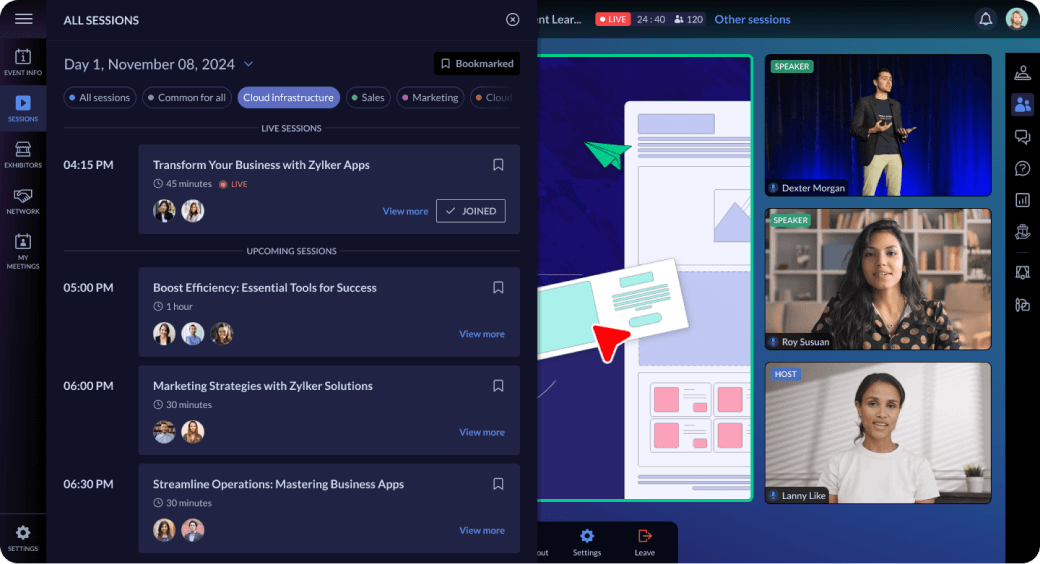
Zoho Backstage offers live streaming, chat, polls, virtual booths, and attendee networking, make this easier to execute and easier to measure, without forcing brands to juggle multiple tools.
Hybrid brand activation ideas that connect both worlds
Hybrid events give you the chance to design connected experiences where onsite and online audiences feel equally involved. This is where many brands still struggle, but also where the biggest gains in engagement are possible.
The goal is to avoid creating two separate events.
Here are ideas that work across both formats:
Shared challenges across in-person and virtual attendees: Make sure that both the groups participate and compete for the same tasks and vote in the same polls. Once they do, show the results on large screens at the venue and inside virtual platforms.
Unified social walls featuring both audiences: Posts, photos, and comments from both onsite and online participants appear in one live feed, creating a feeling of one shared community instead of two separate crowds.
Hybrid product launches with live interaction: You can use event management platforms to stream in-person demos. Virtual attendees can control demo choices via polls or chat requests, making them part of the experience.
Networking matchmaking that mixes both groups: AI-powered networking tools can connect virtual and in-person attendees for video or chat meetings, expanding the reach of every brand interaction.
Digital reward systems tied to in-person booth actions: On-site badge scans and virtual booth visits both contribute to the same reward system, keeping engagement balanced across formats.
Hybrid activations depend heavily on how well your event systems are connected. When check-in, sessions, networking, and engagement tools all run on a single platform, brands can design experiences that flow across formats instead of breaking into silos.
B2B, trade show, and expo brand activation ideas
Brand activations at B2B events, trade shows, and industry expos operate a little differently from those at consumer-focused events. The goal is usually not entertainment alone, but meaningful conversations, product understanding, and qualified lead generation. That means activations should focus on demonstrating expertise, solving real problems, and making it easy for prospects to continue the conversation after the event.
Here are a few strategies that work well in B2B environments:
Problem-solving demo stations
Instead of generic demos, create short guided sessions where attendees bring a real challenge and see how your solution addresses it. This turns the activation into a consultation rather than a sales pitch.
Industry insight hubs
Offer quick data-driven briefings, mini-reports, or trend discussions relevant to the audience. Sharing useful insights positions your brand as a thought leader and naturally attracts professionals interested in deeper conversations.
Scheduled micro-meetings and expert consultations
Allow attendees to book short 10–15 minute meetings with product specialists or consultants directly from the booth. This keeps engagement structured while increasing the chances of meaningful follow-ups.
Interactive solution comparisons
Create interactive screens or guided experiences that let attendees compare product options, explore use cases, or view implementation scenarios. This helps buyers understand the value quickly without sitting through long presentations.
Post-event continuation pathways
Encourage attendees to unlock additional resources, such as case studies, extended demos, or exclusive webinars, after the event. This bridges the gap between booth engagement and the longer B2B sales cycle.
Because B2B decisions often involve multiple stakeholders and longer buying cycles, the most effective activities focus on education, trust-building, and lead qualification, not just quick engagement. When paired with digital lead capture and analytics, brands can easily track which conversations, demos, or consultations turned into real opportunities.
How technology turns brand activations into measurable business impact
Creative brand activation ideas are powerful, but brands also want clear answers afterwards. Did people actually engage with the experience? Did they stay long enough to understand the brand? And did that engagement translate into leads or meaningful conversations? Without the right technology, many teams rely on rough estimates, manual notes, or booth staff feedback, which rarely provides an accurate picture at scale.
Modern event technology changes this by making engagement measurable. Tools like badge scans, QR codes, and session participation tracking show exactly how many people interacted with an activation. Deeper engagement signals, such as time spent at a booth, polls answered, questions asked, or games completed, help brands understand not just how many people showed up, but how involved they were. These insights make it easier to evaluate which activation ideas actually captured attention and which ones need improvement.
Technology also helps turn those interactions into real business outcomes. Instead of collecting stacks of business cards, event teams can capture leads digitally, qualify them during conversations, and sync them directly with CRM systems for faster follow-ups. Detailed analytics also help brands understand which activations drove the most traffic, downloads, or meeting requests, making sponsorship performance easier to justify.
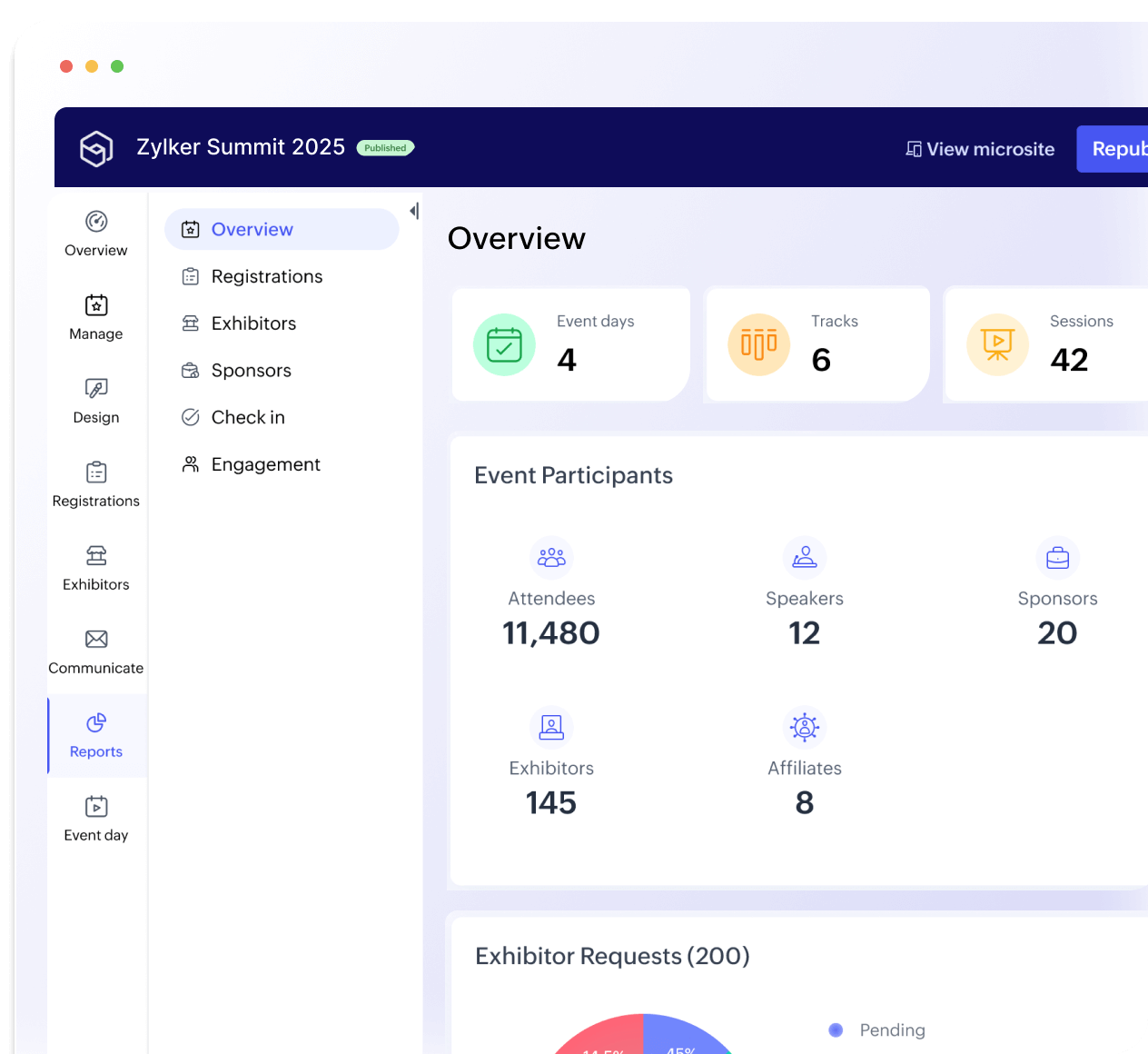
Zoho Backstage, for example, allows organizers and sponsors to track session participation, booth interactions, networking activity, and lead quality through built-in dashboards. This turns brand activations from creative experiments into measurable business activities.
And when branding tools are also built into the event infrastructure, such as custom event websites, mobile apps, digital badges, and onsite signage, brands benefit from consistent visual presence across every touchpoint.
Build brand experiences that people remember with Zoho Backstage
Brand activation is no longer about grabbing attention for a few seconds. It is about creating moments that make people stop, participate, and connect with your story.
When done right, brand activation ideas support real goals. They increase booth traffic, improve lead quality, extend reach through social sharing, and create emotional connections that last beyond the event.
Zoho Backstage helps teams design events where branding, engagement, check-in, networking, and analytics work together instead of in silos. This makes it easier to plan experiential marketing campaigns that feel natural to attendees and valuable to sponsors.
If you want your next event to be remembered for meaningful brand moments and not just good stage sessions, it may be time to rethink how you plan and measure engagement.
Ideally, activation planning should begin alongside booth design and sponsorship planning. This allows enough time to align the creative concept, technology setup, and staffing. Early planning also helps avoid last-minute compromises and ensures the activation fits smoothly into the overall event strategy.
Yes, and they often work even better. Smaller events allow for more personalized experiences and deeper conversations with attendees. This can lead to stronger brand recall and higher-quality leads.
Staff should act as facilitators rather than sales reps. Their role is to guide participation, explain the experience quickly, and keep the interaction engaging. They should also know how to capture leads naturally without interrupting the flow.
Plan backup engagement options such as digital sign-ups, quick mini-activities, or scheduled demos. This keeps attendees engaged even if they cannot join the main activation immediately. Good queue management also improves the overall experience.
Yes. Many activations are designed to be modular and reusable. With small updates to messaging or digital elements, the same concept can work across multiple events while reducing long-term costs.