

Taxes

Taxes affect your business finances, and each organisation must follow country-specific tax compliance. In Zoho Books, you can configure tax settings, add tax rates, create tax groups, and set up BAS settings to stay compliant.
Configure Tax Settings
To add taxes or configure tax preferences, you must first enable taxes in your Zoho Books organisation. To do so:
- Go to Settings.
- Under Organization Settings, navigate to Taxes & Compliance and select Taxes.
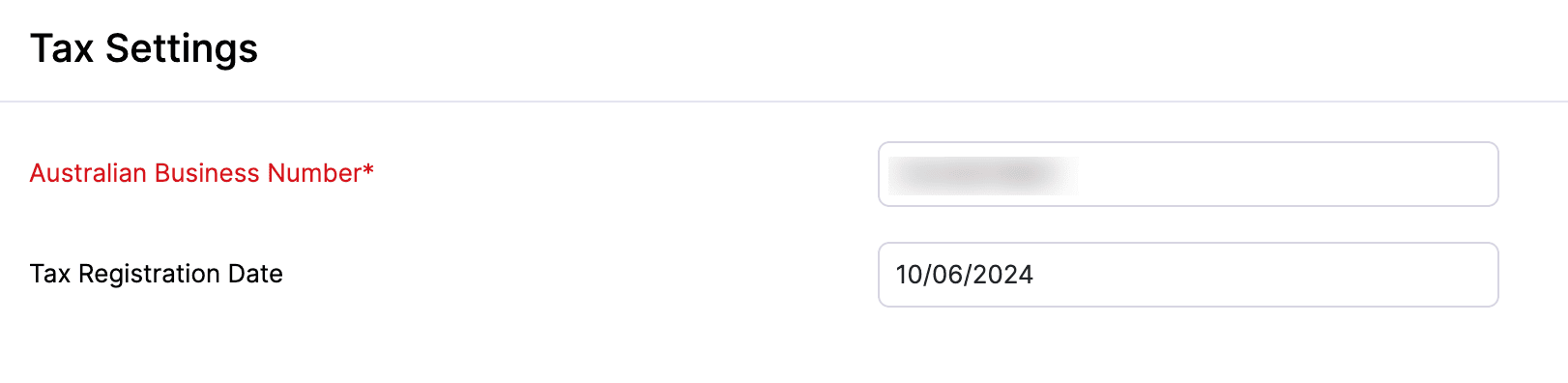
- In the Tax Settings page, fill in the following fields:
- Australian Business Number: Enter the unique 11-digit Australian Business Number (ABN) issued for your business.
- Tax Registration Date: Select the date on which your business was registered for tax.
- Click Save.
Taxes will be enabled for your organisation.
Manage Tax Rates
In this section, you can create the tax rates that are applicable for your business based on the goods and services that your business deals with.
Create Tax Rates
Once taxes are enabled, you can create tax rates. Here’s how:
- Go to Settings.
- Under Organization Settings, navigate to Taxes & Compliance and select Taxes.
- Select Tax Rates in the Taxes pane.
- Click + New Tax in the top right corner.

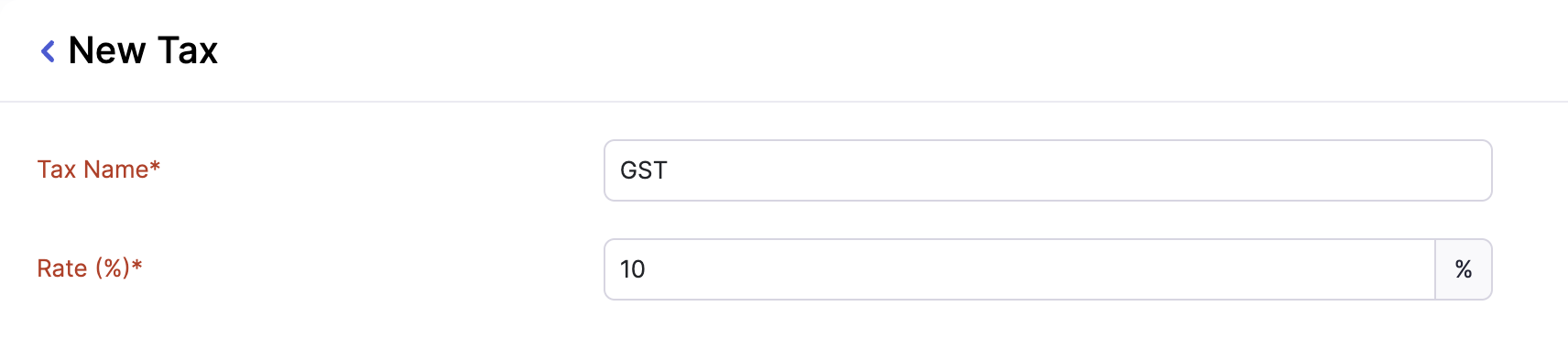
- In the New Tax page, fill in the following fields:
- Tax Name: Enter a name for the tax rate.
- Rate (%): Enter the tax percentage.
- Click Save.
The tax rate will be added to your organisation.
Create Tax Groups
You can combine two or more taxes into a tax group to meet your business requirements. To create a tax group:
- Go to Settings.
- Under Organization Settings, navigate to Taxes & Compliance and select Taxes.
- Select Tax Rates in the Taxes pane.
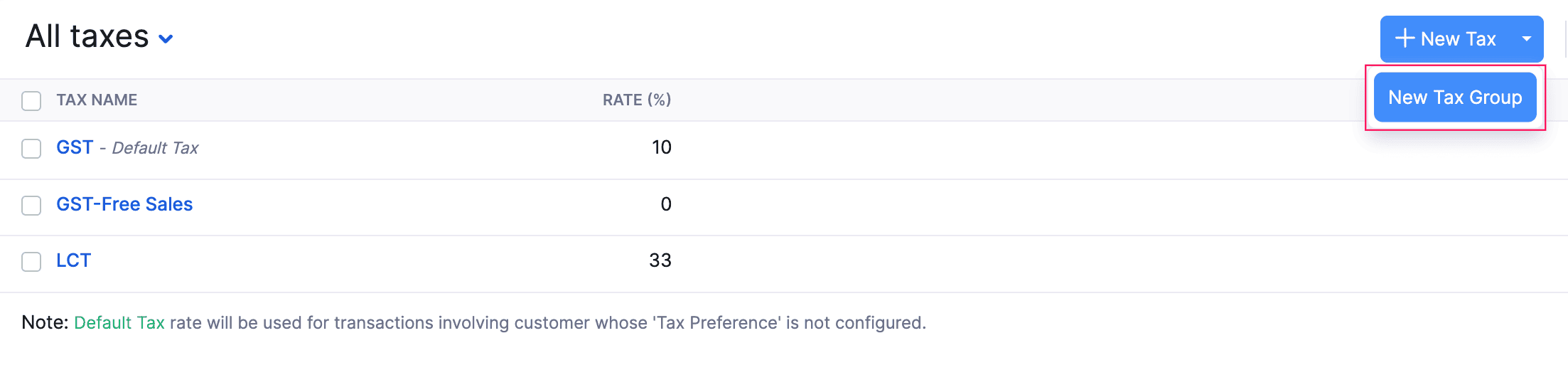
- Click the + New Tax dropdown in the top right corner, and select New Tax Group.
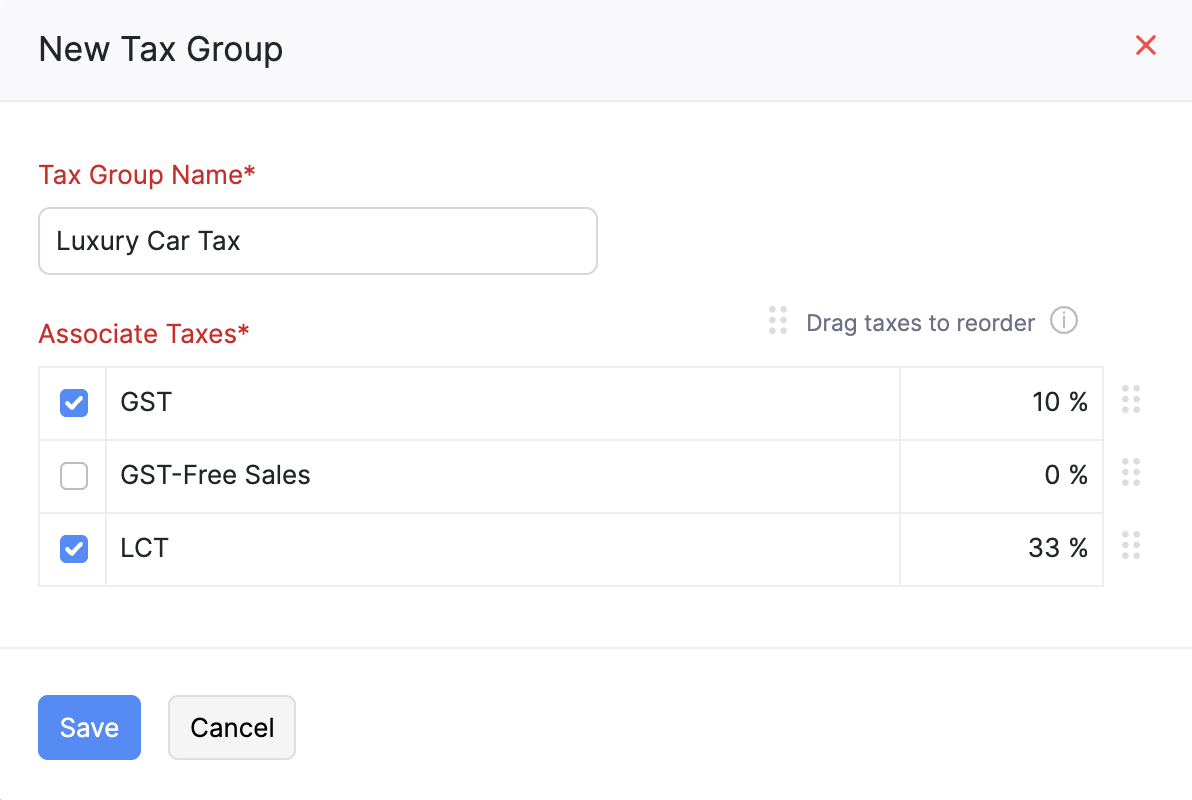
- In the New Tax Group pop-up, fill in the following fields:
- Tax Group Name: Enter a name for the tax group.
- Associate Taxes: Select the tax rates you want to include in the group.
- Click Save.
The tax group will be added to your organisation.
View Associated Records With a Tax Rate
You can view the transactions and other records associated with a tax rate:
- Go to Settings.
- Under Organization Settings, navigate to Taxes & Compliance and select Taxes.
- Select Tax Rates in the Taxes pane.
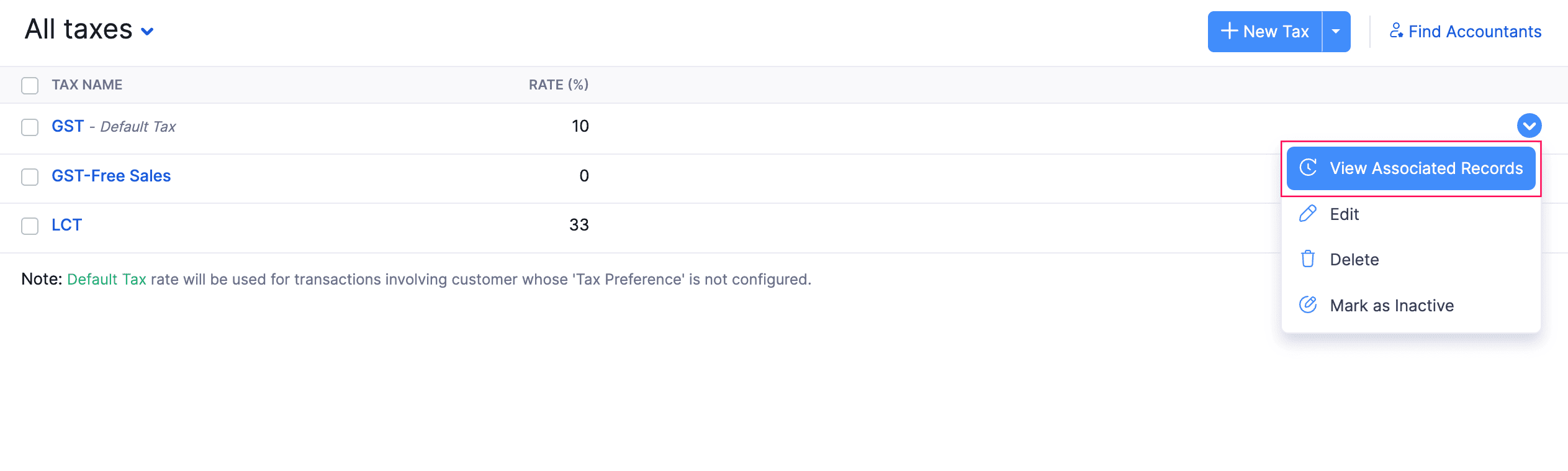
- In the Tax Rates pane, click the dropdown icon next to the required tax rate, and select View Associated Records.
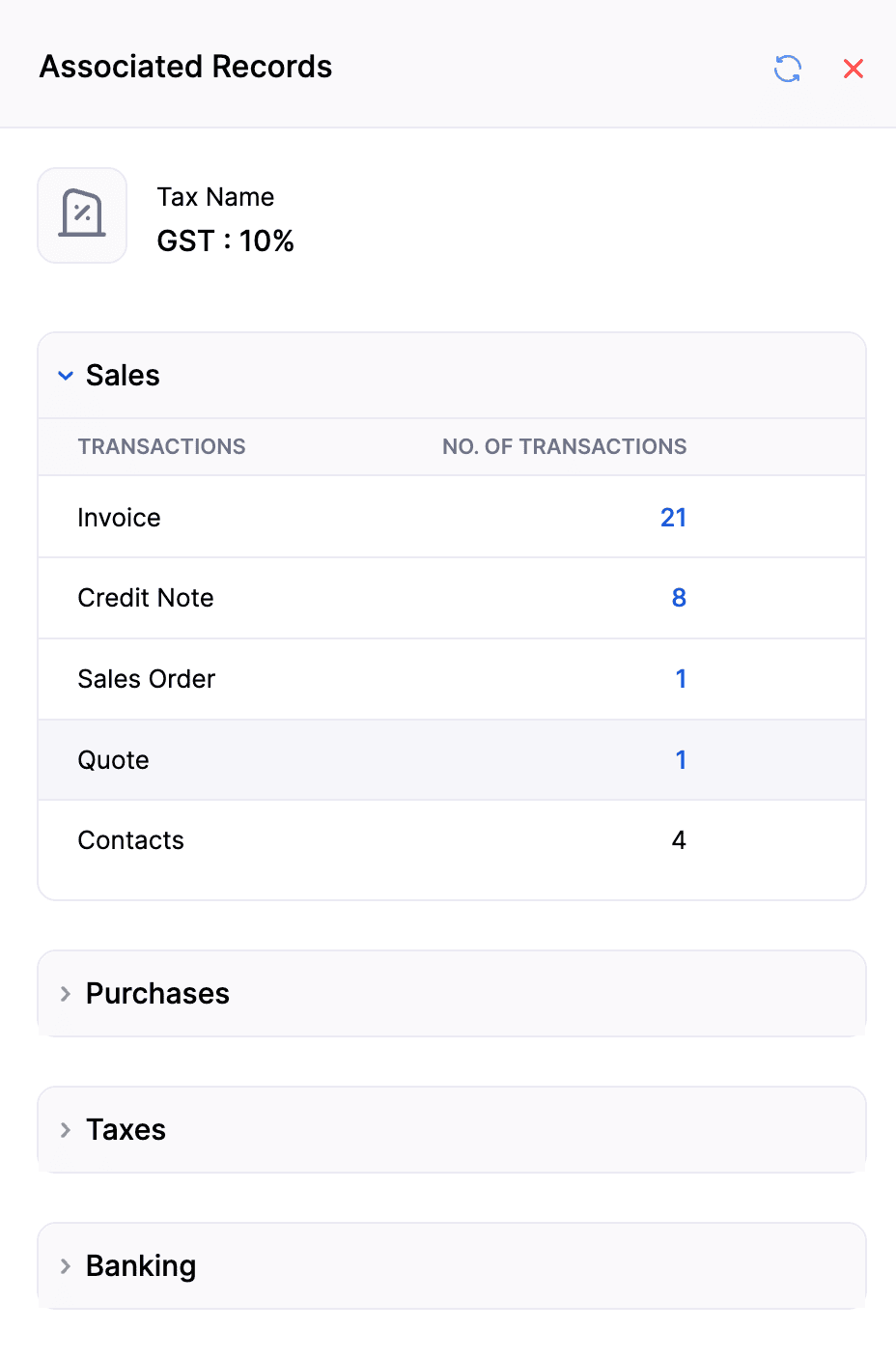
The Associated Records pane will appear, which contains the list of transactions associated with this tax rate.
Edit Tax Rates
To make changes to the tax rates you’ve added:
- Go to Settings.
- Under Organization Settings, navigate to Taxes & Compliance and select Taxes.
- Select Tax Rates in the Taxes pane.
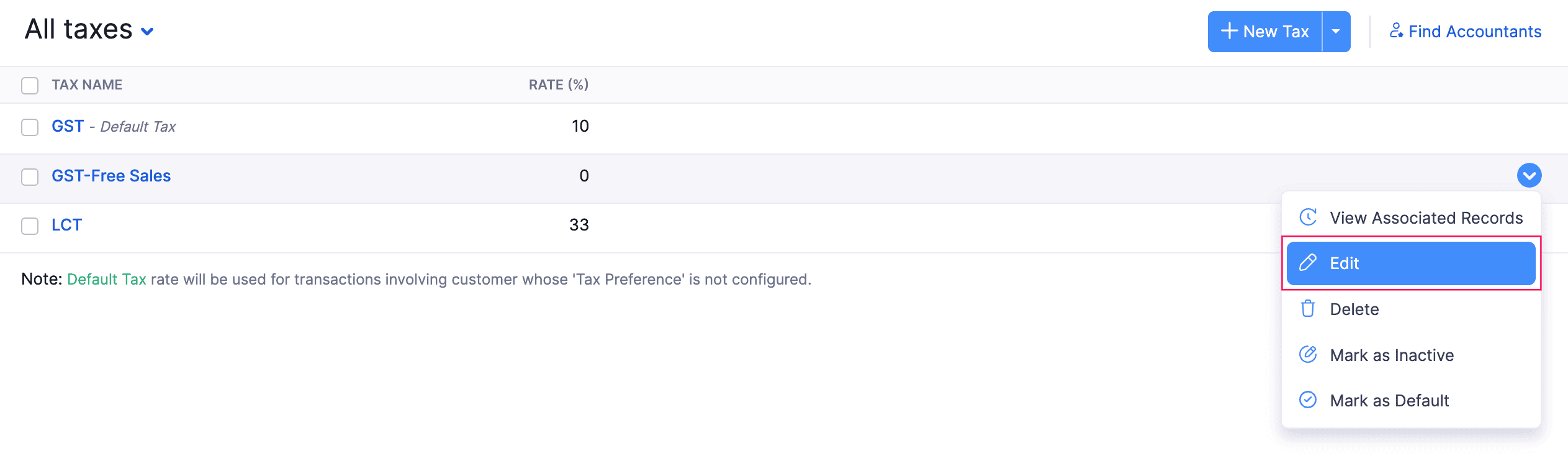
- In the Tax Rates pane, click the dropdown icon next to the required tax rate, and select Edit.
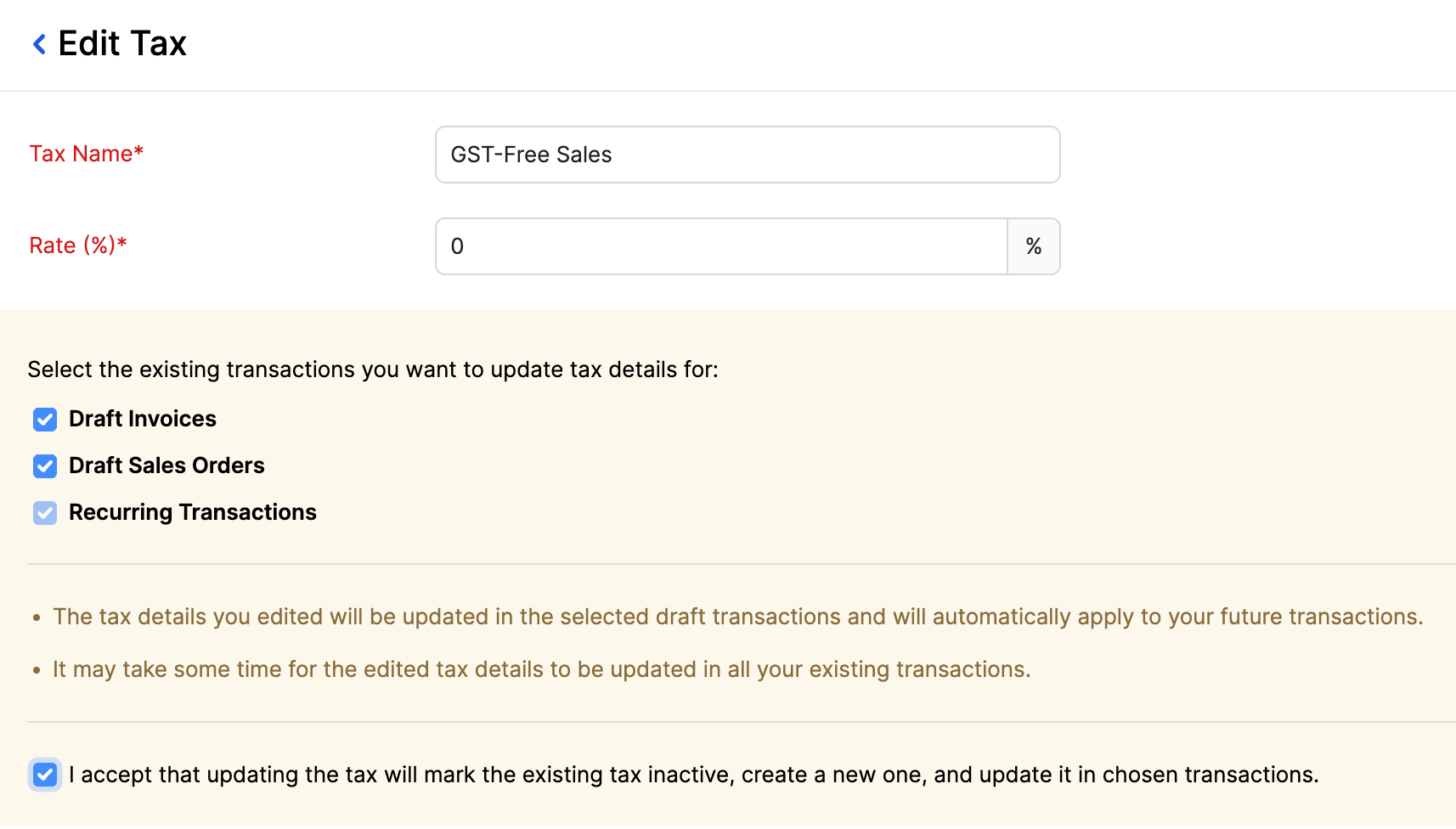
- In the Edit Tax pop-up, make the required changes.
- Under Select the existing transactions you want to update tax details for, select the transactions for which you want to update the tax details. The available options are Draft Invoices and Draft Sales Orders.
- Read the terms and check the I accept that updating the tax will mark the existing tax inactive, create a new one, and update it in chosen transactions option.
- Click Save.
The tax rates will be updated.
Delete Tax Rates
You can delete a tax rate only if it is not associated with any transactions in your organisation. To delete a tax rate you’ve added:
- Go to Settings.
- Under Organization Settings, navigate to Taxes & Compliance and select Taxes.
- Select Tax Rates in the Taxes pane.
- In the Tax Rates pane, click the dropdown icon next to the required tax rate, and select Delete.
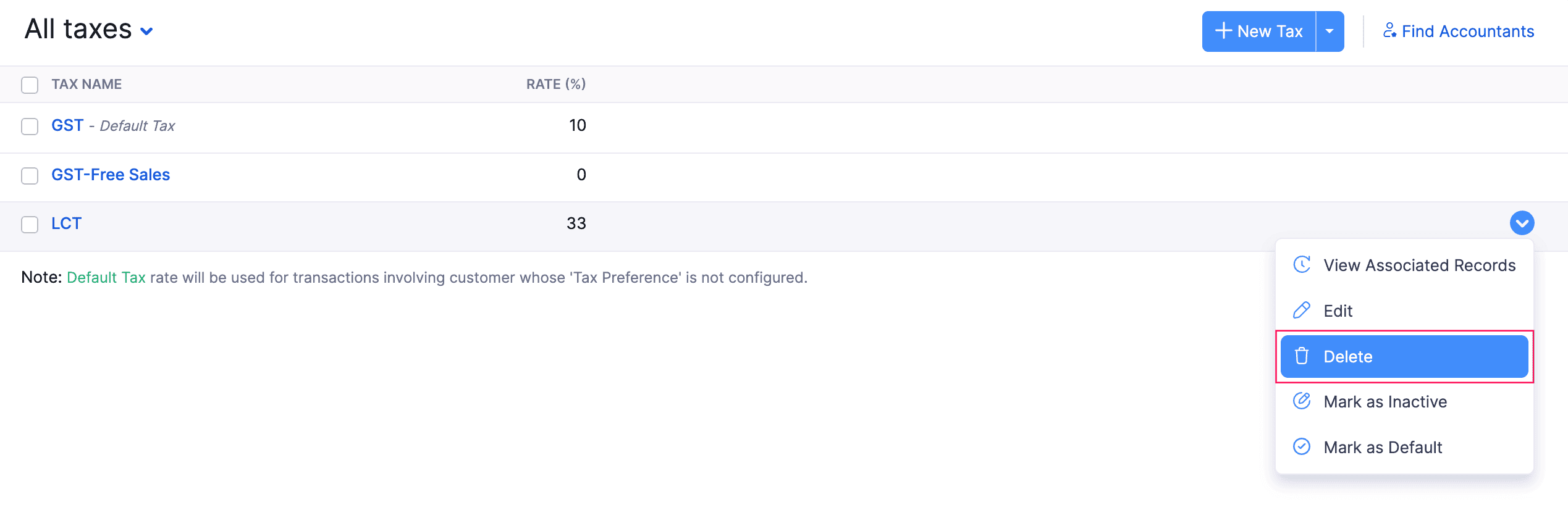
- In the confirmation pop-up, click OK.
The tax rate will be deleted.
Mark Tax Rates as Inactive
If you no longer want to use a tax rate in Zoho Books, you can mark it as Inactive. Here’s how:
- Go to Settings.
- Under Organization Settings, navigate to Taxes & Compliance and select Taxes.
- In the next page, select Tax Rates in the Taxes pane.
- In the Tax Rates pane, click the dropdown icon next to the required tax rate, and select Mark as Inactive.
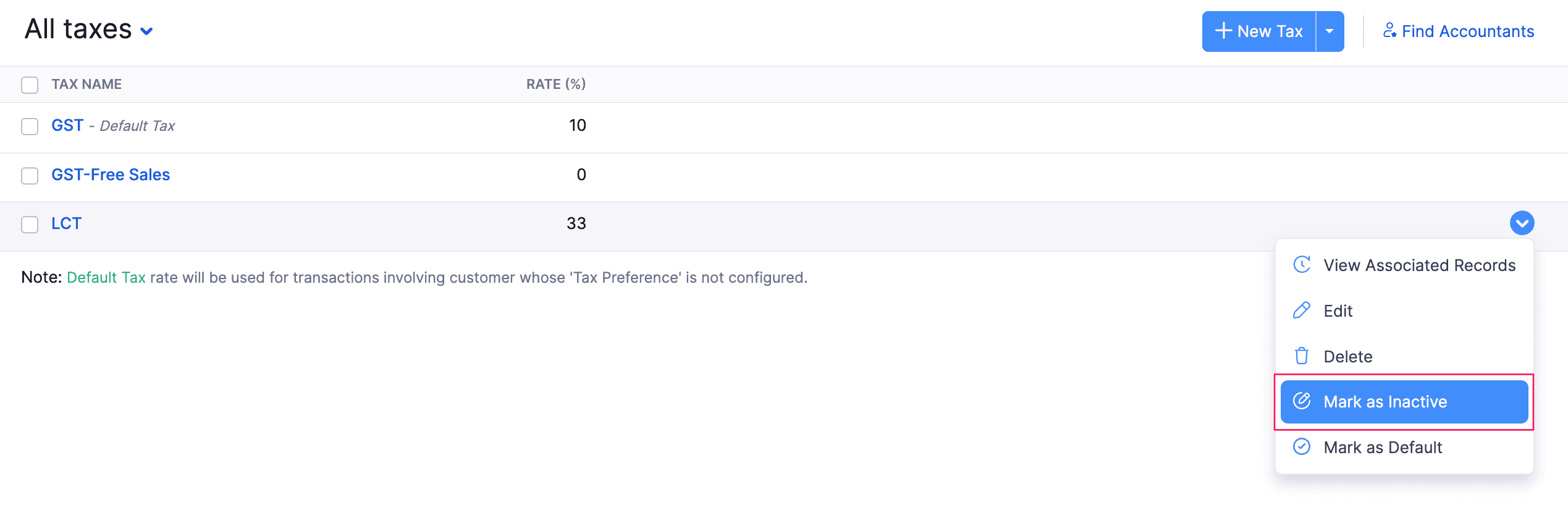
The selected tax rate will be marked as inactive. To mark it active again:
- In the Tax Rates pane, click the dropdown icon next to the required tax rate, and select Mark as Active.
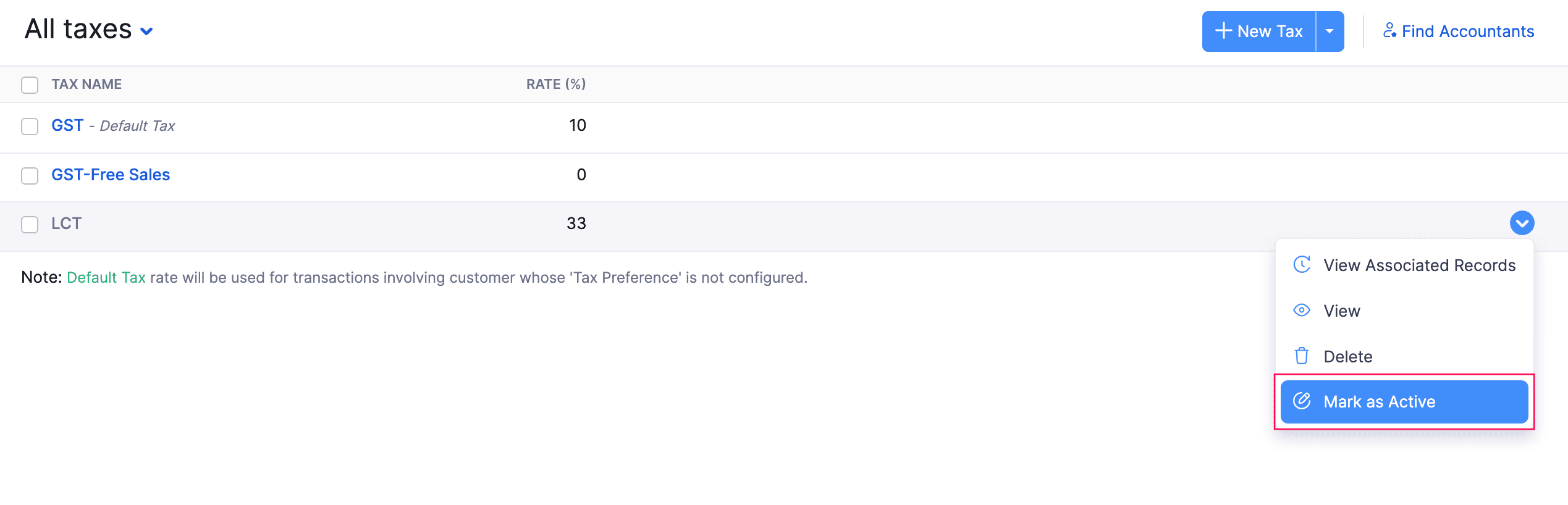
The selected tax rate will be marked as Active.
Mark a Tax Rate as Default
You can mark a tax rate as the default so that it’s applied automatically to transactions for customers whose tax preference is not configured. Here’s how:
- Go to Settings.
- Under Organisation Settings, select Taxes under Taxes & Compliance.
- On the next page, select Tax Rates in the Taxes pane.
- In the Tax Rates pane, click the dropdown icon next to the required tax rate, and select Mark as Default.
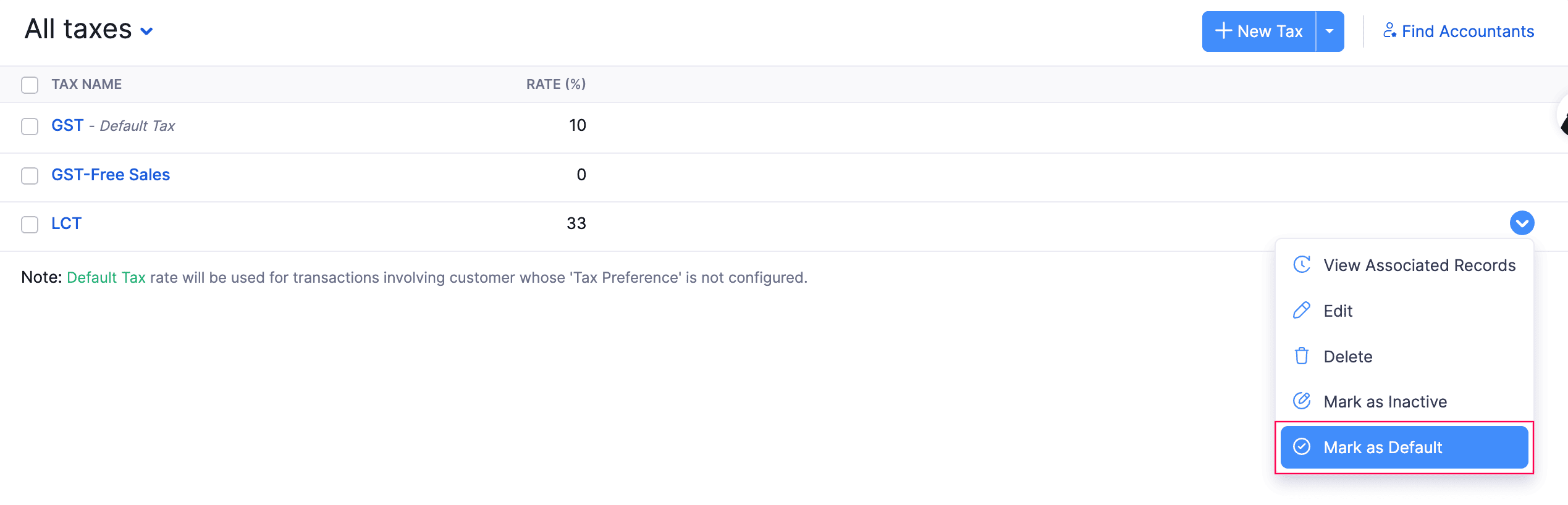
The selected tax rate will be set as the default tax rate.
Configure BAS Settings
Business Activity Statement (BAS) settings let you define how and when you want to report and file your taxes. To configure BAS settings:
- Go to Settings.
- Under Organization Settings, navigate to Taxes & Compliance and select Taxes.
- Select BAS Settings in the Taxes pane.
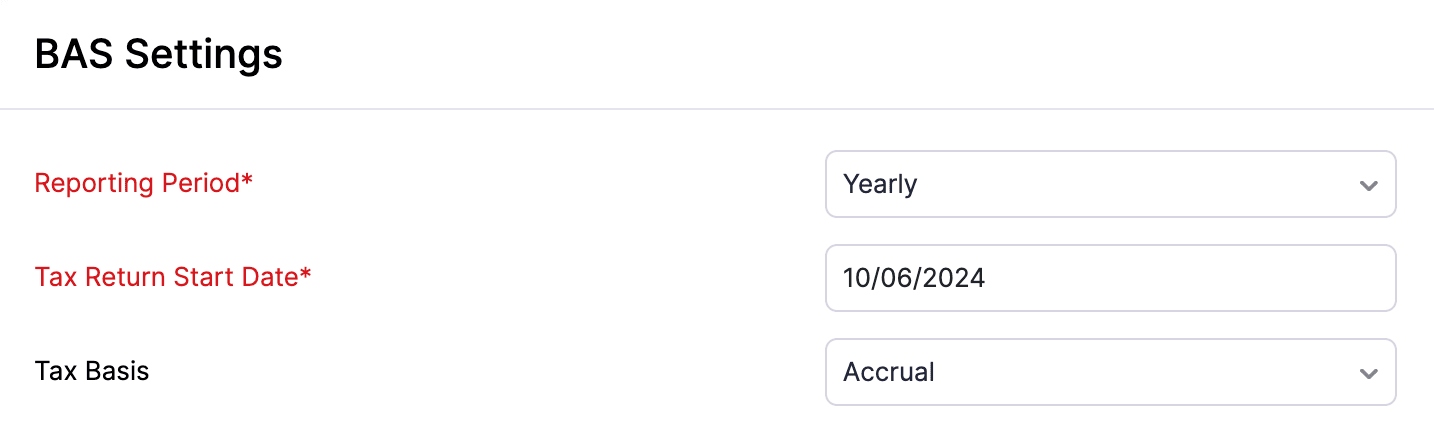
- In the BAS Settings page, fill in the following fields:
- Reporting Period: Select how often you want to file taxes for the respective tax authority. The available options are Monthly, Quarterly, and Yearly.
- Tax Return Start Date: Select the date from which you want to start generating tax returns in Zoho Books. Your first tax return will be generated on this date.
- Tax Basis: Choose how you want to report your transactions. The available options are Accrual and Cash.
- Click Save.
Your BAS settings will be configured.
Manage Tax Preferences
Tax preferences let you control how taxes are applied to your transactions. Here’s how:
- Go to Settings.
- Under Organization Settings, select Taxes under Taxes & Compliance.
- Select Tax Preferences in the Taxes pane.
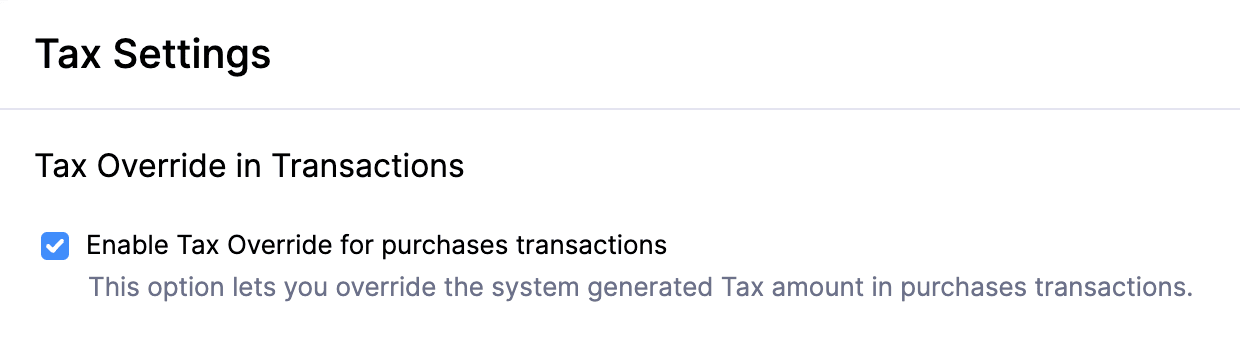
- Under Tax Override in Transactions, check Override tax in purchase transactions to manually update the taxes applied in your purchase transactions at both line-item and transaction levels.
- Click Save.
Your tax preference will be saved, and applied to your transactions.
 Yes
Yes