Zoho Directory
Zoho Analytics' integration with Zoho Directory allows administrators to handle identity and user access management with ease. And to manage multiple login credentials using one tool, which strengthens online account security.
Enabling Zoho Directory
A user with Administrator privileges (Account and Org Admins) can configure Zoho Directory.
- Click the Organization Settings icon on the top right.
- Click Zoho Directory > Configurations.
- Click Configure to enable Zoho Directory for Zoho Analytics.
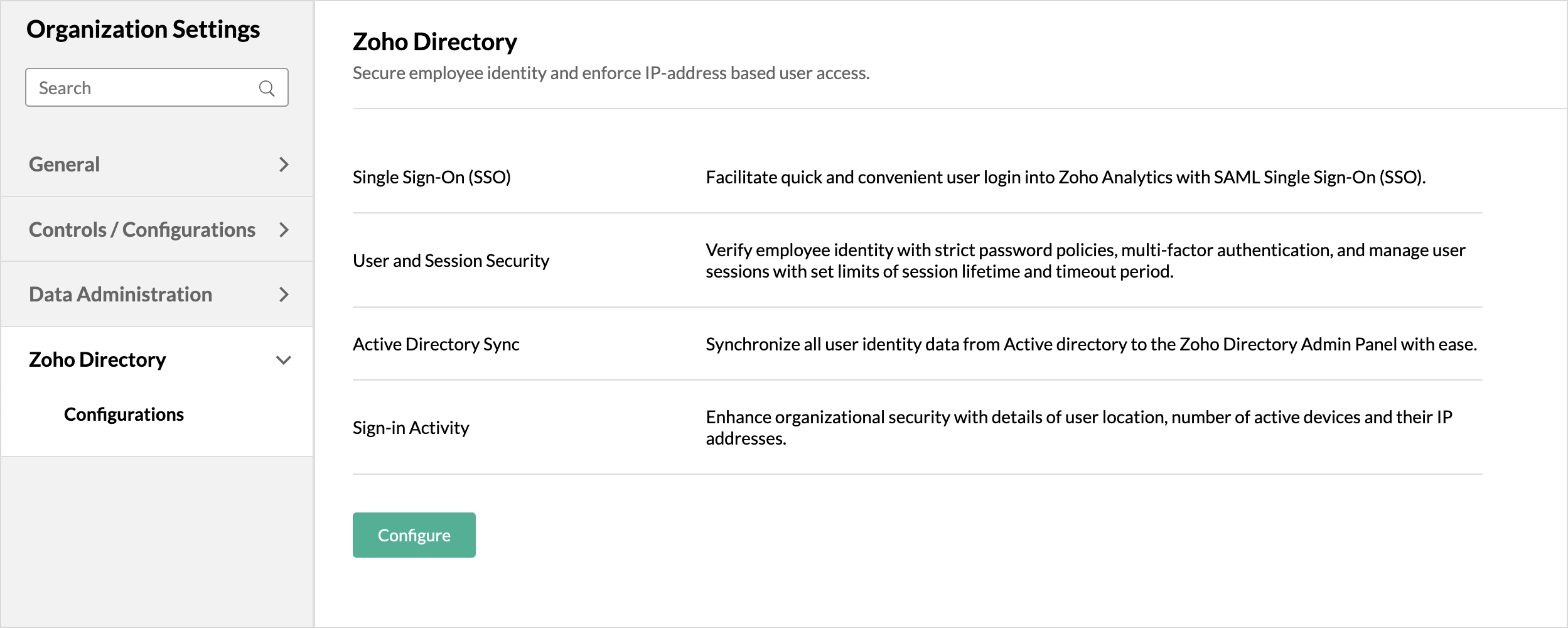
Zoho Directory Functionalities
Single Sign-On
Zoho Analytics supports federated identity through Zoho Directory, enabling organizations to authenticate users via Single Sign-On (SSO). With SSO configured, users can securely access Zoho Analytics using their existing organizational credentials, eliminating the need to manage separate login details for each application.
SAML-Based SSO using Zoho Directory
Zoho Analytics supports SAML 2.0 based Single Sign-On, allowing organizations to authenticate users through their existing Identity Provider (IdP).
In this configuration:
- Zoho Directory acts as the Service Provider (SP).
- Authentication is handled by an external Identity Provider (IdP).
- Users access Zoho Analytics after successful authentication through the configured IdP.
Using this setup, administrators can centrally manage authentication and user access for Zoho Analytics.
Adding Zoho Analytics in Zoho Directory
To enable SSO for Zoho Analytics, you must add the application in Zoho Directory.
- Sign in to Zoho Directory Admin Panel.
- Navigate to Applications.
- Click Add Application.
- Search for Zoho Analytics in the application catalog.
- Add the application to your organization.
External Identity Providers Setup
Zoho Analytics supports SAML-based SSO with several popular external Identity Providers. Refer to the corresponding link below for step-by-step setup instructions specific to each provider.
| Identity Provider | Setup Procedure |
| Okta | Configure Okta with Zoho Directory |
| Google Workspace | Configure Google Workspace with Zoho Directory |
| Microsoft Entra ID | Configure Microsoft Entra ID with Zoho Directory |
| Auth0 | Configure Auth0 with Zoho Directory |
| OneLogin | Configure OneLogin with Zoho Directory |
For a complete list of supported Identity Providers and their configuration, refer to Setting Up Custom Authentication with Popular IdPs.
For general SAML configuration using Zoho's metadata, refer to Configure SAML in Zoho Accounts.
SSO Authentication Flow
When Single Sign-On (SSO) is configured for Zoho Analytics using Zoho Directory, the authentication process works as follows:
- An unauthenticated user attempts to access Zoho Analytics. The user is redirected to the Zoho sign-in page.
- The user enters their email address and selects Next.
- Based on the configured SSO settings, Zoho redirects the user to the configured Identity Provider (IdP) for authentication.
- The Identity Provider verifies the user's credentials.
- After successful authentication, the user is redirected back and granted access to Zoho Analytics.
JWT-Based SSO
For embedded or white-label analytics deployments, Zoho Analytics supports JWT (JSON Web Token) based authentication. This approach is designed for scenarios where Zoho Analytics dashboards and reports are embedded inside another product or portal.
Refer here on how to configure JWT-Based SSO for your embedded or white-label analytics deployments.
User and Security Session
Configure advanced form of user authentication by defining the sessions hours, timeouts, and concurrent sessions. These factors give the ability to identify the users on their subsequent accesses and avoid anonymous access. Refer to this section for more details. Learn more about Security Sessions.
Active Directory Sync
Maintain a common repository for users' details by syncing data with active directory. By configuring this, all the user data can be organized and maintained in a common directory. Learn more about Active Directory Sync.
Sign-in Activity
Monitor the activities of all users in your domain like login time, login device, number of times logged in etc. You can also see an overview of your organization's users, groups, apps, sign-in activity, and app usage.