AI-Powered Enterprise BI Tool for Scalable Analytics & Governance
In today's data-driven landscape, enterprises generate massive volumes of data from business applications like ERPs, CRMs, financial systems, HR software, and more. Enterprise Business Intelligence (BI) refers to the practice of collecting, integrating, analyzing, and visualizing this data at scale. A scalable Enterprise BI tool empowers organizations to drive complex, organization-wide decision-making across multiple functions, regions, and data systems.
Get Started
- 16K
Customers
- 3M
Users
Why An Enterprise BI Tool Is Essential For Large Organizations
As organizations grow, the complexity of managing data across departments, geographies, tools, and teams increases exponentially. They need a fully governed Enterprise BI platform to overcome these challenges and align strategy with execution.

Common Challenges Of Enterprise BI
Siloed systems
Tools used by enterprise users are often scattered across departments, resulting in fragmented data and inconsistent BI reporting.
Slow Responsiveness
At an enterprise scale, the lack of timely insights due to manual report creation or analyst dependency, delays responses to market changes.
Security & privacy
Receiving timely insights is critical, but they become ineffective if their integrity is compromised by unauthorized access or non-compliance due to inadequate data governance.
Scalability
Managing the volume, velocity, and variety of enterprise data is a complex task. Legacy BI tools often fall short of modern, large-scale data requirements.
The Strategic Role Of An Enterprise BI Platform
Enterprise BI tools provide a unified, real-time, and secure data foundation to run business workflows. They help organizations with complex and evolving needs to:
Create a single source of truth across diverse systems
Tailor analytics to specific departments as well as enterprise-wide
Offer self-service insights via interactive dashboards to drive agility

Foresee trends and mitigate risks using AI-powered predictive analytics
Enforce data governance and compliance across all organizational levels
Key Capabilities To Look For In An Enterprise BI Platform
The right Enterprise BI platform should be scalable, secure, and intelligent to keep up with evolving business needs and growing data volumes. Key capabilities include:
Data Management Framework
An enterprise BI platform should support connectivity to a wide range of data sources—databases, cloud platforms, business applications, and more. The collected data must be cleansed, transformed, enriched, and blended for effective analysis. Regular data synchronization is crucial to ensure that insights are always based on fresh and accurate information.

Self-service & collaborative analytics
Enterprise BI platforms should empower business users to start with pre-built visualizations or create their own reports and dashboards without IT support. They should also offer shared workspaces for secure collaboration, sharing, and collective decision-making.

AI-powered Advance Analytics
Modern BI platforms offer Generative AI capabilities such as conversational analytics, automated insights, and diagnostic analytics. Predictive AI features like forecasting, trend analysis, anomaly detection, and support for statistical data models are also essential.

Governance and security
A robust enterprise BI platform should provide comprehensive governance features to enforce data security and privacy. These include role-based access control, row-level security, end-to-end encryption, single sign-on (SSO) with multi-factor authentication, detailed audit logs, and more.

Extensibility
Enterprise BI solutions should support flexible deployment options such as on-premise, cloud, or hybrid environments. They should also offer APIs and SDKs that enable deep customization and embedding, based on organizational needs.

Enterprise BI In Action: Functional Use Cases
A true enterprise BI tool delivers value to every department by transforming data into actionable insights for smarter, faster, and strategically aligned decisions.
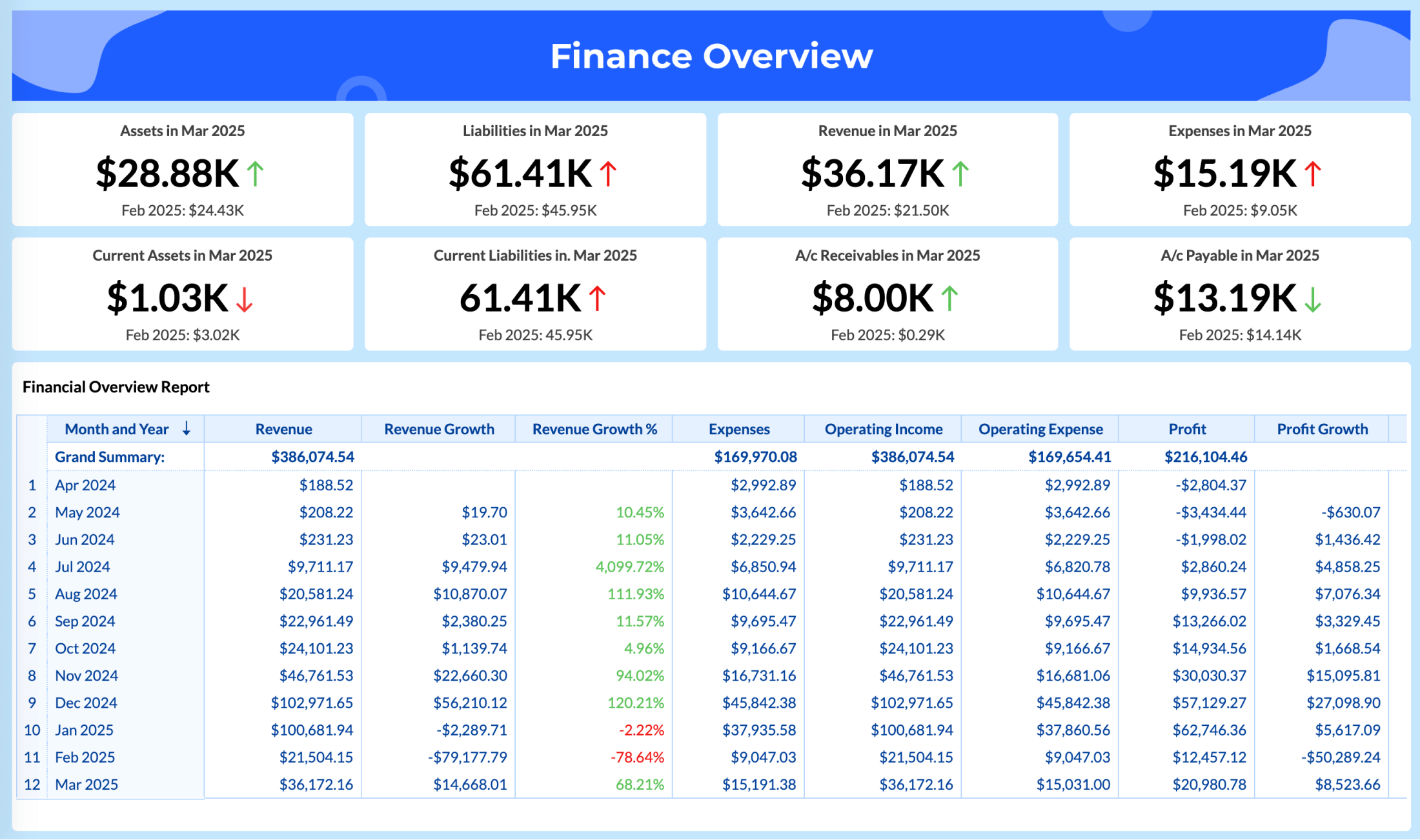
Finance Analytics
Finance teams use enterprise BI tools for budgeting, profitability analysis, and KPI forecasting. Key activities include:
- Creating financial reports and dashboards
- Analyzing revenue and expense trends
- Tracking key performance indicators (KPIs)
- Forecasting financial outcomes
Sales Analytics
Sales leaders rely on enterprise BI platforms for pipeline management and performance tracking. Key activities include:
- Monitoring deal velocity, conversion rates, and target attainment
- Identifying bottlenecks across the sales process
- Forecasting potential revenue and deal volume

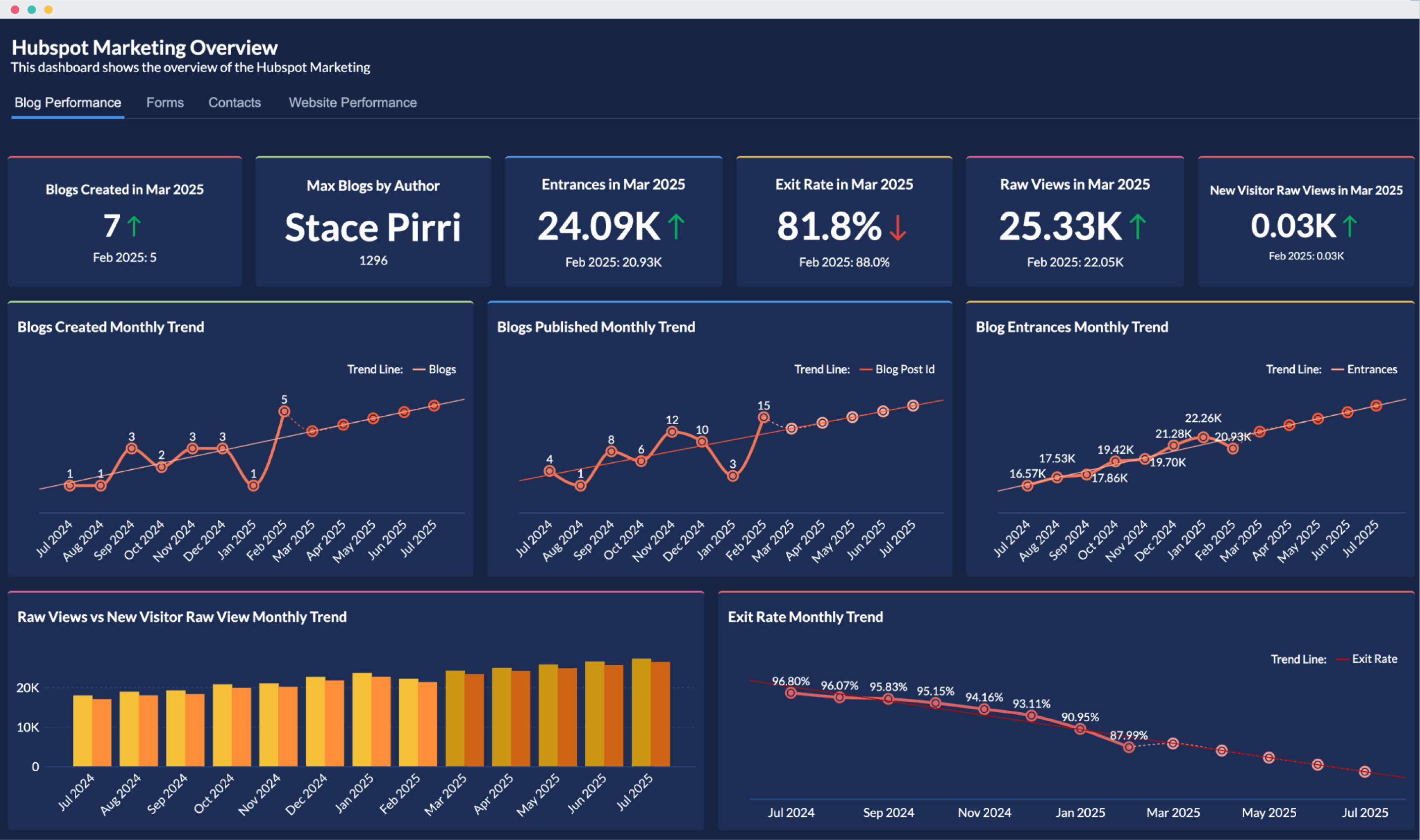
Marketing Analytics
Global enterprises use BI to track marketing performance across geographies and customer segments. Key use cases include:
- Measuring ROI of marketing campaigns across channels
- Fine-grained targeting for effective outreach
- Analyzing customer journeys and engagement patterns
Operations Management
BI is often integrated into supply chain and operations workflows. Common scenarios include:
- Identifying process bottlenecks and inefficiencies
- Monitoring inventory levels, order cycles, and logistics
- Optimizing costs and performance outcomes

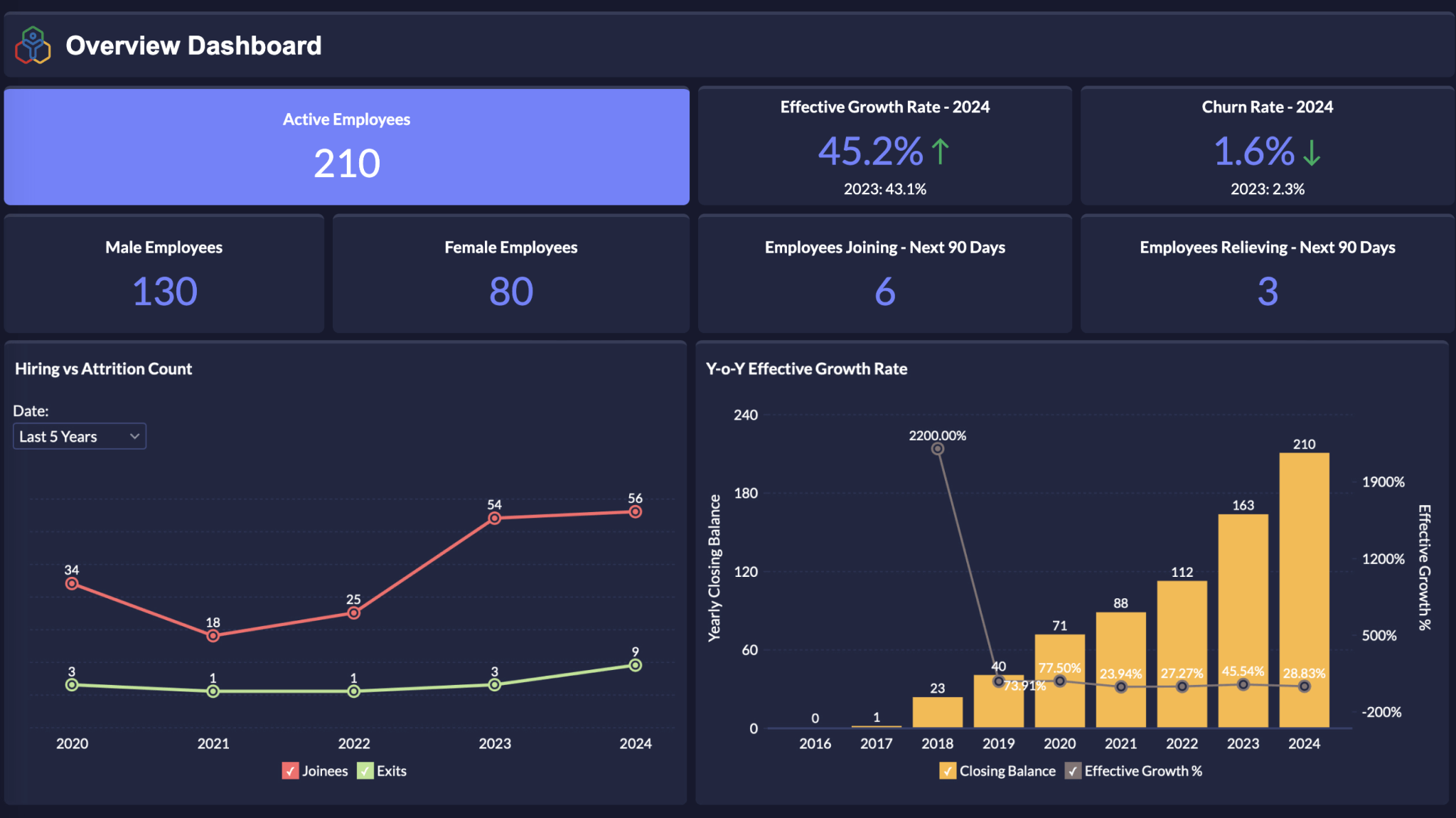
Human Resources Management
Large organizations use HR analytics to monitor workforce health and build retention strategies. Key use cases include:
- Tracking headcount and diversity metrics
- Monitoring the progress of hiring funnels
- Measuring training effectiveness and engagement
- Predicting attrition risk and employee turnover
Why Enterprises Choose Zoho Analytics For Business Intelligence
Zoho Analytics stands out as a trusted platform for large-scale analytics. It empowers enterprises to unify data, democratize insights, and drive business performance—all within a secure and cost-effective environment.
End-to-End Analytics Platform
Zoho Analytics supports the full BI lifecycle without the augmentation or support of any other third-party tool.
- 500+ native connectors (ERP, CRM, databases, cloud apps)
- Built-in data pipelines and preparation tools
- Drag-and-drop report builders and pre-built dashboards
- Embedded analytics for internal apps, portals, and software products
AI-Powered Intelligence
Zoho Analytics brings advanced analytics within reach of all business users.
- Ask questions in natural language and get visual answers
- Generate automated insights with diagnostic analytics
- Leverage no-code predictive BI capabilities
- Use agentic AI to drive complete analytics workflows
Enterprise-Ready Data Governance
Zoho Analytics is designed to meet the security and compliance demands of global enterprises. It also offers the following:
- Secure deployment options: cloud, on-premise, and hybrid
- Hosting across global data centers
- Scales to handle millions of rows and thousands of users
Trusted by Global Enterprises
Zoho Analytics powers data-driven decision-making in numerous enterprise environments across multiple industries.
- 15,000+ businesses in 180+ countries
- Use cases span CXOs, analysts, and external stakeholders
- Delivers measurable ROI through faster decisions and improved operations

"The power of Zoho Analytics enabled us to get a 360-degree view of customer journey. From the moment a customer enters into PREMO group, data like the order they had placed, information of suppliers who are working on that order, how many employees are working in that project, total time, money spent, proposed delivery date, consignment status, and more reside in multiple systems. Zoho Analytics' capability to make easy relationships between these different data from multiple systems is amazing."
 Claudio CabezaBusiness Development Director, PREMO Group
Enterprise BI FAQs
What are Enterprise business intelligence (BI) tools?
- Enterprise business intelligence tools are comprehensive platforms that help large organizations collect, analyze, and visualize data from multiple sources to drive strategic decision-making. They enable self-service analytics, support thousands of users, ensure data governance, provide advanced security, and scale across departments by transforming raw data into actionable insights for business leaders and teams enterprise-wide.
What are the best enterprise BI team and tool stack?
- The best enterprise BI stack typically includes a core platform like Zoho Analytics, Tableau, Power BI, or Looker for visualization and reporting; a data warehouse (Snowflake, BigQuery, Redshift); ETL tools for data integration; and collaboration platforms. The ideal team comprises data analysts, BI developers, data engineers, and governance specialists who work together to deliver trusted, scalable analytics solutions.
What are the leading enterprise business intelligence platforms?
- Leading enterprise BI platforms include Zoho Analytics (affordable, AI-powered with unified data modeling), Tableau (advanced visualization), Power BI (Microsoft ecosystem integration), Looker (semantic layer governance), and Qlik (associative analytics). Each offers scalability, robust security, multi-source integration, and enterprise-grade features tailored to large organizational needs.
What are the key features of enterprise business intelligence?
- Key enterprise BI features include multi-source data integration, self-service analytics with governed metrics, role-based security and access controls, scalability for thousands of users, AI-powered insights and automation, real-time dashboards, embedded analytics capabilities, collaboration tools, mobile accessibility, audit trails, and compliance support ensuring organizations can analyze data securely, efficiently, and at scale across all departments.
Which BI tools are recommended for enterprise-level data analysis?
- BI tools recommended for enterprise-level data analysis are Zoho Analytics, Tableau, Power BI, and Qlik Sense. They dominate enterprise analytics with scalability, advanced governance, and extensive integrations. Looker excels for data modeling and embedded analytics. Domo and ThoughtSpot offer cloud-native enterprise solutions. SAP BusinessObjects and IBM Cognos suit large organizations with complex requirements.
What is the best business intelligence tool for trend analysis?
- The best business intelligence tools for trend analysis are Zoho Analytics' Zia which uses machine learning to uncover hidden opportunities. Tableau has advanced forecasting and pattern recognition visualizations. Power BI's AI insights automatically surface trends and anomalies. ThoughtSpot and Qlik Sense reveal unexpected data relationships. Looker provides deep trend analysis.
Which business intelligence tools are best for identifying trends and opportunities?
- The business intelligence tools that are best for identifying trends and opportunities are Zoho Analytics, as it excels with AI-powered Zia assistant that automatically detects trends, anomalies, and hidden opportunities using machine learning, Tableau offers advanced forecasting visualizations and Power BI surfaces trends through AI insights. ThoughtSpot and Qlik Sense reveal unexpected data patterns for opportunity discovery.
What are the best AI-powered self-service BI tools for conversational data querying?
- Zoho Analytics' Zia AI assistant enables intuitive conversational querying, allowing users to ask questions in natural language and receive instant chart responses. ThoughtSpot offers Google-like search for data exploration. Power BI's Q&A and Copilot provide chat-based analytics. Tableau Ask Data and Qlik deliver intelligent conversational interfaces.
What are the best BI solutions for marketing teams that need self-service analytics with controlled metric governance?
- BI tools that support self-service exploration for marketing teams while maintaining governed metric definitions include Zoho Analytics (unified data models and access controls), Looker (semantic layer), Tableau (certified data sources), Power BI (curated datasets), and ThoughtSpot (governed AI search). They ensure consistency without limiting exploration.